Skip to content
Winnipeg North Dental
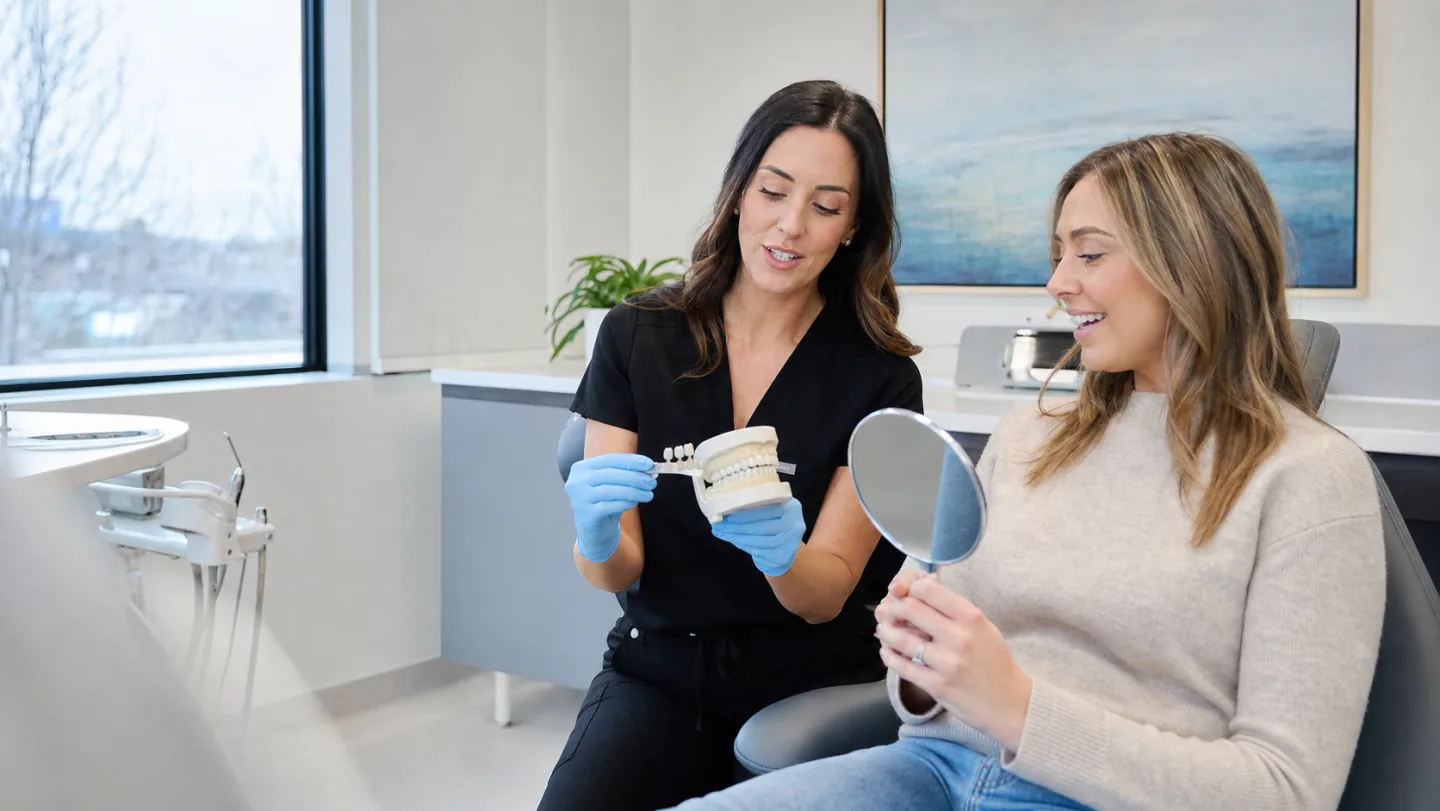
A cosmetic dentist discussing veneer shape and shade with a patient
If you grind or clench

Veneers for St. Andrews Residents

Flattened edges can make a person curious about veneers, yet the habit that wore them down still matters. St. Andrews lies outside the City of Winnipeg, so residents exploring this come in to our McPhillips Street clinic for assessment and care.

Let's find a time

Request an appointment

We’ll call to confirm your appointment. For urgent care, please call us directly.

Force on a thin restoration

Veneers When Your Teeth Take a Lot of Pressure

Grinding and clenching can shorten front teeth over time, and it is natural to want that length back. A veneer is thin, though, and it sits where upper and lower teeth meet during chewing and at night. Grinding is among the things that influence whether one chips or lets go.

None of this rules veneers out automatically. It simply moves the bite to the top of the agenda. This page explains what gets looked at and what to raise, so that a person from St. Andrews arrives ready to talk about wear as well as appearance.

Explore veneers
Treatment room at Winnipeg North Dental with a pale blue reclining chair, wood-look cabinets and a wall-mounted monitor
A pale blue dental chair beside wood-look cabinets and a small monitor.

Name the habit

Mention grinding or clenching early, even if you only suspect it happens while you sleep.

Bite comes under review

How your teeth contact each other helps decide whether a thin edge can be protected.

Other routes exist

Bonding, orthodontics or a stronger restoration may suit some worn teeth better.

Wear and the veneer decision

What a worn smile asks of the plan.

Restoring length is partly a design question and partly a mechanical one. These two lists separate what often leads people to ask from what could point elsewhere.

Why veneers may come up

Certain changes in the appearance of front teeth are the kind of thing a veneer is sometimes considered for.

  • Front edges that have become uneven or worn.
  • Tiny fractures limited to a small area.
  • Proportions that look altered as teeth lost length.
  • Surface flaws that stand out in your smile.

Why another plan may be safer

Some findings suggest that cosmetic shells alone would not address what is happening in the mouth.

  • A bite that is unstable or not yet understood.
  • So little healthy enamel left that bonding is doubtful.
  • Decay or inflamed gums needing attention first.
  • A tooth weakened too heavily for a thin covering.

Suitability rests on an in-person assessment of your enamel and bite, so treat these lists as a starting point for conversation.

From worn edges to a decision

How planning tends to unfold.

The sequence below follows the usual veneer pathway, with extra attention to contact between the teeth at every stage.

Request your visit
  1. 01

    Describe the wear

    Tell the dentist what has changed, what you would like back, and any jaw tightness or morning soreness you have noticed.

  2. 02

    Capture the starting point

    Photographs, scans, shade information and bite records document how your teeth look and meet today.

  3. 03

    Test the new length

    A digital or model preview lets you judge proposed proportions, while the dentist weighs them against your bite.

  4. 04

    Prepare where required

    If you go ahead, enamel is altered only as far as the chosen design and material call for.

  5. 05

    Check contacts, then bond

    Colour, fit and how the teeth come together are confirmed before anything is secured and finished.

Clues to gather first

Notice how your teeth behave.

You may not be able to confirm a night-time habit by yourself, but small observations help. Think about whether you wake with a tired jaw, catch yourself clenching during the day, or have seen new chips appear.

Since you would be coming into Winnipeg, ask how many visits a porcelain or composite plan might take and what each one involves.

Bring along

  • Any night guard or retainer you wear now or have worn.
  • Older photos that show how long your front teeth once were.
  • A note of medications and changes to your health.
  • Your questions on whether extra protection would be advised.
Consultation room at Winnipeg North Dental with black office chairs around a white desk and a window with striped blinds
Waiting area at Winnipeg North Dental with a navy bench, white chairs and abstract blue artwork

Black chairs around a white desk, and a navy bench below abstract artwork.

No blame for wear

Many people never knew they did it.

Grinding often happens without anyone realizing. You will not be scolded for tooth wear here. An honest description of your habits simply gives the dentist more to work with.

Say what feels sore

Jaw or tooth discomfort is useful information, so include it even when it seems minor.

Ask for a pause

Let someone know during an appointment if you need your jaw to rest for a moment.

Take the proposal home

Elective treatment leaves room to think over what you have heard before saying yes.

Protecting the result

Bite habits do not stop at bonding.

Whatever material is placed, the forces that wore your natural teeth may still be present. Upkeep therefore includes watching for changes as well as keeping things clean.

01

Watch the biting edges

Report a new rough spot, a chip or a change in how your teeth meet, so it can be examined.

02

Ask about night protection

Find out whether a protective appliance would be recommended in your case, and how it should be looked after.

03

Keep regular examinations

Natural tooth remains at the margins, so brushing, interdental cleaning and check-ups carry on as before.

A sudden break or a veneer that has come off calls for a phone call, not the appointment form.

Talk with our team
Front of Winnipeg North Dental with a large sign and the phone number above glass doors

Winnipeg North Dental

Unit-5 2358 Mcphillips Street, Winnipeg, MB R2V 4J6
Get directions (opens in a new tab)
Getting your bite examined

Bite and Veneer Assessments for St. Andrews Residents

St. Andrews is a Manitoba community outside the City of Winnipeg. Its residents come into the city for this care, which takes place at Winnipeg North Dental, Unit 5, 2358 McPhillips Street.

Your request is not a reserved time. The clinic follows up to confirm, and you can mention grinding at that point.

Questions about coverage?

Talk with our team before your visit or learn about CDCP.

A little clarity before your visit

Your questions, answered.

Helpful details about veneers in St. Andrews.

Ask our team
Can someone who grinds their teeth have veneers?

Possibly, but it cannot be settled from a description. Your enamel, the pattern of wear and the way your teeth meet all need examining before anyone can say.

Is porcelain or composite more forgiving of grinding?

Neither wins in every case. Porcelain chips can be difficult to mend invisibly, while composite often allows localized additions, so ask how each would behave against your particular bite.

Can I tell by myself if I’m a night grinder?

Worn edges, a tired jaw on waking or small new chips can be hints. Raise whatever you have noticed so that your teeth can be looked at with that in mind.

Do I need a night guard with veneers?

That depends on your assessment. It is a sensible question to put to the dentist before you commit, especially if clenching has already marked your teeth.

Could a stronger restoration be more sensible than a veneer?

For a heavily weakened tooth, yes, that may be the case. A veneer covers the visible surface and is not meant to rebuild a tooth that has lost much of its structure.

How can a St. Andrews resident arrange an assessment?

Phone Winnipeg North Dental at (204) 338-3003 or use the form below. Care is provided at the McPhillips Street clinic, and the clinic contacts you to confirm any time.

Worried about wear?

Have your bite looked at before you decide.

St. Andrews residents are welcome to request a veneer consultation at our Winnipeg clinic. Tell us what you have noticed, and the clinic will reach out.

Patient testimonials

Kind words from our patients

★★★★★ 5.0 from 440+ reviews on Google

Close to home

Areas we serve

Convenient dental care on McPhillips Street for families across northwest Winnipeg and nearby communities.

Explore all service areas

A healthier smile is one visit away

Ready for dental care that feels genuinely comfortable?

✓ New patients welcome ✓ Direct insurance billing ✓ Multilingual team

How can we help?

Our dental team is here for you.

Ready to book or have a question? Choose the option that works best for you.

For urgent dental concerns, please call us directly.

Send us a message

Our team will reply during clinic hours.



