Skip to content
Winnipeg North Dental
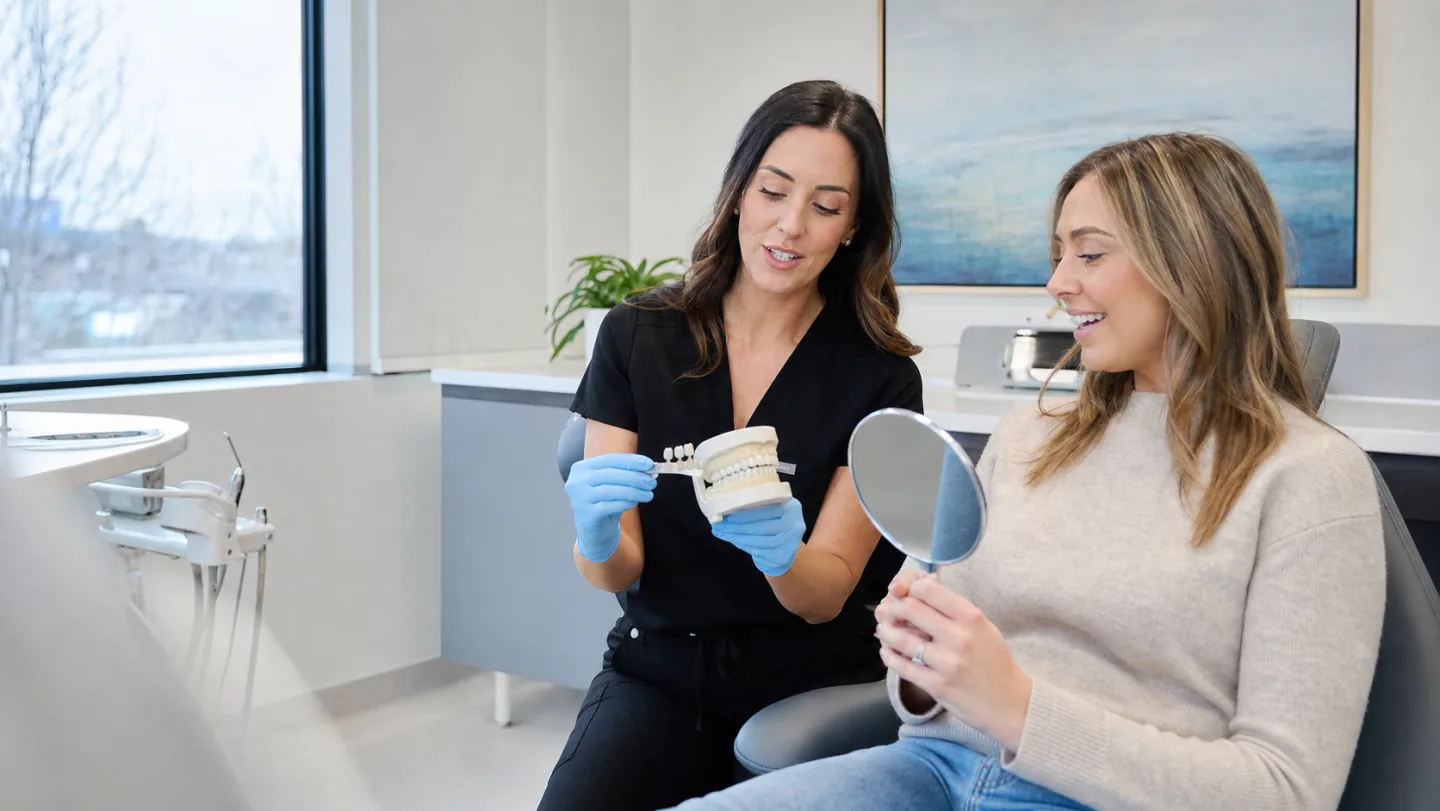
A cosmetic dentist discussing veneer shape and shade with a patient
Where upper and lower edges meet

Veneers for Southdale Residents

A veneer is chosen for looks, but it has to survive every bite. Southdale residents can learn why contacts between upper and lower teeth guide the design at our McPhillips Street clinic in Winnipeg.

Let's find a time

Request an appointment

We’ll call to confirm your appointment. For urgent care, please call us directly.

Function behind the cosmetics

Why Your Bite Shapes Every Veneer Decision

When you close, slide your jaw forward or chew, your lower front teeth glide against the inner surfaces and edges of the upper ones. A veneer that lengthens or reshapes those teeth changes where that contact happens, so the design has to allow the bite to function without overloading the new edges.

This is why bite records are taken alongside photos and scans, and why the bite is checked again at the try-in. In some mouths, the way the teeth meet suggests a different plan, such as orthodontics, before veneers are considered. People from Southdale have this assessed at our Winnipeg clinic.

Explore veneers
Pale blue dental chair positioned under a white overhead arm in a bright treatment room
A pale blue dental chair under a white overhead arm in a bright treatment room.

Contacts are mapped

Bite records show where your teeth touch at rest and as the jaw moves.

Edges need protection

The design aims for the bite to support veneer edges rather than strike them.

Checked before bonding

Contacts are confirmed at try-in so problems can be adjusted early.

How function enters design

Bite factors and their effect on veneers.

The way your teeth meet can shape length, thickness and even whether veneers are the right tool.

What the bite assessment looks at

Several aspects of how your teeth come together are examined.

  • Where lower front teeth contact the upper ones.
  • How teeth guide each other when the jaw slides forward or sideways.
  • Signs of wear, chipping or flattening along the edges.
  • Whether the bite seems stable or has been changing.

How findings shape the plan

What is found affects the design and the choice of approach.

  • Edge length may be limited if the bite would strike a longer veneer.
  • Heavy wear may point to grinding that needs discussing.
  • An unstable bite may call for treatment before cosmetic work.
  • Moving teeth with orthodontics can sometimes create a safer arrangement.

A bite that suddenly feels different, or a tooth that becomes loose or sore, should be reported by phone rather than saved for a cosmetic visit.

The bite at each stage

How function is checked from start to finish.

Bite information is gathered early and confirmed again before the veneers are permanently placed.

Request your visit
  1. 01

    Explain your goals

    Say what you want to change about appearance and mention any chipping or jaw discomfort you have noticed.

  2. 02

    Record the bite

    Bite records join photos, scans and shade records to describe how your teeth meet.

  3. 03

    Design with contacts in mind

    Proposed shapes are checked digitally or in a model to see how they would meet opposing teeth.

  4. 04

    Prepare conservatively

    Enamel is altered only to the degree the design and material call for.

  5. 05

    Confirm contacts

    With veneers tried in, fit, colour and bite are verified before bonding and finishing.

Noticing your bite

Pay attention to how your teeth meet.

Small observations about chewing and jaw comfort help the dentist understand forces you may not have thought about.

Chips that keep recurring on the same tooth can be a sign that the bite is placing extra load there.

Things to mention

  • Front teeth that have chipped or worn down over the years.
  • Jaw tightness or clicking, especially in the morning.
  • Any braces or bite treatment in the past.
  • Medicines and recent health changes.
Office-style consultation room with two black chairs facing a white table under a painting
Navy bench and abstract artwork beside the reception desk with a glass screen

Black chairs at a white table, and a navy bench beside the reception desk.

Cosmetic and practical

Function questions are not a detour.

If you came in for appearance, talk of bite contacts can feel like a distraction. It is part of planning a veneer that lasts, and you can ask how any finding affects the look you hoped for.

Ask what was found

You can ask to have your bite explained using your own records.

Ask about limits

It is fair to ask whether the bite restricts edge length or shape.

Ask about options

If veneers seem risky for your bite, you can ask what would work instead.

Living with the new edges

Keeping new edges in good shape.

After bonding, the way you bite and any grinding continue to affect veneers, so a little awareness helps.

01

Report a high spot

If one veneer touches first when you close, call so the bite can be checked.

02

Consider night protection

Ask whether a night guard makes sense if grinding or heavy wear was noted.

03

Keep regular exams

Routine visits let wear, chipping or loosening be noticed early.

Daily brushing and cleaning between teeth keep the margins healthy, which matters as much as the bite.

Talk with our team
Dark and light grey building front with the Winnipeg North Dental sign and glass entry doors

Winnipeg North Dental

Unit-5 2358 Mcphillips Street, Winnipeg, MB R2V 4J6
Get directions (opens in a new tab)
Bite assessed at the clinic

Southdale Residents Are Assessed on McPhillips Street

Bite assessment and veneer planning for people who live in Southdale, an area in Winnipeg, take place at Winnipeg North Dental, Unit 5, 2358 McPhillips Street.

Mention any chipping or jaw discomfort in the request form. The clinic reviews your request and responds about an appointment.

Questions about coverage?

Talk with our team before your visit or learn about CDCP.

A little clarity before your visit

Your questions, answered.

Helpful details about veneers in Southdale.

Ask our team
Can my bite stop me from getting veneers?

Sometimes. A bite that is unstable or places heavy force on front edges may make veneers less predictable, and another approach could be suggested.

Why would a veneer chip at the edge?

Edges are thin, and if opposing teeth strike them hard or you grind, the stress can lead to chipping. Planning the bite carefully reduces that risk.

Can longer front teeth affect how I bite?

Yes. Adding length changes where lower teeth contact the upper ones, so length is planned with your bite records in mind.

What is checked at the bite stage of a try-in?

The dentist looks at where the veneers meet opposing teeth when you close and move your jaw, and whether any contact is too heavy.

Do veneers correct a bite problem?

No. They change the visible surfaces of teeth and do not move roots or alter how the jaws meet. Bite problems need their own assessment.

How can Southdale residents ask for a bite and veneer assessment?

A call to (204) 338-3003 or a request through this page’s form will get things moving. Bite checks and veneer planning happen at our McPhillips Street clinic in Winnipeg.

Worried about chipping?

Plan veneers that work with your bite.

Southdale residents are welcome to request a veneer consultation through the form. Each request is reviewed and the clinic replies about a time to come in.

Patient testimonials

Kind words from our patients

★★★★★ 5.0 from 440+ reviews on Google

Close to home

Areas we serve

Convenient dental care on McPhillips Street for families across northwest Winnipeg and nearby communities.

Explore all service areas

A healthier smile is one visit away

Ready for dental care that feels genuinely comfortable?

✓ New patients welcome ✓ Direct insurance billing ✓ Multilingual team

How can we help?

Our dental team is here for you.

Ready to book or have a question? Choose the option that works best for you.

For urgent dental concerns, please call us directly.

Send us a message

Our team will reply during clinic hours.



