Skip to content
Winnipeg North Dental
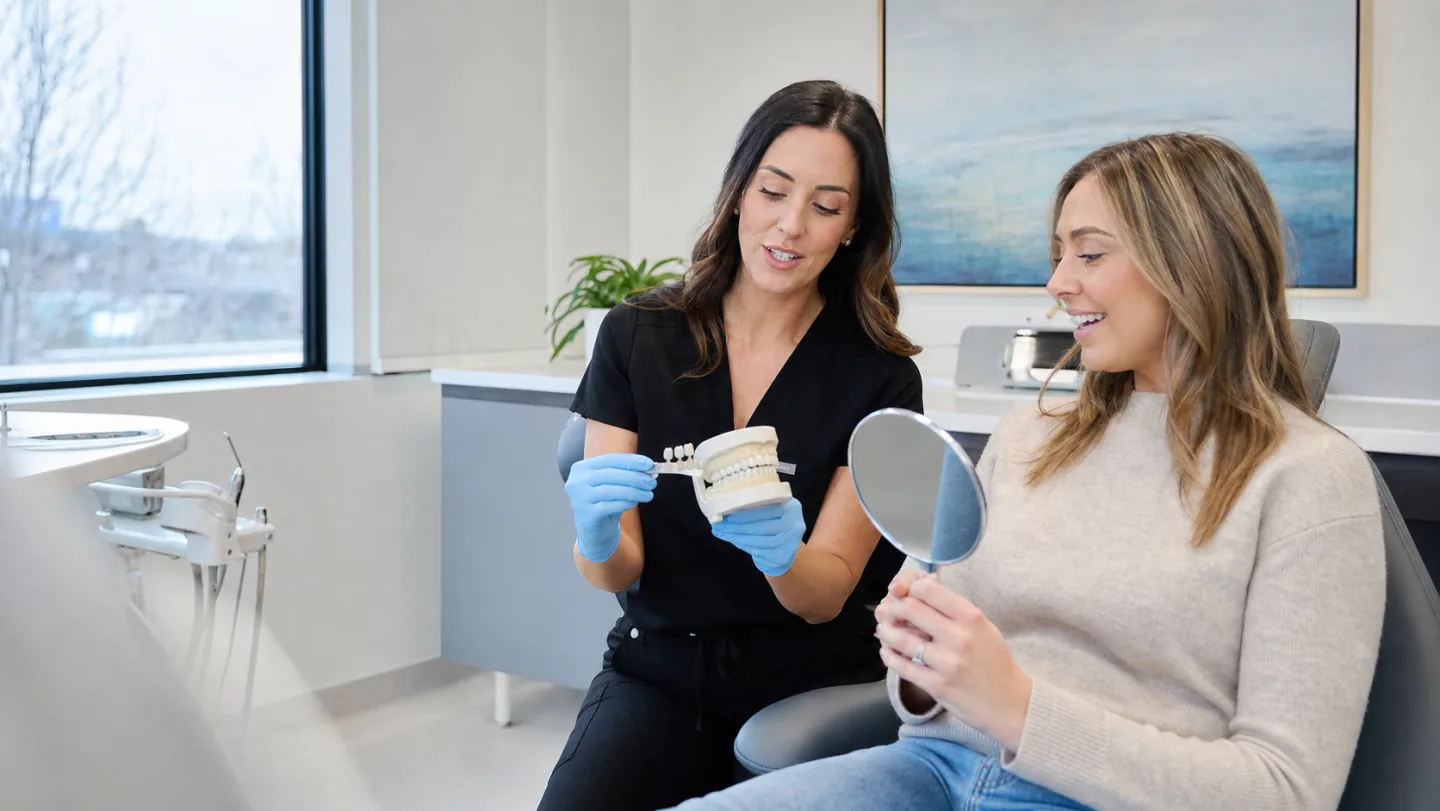
A cosmetic dentist discussing veneer shape and shade with a patient
Photos, scans and bite records

Veneers for River Heights Residents

Before anyone talks about a final shape, your teeth are documented carefully. River Heights residents can learn what that record-taking involves at our McPhillips Street clinic in Winnipeg.

Let's find a time

Request an appointment

We’ll call to confirm your appointment. For urgent care, please call us directly.

The groundwork stage

Why Veneer Planning Starts With Careful Records

A veneer design is only as reliable as the information it is built on. Photographs show how your teeth look against your lips and face, scans capture their exact contours, shade records note their colour, and bite records show how upper and lower teeth come together.

Together these let the dentist propose shapes and proportions that can be reviewed before enamel is touched. They also give you something concrete to look at, which makes it easier to say what you like and what you would change. If you live in River Heights, this stage takes place at our clinic in Winnipeg.

Explore veneers
Treatment room with a reclined light blue chair, a ceiling-mounted arm and wooden cupboards
A reclined light blue chair beside wooden cupboards in a treatment room.

A true baseline

Records show your teeth as they are now, not as memory or a mirror suggests.

Design built on fact

Proposed shapes are drawn up from measurements rather than guesswork.

Something to compare

Later stages can be checked against the starting point you agreed on.

Four kinds of record

What each record tells the dentist.

No single record covers everything, so several are usually combined to describe your smile fully.

Records of appearance

These capture how your teeth look in the context of your face.

  • Photographs of your smile at rest and in motion.
  • Close views showing surface texture and existing repairs.
  • Shade records noting colour across different teeth.
  • Views showing how much tooth your lips reveal.

Records of form and function

These describe size, shape and the way your jaws meet.

  • Scans or impressions recording each tooth’s contours.
  • Bite records showing where upper and lower teeth touch.
  • Information later used to fabricate porcelain outside the mouth.
  • A reference for checking fit at the try-in.

Records are taken once the teeth and gums are healthy enough to plan around. Active decay or gum inflammation is usually treated before cosmetic work proceeds.

Where records fit in

The sequence around the records stage.

Record-taking sits between the first conversation and the design. Here is how the pieces usually connect.

Request your visit
  1. 01

    Talk through goals

    You explain what bothers you about your teeth and which features you want to keep.

  2. 02

    Examine and document

    Teeth, gums and enamel are checked, then photos, scans, shades and bite records are gathered.

  3. 03

    Draft the design

    Shapes and proportions are evaluated digitally or in a model, using the records as a base.

  4. 04

    Prepare where required

    Enamel is changed only as far as the agreed design and material call for.

  5. 05

    Try in and secure

    Fit, shade and bite are confirmed against the plan before final bonding and finishing.

Making records easier

Small things that help on the day.

Good records rely partly on clear, unaltered teeth and a relaxed face, so a little preparation goes a long way.

Strongly coloured lipstick can make shade comparison harder, so a neutral or bare lip is usually simpler.

Before your appointment

  • Brush and floss so surfaces are clean for photos and scans.
  • Mention any recent whitening, since colour may still be settling.
  • Think about whether you have had trouble with impressions before.
  • Bring a list of your medicines and any recent health changes.
Bright consultation room with a white table, a keyboard and window blinds behind black chairs
White reception counter with plants beside a glass partition and a blue accent wall

A white table and black chairs by window blinds, and a reception counter with plants.

Being photographed

If close-up photos of your teeth feel awkward.

Plenty of people dislike seeing their teeth enlarged on a screen, especially when those teeth are the reason they came in. The photos are working tools for planning, and you can ask how they are used and stored.

Ask for a pause

If holding your lips back gets tiring, you can say so and take a moment.

Ask about scans

You can ask whether a digital scan or an impression will be used for your teeth.

Ask to see them

Viewing the photos together can help you put your concerns into words.

Records after treatment

How the starting point stays useful.

Records taken before treatment can help later, when veneers are checked, maintained or eventually replaced.

01

Book examinations

Routine exams let the dentist compare veneers and margins with how they looked at the start.

02

Report changes

Call if a veneer chips, loosens or a margin darkens rather than waiting for your next visit.

03

Keep cleaning well

Natural tooth at the margins can still decay, so brushing and cleaning between teeth matter.

If you ever need a veneer replaced, ask whether your original records can help guide the new one.

Talk with our team
Clinic front with a dark grey facade, white signage reading Winnipeg North Dental and glass doors

Winnipeg North Dental

Unit-5 2358 Mcphillips Street, Winnipeg, MB R2V 4J6
Get directions (opens in a new tab)
Records taken at the clinic

River Heights Residents Visit Us on McPhillips Street

Photos, scans, shade and bite records for people who live in River Heights, an area in Winnipeg, are taken at Winnipeg North Dental, Unit 5, 2358 McPhillips Street.

Use the form to tell us what you would like to change about your teeth. The clinic reads your request and responds about scheduling.

Questions about coverage?

Talk with our team before your visit or learn about CDCP.

A little clarity before your visit

Your questions, answered.

Helpful details about veneers in River Heights.

Ask our team
Why can’t the design be made from photos alone?

Photos show appearance but not exact contours or how teeth meet. Scans and bite records add the measurements needed for a veneer to fit and function.

What is a bite record used for?

It shows where your upper and lower teeth contact. Veneers must allow those contacts to work safely, so the design takes them into account.

Will records be taken at my first appointment?

It varies with the state of your teeth on the day. If decay or gum problems need attention first, records for cosmetic planning may wait until those are settled.

Is a scan uncomfortable?

Most people find it straightforward. If you have a strong gag reflex or found impressions difficult before, mention it so the approach can be discussed.

Do records commit me to having veneers?

No. They support planning and help you see options more clearly. Deciding whether to go ahead is a separate step.

Why are shade records taken under certain lighting?

Colour looks different from one light source to another. Recording shade consistently helps the veneers match your natural teeth in everyday conditions.

How do River Heights residents start the records stage?

Begin by phoning (204) 338-3003 or sending the request form on this page. A first consultation at our McPhillips Street clinic comes before records are planned.

Ready to be documented?

Start with a clear picture of your teeth.

If you live in River Heights, ask for a veneer consultation at our Winnipeg clinic. The clinic will look at your request and contact you about a time.

Patient testimonials

Kind words from our patients

★★★★★ 5.0 from 440+ reviews on Google

Close to home

Areas we serve

Convenient dental care on McPhillips Street for families across northwest Winnipeg and nearby communities.

Explore all service areas

A healthier smile is one visit away

Ready for dental care that feels genuinely comfortable?

✓ New patients welcome ✓ Direct insurance billing ✓ Multilingual team

How can we help?

Our dental team is here for you.

Ready to book or have a question? Choose the option that works best for you.

For urgent dental concerns, please call us directly.

Send us a message

Our team will reply during clinic hours.



