Skip to content
Winnipeg North Dental
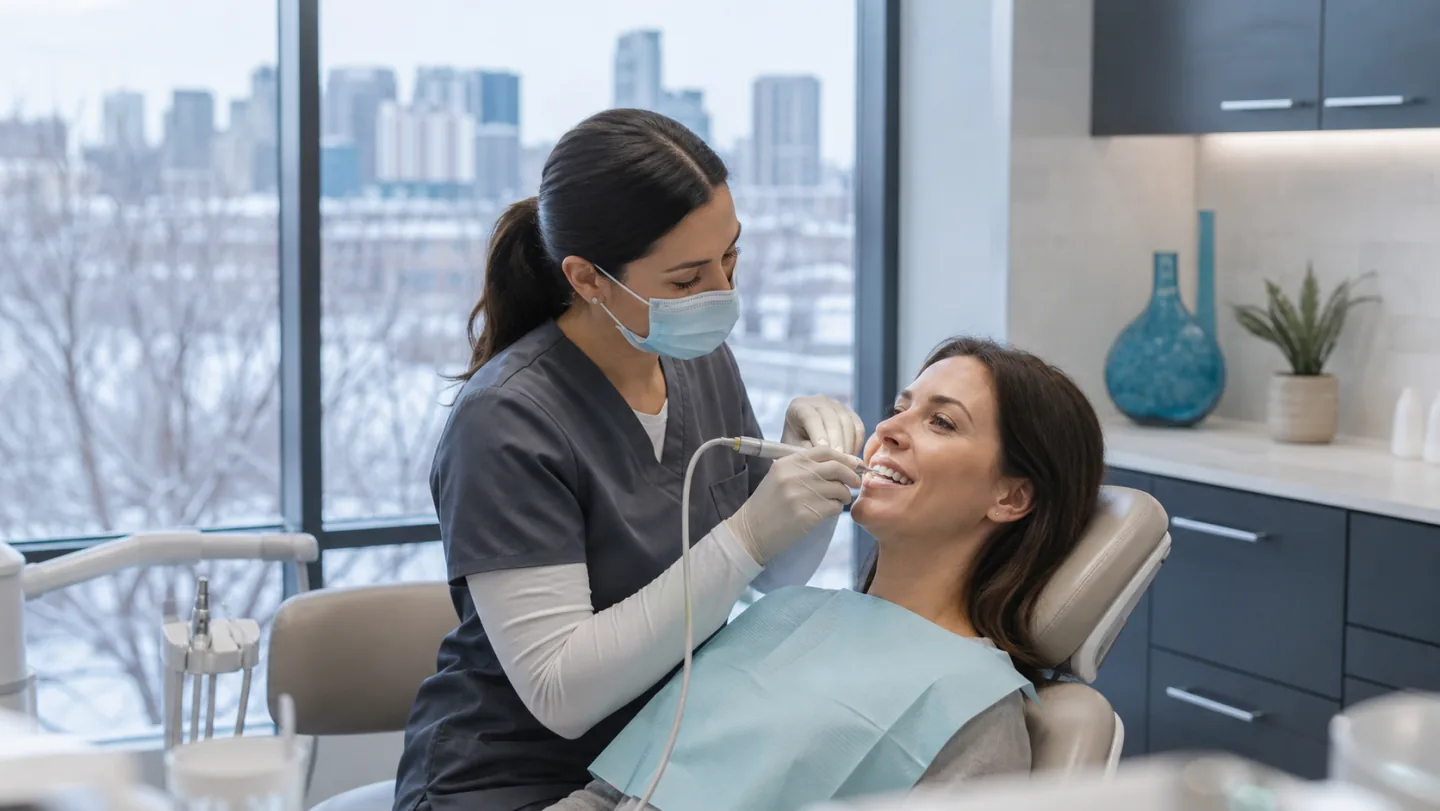
A dentist conservatively polishing the edge of a front tooth
Your embouchure has opinions

Tooth Reshaping for St. Andrews Residents

When a mouthpiece rests against your front teeth, even a slight edge change deserves thought. Bring that detail to an assessment at our McPhillips Street clinic.

Let's find a time

Request an appointment

We’ll call to confirm your appointment. For urgent care, please call us directly.

Teeth with a second job

For players who notice every edge

Clarinet, saxophone, trumpet, trombone: people who play these often know the feel of their front teeth in unusual detail. If a rough corner bothers you, you may also wonder how smoothing it would affect the way your instrument sits. St. Andrews is outside the City of Winnipeg, so it makes sense to think that through before coming into the city.

Contouring takes away a tiny amount of outer enamel and cannot be undone. That permanence matters more when your teeth contribute to something you do every day. At Winnipeg North Dental, on McPhillips Street in Winnipeg, tell the dentist about your playing at the outset, so it can be considered along with enamel, tooth health and bite.

Explore tooth reshaping
White desk and black office chairs in a consultation room at Winnipeg North Dental
A white desk with black chairs and a seascape painting in a consultation room.

Name your instrument

Mentioning what you play gives the dentist context a mirror can’t supply.

Tiny, then rechecked

Enamel comes away in controlled increments, with shape reviewed between them.

No undo button

Lost enamel stays lost, which argues for changing as little as possible.

Edge and function

Two questions to separate before anything changes.

How a tooth looks and how it works against a mouthpiece are related but not identical. Keeping them apart makes the conversation clearer.

What contouring can address

Its role is limited to refining contours where sound enamel extends past the shape you want.

  • A corner that snags your lip while you’re playing or talking.
  • A tiny chip with enough supported enamel around it.
  • A slight length difference along the biting edges.
  • A point that makes one tooth look a little unlike its partner.

What it leaves untouched

Some concerns players describe come from causes that removing enamel won’t correct.

  • Tooth position, because roots and teeth aren’t moved.
  • A gap or shortened edge that would need material added.
  • A fracture hiding behind what feels like mere roughness.
  • A filling margin that has lost its smooth finish.

No one can promise how a small edge change will feel on your instrument, so weigh that uncertainty honestly before agreeing to a permanent adjustment.

Planning your appointment

How the visit could unfold, from question to polish.

Coming from outside the city, you may prefer knowing the sequence ahead of time. These are the broad stages, and timing is something to ask about.

Request your visit
  1. 01

    Explain the playing and the problem

    Phone or use the form, and say which tooth bothers you and what you play. Ask how many visits to expect.

  2. 02

    Have the area assessed

    The dentist weighs enamel thickness, cracks, older restorations and how your upper and lower teeth meet.

  3. 03

    Agree on the smallest useful change

    Neighbouring teeth serve as reference when the intended contour is marked, and you can ask what it means for your mouthpiece.

  4. 04

    Refine, polish and verify

    Fine instruments do the work, then the surface is finished and contacts are retested in different jaw positions.

Before you set out

Note how the edge behaves when you play.

Your own observations are useful because no one else experiences the tooth from behind the mouthpiece. Specifics will serve you better than a general impression.

Whether an instrument should come along to the appointment is a fair question to put to the clinic when you book.

Details to jot down

  • Which instrument you play, and how regularly.
  • Where the tooth catches, and whether that happens only while playing.
  • Any recent knock, chip or change along that edge.
  • Medications and health details you’d want the dentist to know.
Light blue dental chair in a treatment room with wood-look cabinets at Winnipeg North Dental
White reception desk beside a tall potted plant at Winnipeg North Dental

Pale blue treatment chair with wood-look cabinets behind it.

In the chair

Enamel work usually asks little of you.

Since enamel lacks a nerve supply, staying within it tends to be comfortable, and local anaesthetic is often unnecessary. That may matter to you if you’d like to ask about playing later on.

Sensitivity changes the plan

Feeling something during treatment is a signal to pause, so let the dentist know right away.

Check the feel as you go

You can ask to run your lip across the edge whenever the dentist pauses to review it.

Ask about getting back to practice

Raise this before treatment, particularly if a performance or rehearsal falls soon afterward.

Back at the music stand

Give yourself an honest read on the change.

A small adjustment can feel larger to someone used to noticing their teeth. Pay attention, and don’t hesitate to report anything that seems wrong.

01

Describe what’s different

If your bite or the edge feels off once you’re home in St. Andrews, phone the clinic and explain it.

02

Watch for new roughness

Polished enamel shouldn’t feel sharp, so a rough patch appearing later needs a look for wear or a chip.

03

Keep your dentist informed

Anyone else caring for your teeth should hear what was changed, and the clinic can tell you how records may be shared.

Keep in mind that enamel can’t be added back, though bonding is one way material may be added if an edge ever needs it.

Talk with our team
Exterior of the Winnipeg North Dental clinic on McPhillips Street

Winnipeg North Dental

Unit-5 2358 Mcphillips Street, Winnipeg, MB R2V 4J6
Get directions (opens in a new tab)
Where the care takes place

Bringing this question to our clinic

St. Andrews residents have this assessment at Winnipeg North Dental, Unit 5, 2358 McPhillips Street, Winnipeg, MB R2V 4J6.

Sending the form doesn’t reserve a time, since the clinic still needs to confirm with you. For questions about your instrument, try (204) 338-3003.

Questions about coverage?

Talk with our team before your visit or learn about CDCP.

A little clarity before your visit

Your questions, answered.

Helpful details about tooth reshaping in St. Andrews.

Ask our team
Could contouring change how my instrument feels?

It’s possible, because any change to an edge alters what your lip or the mouthpiece meets. Nobody can predict exactly how that will feel, so bring it up before deciding.

Should I mention my playing even if the concern is only cosmetic?

Yes. A front tooth with a role in your playing may change the dentist’s thinking about how much, or whether, to adjust it, even when your own reason is its appearance.

My tooth got rough after years of playing. Did my mouthpiece cause it?

An examination is the way to find out. Roughness can come from wear, a chip, a crack or an older filling, and it’s worth identifying which before any enamel is touched.

If the edge feels wrong later, can it be put back?

Removed enamel won’t return. Bonding adds tooth-coloured resin and may be an option for restoring some length, although added resin needs upkeep over time, and suitability would need assessing.

What if the edge broke suddenly and I have a concert coming?

Phone the clinic and describe the break. A sudden fracture calls for a conversation rather than a form, particularly if the tooth hurts as well.

What should a player in St. Andrews do first?

Send the form below or call (204) 338-3003, and mention your instrument. You’ll be arranging a visit to McPhillips Street, and a time is set once the clinic confirms it.

Before the next rehearsal

Get that nagging edge examined properly.

Request an assessment at our Winnipeg clinic and tell us what you play. You’ll hear back before any time is fixed.

Patient testimonials

Kind words from our patients

★★★★★ 5.0 from 440+ reviews on Google

Close to home

Areas we serve

Convenient dental care on McPhillips Street for families across northwest Winnipeg and nearby communities.

Explore all service areas

A healthier smile is one visit away

Ready for dental care that feels genuinely comfortable?

✓ New patients welcome ✓ Direct insurance billing ✓ Multilingual team

How can we help?

Our dental team is here for you.

Ready to book or have a question? Choose the option that works best for you.

For urgent dental concerns, please call us directly.

Send us a message

Our team will reply during clinic hours.



