Skip to content
Winnipeg North Dental
A dentist conservatively polishing the edge of a front tooth
Picturing the appointment itself

Tooth Reshaping for Pembina Residents

You have more or less decided to ask about smoothing an edge, and now you want to know what the visit will feel like. Here is a plain account of how it works at our McPhillips Street clinic in Winnipeg.

Let's find a time

Request an appointment

We’ll call to confirm your appointment. For urgent care, please call us directly.

From the chair’s point of view

Knowing the sequence makes it easier to say yes or no

Some people feel calmer once they can picture each stage: who looks at what, when anything is touched, and how they will know it is finished. If you live in Pembina, an area in Winnipeg, and that kind of clarity would help you decide, this page walks through the process in order.

Nothing about contouring is meant to be rushed. At Winnipeg North Dental on McPhillips Street, the dentist first confirms the tooth is suitable, then works in small steps, polishes the surface and checks your bite before you leave the chair.

Explore tooth reshaping
White reception desk with an orchid and a blue accent wall at Winnipeg North Dental
The reception counter with potted plants, an orchid and a navy bench beside a rug.

Assessment before anything

No enamel is removed until the tooth, its repairs and your bite have been reviewed.

Stepwise, not all at once

Tiny amounts come off at a time, with shape and symmetry checked again and again.

Finish with a bite test

Contacts are verified in different jaw positions once the surface is polished.

What gets decided first

The checks that come before the polish.

Two things are settled at the start: whether the concern is something contouring can address, and how much enamel the tooth can safely spare.

Suited to contouring

If the exam confirms one of these and the enamel allows it, a refinement may be planned.

  • A minor chip on a well-supported edge
  • A corner that keeps catching the lip or tongue
  • Slight differences in the length of edges
  • A small point that throws off a tooth’s shape

Reasons to pause

When the findings look like this, the dentist is likely to suggest a different course.

  • Thin enamel over the area in question
  • A fracture line rather than spare enamel
  • An edge doing important work in your bite
  • A change that would leave a neighbour looking off

You are under no obligation to proceed once the assessment is done. Understanding your options is a worthwhile outcome on its own.

The order of events

How a refinement unfolds.

Ask the clinic whether your assessment and any contouring would fall on the same visit. Either way, the treatment itself follows a consistent order.

Request your visit
  1. 01

    Agree on the intended outline

    The dentist compares the tooth with its neighbours and identifies precisely where a small change belongs.

  2. 02

    Remove enamel in tiny amounts

    Fine instruments take away very little at once, and the shape is reviewed between each pass.

  3. 03

    Smooth and polish the surface

    Once the outline is right, the area is finished so no roughness is left behind.

  4. 04

    Verify the bite

    You bite and move your jaw in several directions so the dentist can confirm the contacts are comfortable.

The day before

Little to prepare, a few things to mention.

There is no special routine needed beforehand. What matters most is sharing information that could affect the tooth or the plan.

If the tooth breaks further or becomes painful before your appointment, don’t wait for the visit. Call the clinic.

Things to tell the dentist

  • Any medications, supplements or health conditions.
  • Past injuries or dental work on that tooth.
  • Whether you clench or grind your teeth.
  • How much change you’re hoping for.
Light blue dental chair beside wood-look cabinets at Winnipeg North Dental
White reception desk with an orchid and a blue accent wall at Winnipeg North Dental

A light blue dental chair reclined in front of wood-look cabinets and a sink.

What you’ll feel

Mostly vibration and light pressure.

Enamel has no nerves, so work that stays in that layer is generally comfortable and often needs no local anaesthetic. If you notice sensitivity, speak up straight away, because it means the plan should be paused and rethought.

No surprises

Feel free to ask the dentist to describe each step before it starts.

Room to stop

Agree on a hand signal so you can call for a break whenever you need one.

See the progress

A mirror check between stages lets you weigh in on the shape.

When you get up from the chair

Back to ordinary life.

Pay attention to how the refined tooth feels as you eat and talk over the following days, and mention anything that seems unusual.

01

Bite feels different

If teeth seem to meet in a new way after the refinement, tell the clinic.

02

Edge feels rough

A polished surface should feel smooth, so a sharp spot later deserves a look.

03

Next routine exam

Ask how often your teeth should be checked so the refined area is seen in future.

The enamel that was removed will not regrow. That permanence is the reason the steps above are taken so carefully.

Talk with our team
Exterior of the Winnipeg North Dental clinic on McPhillips Street

Winnipeg North Dental

Unit-5 2358 Mcphillips Street, Winnipeg, MB R2V 4J6
Get directions (opens in a new tab)
Where the chair is

Appointments for Pembina residents

Every stage described above, for anyone coming from Pembina, happens in the treatment rooms of Winnipeg North Dental, Unit 5, 2358 McPhillips Street, Winnipeg, MB R2V 4J6.

The request form doesn’t lock in a time. Expect the clinic to respond to arrange one, or phone (204) 338-3003 if you prefer.

Questions about coverage?

Talk with our team before your visit or learn about CDCP.

A little clarity before your visit

Your questions, answered.

Helpful details about tooth reshaping in Pembina.

Ask our team
Will I need freezing for contouring?

Often not, as the work stays within enamel, which contains no nerves. If sensitivity appears, the dentist stops to reassess rather than pushing on.

Is the assessment and the treatment one visit or two?

That can vary, so ask the clinic when you request a time. The assessment always comes first, because suitability has to be confirmed before any enamel is removed.

What does the dentist use to remove enamel?

Fine instruments designed to take away minimal amounts in controlled steps. The surface is then smoothed and polished so it doesn’t feel rough.

Can I eat normally afterward?

Since local anaesthetic often isn’t used, there is usually no numbness to wait out. If anything feels odd when you chew, mention it to the clinic.

What if I change my mind halfway?

Tell the dentist. Because enamel comes off in small increments, stopping early is possible, though anything already removed stays removed.

How do Pembina residents request a contouring visit?

Use the form or call (204) 338-3003 and mention the tooth you’re thinking about. The appointment takes place at our McPhillips Street clinic once the clinic confirms timing.

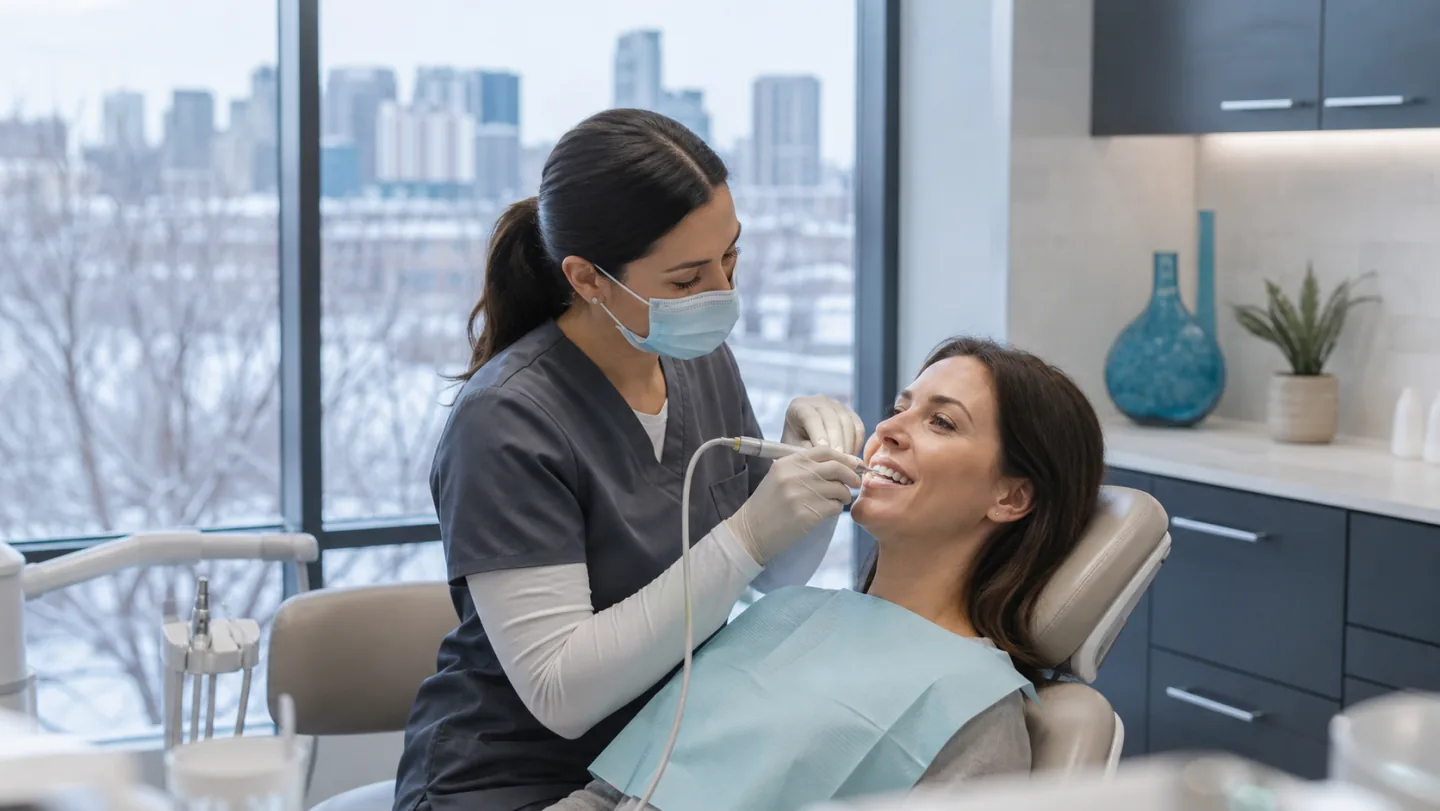
Now you know the steps

Ask for an assessment when you’re ready.

Request a visit to our Winnipeg clinic and the team will reply to arrange the details. You can always call instead.

Patient testimonials

Kind words from our patients

★★★★★ 5.0 from 440+ reviews on Google

Close to home

Areas we serve

Convenient dental care on McPhillips Street for families across northwest Winnipeg and nearby communities.

Explore all service areas

A healthier smile is one visit away

Ready for dental care that feels genuinely comfortable?

✓ New patients welcome ✓ Direct insurance billing ✓ Multilingual team

How can we help?

Our dental team is here for you.

Ready to book or have a question? Choose the option that works best for you.

For urgent dental concerns, please call us directly.

Send us a message

Our team will reply during clinic hours.


