Skip to content
Winnipeg North Dental
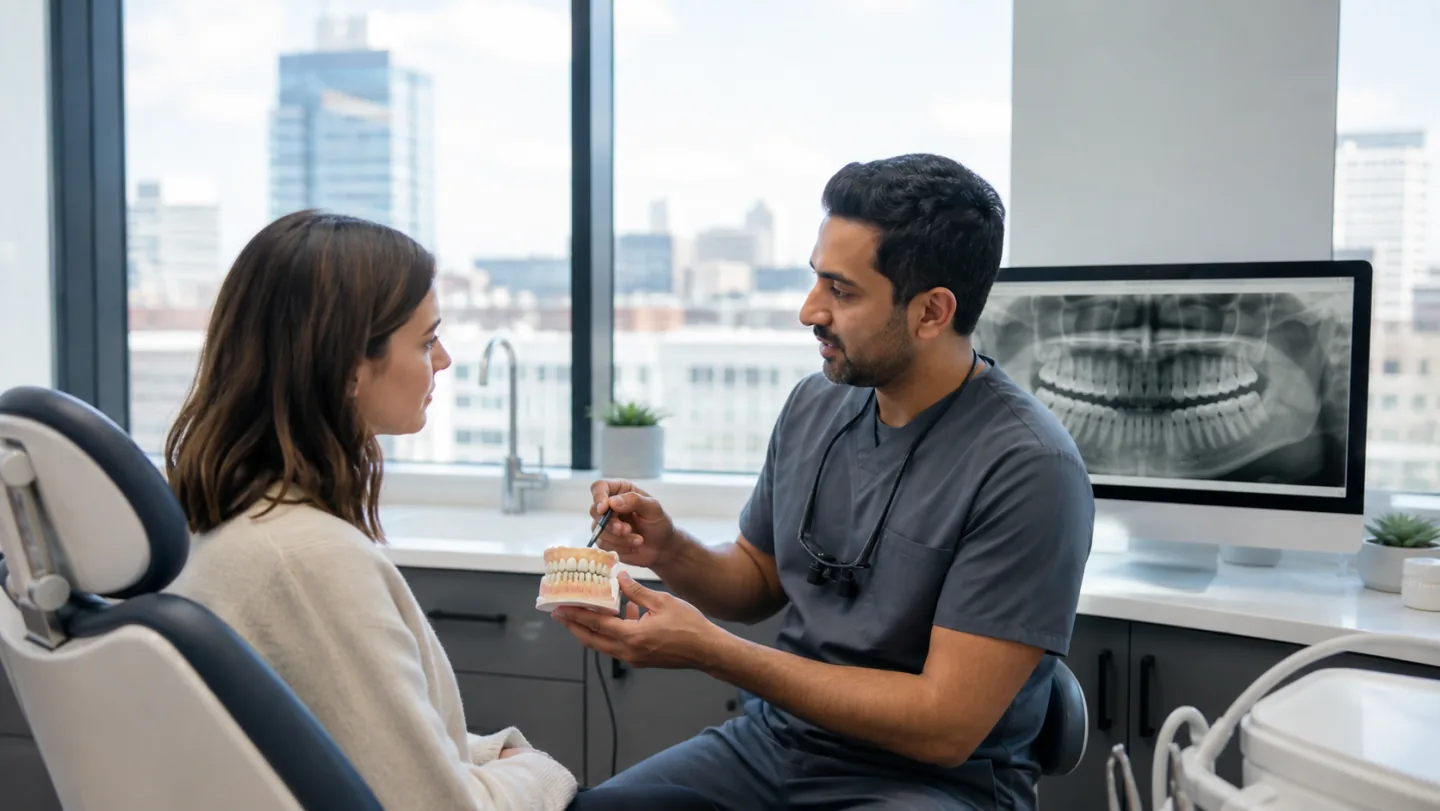
A dentist discussing an X-ray and tooth model before a possible extraction
A tooth with dental work on it

Tooth Extractions for Old Kildonan Residents

You may have invested time and money in a crown, root canal or bridge. Hearing that the tooth beneath it is failing can be discouraging, so let’s go through what happens now.

Let's find a time

Request an appointment

We’ll call to confirm your appointment. For urgent care, please call us directly.

When old work gives out

When a Crowned or Restored Tooth Fails: For Old Kildonan Patients

Dental work does not last forever, and the tooth underneath keeps aging too. Crowns can loosen, decay can start at the edges of old restorations, and cracks can develop where they cannot be seen. If you live in Old Kildonan and a tooth with a lot of history has begun causing problems, you are likely asking whether it can be redone.

It sometimes can. At Winnipeg North Dental, on McPhillips Street in Winnipeg, your dentist looks at what remains under the existing work, the support around the root and how the tooth fits with your bite. Removal may come up if restoring it again would not be predictable, or if the tooth no longer fits your broader treatment plan.

Explore tooth extractions
Dental operatory with a teal chair and wood-toned storage at Winnipeg North Dental
Operatory with a teal chair and wood-toned storage.

Look beneath the surface

A crown can look fine from the outside while the tooth under it has a problem.

Ask about redoing it

Whether another restoration is sensible is one of the first things to find out.

Neighbouring work matters

If the tooth supports a bridge or partial denture, removing it can affect more than that one spot.

Sorting out the problem

Is it the restoration or the tooth?

A failed crown or filling does not automatically mean a failed tooth. The examination and X-ray help separate a problem with the dental work itself from a problem with what is underneath.

When the work can be replaced

A new restoration may be an option if the tooth below it remains in good enough shape.

  • A sound base of healthy tooth under the old crown or filling.
  • Good gum and bone support around the root.
  • No crack extending into an area beyond repair.

When the tooth itself has failed

Replacing the restoration will not help if the foundation no longer offers predictable support.

  • New decay leaving too little structure to rebuild on.
  • A deep fracture running beneath the gumline.
  • Infection that cannot be predictably retreated.

Teeth with crowns or root canals can be more complicated to remove, and sectioning or a small incision may be needed. Ask how your tooth’s history could affect the approach.

How the removal goes

A familiar process, adjusted to a restored tooth.

An extraction runs through the same overall stages even when the tooth has been heavily treated. The details depend on its position, roots, surrounding bone and what the X-ray shows.

Request your visit
  1. 01

    Sit down with the details

    Your health history, medications, allergies and X-rays are confirmed, and your dentist verifies which restored tooth is being removed.

  2. 02

    Comfort first

    Local anesthetic is used to numb the area. Once it has taken effect, your comfort is checked, and only then does the work proceed.

  3. 03

    Removing tooth and restoration

    The dentist works the tooth loose and takes it out, using sectioning or a small incision if a simple approach will not do the job.

  4. 04

    Protecting the site

    The socket is cleaned and the bleeding managed with gauze, or sutures when appropriate. Your written directions cover healing, eating, discomfort and symptoms to call about.

Bringing the history along

Past treatment is part of this tooth’s record.

Your memory of what was done, and roughly when, can add useful context. If earlier work was done at another office, you can ask about having records transferred.

A crown that has come off, or a tooth that is suddenly painful, may not be able to wait for a routine visit. Phone the clinic to explain what has happened.

Details that may help

  • Roughly when the crown, root canal or bridge was placed.
  • The office where it was done, if the records may be needed.
  • A crown or other piece that has come off, along with any questions about it.
  • Whether the tooth supports a bridge or partial denture.
  • Your up-to-date medication and allergy information.
Two framed abstract paintings above a bench in the Winnipeg North Dental waiting room
Front desk with an orchid and a small succulent at Winnipeg North Dental

Framed paintings above a waiting room bench.

A discouraging moment

It is frustrating to lose work you paid for.

Being disappointed when dental work has reached the end of its life is natural. Feel free to say so, and ask why things changed and what might make the next plan hold up well.

Ask what went wrong

Understanding why the tooth failed can help you when you talk about what should come next.

See the difference

Ask your dentist to show you on the X-ray where the old work ends and the problem begins.

Mention a sensitive area

Old restorations sometimes have tender surroundings, so point these out before the freezing is given.

The socket, and everything around it

Look after what your other dental work needs.

Stick to your written instructions, since healing depends on the procedure and on your health. A little tenderness, swelling or oozing is possible, and any change should be for the better.

01

Keep clear of the site

Do not use straws, smoke, vape or spit hard for the period discussed, and chew away from the healing area.

02

Clean around other restorations

Keep up with hygiene around your remaining crowns and fillings, without directly disturbing the healing socket early on.

03

Reasons to check in

Call about bleeding that will not settle with directed pressure or pain that becomes much worse after a few days. Rising swelling, fever, drainage and a bad taste also warrant a call.

Any difficulty breathing or swallowing means you should seek emergency medical care straight away.

Talk with our team
Exterior of Winnipeg North Dental with blue-grey siding and a white sign panel

Winnipeg North Dental

Unit-5 2358 Mcphillips Street, Winnipeg, MB R2V 4J6
Get directions (opens in a new tab)
Where we will review your tooth

Old Kildonan Residents Are Welcome at Our Winnipeg Clinic

Winnipeg North Dental is at Unit 5, 2358 McPhillips Street, Winnipeg, and that is where the assessment and any extraction take place. The directions link is below for your convenience.

A form request is not a booked visit, and the clinic will reply to work out timing. A sudden problem with a tooth or crown is better handled with a phone call.

Questions about coverage?

Talk with our team before your visit or learn about CDCP.

A little clarity before your visit

Your questions, answered.

Helpful details about tooth extractions in Old Kildonan.

Ask our team
How can someone in Old Kildonan get a failing crown looked at?

Call (204) 338-3003 or send the form, and let the clinic know what is going on with the crown. Your visit would take place at Unit 5, 2358 McPhillips Street, Winnipeg, MB R2V 4J6.

Can a tooth be removed if it has a crown on it?

Yes, it can. Your dentist reviews the tooth and X-ray to plan the approach, and in some cases the tooth needs to be sectioned or requires a small incision.

My root canal tooth has cracked. Is it worth saving?

It depends on where the crack runs and how much structure remains. An examination can show whether a restoration could still be predictable, and your dentist can explain the reasoning.

What happens to my bridge if a support tooth is removed?

The bridge relies on that tooth, so the plan may need to change. Ask your dentist what replacing or redesigning the restoration would involve, and go over your options before treatment.

My crown came off. Should I glue it back on?

Call the clinic and describe what happened rather than deciding on your own. Keep the crown and bring it with you if you are asked to come in.

Can the new replacement be matched to my other dental work?

Ask about appearance as part of the planning conversation. What is possible depends on the option you choose and on the rest of your mouth.

Find out what can be redone

Have that restored tooth reassessed.

Send a request describing the dental work involved, and our clinic in Winnipeg will contact you to arrange a visit.

Patient testimonials

Kind words from our patients

★★★★★ 5.0 from 440+ reviews on Google

Close to home

Areas we serve

Convenient dental care on McPhillips Street for families across northwest Winnipeg and nearby communities.

Explore all service areas

A healthier smile is one visit away

Ready for dental care that feels genuinely comfortable?

✓ New patients welcome ✓ Direct insurance billing ✓ Multilingual team

How can we help?

Our dental team is here for you.

Ready to book or have a question? Choose the option that works best for you.

For urgent dental concerns, please call us directly.

Send us a message

Our team will reply during clinic hours.



