Skip to content
Winnipeg North Dental
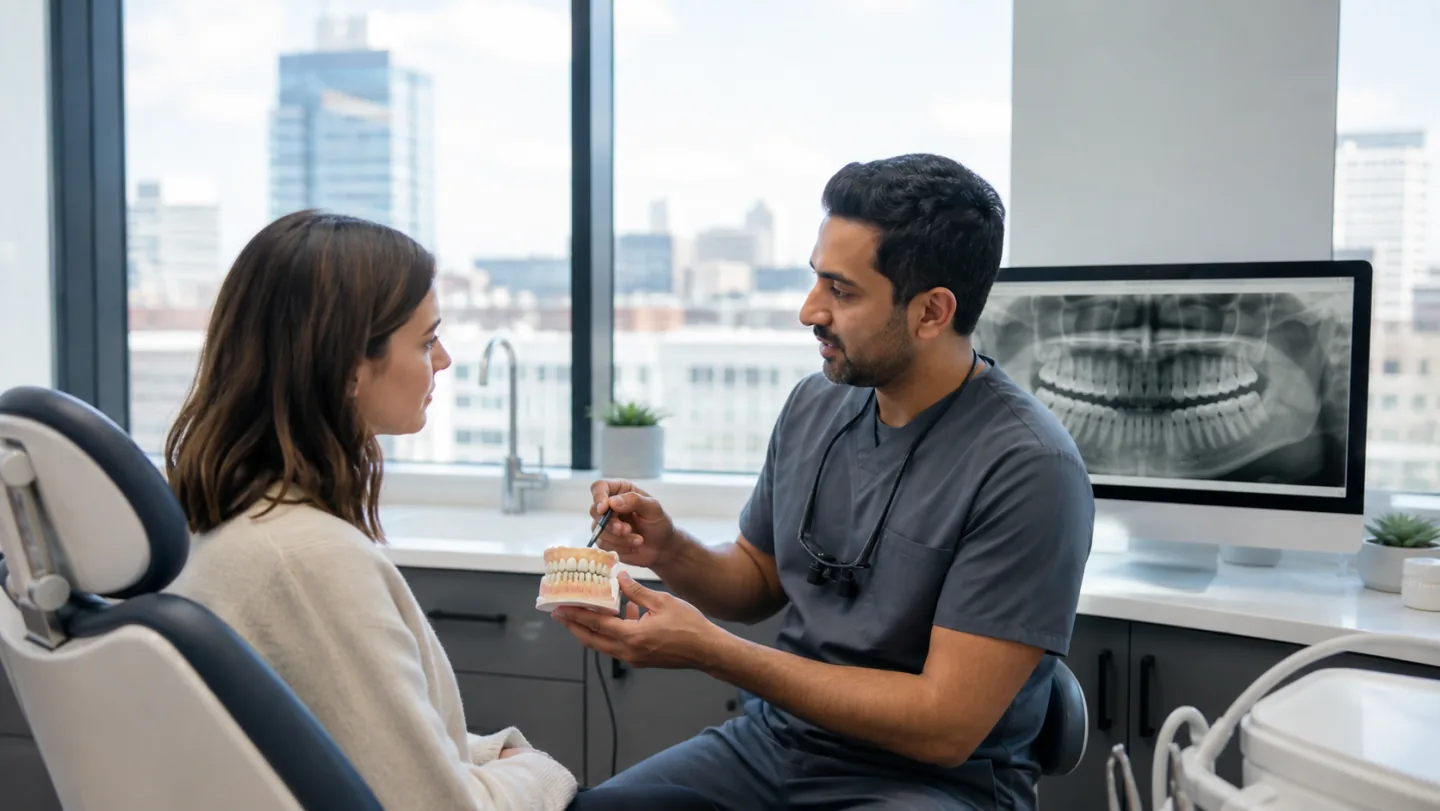
A dentist discussing an X-ray and tooth model before a possible extraction
A tooth you have been watching

Tooth Extractions for Highland Pointe Residents

For a while, keeping an eye on this tooth made sense. If something has shifted, the question may now be whether watching is still a sound choice, and we can look at that with you on McPhillips Street.

Let's find a time

Request an appointment

We’ll call to confirm your appointment. For urgent care, please call us directly.

When wait-and-see changes

From Monitoring to Extraction: Highland Pointe Patients

Monitoring is a legitimate plan when a finding stays stable and does not carry unacceptable risk. Its whole purpose is to catch change, though, so a tooth that has started to act differently is worth having examined rather than left for another round of waiting.

New symptoms do not automatically mean the tooth must go. Fresh findings get set against the earlier ones, and repair, root canal therapy and continued monitoring all stay in the discussion. Removal is advised when none of them looks dependable for this tooth.

Explore tooth extractions
Dental chair and wall monitor in a treatment room at Winnipeg North Dental
Wall monitor above wooden cabinets in a treatment room.

Then compared with now

Anything you have noticed since the tooth was last checked becomes useful evidence in the assessment.

Every path still reviewed

Restoring, treating the inside, continuing to watch and extracting are compared on what the tooth shows today.

A decision you understand

You hear why the outlook has or has not changed, so you are not simply handed a new recommendation.

What shifts the balance

Signs a watched tooth is telling you something.

No single symptom settles the matter. Your dentist weighs what you describe alongside what can be measured and seen, including the X-ray.

Changes you might notice

These are reasons to get the tooth looked at, not a diagnosis. Several can have more than one explanation.

  • Soreness that was not there during the last check.
  • A bad taste or drainage coming from around the tooth.
  • Movement in a tooth that used to feel firm.
  • A chip or crack that has appeared since your last appointment.

Factors your dentist reviews

Being technically treatable is not the same as having a reliable future, so the assessment reaches beyond the immediate complaint.

  • How much of the tooth’s structure is still sound.
  • The condition of the gum and bone supporting it.
  • Whether a crack or infection affects its long-term outlook.
  • Bite forces, along with your own goals for treatment.

Depending on the results, a tooth could go back to being monitored or move toward treatment. Removal is only one of the possible conclusions.

Revisiting the plan

How a reassessment leads to a decision.

If extraction turns out to be the sensible next step, it follows this general order. Should the tooth be kept, you will discuss whichever care applies instead.

Request your visit
  1. 01

    Sharing what has changed

    Describe when you first noticed the difference and what seems to bring it on. Any change in your health or medications belongs in that conversation too.

  2. 02

    Taking a fresh look

    The tooth is examined and an X-ray reviewed. From there, you can talk over whether the earlier plan still holds up.

  3. 03

    Removing the tooth, if chosen

    Once local anesthetic has taken effect and comfort is confirmed, the tooth is loosened and taken out. Certain teeth also need a small incision or to be sectioned.

  4. 04

    Protecting the site

    Cleaning and bleeding control come next, using gauze or sutures where they fit. Written recovery instructions go home with you, including when to get in touch.

Build the timeline

Your memory of this tooth is useful.

You have been living with this tooth and may have noticed patterns that a single examination cannot show. A few rough notes can turn a vague sense of change into something your dentist can use.

Anything you cannot recall exactly is fine to leave out. If a previous clinic did the monitoring, ask about having your earlier records or X-rays sent over.

Notes on the tooth’s history

  • Roughly when the tooth began to feel or look different.
  • Foods, temperatures or pressure that set it off.
  • Past treatment on that tooth, as far as you remember it.
  • Everything you currently take, plus any drug allergies.
Consultation room with a desk and a window at Winnipeg North Dental
Reception counter and wood floor at Winnipeg North Dental

Desk beside a bright window, and a white front counter with plants.

Living with uncertainty

Waiting on a tooth can wear on you.

Wondering whether a tooth will become a problem takes up more room than people expect. Getting a clear reading can be a relief, even when the news is not what you hoped for, and you will not be hurried through hearing it.

Let your disappointment show

You may have hoped this tooth would last, and it is reasonable to say so during the discussion.

Ask for the reasoning again

If an explanation does not sink in the first time, ask to hear it once more in different words.

Numbing comes before removal

Should you go ahead, local anesthetic is used and your comfort is checked before anything further happens.

If the tooth comes out

Watching for a different reason now.

You already know how to keep an eye on something. After an extraction, what you are tracking is whether healing keeps moving the right way. Some soreness, swelling and minor oozing can occur, and your written instructions set out what to do.

01

Early care of the socket

Bite on gauze the way you were shown, and leave the clot alone by avoiding straws, smoke, vaping and hard spitting for as long as advised.

02

A change in direction

Pain that gets markedly worse after a few days, rising swelling, fever, drainage or a foul taste are reasons to phone the clinic.

03

The future of the space

Filling the gap is not always necessary, though it should still be thought through. Your bite, the teeth remaining and your priorities all shape that answer.

If breathing or swallowing becomes difficult, get emergency medical care without delay.

Talk with our team
Exterior of the Winnipeg North Dental clinic on McPhillips Street

Winnipeg North Dental

Unit-5 2358 Mcphillips Street, Winnipeg, MB R2V 4J6
Get directions (opens in a new tab)
Getting the tooth rechecked

Where Highland Pointe Residents Are Seen

Highland Pointe lies within Winnipeg. An assessment or extraction for its residents takes place at Winnipeg North Dental, Unit 5, 2358 McPhillips Street, Winnipeg, MB R2V 4J6.

Use the form to request a time, then watch for the clinic’s reply confirming it. Prefer to talk it through? Call (204) 338-3003.

Questions about coverage?

Talk with our team before your visit or learn about CDCP.

A little clarity before your visit

Your questions, answered.

Helpful details about tooth extractions in Highland Pointe.

Ask our team
Can a tooth safely stay under observation for good?

That depends on what is being observed. Some stable findings can be watched without much concern, but a dentist would reconsider if the tooth changes or the risk of leaving it grows.

The ache comes and goes. Should I still have it looked at?

Yes, because pain that comes and goes is still a change worth reporting on a tooth that was being followed. Mention how often it happens and what seems to trigger it.

Did waiting make things worse?

Monitoring is a recognized choice for stable findings, not a mistake on your part. What matters now is what the tooth shows today, and your dentist can explain how that affects your options.

Could I go back to monitoring after this assessment?

Possibly, if the findings remain stable and leaving the tooth does not carry unacceptable risk. If that is not the case, you will hear why and which treatment is being suggested.

How might a filling or crown fit in at this stage?

Either could repair the tooth when it still has enough support. Should too little healthy structure remain, a restoration may not be predictable, and that is when other options come forward.

What will recovery be like if it does have to come out?

Expect the gum to mend across days to weeks, with deeper changes in the socket and bone taking longer. The type of removal and your general health play a part, and smoking can too.

I live in Highland Pointe. How do I get this tooth reassessed?

Send a request through this page or phone (204) 338-3003, and mention that the tooth has been monitored. For sudden or severe trouble, please phone rather than use the form.

Find out where it stands

Get a current answer about that tooth.

Highland Pointe residents can ask for a reassessment at our Winnipeg clinic. We will reply to arrange a time.

Patient testimonials

Kind words from our patients

★★★★★ 5.0 from 440+ reviews on Google

Close to home

Areas we serve

Convenient dental care on McPhillips Street for families across northwest Winnipeg and nearby communities.

Explore all service areas

A healthier smile is one visit away

Ready for dental care that feels genuinely comfortable?

✓ New patients welcome ✓ Direct insurance billing ✓ Multilingual team

How can we help?

Our dental team is here for you.

Ready to book or have a question? Choose the option that works best for you.

For urgent dental concerns, please call us directly.

Send us a message

Our team will reply during clinic hours.



