Skip to content
Winnipeg North Dental
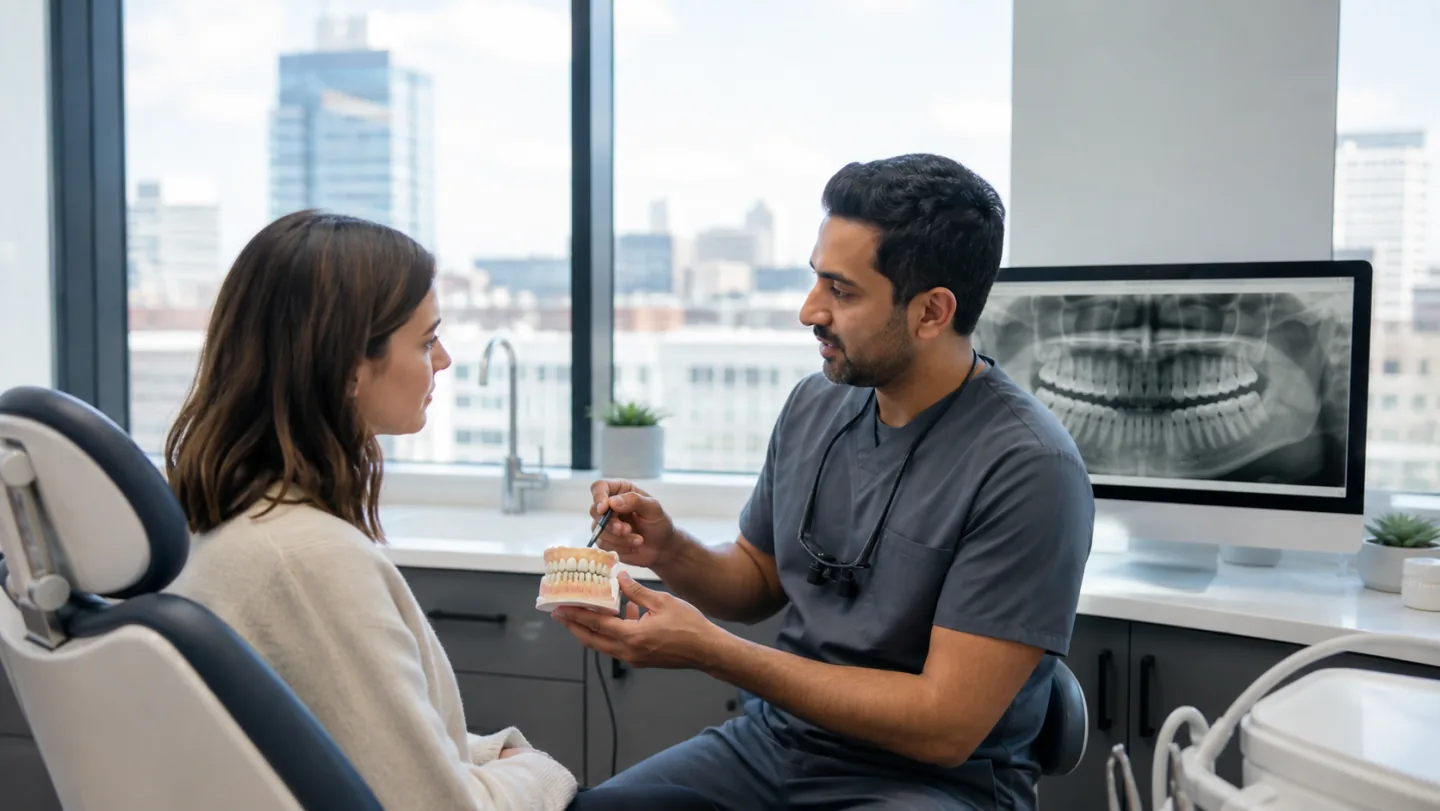
A dentist discussing an X-ray and tooth model before a possible extraction
The words, explained

Tooth Extractions for Brooklands Residents

Dental language can make a routine discussion sound alarming. Learn what the common extraction terms mean, so you can follow along and ask better questions.

Let's find a time

Request an appointment

We’ll call to confirm your appointment. For urgent care, please call us directly.

A plain-language guide

Extraction Terms in Everyday Language

Words like sectioning, socket and pulp can land heavily when you are hearing them for the first time. Maybe you have never had a tooth removed, or English is not the language you usually use for medical conversations. Either way, nothing about your care should go over your head.

At Winnipeg North Dental, the McPhillips Street clinic in Winnipeg where Brooklands residents are seen, you are welcome to stop and ask what a word means. An examination and X-ray come first, and we try to preserve natural teeth whenever we can do so predictably. This page can get you familiar with the vocabulary beforehand.

Explore tooth extractions
Dental treatment room with a chair, sink and wall-mounted screen at Winnipeg North Dental
Chair, sink and wall-mounted screen in a clinic treatment room.

Ask what a word means

Interrupting is fine. A clear explanation matters more than getting through the conversation quickly.

Instructions on paper

You can reread your written aftercare at home, and look up anything that was unclear.

Choices spelled out

Restoring, monitoring and extracting are explained in terms you can weigh yourself.

A short glossary

Terms you may hear before and during treatment.

You do not have to memorize any of this. Think of it as a reference you can return to, with your dentist on hand to explain how each one applies to you.

Words about the tooth

These describe why the tooth is in trouble and what might be done about it.

  • Pulp: the soft inner tissue of a tooth, which can become inflamed or infected.
  • Prognosis: how well a tooth is expected to do over the long term.
  • Restorable: enough of the tooth remains to repair it predictably.

Words about the procedure

These tell you how the removal will be carried out, and most sound worse than they are.

  • Local anesthetic: medicine that numbs just the area being treated.
  • Sectioning: dividing a tooth so it can be removed piece by piece.
  • Surgical extraction: an approach that may use a small incision or remove a little bone.

If you hear a term that is not on this list, please ask. It is your mouth, and you should understand what is being said about it.

Putting the words to use

The appointment, described without the jargon.

How your tooth comes out depends on where it sits, how its roots are shaped, the bone around it and how much of it shows above the gum.

Request your visit
  1. 01

    We double-check

    Your medical background, any allergies, the pills you take, your X-ray and the correct tooth are all confirmed.

  2. 02

    We numb the spot

    Anesthetic stops sharp pain in that area, and we ask how you feel before going ahead.

  3. 03

    We take out the tooth

    It gets rocked loose and lifted free. Certain teeth need a small cut in the gum, or to be split into parts.

  4. 04

    We finish and explain

    Once the socket has been cleaned and bleeding has slowed, gauze or stitches go in as needed, and your aftercare is explained in plain terms.

Getting your questions ready

Note any word or idea you are unsure of.

A letter or treatment estimate may include terms you have not come across. Bring them with you and circle whatever does not make sense, so nothing stays unclear.

Estimate is another word worth asking about, since it is not a final figure. Bring your insurance or CDCP information, as the actual amount depends on your plan and what is done.

Bring along

  • Any dental paperwork containing words you would like explained.
  • The names of your medications, written down or in their packaging.
  • A list of allergies and medical conditions.
  • Your own questions, in the language that comes easiest to write them.
Quiet room with a desk, keyboard and landscape painting at Winnipeg North Dental
Front counter with a glass divider and plants at Winnipeg North Dental

Desk and painting in a private room, and our front counter with its glass divider.

Asking without embarrassment

No question is too basic.

Many people nod when they are confused, because they do not want to take up time. Please do not hold back here. If an explanation did not make sense, it is reasonable to ask for it another way.

Request simpler words

Say that you would like it explained without the dental terms, and try repeating it back in your own words.

Look at a picture

Ask to see the problem on your X-ray, since a visual often does more than a definition.

Tell us what you feel

Pressure means pushing without sharp pain. If you are feeling something beyond that, your dentist needs to know right away.

Words for the days after

Aftercare terms that are helpful to know.

Healing has its own vocabulary too. Knowing these three ideas makes your written instructions easier to follow, and helps you describe things if you need to call.

01

Socket and clot

The socket is the empty space the tooth leaves behind. A blood clot forms inside and shields it, so leave it alone.

02

Oozing

This means a small, slow amount of bleeding, and some can occur. Steady bleeding that will not settle with directed pressure is a different matter.

03

Dry socket

This is a painful inflammation that can develop when the clot is lost or breaks down. Pain that worsens after a few days is your signal to call.

Drainage means fluid coming from the area. Tell the clinic about that, or about increasing swelling, fever, a bad taste, numbness outside the expected course, or heavier pain or bleeding. Difficulty breathing or swallowing requires emergency medical care.

Talk with our team
Winnipeg North Dental clinic with phone number displayed above the entrance

Winnipeg North Dental

Unit-5 2358 Mcphillips Street, Winnipeg, MB R2V 4J6
Get directions (opens in a new tab)
The clinic’s address

Brooklands Residents Are Seen on McPhillips Street

Brooklands is in Winnipeg. For your assessment or extraction, you would come to Winnipeg North Dental, Unit 5, 2358 McPhillips Street. A directions link is provided here for planning your trip.

After you send a request, you will need confirmation from the clinic before a time is yours. To talk about something urgent, dial (204) 338-3003 rather than using the form.

Questions about coverage?

Talk with our team before your visit or learn about CDCP.

A little clarity before your visit

Your questions, answered.

Helpful details about tooth extractions in Brooklands.

Ask our team
What is the difference between a simple and a surgical extraction?

In a simple removal, the tooth is loosened and taken out. Surgical means a small incision, some bone removal or sectioning may be needed, typically because the simple way would not be predictable.

What does freezing mean?

It is the everyday term for local anesthetic, which numbs the tooth and the area around it. You still feel pressure and movement, though sharp pain should not come through.

What are sutures, and are they painful?

Sutures are stitches placed in the gum to help protect the area, and they are used only when appropriate. You will be numb when they go in, and your instructions will explain how to care for them.

My paperwork says poor prognosis. Does that mean it must come out?

It means the tooth’s long-term outlook is uncertain or unfavourable, but it is not a decision in itself. Ask what is causing that outlook and which alternatives have been considered.

What is a partial denture?

It is a removable appliance that replaces one or more missing teeth, and it is supported by remaining teeth and oral tissues. Ask your dentist how it compares with a bridge or an implant for your mouth.

If I live in Brooklands, how do I set up a visit?

You may send us the online request or call (204) 338-3003, and add a note if you would like terms explained slowly. Your visit would be at our McPhillips Street clinic, once it has been confirmed.

Ask us anything

Bring your questions, in your own words.

Brooklands residents can request a visit at our Winnipeg clinic, and the clinic will contact you to arrange the appointment.

Patient testimonials

Kind words from our patients

★★★★★ 5.0 from 440+ reviews on Google

Close to home

Areas we serve

Convenient dental care on McPhillips Street for families across northwest Winnipeg and nearby communities.

Explore all service areas

A healthier smile is one visit away

Ready for dental care that feels genuinely comfortable?

✓ New patients welcome ✓ Direct insurance billing ✓ Multilingual team

How can we help?

Our dental team is here for you.

Ready to book or have a question? Choose the option that works best for you.

For urgent dental concerns, please call us directly.

Send us a message

Our team will reply during clinic hours.



