Skip to content
Winnipeg North Dental
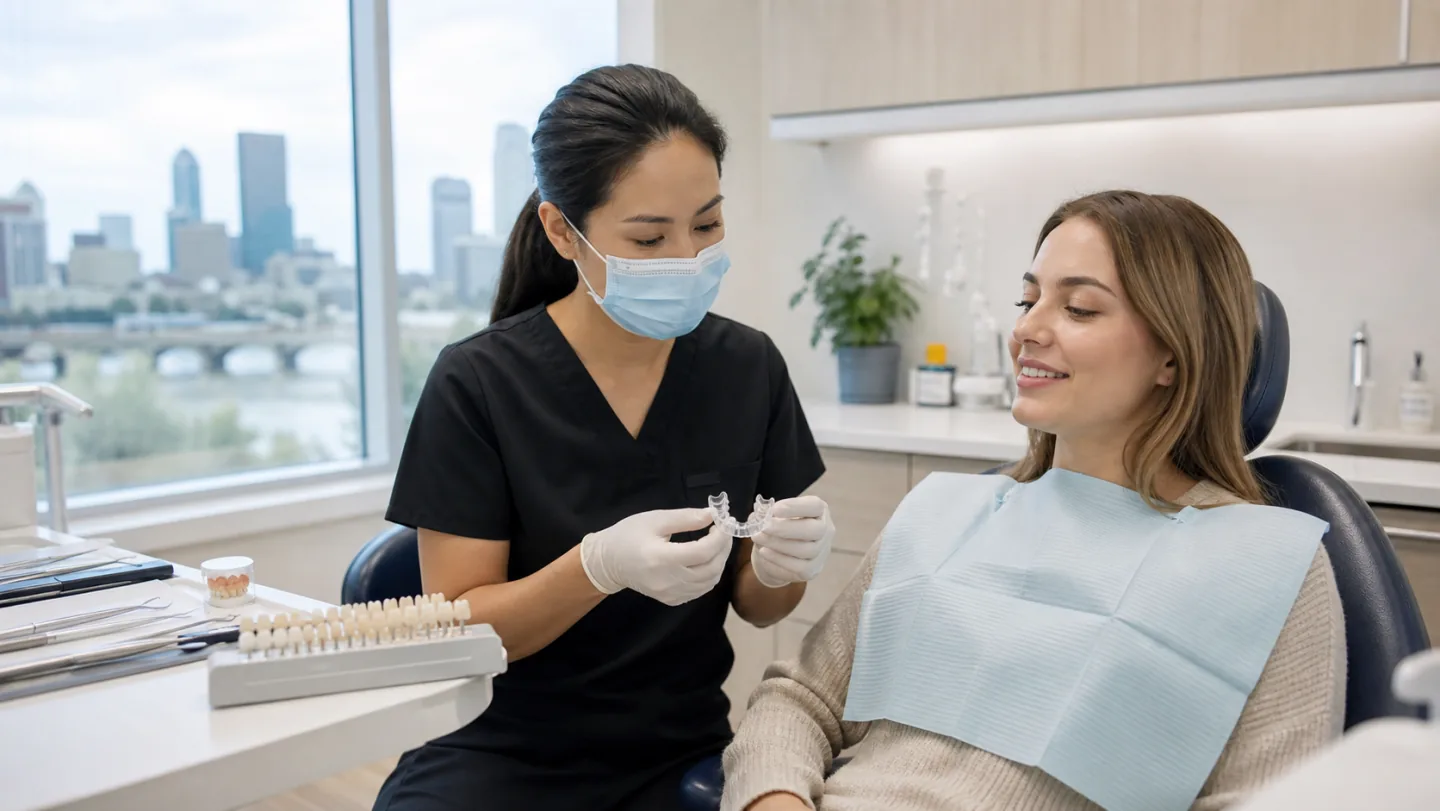
A dental professional preparing a custom whitening tray for a patient
Yellow, grey, brown, or hard to name?

Teeth Whitening for Aurora Residents

People often struggle to describe exactly what is wrong with their tooth colour. Starting with your own words, an assessment at our McPhillips Street clinic looks for what is behind the shade you see.

Let's find a time

Request an appointment

We’ll call to confirm your appointment. For urgent care, please call us directly.

Putting a name on it

Making Sense of Your Colour, Aurora

“Yellow” is the word most people reach for, yet it may not quite fit what you see. Your teeth may seem greyish, brownish, or just flat, and online advice rarely helps you tell one from another. Whatever word you land on, it gives the dentist an opening for a proper look, and Aurora residents have that look at our clinic on McPhillips Street in Winnipeg.

The tint alone does not settle anything. What matters is where the colour sits and what caused it, as peroxide-based gel responds to some sources better than others. Identifying this is the reason an examination happens before a whitening system is ever recommended.

Explore teeth whitening
Reception desk with an orchid and a glass divider against a blue wall at Winnipeg North Dental
An orchid on the reception counter, with a blue wall behind it.

Your description is useful

No technical vocabulary is required, since plain words about what you notice give the dentist a place to begin.

Cause outranks tint

Identifying the source of a colour tells you more than its name, and points toward care that may actually help.

Health stays in the picture

Colour may be cosmetic or it may hint at a dental problem, so both possibilities get considered.

Where a colour might begin

Sources worth separating before any gel.

A shade is the visible end of something else. Below is how colour concerns are commonly sorted, and why a tooth that looks unusual to you may be handled differently from general darkening.

Colour that may respond

Natural enamel and dentin can lighten with peroxide, depending on the circumstances.

  • Darkening associated with age.
  • Pigments left behind by foods and beverages.
  • Some staining related to tobacco.
  • A portion of internal discolouration.

Colour that calls for something else

Certain findings need cleaning, a restoration, or a separate diagnosis, and gel alone would be the wrong tool.

  • Deposits of plaque that dull the enamel surface.
  • Fillings, bonding, crowns, or veneers that have changed how they look against neighbouring teeth.
  • A single tooth that has darkened after an injury or from decay.
  • Shadows from a large restoration or from changes inside a tooth.

If your colour is likely to respond, you may hear about whitening in the clinic, custom trays at home, or the two together.

From description to diagnosis

How your concern gets sorted out.

Nobody expects you to diagnose yourself by the name of a colour. The appointment takes what you see and places it next to what can be found through examination.

Request your visit
  1. 01

    Describe it in your words

    Say what stands out, how long you have noticed it, and whether it affects your whole smile or just some teeth.

  2. 02

    Allow a thorough check

    Cavities, cracks, recession, inflammation, and failing restorations can all alter appearance and may need care first.

  3. 03

    See your shade noted

    A baseline goes on record, giving the conversation about realistic change a firm starting point.

  4. 04

    Learn what explains it

    You hear which explanation seems most likely, and whether whitening, a cleaning, or something else is appropriate.

Looking closely at home

Study your teeth in good light for a minute.

A short observation can sharpen your description. You do not need to reach any conclusions, as noticing a pattern is more than enough to help the appointment along.

Please do not try to test or scrape away a discoloured area yourself. Just tell us where it is.

What to observe

  • Whether the colour is even, or strongest near the gums or edges.
  • Which teeth look most affected, particularly if only one stands out.
  • Any fillings or crowns located close to the area that bothers you.
  • Whether the change appeared slowly or seemed to happen after an injury.
Bright waiting area with framed abstract art and a large window at Winnipeg North Dental
Curved white equipment arm in front of a teal treatment chair at Winnipeg North Dental

Blue-toned paintings in the waiting area, and a teal treatment chair.

Should you go ahead

Understand how whitening may feel.

Temporary sensitivity is a common part of whitening, and it deserves attention rather than alarm. Exposed roots and prior reactions are among the details that a dentist considers while planning.

A slower protocol, perhaps

Lower-strength or more gradual whitening may feel easier, where your assessment suggests that it is suitable.

Protection during treatment

During in-office whitening, your gums and soft tissues are shielded before gel is applied to the teeth.

Pain worth reporting

Anything sharp, or anything that refuses to fade, should be passed on to the clinic rather than endured.

Keeping an eye on things

Note how your colour behaves over time.

Once the source of your colour is understood, you can watch for changes more knowledgeably. Whitening is not permanent, and new discolouration should not automatically be chalked up to fading.

01

General fading is expected

A gradual, overall return of colour is typically connected to diet, tobacco, plaque, and natural aging.

02

Isolated change is different

If one tooth shifts while its neighbours stay the same, have it looked at, whether or not you whitened.

03

Plan shade-matching carefully

Where new restorations are expected, ask about waiting until your whitened colour settles before anything is matched.

A regular check-up gives you a natural moment to mention any colour change you have spotted.

Talk with our team
Dark-sided Winnipeg North Dental storefront with a white sign and tall windows

Winnipeg North Dental

Unit-5 2358 Mcphillips Street, Winnipeg, MB R2V 4J6
Get directions (opens in a new tab)
Where care happens

Aurora Patients Come to McPhillips Street

Your assessment is at Winnipeg North Dental, Unit 5, 2358 McPhillips Street, Winnipeg. In your request, mention the colour concern in whatever words feel accurate.

Reach the clinic on (204) 338-3003, or send this page’s form. Sending it does not lock in a time, as that is agreed when the clinic answers you.

Questions about coverage?

Talk with our team before your visit or learn about CDCP.

A little clarity before your visit

Your questions, answered.

Helpful details about teeth whitening in Aurora.

Ask our team
Does the exact colour of my teeth tell you the cause?

Not on its own. A shade is only one clue among several, along with where it appears, how it developed, and what an examination finds. That is why treatment recommendations come after a look at your teeth.

My teeth seem grey rather than yellow. Can they be whitened?

That depends on the reason for the colour. Whitening is most useful where the source can respond to peroxide, and the dentist can tell you what seems realistic after examining them.

What if brown spots are the thing bothering me?

Have them looked at. A brown area could be surface stain, or it could have a different explanation that calls for care before any cosmetic step is taken, such as decay.

Does whitening work on discolouration inside a tooth?

It can on some internal discolouration. Peroxide-based gel acts within natural tooth structure, although the response varies, and some cases may suggest a restoration or another approach.

Is it silly if I cannot explain what looks wrong?

Not at all. “They just look off” is a perfectly acceptable place to start, and pointing at the teeth in question will usually tell the dentist where to look.

Could my colour be coming from an old filling?

A large or aging restoration can affect how a tooth appears. Restorations do not lighten with gel, so finding one is useful, as it may need separate planning.

Where would Aurora residents go for a colour assessment?

Our clinic is at Unit 5, 2358 McPhillips Street, Winnipeg, MB R2V 4J6. Request a time through this page, or speak with someone at (204) 338-3003.

Whatever you would call it

Find out what is behind that colour.

People in Aurora can describe the colour on this page’s form and ask to have it assessed. Timing gets worked out when the clinic replies.

Patient testimonials

Kind words from our patients

★★★★★ 5.0 from 440+ reviews on Google

Close to home

Areas we serve

Convenient dental care on McPhillips Street for families across northwest Winnipeg and nearby communities.

Explore all service areas

A healthier smile is one visit away

Ready for dental care that feels genuinely comfortable?

✓ New patients welcome ✓ Direct insurance billing ✓ Multilingual team

How can we help?

Our dental team is here for you.

Ready to book or have a question? Choose the option that works best for you.

For urgent dental concerns, please call us directly.

Send us a message

Our team will reply during clinic hours.



