Skip to content
Winnipeg North Dental
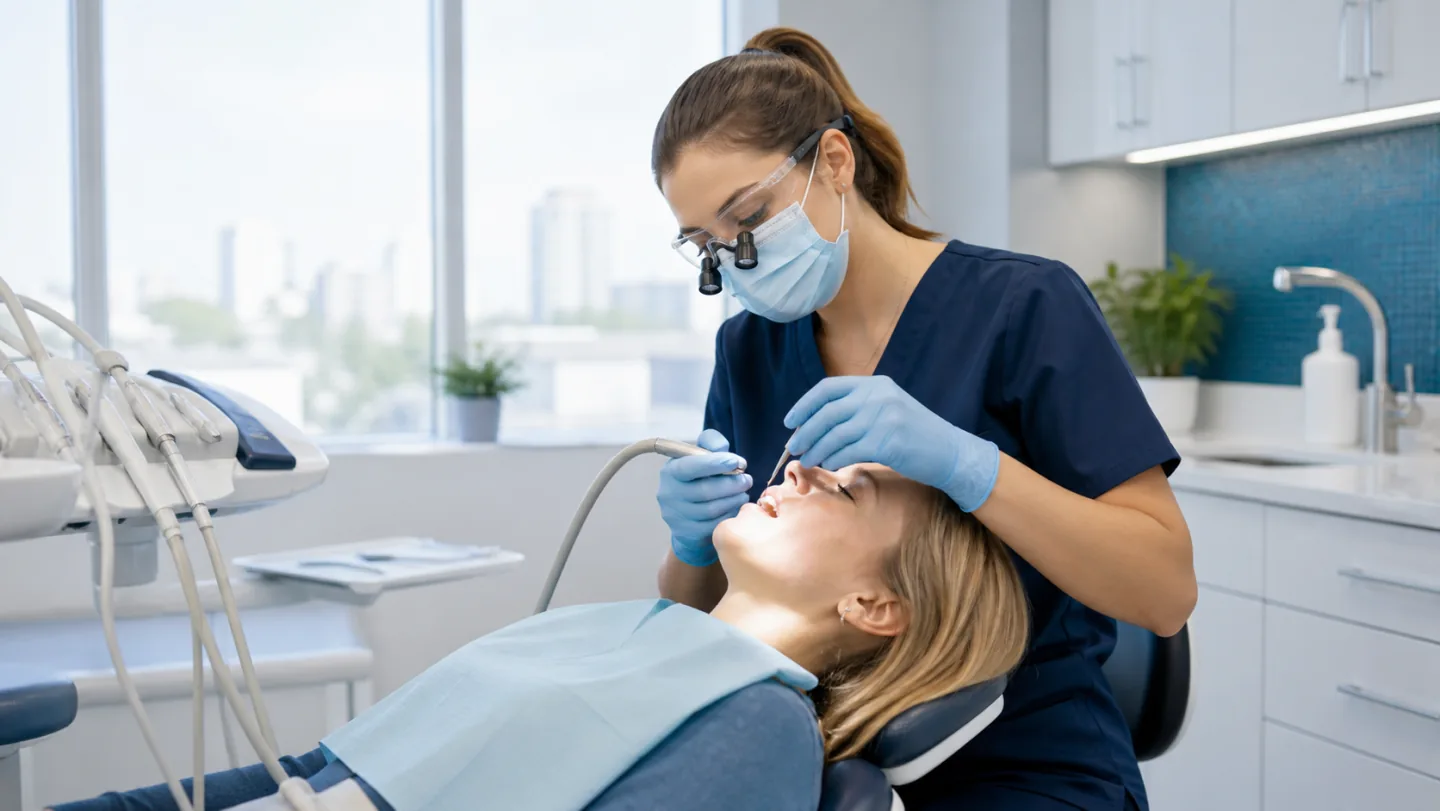
A dental hygienist providing careful deep cleaning below the gumline
A tooth with a little give

Scaling & Root Planning for St. Boniface Residents

Feeling a tooth move under your tongue or fingertip is unsettling. Gum support is one of several things worth checking, and finding out what’s behind it is the sensible first move.

Let's find a time

Request an appointment

We’ll call to confirm your appointment. For urgent care, please call us directly.

Why movement matters

Teeth Rely on What Surrounds Their Roots

A healthy tooth sits firmly because gum attachment and bone hold its root. Periodontitis can wear away some of that support over time, and a tooth that wobbles a little may be one sign of it. Other causes exist too, so a wobble on its own doesn’t confirm gum disease.

For St. Boniface residents, the checking happens at Winnipeg North Dental on McPhillips Street in Winnipeg. Measurements around each tooth, bleeding on gentle probing and dental images of the bone help show whether a deep cleaning below the gumline makes sense for the areas involved.

Explore scaling & root planning
Treatment room with a reclined light blue dental chair and wood cabinetry at Winnipeg North Dental
A reclined light blue chair in a treatment room.

Support is measured

Pocket readings and images give a clearer view of attachment than how a tooth feels to you.

Causes get sorted out

Gum disease is one possibility among several, and the exam is how they’re told apart.

Leave it alone meanwhile

Testing the tooth over and over with your tongue or finger won’t tell you much more.

If gum disease is the reason

Cleaning the roots so the tissue can respond.

When periodontitis is found around the moving tooth or others, scaling and root planing removes plaque, hardened calculus and bacterial deposits from the root surfaces inside the pockets. The aim is cleaner roots and calmer gums, not a tooth that is suddenly rigid again.

What gets cleaned

Specialized instruments reach below the gumline, where routine polishing and home tools can’t go.

  • Deposits are lifted from affected root surfaces.
  • Roots are smoothed carefully, not polished to an unnatural finish.
  • Only the areas identified in your findings are planned for treatment.

What it can and can’t do

Removing the cause of inflammation gives the gums a chance to settle around the roots.

  • Tissue may firm up as swelling goes down.
  • Bone that has already been lost isn’t rebuilt by this cleaning.
  • Your reassessment shows how each site responded.

Whether a moving tooth can be kept, and what care suits it, is something only an assessment can answer for your mouth.

From noticing to knowing

How a loose-feeling tooth gets looked into.

Each step adds information, so the recommendation rests on findings instead of a guess.

Request your visit
  1. 01

    Point out the tooth

    Show which one moves, since when, and whether chewing on it feels different.

  2. 02

    Measure and image

    Pockets are probed gently around your teeth and pictures help reveal the bone level.

  3. 03

    Hear the explanation

    You’re told what the findings suggest and which treatment, if any, is being recommended.

  4. 04

    Clean in sections if needed

    Deep cleaning may be done in one appointment or split by area, usually with local anaesthetic.

Notes worth bringing

Small details about that tooth help.

You don’t need to diagnose anything yourself. A few observations about how the tooth has behaved give the exam a useful head start.

Time and fees depend on how many areas need care, so ask once your findings are known. What a plan covers varies by insurer.

Clues about the wobble

  • When you first noticed the movement and whether it has changed.
  • Any bump, fall or knock to the face you can recall.
  • Bleeding, swelling or a bad taste near that tooth.
  • Whether you clench, grind or wear a night guard.
Consultation room with a white desk, black office chairs and window blinds at Winnipeg North Dental
Reception counter with plants and a blue bench at Winnipeg North Dental

A white desk with black chairs, and the reception counter.

Worry is understandable

A wobbly tooth makes anyone uneasy.

Many people fear the worst the moment a tooth moves. Getting an answer often feels better than guessing, and you can ask as many questions as you need while the findings are explained.

Ask about keeping it

It’s fair to ask directly what the outlook is for that tooth based on your readings.

Freezing for treatment

Local anaesthetic is commonly used so roots can be cleaned thoroughly and calmly.

Go easy on it

Chewing on the other side for now may simply feel better while you wait.

Once the roots are clean

The moving tooth gets a second look.

Tenderness, temperature sensitivity or light bleeding can follow deep cleaning and usually fade as the gums heal. A tooth with reduced support may feel tender to bite on for a while, so softer foods can help.

01

Keep plaque away

Brush and clean between teeth using the method shown for your treated areas, gently but daily.

02

Notice any change

Keep track of whether the tooth feels steadier, the same or looser, and mention it at follow-up.

03

Return for reassessment

Readings are compared with your starting numbers to see which sites are stable.

Call the clinic if bleeding won’t stop, swelling is increasing, pain becomes severe or something doesn’t match your instructions.

Talk with our team
Exterior of Winnipeg North Dental with its sign, phone number and glass entrance

Winnipeg North Dental

Unit-5 2358 Mcphillips Street, Winnipeg, MB R2V 4J6
Get directions (opens in a new tab)
For a St. Boniface exam

Where That Tooth Would Be Checked

Assessment and any deep cleaning take place at Winnipeg North Dental, Unit 5, 2358 McPhillips Street, Winnipeg. St. Boniface is also in Winnipeg, and directions are linked from this section.

Ring (204) 338-3003, or fill in the form on this page. A request isn’t an appointment until the clinic confirms it with you.

Questions about coverage?

Talk with our team before your visit or learn about CDCP.

A little clarity before your visit

Your questions, answered.

Helpful details about scaling & root planning in St. Boniface.

Ask our team
Does a loose tooth always mean gum disease?

No. Gum problems are one possible cause, but others exist. Measurements, bleeding checks and images are used to work out what’s going on.

Can scaling and root planing make a loose tooth firm again?

It can help gums settle by removing deposits from the roots, and tissue may tighten as inflammation eases. Lost bone isn’t replaced, and how a tooth responds varies.

Should I avoid chewing on the tooth that moves?

Favouring the other side may feel more comfortable until it’s checked. If chewing on it hurts, mention that when you book.

What if the loose tooth can’t be saved?

That conversation depends on your findings. Ask what the options would be, and see the pages linked below for related treatments.

Is maintenance still needed after deep cleaning?

Most people treated for periodontitis go on to regular periodontal maintenance so buildup is controlled and changes are noticed early.

How do St. Boniface residents arrange an exam for a loose tooth?

Send a request on this page or call (204) 338-3003 and mention the tooth. The exam itself happens at our McPhillips Street clinic in Winnipeg.

Get it looked at

Find out why the tooth moves.

St. Boniface residents can request an exam at our Winnipeg clinic by phone or online, and the clinic will reply to arrange it.

Patient testimonials

Kind words from our patients

★★★★★ 5.0 from 440+ reviews on Google

Close to home

Areas we serve

Convenient dental care on McPhillips Street for families across northwest Winnipeg and nearby communities.

Explore all service areas

A healthier smile is one visit away

Ready for dental care that feels genuinely comfortable?

✓ New patients welcome ✓ Direct insurance billing ✓ Multilingual team

How can we help?

Our dental team is here for you.

Ready to book or have a question? Choose the option that works best for you.

For urgent dental concerns, please call us directly.

Send us a message

Our team will reply during clinic hours.



