Skip to content
Winnipeg North Dental
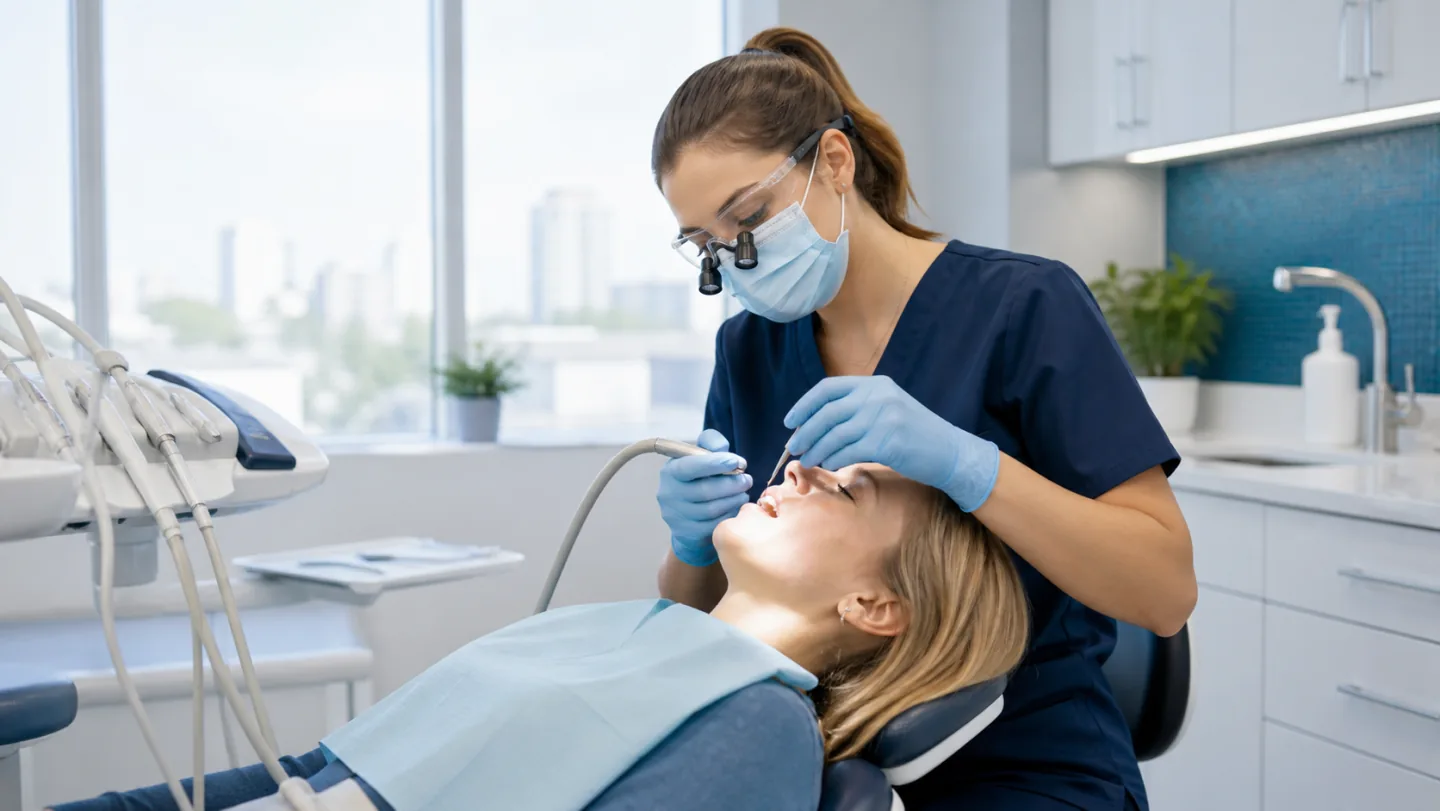
A dental hygienist providing careful deep cleaning below the gumline
Teeth that overlap and crowd together

Scaling & Root Planning for Rivercrest Residents

If floss snags and your brush can’t get between certain teeth, you’ve probably wondered whether your crowding plays a part in your gum problems. Here’s what deep cleaning can do in tight quarters, and what to ask.

Let's find a time

Request an appointment

We’ll call to confirm your appointment. For urgent care, please call us directly.

Tight spaces, tricky cleaning

Gum Treatment Around Crowded Teeth

Overlapping teeth create corners that bristles and floss struggle to get into. Plaque that lingers there can harden over time. Crowding doesn’t automatically mean periodontitis, and plenty of people with crowded teeth don’t have it. It’s simply one more thing to weigh when your gums are measured and your home care is reviewed.

Rivercrest is a community outside the City of Winnipeg, and residents who come in for this care are treated at our McPhillips Street clinic. If periodontitis is diagnosed, scaling and root planing targets the root surfaces in affected pockets. Your cleaning instructions afterward would then need to reflect the shape of your own smile.

Explore scaling & root planning
White desk with a keyboard, leather chairs and a window with shaded blinds at Winnipeg North Dental
A desk with a keyboard in front of a window with shaded blinds.

Hard-to-reach is worth noting

Point out the teeth you can’t clean well, since this helps your clinician understand your routine.

Instruments suited to the work

Specialized tools remove buildup beneath the gums on the root surfaces that have been planned.

Instructions for your spaces

Home care is tailored to your particular gaps and overlaps, along with what you’ll actually use.

When teeth sit close together

Crowding’s role, and the treatment’s.

Deep cleaning doesn’t rearrange teeth, and it doesn’t need perfectly aligned ones either. These notes separate the two questions so you can bring each to your visit.

What’s being treated

Roots in pockets diagnosed with periodontitis are the target, whichever way the teeth above them happen to be turned.

  • Plaque and hardened calculus are removed from below the gumline.
  • Pocket readings and bleeding help show which sites are affected.
  • Dental images can reveal bone changes that aren’t otherwise visible.

What stays the same

After treatment, your teeth stay in the arrangement they’re in now, so tight spots remain something to manage.

  • Gums may firm up as inflammation settles.
  • Some spaces could look more noticeable as swelling goes down.
  • Questions about alignment deserve their own discussion.

Crowding alone doesn’t decide whether you need this treatment. That’s determined by your full assessment with the dentist, and the same goes for any talk of straightening.

Mapping the difficult spots

How your appointments could unfold.

This sequence is only a guide, as your count of visits depends on how many areas are involved and how deep the pockets are.

Request your visit
  1. 01

    Tour your tight corners

    Show us which teeth trap plaque or shred floss. Your health history and gum readings round out the picture, with images if needed.

  2. 02

    Plan by area

    Treatment may take one visit or be divided into sections, and you can ask how the crowded regions fit in.

  3. 03

    Work below the gums

    Usually after local anaesthetic, instruments clean the root surfaces in your plan and disrupt the bacterial buildup found there.

  4. 04

    Rethink your tools

    You’re shown what can reach your tricky spots, and a follow-up later checks how inflammation and plaque control have changed.

A little homework

Bring the tools that aren’t working.

If you’ve bought floss picks, tiny brushes or anything else in hopes of reaching those stubborn gaps, tell us what you tried. Knowing what failed saves everyone from repeating it.

Your treatment’s time and fees follow from your assessment. Straightening would be a separate subject, so ask about each of them independently, and check benefits with your plan.

Take note of

  • Teeth that shred floss or catch food most often.
  • Cleaning aids you’ve tried, and how they went.
  • Past orthodontic treatment, if you’ve had any.
  • Your medications, health conditions and any plan or CDCP details.
Reclined pale blue dental chair on a wood-toned floor at Winnipeg North Dental
Patterned rug beside the white front desk at Winnipeg North Dental

A reclined pale blue dental chair, with the white front desk alongside.

For the patient who feels awkward

Crowded teeth are no reason to feel embarrassed.

If you’ve been told off about your flossing in the past, you may be dreading this. Tight contacts make cleaning objectively hard, and what helps is a practical talk about what can work for you.

Frozen where needed

Which areas are numbed, and how much anaesthetic is given, is planned around you.

Ask for a demonstration

Seeing the technique in your own mouth may be clearer than hearing it described.

Say if a tool hurts

If something recommended feels too rough in a narrow gap, tell us and ask about alternatives.

Cleaning tight gaps as you heal

The awkward spots still need attention.

Treated gums can feel tender, react to temperature or bleed lightly, and the amount varies with how much was done. This should generally ease once your tissues begin to heal. Unfortunately, crowded corners are precisely where gentle, continued cleaning matters.

01

Use your recommended tools

Follow the method you were shown for narrow areas, and ask if you can’t get the hang of it.

02

Go soft for a while

Picking softer food can help if biting feels tender, and it keeps sharp bits away from treated gums.

03

Report increasing sensitivity

Any recommended product should be used as directed. If your symptoms grow, let the clinic know.

Give the clinic a call if bleeding persists, swelling worsens, pain becomes severe or you have a concern that your instructions don’t explain.

Talk with our team
Winnipeg North Dental’s exterior sign, navy siding and windows with light blinds

Winnipeg North Dental

Unit-5 2358 Mcphillips Street, Winnipeg, MB R2V 4J6
Get directions (opens in a new tab)
Rivercrest patients

Where Your Treatment Would Take Place

Care is given at Winnipeg North Dental, Unit 5, 2358 McPhillips Street, Winnipeg. You’ll find a directions link in this section for planning your visits.

You may send a request by form or phone (204) 338-3003. Your time isn’t set until the clinic confirms, and urgent concerns should come by phone.

Questions about coverage?

Talk with our team before your visit or learn about CDCP.

A little clarity before your visit

Your questions, answered.

Helpful details about scaling & root planning in Rivercrest.

Ask our team
Did my crowded teeth cause my gum disease?

They can make cleaning harder, but that’s rarely the whole explanation. Your exam looks at your findings overall, and you can ask how much crowding seems to matter in your mouth.

Can instruments get between teeth that overlap?

Specialized instruments are designed for cleaning root surfaces below the gums. Ask your clinician to explain how your tightest areas would be approached, as every mouth is different.

Should I straighten my teeth before treating my gums?

Bring up both goals at your assessment. Your gums would need to be evaluated first, and the dentist can then explain how those plans might relate in your situation.

Will deep cleaning make my crowding look different?

It doesn’t move teeth into new positions. However, as swelling lessens, gums may change shape a bit, and recession or spaces can sometimes become more visible.

Which floss is right for teeth this tight?

There’s no universal answer. Your instructions are based on your spaces, your sensitivity and what you’ll keep using, so ask for advice when you’re at the clinic.

Can a Rivercrest resident ask about crowding and gums together?

Yes, and you can mention both when you reach out. Anyone from Rivercrest who comes to us would be seen at the McPhillips Street clinic in Winnipeg.

Those tight corners matter

Have the hard-to-clean spots measured.

Rivercrest residents can send a request for an assessment at our Winnipeg clinic, and we’ll reach out to settle on a time.

Patient testimonials

Kind words from our patients

★★★★★ 5.0 from 440+ reviews on Google

Close to home

Areas we serve

Convenient dental care on McPhillips Street for families across northwest Winnipeg and nearby communities.

Explore all service areas

A healthier smile is one visit away

Ready for dental care that feels genuinely comfortable?

✓ New patients welcome ✓ Direct insurance billing ✓ Multilingual team

How can we help?

Our dental team is here for you.

Ready to book or have a question? Choose the option that works best for you.

For urgent dental concerns, please call us directly.

Send us a message

Our team will reply during clinic hours.



