Skip to content
Winnipeg North Dental
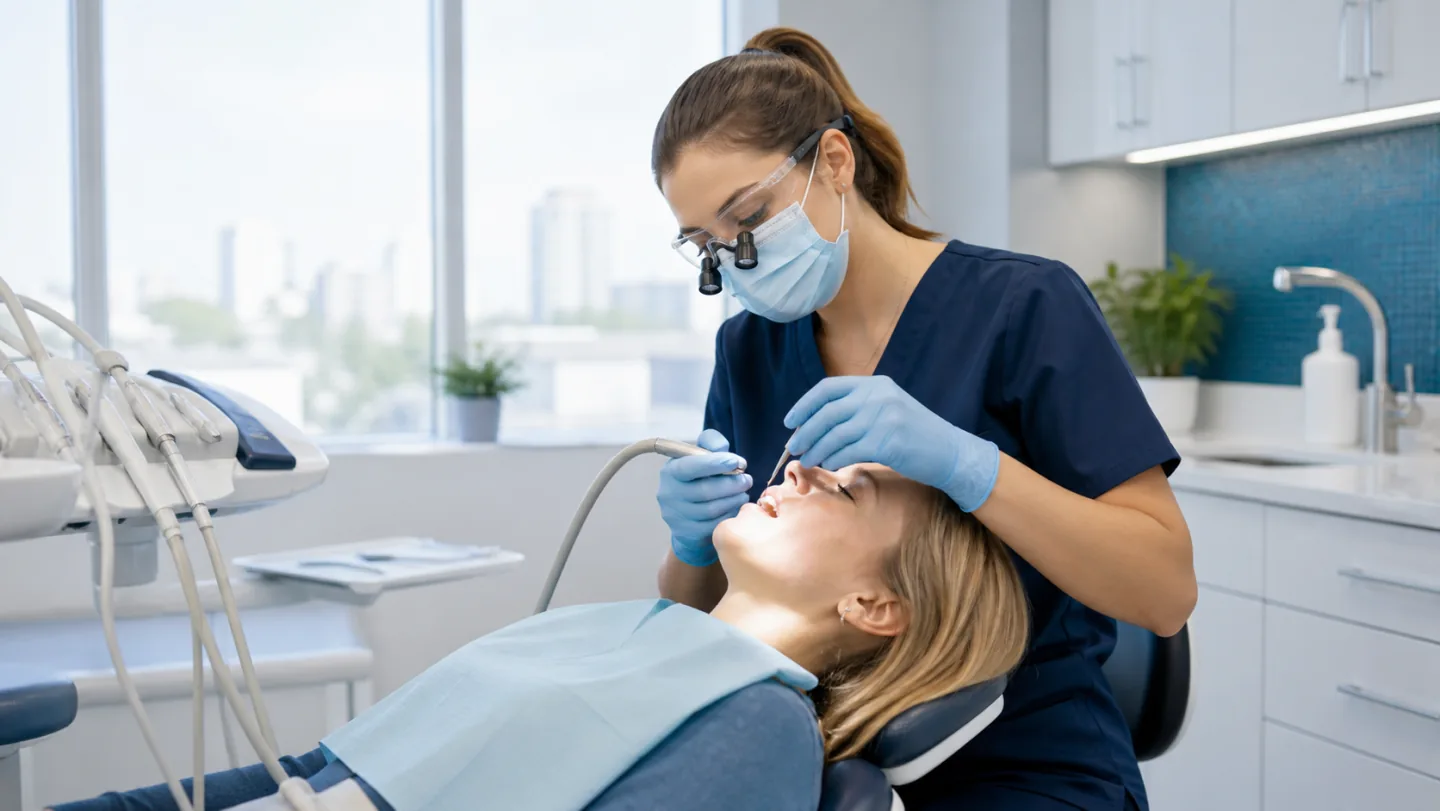
A dental hygienist providing careful deep cleaning below the gumline
You work in health care yourself

Scaling & Root Planning for Pembina Residents

Nurses, pharmacists, therapists and others who spend their days with patients often want the reasoning, not reassurance. Here’s the clinical logic behind deep cleaning, laid out plainly.

Let's find a time

Request an appointment

We’ll call to confirm your appointment. For urgent care, please call us directly.

The rationale

Deep Cleaning as Treatment, Not Prevention

Think of this as the first, non-surgical phase of managing an established periodontal infection. Its target is the root surface inside a periodontal pocket, where plaque, calculus and bacterial deposits keep the surrounding tissue inflamed. Removing that material is meant to let inflammation resolve and the tissue heal against a cleaner surface.

Pembina residents can have the assessment and treatment at Winnipeg North Dental on McPhillips Street in Winnipeg. If you’d like to see your probing chart or images and talk through them in clinical terms, ask; that kind of conversation suits many patients from your field.

Explore scaling & root planning
Consultation desk with a keyboard and three black chairs beside a large window at Winnipeg North Dental
A desk with a keyboard and black chairs by a large window.

Indication comes from findings

Probing depths, bleeding sites, subgingival calculus and radiographic bone are read as a set.

Outcome is measured

Reassessment compares the same parameters after the tissue has had time to respond.

History is part of it

Your medications and conditions are considered when treatment is planned.

Clinical detail

Indications and the procedure itself.

As in most of medicine, one finding rarely carries the whole diagnosis. Several measurements together show whether periodontitis is present, which sites are involved, and whether instrumentation below the gumline is appropriate.

What the chart looks at

Each measure contributes a different piece of the picture.

  • A larger probe reading suggests attachment loss and a site your brush won’t clean well.
  • Sites that bleed under a light probe flag ongoing inflammatory activity.
  • Radiographs add the bone-level information a probe alone can’t supply.

What instrumentation involves

Specialized instruments remove deposits and disrupt bacterial buildup on the planned root surfaces.

  • Sites are usually anaesthetized locally, which allows unhurried instrumentation.
  • The endpoint is debridement of contaminated material, not a glassy root.
  • Depending on extent, the work is completed at one sitting or staged by quadrant or section.

Suitability for you is determined at assessment. A professional background helps the discussion, but your own findings are what guide the plan.

The care pathway

Assessment through to re-evaluation.

The sequence will feel familiar if you’ve worked with treatment plans: baseline, intervention, review.

Request your visit
  1. 01

    Baseline

    Pocket measurements, bleeding sites, calculus and images establish the starting point.

  2. 02

    Intervention

    Affected roots are instrumented under local anaesthetic, in one sitting or by sections.

  3. 03

    Patient education

    Home-care instructions are matched to your spaces, sensitivity and the tools you’ll actually use.

  4. 04

    Re-evaluation

    After healing, the same parameters are compared to decide between maintenance and further care.

Your history, accurately

Give us the list you’d want from a patient.

You know how much an incomplete medication list can complicate care. Bring a current one, along with relevant conditions, so your treatment can be planned with the full picture.

Fees and appointment time follow from the extent of treatment, so ask once it’s planned. Coverage depends on your benefits.

Worth documenting

  • All prescriptions, with doses if you have them.
  • Over-the-counter products and supplements.
  • Diagnosed conditions and recent changes in your health.
  • Any reactions to anaesthetic or other medications.
Treatment room with a light blue padded chair, sink and upper cabinets at Winnipeg North Dental
Reception desk with glass panels, plants and a framed blue painting at Winnipeg North Dental

A padded treatment chair, and the reception desk.

Being on the other side

You get to be the patient here.

People who care for others all day sometimes downplay their own symptoms. Treat this visit the way you’d want your own patients to: describe what you’ve noticed, ask your questions, and let someone else look after you.

Technical questions are fine

Ask about anything on your chart, from the readings to the reasoning behind a site.

Comfort still counts

Freezing is often part of treatment, and how it’s used depends on your plan and preferences.

Symptoms worth reporting

Mention bleeding, tenderness or changes you’ve noticed, even if they seem minor to you.

The expected course

What healing typically looks like.

Expect the usual post-instrumentation picture: some soreness, thermal sensitivity or minor bleeding, scaled to the extent of treatment. It normally resolves as healing progresses, and re-evaluation waits until the tissue has had a fair chance to respond.

01

Plaque control continues

Use the technique and tools recommended for the treated sites, even while they’re sore.

02

Medication as directed

Stick to the dosing and products you were advised on, and report symptoms that escalate.

03

Three possible outcomes

Sites that have settled go on to maintenance, any that haven’t may call for further care, and your recall interval is individual.

You’d tell a patient to phone in for this, so do the same: ongoing bleeding, swelling on the rise, severe pain or any concern outside the aftercare advice you received means a call to the clinic.

Talk with our team
Winnipeg North Dental’s entrance with glass doors, tinted windows and blue-grey siding

Winnipeg North Dental

Unit-5 2358 Mcphillips Street, Winnipeg, MB R2V 4J6
Get directions (opens in a new tab)
From Pembina

Where Your Baseline and Treatment Happen

Your assessment, deep cleaning and re-evaluation take place at Winnipeg North Dental, Unit 5, 2358 McPhillips Street, Winnipeg. Pembina is in Winnipeg, and you can open directions from this section.

Call (204) 338-3003 or complete the request form. Only a confirmation from the clinic turns your request into a booked time.

Questions about coverage?

Talk with our team before your visit or learn about CDCP.

A little clarity before your visit

Your questions, answered.

Helpful details about scaling & root planning in Pembina.

Ask our team
Is scaling and root planing the same as a prophylaxis cleaning?

They differ in purpose. Prophylaxis is preventive, focused at and above the gum margin, whereas root planing is therapy for diseased sites inside periodontal pockets.

Are antibiotics part of this treatment?

The treatment itself is mechanical. If any medication were recommended for you, ask why and how it fits your health history.

Why can gums look like they’ve receded after treatment?

As swelling goes down, tissue may firm up and pockets may measure shallower. Recession or spaces between teeth can become more noticeable as a result.

What happens to sites that don’t improve?

Residual pockets may need further care. The pages below describe options that can come up after initial therapy.

Can I see my periodontal chart?

You can ask to have your readings and images shown and explained at your appointment.

What’s the process for Pembina residents wanting a periodontal assessment?

Phone (204) 338-3003 or use the form on this page, and the clinic will follow up. Charting and treatment both happen at our McPhillips Street location in Winnipeg.

Your turn in the chair

Get your own baseline measured.

Pembina residents can request an assessment from our Winnipeg clinic online or by phone, and the clinic will be in touch.

Patient testimonials

Kind words from our patients

★★★★★ 5.0 from 440+ reviews on Google

Close to home

Areas we serve

Convenient dental care on McPhillips Street for families across northwest Winnipeg and nearby communities.

Explore all service areas

A healthier smile is one visit away

Ready for dental care that feels genuinely comfortable?

✓ New patients welcome ✓ Direct insurance billing ✓ Multilingual team

How can we help?

Our dental team is here for you.

Ready to book or have a question? Choose the option that works best for you.

For urgent dental concerns, please call us directly.

Send us a message

Our team will reply during clinic hours.



