Skip to content
Winnipeg North Dental
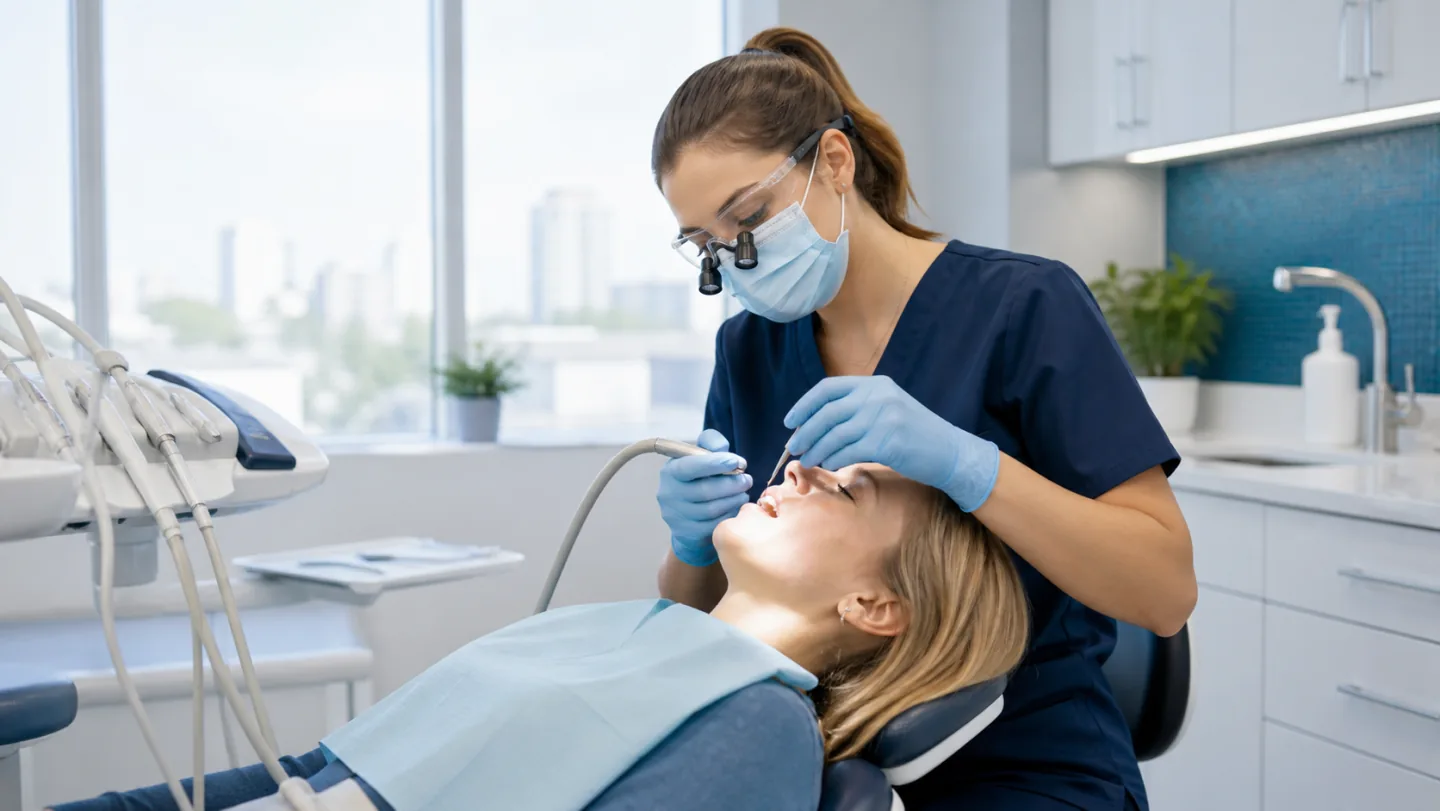
A dental hygienist providing careful deep cleaning below the gumline
You and floss never got along

Scaling & Root Planning for Park View Residents

You’ve bought it, tried it, watched your gums bleed and given up. Now you’re being told home care matters more than ever. This page takes that seriously, and explains why the answer may be finding a method you’ll actually use.

Let's find a time

Request an appointment

We’ll call to confirm your appointment. For urgent care, please call us directly.

Honest about your routine

Deep Cleaning and a Home Routine You’ll Keep, for Park View Patients

Plenty of people feel a twinge of guilt when a dental professional asks how often they floss. It’s far more useful to tell the truth. Scaling and root planing deals with what home care can’t reach: plaque and calculus on roots inside periodontal pockets. What you do every day then helps protect that work above the gumline.

Instructions are tailored to your spaces, your sensitivity and the tools that are practical for you, so there’s room for a real conversation about what hasn’t worked. Park View residents who are seen at our McPhillips Street clinic in Winnipeg can come as they are, with their habits exactly as they stand.

Explore scaling & root planning
Reception area at Winnipeg North Dental with a rug, navy bench and front counter
A rug, navy bench and front counter in the reception area.

Honesty over perfection

An accurate picture of your habits lets your instructions start from where you really are.

Tools fitted to your mouth

Tight contacts, open gaps and tender spots all affect which cleaning aids will make sense.

Treatment and routine together

Professional care reaches the deposits below the gum, and daily plaque control supports the healing.

Dividing up the work

What’s your job, and what isn’t.

No amount of flossing removes hardened calculus from a root. That’s a relief if you’ve been blaming yourself. It also shows why these two kinds of cleaning have separate roles once periodontitis has been diagnosed.

What the clinic handles

Treatment goes beneath the gumline, in areas diagnosed with periodontitis, using instruments designed for root surfaces.

  • Plaque and calculus are removed from root surfaces.
  • Pocket bacteria are knocked loose by the instruments.
  • Freezing is commonly used for the planned areas.
  • Results are later reviewed at a reassessment.

What you handle at home

Your part is steady plaque control, using the methods you’re shown for each treated area, on an ordinary day.

  • A brushing technique that’s comfortable to repeat.
  • A between-teeth cleaner you’re willing to pick up.
  • Telling us at each visit how the routine is going.

Deep cleaning is recommended based on your periodontal findings, not your flossing record. Your dentist will assess what’s needed for your own mouth.

With your habits in mind

From first conversation to a routine that fits.

Here’s the general course of care. The last step gets particular attention on this page, but the clinical parts come first.

Request your visit
  1. 01

    Describe your actual routine

    Tell us what you do on a normal day and what you’ve given up on, plus your medications and health history.

  2. 02

    Take your gum readings

    Bleeding and pocket depth are checked by gentle measurement, with images added if they’d help show bone levels.

  3. 03

    Clean the planned roots

    This is commonly done under local anaesthetic, either at one sitting or by section, depending on what’s affected.

  4. 04

    Try out your options

    This is the moment to ask to see different aids and tell us frankly which you’d be likely to keep using.

Before your assessment

Bring your frustrations with you.

Is it awkward to hold the floss? Do the gaps feel too tight, or does it shred? Do your gums bleed so much you stop? Those aren’t excuses. They’re specifics that can point toward something more workable for you.

Wondering what treatment could cost? Your dentist’s plan determines the areas involved, and that shapes the estimate. Whether anything is covered depends on your plan.

Bring along, if you can

  • Whatever cleaning aids you’ve tried, or simply their names.
  • Notes about dexterity or hand trouble that makes cleaning harder.
  • Your list of medications and medical conditions.
  • Details for your insurance or CDCP, if relevant.
Window seating and a large potted plant in the waiting area at Winnipeg North Dental
Wood cabinets and a blue dental chair in a treatment room at Winnipeg North Dental

Window seating and a potted plant, along with a dental chair in a treatment room.

No lectures

You can tell us the real number.

Being asked about your habits can make you feel like a kid who hasn’t done their homework. If you’ve dodged the question at other dental offices, try giving a plain answer here. You’re allowed to ask for suggestions and say when one won’t work for you.

Bleeding and your confidence

Seeing blood can make anyone stop. Ask what it could mean for you, and how to proceed.

Show us your hands at work

If grip or reach is the sticking point, ask whether you can show how you clean.

One change at a time

If a long list feels unrealistic, tell us and ask what to focus on first.

Making it stick

The weeks when your new habit forms.

Your mouth may feel tender after treatment, react to cold or heat, or bleed lightly, to a degree that reflects how much was treated. These effects should generally fade as healing progresses. Keeping up the routine during this stretch can feel awkward, so ask how to adapt it.

01

Clean as you’ve been shown

Treated areas still need plaque control, using whichever technique and aids you were advised to use.

02

Report back honestly

Your plaque control is reviewed at reassessment, which makes that visit a good moment to change anything not working.

03

Maintenance is a shared effort

Most people treated for periodontitis go on to maintenance appointments, working alongside whatever you do each day.

Don’t hesitate to call if bleeding persists, swelling is increasing, pain becomes severe, or your concern isn’t addressed by your instructions.

Talk with our team
Winnipeg North Dental front entrance beneath a white panel with the clinic name

Winnipeg North Dental

Unit-5 2358 Mcphillips Street, Winnipeg, MB R2V 4J6
Get directions (opens in a new tab)
Living in Park View?

Where to Sort Out Your Gums and Your Routine

Your care takes place at Winnipeg North Dental, Unit 5, 2358 McPhillips Street, Winnipeg. Tap the directions link if you’d like to see it mapped.

Reach out by form or at (204) 338-3003 to ask for an assessment, and the clinic will reply to confirm. If you have a sudden or urgent problem, telephone instead.

Questions about coverage?

Talk with our team before your visit or learn about CDCP.

A little clarity before your visit

Your questions, answered.

Helpful details about scaling & root planning in Park View.

Ask our team
Did skipping floss cause my gum disease?

Plaque plays a central role in gum disease, but it isn’t useful to look for blame. The important thing now is getting your gums assessed and settling on a routine you can sustain.

What can I use if I just can’t floss?

There are various aids for cleaning between teeth, such as small interdental brushes, and what suits you depends on your spaces. Ask which would make sense for you.

Do I still need treatment if I start flossing perfectly?

Hardened calculus below the gumline requires professional instruments, so home care alone can’t remove it. Your dentist can explain what your findings mean.

Should I stop if my gums bleed when I clean them?

Tell us about the bleeding, instead of quietly giving up. Your instructions will depend on your stage of treatment, and persistent bleeding after treatment is a reason to call.

Will you be able to tell I haven’t been flossing?

Gum findings and plaque levels often give clues, and that’s fine. Being upfront simply saves time and lets the conversation focus on what would work.

As a Park View resident, how do I ask for help with both?

Use this page’s form or call (204) 338-3003 and ask for a gum assessment at our McPhillips Street clinic in Winnipeg. Feel free to mention what you’d like help with.

No more guilty guessing

Get a routine you’ll actually use.

Park View residents can ask about deep cleaning and home care at our Winnipeg clinic, and we’ll be back in touch about a confirmed visit.

Patient testimonials

Kind words from our patients

★★★★★ 5.0 from 440+ reviews on Google

Close to home

Areas we serve

Convenient dental care on McPhillips Street for families across northwest Winnipeg and nearby communities.

Explore all service areas

A healthier smile is one visit away

Ready for dental care that feels genuinely comfortable?

✓ New patients welcome ✓ Direct insurance billing ✓ Multilingual team

How can we help?

Our dental team is here for you.

Ready to book or have a question? Choose the option that works best for you.

For urgent dental concerns, please call us directly.

Send us a message

Our team will reply during clinic hours.



