Skip to content
Winnipeg North Dental
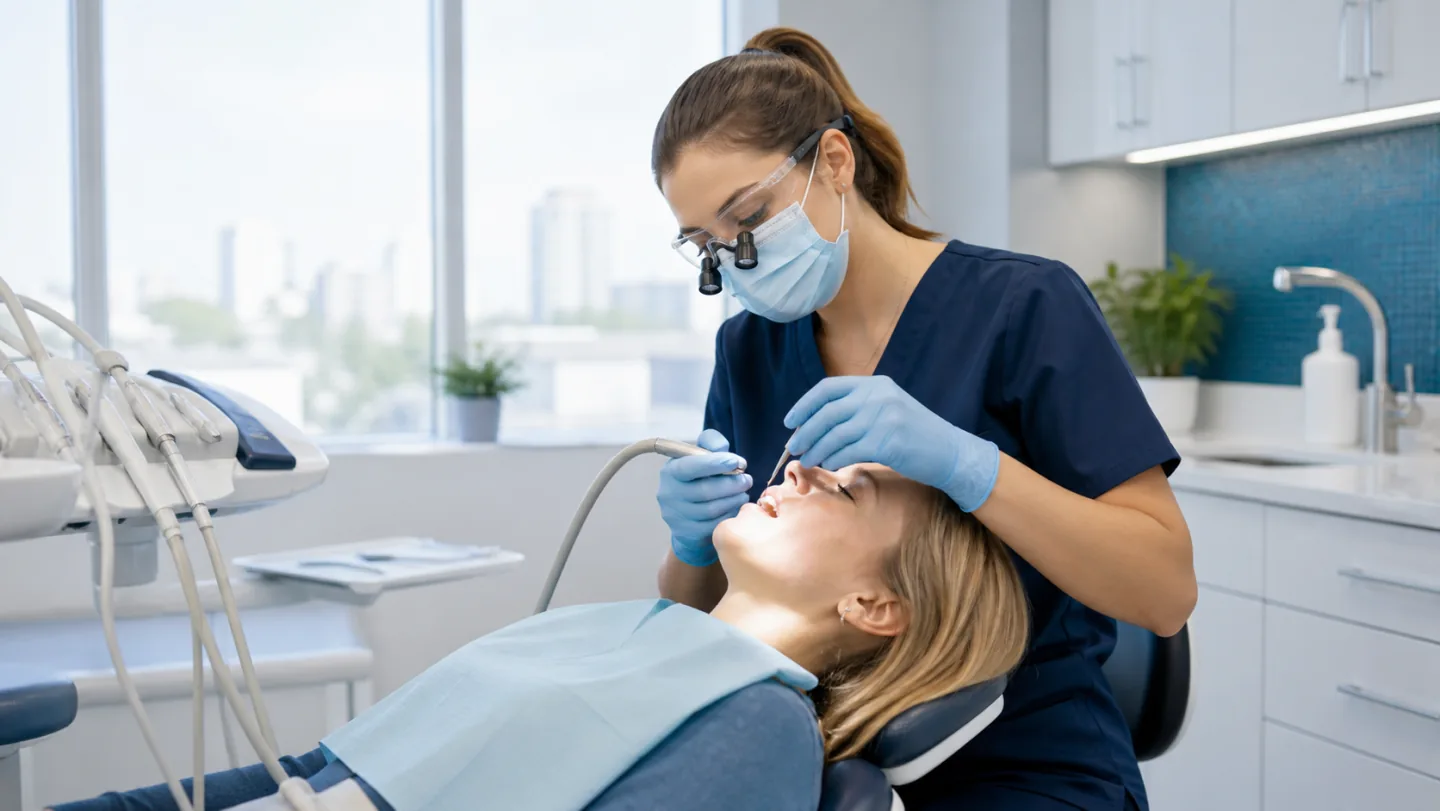
A dental hygienist providing careful deep cleaning below the gumline
A gap that wasn’t there before

Scaling & Root Planning for Kildonan Residents

Teeth that drift or spaces that slowly open can have several explanations, and weakened gum support is one of them. Learn how it gets checked and where scaling and root planing fits.

Let's find a time

Request an appointment

We’ll call to confirm your appointment. For urgent care, please call us directly.

When your smile seems to shift

Teeth on the Move and What Gums Have to Do With It

Maybe a photo made you look twice, or floss now slides through a space that used to be snug. When periodontitis reduces the attachment and bone holding a tooth, that tooth can begin to change position. Bite changes, old habits and other dental problems can do something similar, so a spreading gap doesn’t tell you the reason on its own.

Kildonan residents wondering about this can have it examined at our McPhillips Street clinic in Winnipeg. If gum disease turns out to be involved, deep cleaning addresses the infection and buildup around the roots; it isn’t a way of moving teeth back into line.

Explore scaling & root planning
Dental chair in pale blue beside a side-mounted monitor in a treatment room at Winnipeg North Dental
Pale blue chair under the overhead arm in a treatment room.

Support gets measured

Probing depths and dental images show how much of the foundation around a tooth has been affected.

Cleaning has a clear role

Removing root deposits helps inflammation settle, while position is a separate question for a separate talk.

Earlier is easier to discuss

You needn’t wait until a tooth feels wobbly before asking someone to take a look.

From gap to diagnosis

Sorting the cause comes before any treatment.

The space you noticed is a clue, and it needs other evidence beside it. Here’s how a gum cause is looked for and what’s done when one is found.

Checking the foundation

The exam covers the teeth you’re worried about and the remainder of your mouth.

  • Depth readings indicate where attachment may have been lost.
  • Bleeding on gentle probing flags tissue that’s still inflamed.
  • Images help reveal whether bone levels around the roots have changed.

Treating infected root surfaces

Where periodontitis is diagnosed, instruments reach under the gumline to remove plaque and calculus from planned roots.

  • The extent of disease helps determine how the work is divided.
  • Local anaesthetic allows time to work carefully on each root.
  • Personal cleaning advice takes account of the new spaces you’re dealing with.

Only an assessment can tell whether scaling and root planing is appropriate for you. We can’t say from a description whether a gap will close, stay or grow.

What to expect in order

Tracing the shift, then treating what’s found.

Your appointments follow the evidence. Bringing an older photo, if you have one, can be a simple way of showing what you’ve seen change.

Request your visit
  1. 01

    Point out the change

    Show which teeth have moved and describe when you first noticed, along with your medical background.

  2. 02

    Review your gum support

    Pockets, deposits and bone are examined so any recommendation rests on findings instead of appearance alone.

  3. 03

    Clean where it’s needed

    With the area usually frozen, treatment proceeds on affected roots, whether at one sitting or across sections.

  4. 04

    Look again later

    After the tissues have responded, a follow-up checks stability, and you can raise the gap again at that point.

Gathering what you’ve noticed

Small observations are useful here.

A tooth moving seldom happens overnight, so dates can be fuzzy. Rough impressions still help, and you don’t need to know what’s causing the change before you ask about it.

How long treatment takes and what it costs both depend on what’s recommended, so raise those questions when you reach out. Your own plan governs any coverage.

Bring these details

  • Roughly when the gap appeared or the tooth began to look different.
  • Dated photos that show your teeth, if any are handy.
  • Past braces, retainers or dental work on those teeth.
  • Your medication list and insurance particulars.
Private room at Winnipeg North Dental with a white desk, three black chairs and window blinds
Front desk and blue bench in the reception area at Winnipeg North Dental

A consultation room desk, followed by the front counter.

When it’s unsettling

Watching your teeth change is worrying.

It’s common to jump straight to the fear of losing a tooth. Tell us if that’s what’s on your mind. The exam can give you real information to talk about, even though nobody can predict every outcome.

See what we see

Ask to go over your images and readings so the explanation is tied to your own teeth.

Gentle around tender teeth

Let us know if a certain tooth feels sensitive to pressure before any measuring starts.

Freezing when treating

Treated areas are usually numbed, and you’re free to ask how that would be approached for you.

Once the swelling eases

Your gap may look different for a while.

Puffiness can partly hide spaces, so when gums firm up, those spaces can stand out more. Soreness, temperature sensitivity and light bleeding are also possible in the first days, and these should generally ease with healing.

01

Softer chewing, if needed

Give a tender area a break by picking softer foods for now, and try not to irritate it.

02

New tools for new spaces

A wider gap may call for a different cleaning aid, so follow the method shown to you.

03

Monitoring over time

Periodontal maintenance lets the team control fresh buildup and keep an eye on how stable things remain.

Phone the clinic if a tooth suddenly feels different, or if you have severe pain, increasing swelling, bleeding that persists or any concern outside your instructions.

Talk with our team
Winnipeg North Dental storefront with dark siding, tinted windows and a large sign

Winnipeg North Dental

Unit-5 2358 Mcphillips Street, Winnipeg, MB R2V 4J6
Get directions (opens in a new tab)
Kildonan residents with a new gap

Have the Change Looked At

Your exam would be held at Winnipeg North Dental, Unit 5, 2358 McPhillips Street, Winnipeg. Kildonan lies in Winnipeg as well, and directions are a click away in this section.

Call (204) 338-3003 or fill out the form and mention the tooth or gap. The clinic follows up to confirm any appointment.

Questions about coverage?

Talk with our team before your visit or learn about CDCP.

A little clarity before your visit

Your questions, answered.

Helpful details about scaling & root planning in Kildonan.

Ask our team
Can gum disease really make my teeth move?

It can, because teeth depend on surrounding attachment and bone for support. Other causes also exist, so your exam looks at the whole picture before pointing to one.

Will the gap close after deep cleaning?

Don’t count on that. Treatment targets deposits and inflammation, not tooth position, and spaces can even seem more obvious as swelling goes down.

Should I get braces or aligners to fix the gap?

That’s a conversation for after your gums have been assessed. Ask how any active gum disease would affect the timing of tooth movement in your case.

My teeth have moved but my gums don’t hurt. Should I still ask?

Yes. Periodontitis can progress without much discomfort, so lack of pain isn’t a useful way of ruling it out.

How will you tell if the movement has stopped?

Ongoing visits allow comparisons over time, along with your own observations. Ask how your teeth would be monitored, because the approach depends on your findings.

What wording should a Kildonan resident use on the request?

Something as simple as “I’ve noticed a new gap” is enough, written on this page’s form or said over the phone. The exam takes place at our clinic on McPhillips Street in Winnipeg.

Don’t just keep watching it

Find out why that space appeared.

Kildonan residents are invited to write to our McPhillips Street clinic with a request. Let us know which tooth prompted it.

Patient testimonials

Kind words from our patients

★★★★★ 5.0 from 440+ reviews on Google

Close to home

Areas we serve

Convenient dental care on McPhillips Street for families across northwest Winnipeg and nearby communities.

Explore all service areas

A healthier smile is one visit away

Ready for dental care that feels genuinely comfortable?

✓ New patients welcome ✓ Direct insurance billing ✓ Multilingual team

How can we help?

Our dental team is here for you.

Ready to book or have a question? Choose the option that works best for you.

For urgent dental concerns, please call us directly.

Send us a message

Our team will reply during clinic hours.



