Skip to content
Winnipeg North Dental
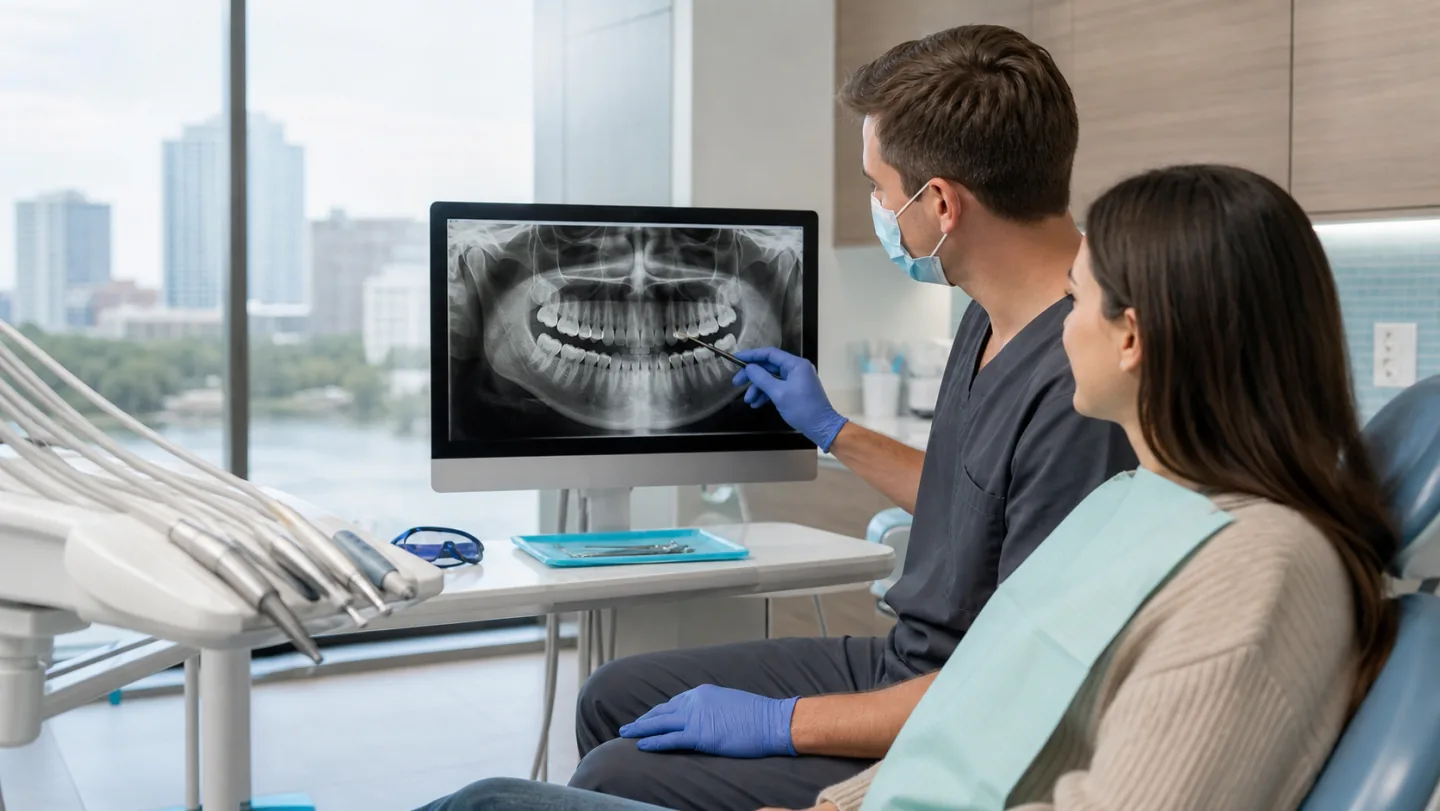
A dentist reviewing a dental X-ray before root canal treatment
Those two words, explained plainly.

Root Canal Therapy in Winnipeg

Heard the words root canal and felt your stomach drop? Patients from all over the city come to McPhillips Street with that same worry, so we begin by explaining what is going on inside the tooth.

Let's find a time

Request an appointment

We’ll call to confirm your appointment. For urgent care, please call us directly.

What the phrase actually means

A Treatment Aimed at Keeping Your Own Tooth

The name sounds worse than the idea behind it. Deep within each tooth sits soft tissue, made up of nerves, blood vessels and connective tissue, and it runs down through narrow channels in the roots. When that tissue is inflamed or infected and cannot recover, the dentist removes it, then cleans and seals the channels so the tooth can stay where it is.

People across Winnipeg often arrive with a half-remembered story from a relative or a frightening search result. Bring all of it with you. At Winnipeg North Dental, an examination and suitable X-rays come first, because only an assessment can show whether this treatment is the right fit for your tooth.

Explore root canal therapy
Consultation room with a white desk and chairs at our clinic
A quiet room for going over questions at our clinic.

Plain words first

Expect the diagnosis and the reasoning behind it to be explained without dental jargon.

The natural tooth in mind

Where enough sound structure and support remain, preserving your tooth is the goal of treatment.

An ending, not only a start

Sealing the canals is followed by a final restoration, and we cover that part from the outset.

Inside the tooth

What goes wrong, and what treatment does about it.

A short tour of the problem and the repair makes the whole idea far less mysterious. Your own case may differ, which is why the examination matters so much.

How the trouble begins

Enamel and dentin form a hard shell around the inner tissue. Once that shell is breached, the tissue underneath becomes vulnerable.

  • Decay that has travelled deep into the tooth can reach the pulp.
  • A crack or fracture may open a path to the tissue inside.
  • An injury to the tooth can inflame what lies beneath the surface.
  • Some affected teeth look perfectly normal from the outside.

How the repair works

Once the tooth is numb, the work moves through a clear order, from reaching the canals to closing them off and rebuilding the tooth.

  • Isolating the tooth helps keep the working area clean.
  • Through a small opening, the affected tissue is taken out.
  • Careful shaping and disinfecting prepare the canals for filling.
  • A seal goes in to lower the chance of infection returning.

Plenty of sore teeth do not need a root canal at all, so please treat this page as background reading and not as a diagnosis.

From first call to finished tooth

How your care may be sequenced.

The order below is typical, although the number of appointments depends on the tooth’s anatomy, any infection and the restoration planned.

Request your visit
  1. 01

    Describe what you have noticed

    Lingering reactions to hot or cold, tenderness on biting, a bump on the gum: tell us when each started and what sets it off.

  2. 02

    Find out what is happening

    The dentist examines the area and takes any X-rays needed. You will then hear whether the tooth looks treatable, and if a different path makes more sense.

  3. 03

    Treat the canals

    After local anesthetic has taken effect, the inner space is cleaned, disinfected and sealed. A single visit is enough for some teeth, while others call for more.

  4. 04

    Protect what remains

    A filling, and often a crown, rebuilds the tooth for chewing. This last stage matters because a treated tooth can be more prone to fracture.

Ahead of your appointment

Bring the worry along with the paperwork.

Nobody expects you to know dental terms. If you have only ever heard horror stories about root canals, say so at the start, and we can walk through them one at a time.

Curious how long the assessment could run, or what fees to expect for a root canal? Those questions are welcome when you first reach us.

Useful to have with you

  • Names of your prescriptions and supplements, even ones started last week.
  • Notes on which tooth bothers you and what seems to trigger it.
  • A benefits card or CDCP letter, if you plan to claim for the root canal.
  • The name of any clinic holding recent X-rays of this tooth.
Treatment room with a blue dental chair at our clinic
Reception desk with orchids and a white counter at our clinic

Our McPhillips Street treatment room and front desk.

During treatment

What numb actually feels like.

Local anesthetic is used before anything begins. Patients may notice pressure or vibration as the work goes on. Sharp pain is different, and you should tell the dentist right away if you feel it.

Questions before the first step

Nothing is too small to ask about, from the instruments to what you are likely to hear.

A way to say stop

Settle on a hand signal before starting so a pause is easy to request.

Honest feedback welcome

An already inflamed tooth can affect comfort, so keep telling us how things feel.

Once the canals are sealed

The days and months after treatment.

A treated tooth still needs looking after. Here is what generally comes next, and when a phone call makes sense.

01

Some tenderness can happen

Biting may feel a little tender for a short time, and this should ease. Call if pain or swelling is significant, getting worse or not settling as expected.

02

Finishing with a restoration

Back teeth often need a crown or similar protection, while front teeth vary with what remains. Putting this off can leave the tooth at risk.

03

Long-term upkeep

New decay, a leak or a fracture can still cause problems later on. Routine dental visits and a sound restoration help protect the result.

Unsure whether something you are feeling is normal? Phone the clinic and ask.

Talk with our team
Storefront with the Winnipeg North Dental sign on McPhillips Street

Winnipeg North Dental

Unit-5 2358 Mcphillips Street, Winnipeg, MB R2V 4J6
Get directions (opens in a new tab)
Where your care happens

One Clinic, on McPhillips Street

Whichever part of Winnipeg you are coming from, root canal therapy takes place at Unit 5, 2358 McPhillips Street, in the north of the city. The map link can help you work out your trip.

Prefer typing to talking? The form passes your request along without holding a time, and clinic staff reply about dates. Phoning works too.

Questions about coverage?

Talk with our team before your visit or learn about CDCP.

A little clarity before your visit

Your questions, answered.

Helpful details about root canal therapy in Winnipeg.

Ask our team
Where do I go for a root canal, and how do I ask for a visit?

Treatment is provided at Unit 5, 2358 McPhillips Street, R2V 4J6. To ask for a visit, write to us through the form below or dial (204) 338-3003, and bear in mind that a date only stands after the clinic has agreed it with you.

Does a root canal hurt as much as people say?

The stories often describe the toothache that came before treatment. The tooth is numbed first, and pressure or vibration may be felt along the way. Mention any sharp pain immediately, and keep in mind that existing inflammation can influence comfort and recovery.

Could a sore tooth turn out to need something else?

Yes. Pain alone does not point to a root canal, and some teeth that do need one barely hurt. An examination with appropriate X-rays is how the cause gets identified.

What happens to the tooth without its inner tissue?

It stays in your mouth and can continue to work for chewing once restored. Because damage has already taken away some structure, it can be more likely to fracture, which explains why a protective restoration is so important.

Can the infection come back after treatment?

It can. Leakage, a fracture, complicated anatomy or fresh decay may each create a new problem in a treated tooth. Keeping up with regular dental care and having a sound final restoration both help guard against this.

Will my benefits or CDCP help pay for a root canal?

That varies from one plan to the next, and from one tooth’s treatment to another. Once the dentist knows what the tooth requires, ask for an estimate and have your plan details with you.

Ready for real answers?

Find out what your tooth actually needs.

Ask for an assessment at our Winnipeg clinic. If the tooth is severely painful or swollen, please phone instead of using the form.

Patient testimonials

Kind words from our patients

★★★★★ 5.0 from 440+ reviews on Google

Close to home

Areas we serve

Convenient dental care on McPhillips Street for families across northwest Winnipeg and nearby communities.

Explore all service areas

A healthier smile is one visit away

Ready for dental care that feels genuinely comfortable?

✓ New patients welcome ✓ Direct insurance billing ✓ Multilingual team

How can we help?

Our dental team is here for you.

Ready to book or have a question? Choose the option that works best for you.

For urgent dental concerns, please call us directly.

Send us a message

Our team will reply during clinic hours.



