Skip to content
Winnipeg North Dental
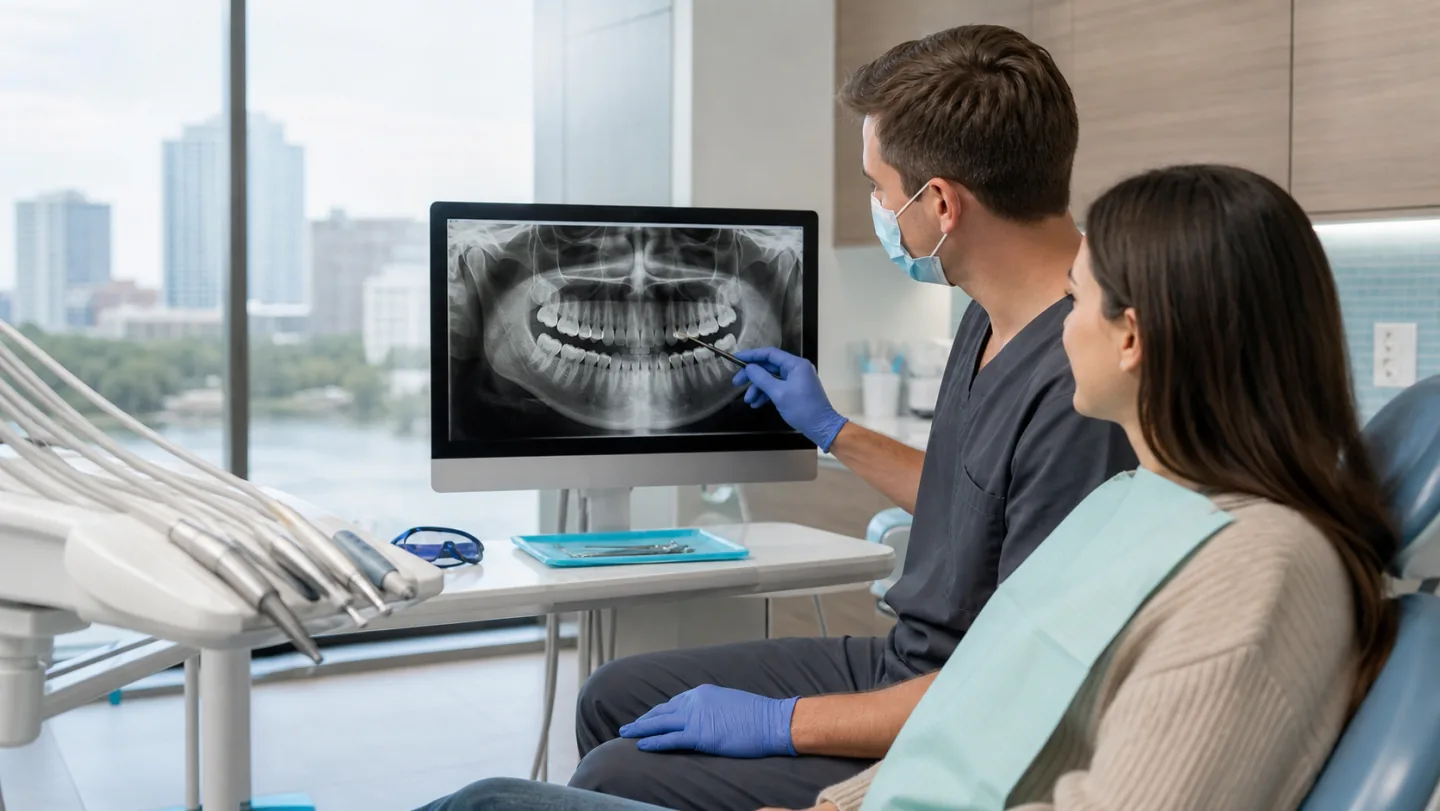
A dentist reviewing a dental X-ray before root canal treatment
Love a good crunch?

Root Canal Therapy for Waverley West Residents

Nuts, hard candy, ice from the bottom of the glass: a treated tooth doesn’t always take these well. Here’s why that’s the case, and how the tooth gets protected for everyday chewing.

Let's find a time

Request an appointment

We’ll call to confirm your appointment. For urgent care, please call us directly.

Chewing after a root canal

Why Hard Foods Deserve Some Thought

A root canal deals with what’s wrong inside a tooth, yet it can’t replace what decay, a break or earlier repairs have already taken away. Having lost that structure, a treated tooth may be more vulnerable to fracture, and strong biting forces on back teeth are part of the concern.

If you’re in Waverley West, an area in Winnipeg, and you have questions about getting back to normal chewing, the dentist at our McPhillips Street clinic can talk them through. The answer rests on your particular tooth, what’s left of it and how it’s restored.

Explore root canal therapy
Dental chair with a pale blue cushion, an instrument arm and a monitor above the headrest
A monitor above the headrest of a mint-blue chair in a treatment room.

Treated doesn’t mean tougher

Removing infection doesn’t restore the tooth structure already lost over time.

The restoration does the work

A crown or similar coverage helps a back tooth stand up to chewing.

The gap is the riskiest time

Before the final restoration is placed, take it easy on that side.

From infection to chewing again

How the tooth gets back to work.

It’s useful to separate the two jobs involved here. One gets rid of the problem inside, while the other makes the tooth strong enough to use.

Clearing the inside

This stage addresses inflamed or infected tissue, working under local anesthetic.

  • An isolated, numbed tooth is opened by way of a small access point.
  • Affected tissue comes out of the chamber and canals.
  • These spaces are disinfected and shaped carefully.
  • A filling material then seals them against reinfection.

Rebuilding the outside

This stage is the one that matters most for anyone who enjoys crunchy food.

  • A filling restores the opening and helps keep bacteria out.
  • Many back teeth need their cusps covered by a crown or similar.
  • Front teeth are judged on structure and bite.
  • Delaying it can leave the tooth at risk of breaking.

A tooth that has broken too deeply might not be restorable, and that’s one reason protecting it matters from the start.

Planning for your bite

Things to go over with the dentist.

Your eating habits are worth bringing up. They’re a part of the picture when working out how much protection a tooth needs.

Request your visit
  1. 01

    Get the tooth assessed

    Exam findings and X-rays show whether a root canal is the correct treatment and whether a good restoration is realistic.

  2. 02

    Own up to your habits

    Ice chewing, pen biting or clenching are all useful for the dentist to hear about, and nobody’s keeping score.

  3. 03

    Ask how it’ll be restored

    Find out which type of restoration is being suggested, and why it suits this tooth and your bite.

  4. 04

    Ask about the in-between

    Check what you should avoid eating between sealing and the final restoration, and for how long.

Thinking about your chewing

Notes for your appointment.

You won’t need to change anything in advance. Paying attention to how you use your teeth, though, can give the dentist more to work with.

If a tooth has cracked or broken while you were eating, phone the clinic and describe what happened.

Jot down

  • Foods that hurt or that you’ve begun to avoid.
  • Habits like crunching ice or grinding your teeth at night.
  • Your medication list, allergies and medical background.
  • Any chips or cracks on that tooth you’re aware of.
Sunny seating area with a variegated plant, white chairs and framed abstract art
Black headrest chair in the foreground of a room with a white desk and wall painting

A leafy variegated plant by the window, and a black headrest chair at a desk.

Sensations, then and after

From the chair to the dinner table.

Comfort doesn’t stop when treatment ends, because your next meal will tell you things too. Here’s a general sense of what you may notice.

During the procedure

You could sense vibration or pushing on the tooth. Tell the dentist right away about anything sharp.

While you’re still numb

Be careful about chewing until the freezing has gone, since it’s easy to bite your lip or cheek without feeling it.

Your first few meals

Tenderness when biting is common for a short time, so softer food on the other side may feel better.

Back to normal eating

Getting your chew back.

A return to ordinary meals happens in stages. Moving on too quickly carries some risk, so it helps to know what each one involves.

01

Early tenderness

Soreness that eases is expected. Call the clinic about pain or swelling that’s bad, getting worse or simply not behaving as described.

02

Finishing the tooth

Holding off on the crown or other final restoration means that tooth is chewing without its protection, which risks a fracture.

03

Long-term habits

Even a restored tooth can be damaged, so ask whether ice, hard candy or a grinding habit are putting yours at risk.

Which foods are sensible later on depends on the tooth and its restoration, so ask about your own favourites.

Talk with our team
Front of Winnipeg North Dental with its logo sign, tall windows and a railing beside the doors

Winnipeg North Dental

Unit-5 2358 Mcphillips Street, Winnipeg, MB R2V 4J6
Get directions (opens in a new tab)
Asking about your tooth

Winnipeg North Dental

Waverley West residents who want this tooth assessed would come to Winnipeg North Dental, Unit 5, 2358 McPhillips Street, Winnipeg. Tell us if a particular food set off the problem.

Requesting through the form doesn’t set a time. You’ll hear from us to arrange one.

Questions about coverage?

Talk with our team before your visit or learn about CDCP.

A little clarity before your visit

Your questions, answered.

Helpful details about root canal therapy in Waverley West.

Ask our team
From Waverley West, how do I get a tooth I broke on something hard checked?

Contact us at (204) 338-3003 and describe the break, or use the form if there’s no severe pain or swelling. A broken tooth like this gets examined at our clinic on McPhillips Street.

Does a tooth become brittle after a root canal?

A treated tooth may be more vulnerable to fracture, mainly because of the structure lost to damage and treatment. Suitable restoration helps protect it.

What should I avoid chewing before the crown is on?

Hard or very sticky foods on that side are worth avoiding until it has been restored. Ask for advice that’s specific to your tooth and the temporary repair.

Can I eat nuts again once it’s been restored?

Many people return to their ordinary diet, but it really does depend on the tooth and restoration. Ask the dentist whether anything should stay off your menu.

Can chewing ice crack a treated tooth?

Hard biting forces can damage teeth, and a weakened tooth has less in reserve. Breaking that habit is a sensible thing to discuss at your visit.

What happens if a treated tooth breaks?

Call the clinic and have it looked at. Whether it can be repaired depends on how deep the break goes, and in some cases extraction may have to be considered.

Don’t test it with an ice cube

Find out how sturdy your tooth is.

Ask for an assessment at our Winnipeg clinic, and tell us how you’ve been chewing lately. Sudden severe pain or swelling? Please phone us.

Patient testimonials

Kind words from our patients

★★★★★ 5.0 from 440+ reviews on Google

Close to home

Areas we serve

Convenient dental care on McPhillips Street for families across northwest Winnipeg and nearby communities.

Explore all service areas

A healthier smile is one visit away

Ready for dental care that feels genuinely comfortable?

✓ New patients welcome ✓ Direct insurance billing ✓ Multilingual team

How can we help?

Our dental team is here for you.

Ready to book or have a question? Choose the option that works best for you.

For urgent dental concerns, please call us directly.

Send us a message

Our team will reply during clinic hours.



