Skip to content
Winnipeg North Dental
A dentist reviewing a dental X-ray before root canal treatment
How would anyone know?

Root Canal Therapy for Waterford Green Residents

You can’t see inside your own tooth, so a recommendation can feel like taking someone’s word for it. This page walks through the evidence a dentist weighs before suggesting a root canal.

Let's find a time

Request an appointment

We’ll call to confirm your appointment. For urgent care, please call us directly.

The detective work comes first

How a Root Canal Recommendation Gets Made

A tooth may look perfectly ordinary in the mirror while its inner tissue is in trouble, and the reverse can be true as well. For that reason, a diagnosis rests on an examination together with appropriate X-rays, never on one symptom or a quick glance.

If you live in Waterford Green, an area in Winnipeg, this assessment happens at our clinic on McPhillips Street. Knowing what is being looked for can make the findings easier to follow, and it gives you better questions to raise when they are explained.

Explore root canal therapy
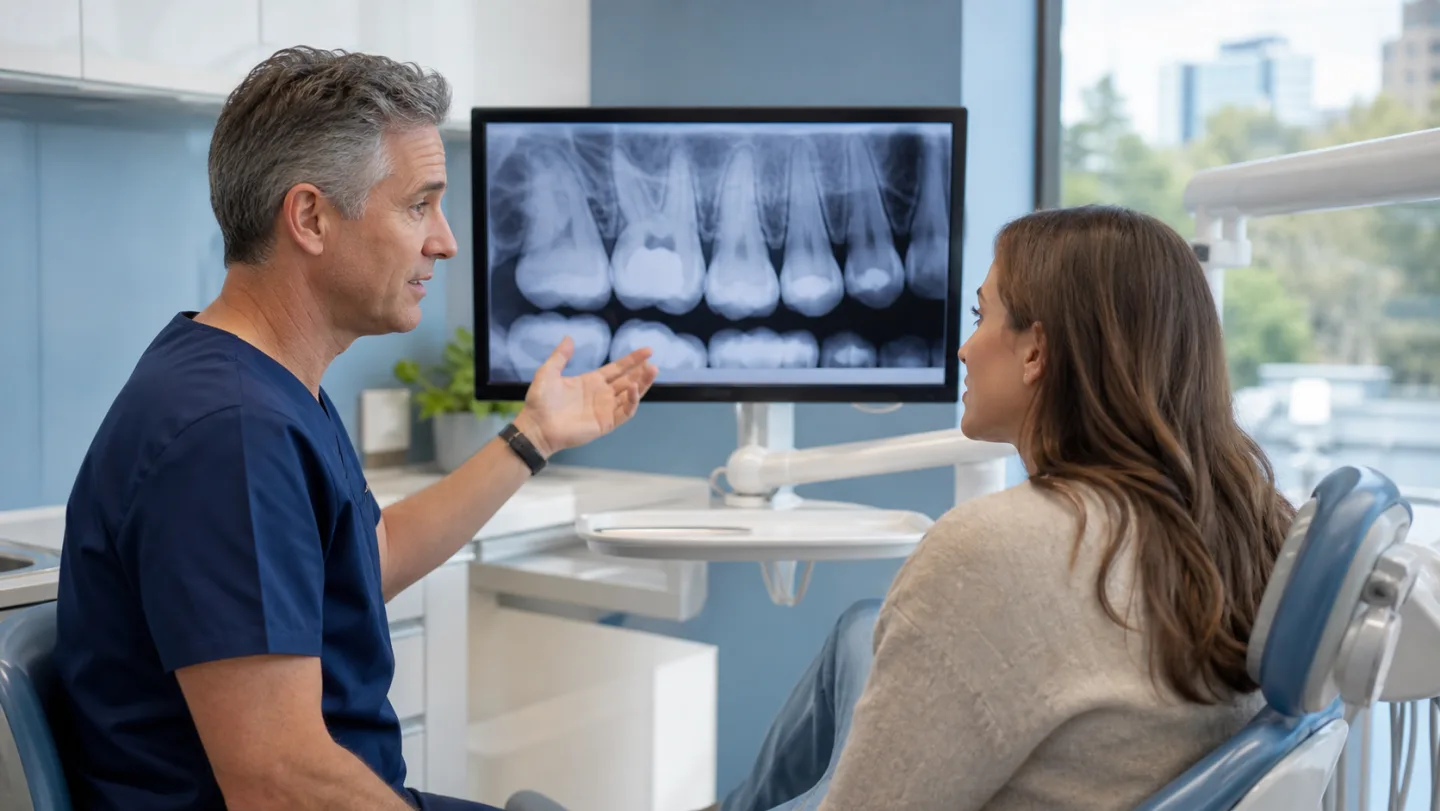
Dentist pointing out an X-ray on a large monitor to a seated patient in a beige sweater
A dentist pointing to an X-ray on a monitor while a patient looks on.

Evidence over guesswork

Your description, the exam and the images are considered together to reach a conclusion.

Your account counts

When the pain began and what sets it off are clues that no picture can supply.

Other answers exist

A sore tooth doesn’t automatically point to this treatment, and the assessment can show that.

Two lines of inquiry

What gets examined, and why it matters.

An assessment tries to answer two separate questions: what is happening inside the tooth, and whether the tooth is sound enough to be worth treating.

Is the inner tissue affected?

Deep decay, a crack or an old injury can inflame or infect the pulp, so the first task is to find out whether that has occurred.

  • Reactions to hot or cold that linger once the trigger is gone are noted.
  • Tenderness under biting pressure or while chewing is checked.
  • Localized swelling, drainage or a recurring gum pimple can suggest infection.
  • X-rays add information that can’t be gathered by looking at the tooth alone.

Can the tooth be rebuilt?

A successful canal cleaning means little if the tooth can’t be restored later, which is why its structure gets weighed too.

  • The dentist considers how much healthy structure is still there.
  • Support around the tooth forms part of the long-term picture.
  • A fracture running too deep can make preservation unrealistic.
  • The likely final restoration is thought about before treatment starts.

If the evidence points elsewhere, the discussion moves elsewhere too. Not every painful tooth turns out to need a root canal.

From question to conclusion

How an assessment tends to unfold.

Should treatment be recommended, the number of appointments will depend on the tooth’s anatomy, any infection and the restoration plan. The first job is simply working out what is wrong.

Request your visit
  1. 01

    You describe the history

    Be as specific as you can about what you have noticed. Timing, triggers and past dental work on that tooth can all shape where the dentist looks next.

  2. 02

    The tooth is examined

    Your dentist looks at the tooth and the gum surrounding it, watching for damage, swelling or a bump that could suggest something is happening below the surface.

  3. 03

    Images are reviewed

    Appropriate X-rays show structures you could never see in a mirror, and they help the dentist relate your symptoms to the condition of the tooth.

  4. 04

    The findings are shared

    You hear what was found and what it may mean, including whether root canal therapy, removal or something different makes sense for this particular tooth.

Sharpening your own observations

A little noticing goes a long way.

In the days before an exam, pay attention to the tooth without trying to test it. Small details that seem trivial may help narrow things down, so jot them down while they are fresh.

Pain that has become severe, or any swelling, is a reason to call instead of keeping notes and waiting.

Worth writing down

  • The approximate date you first noticed something was off.
  • Whether hot, cold or chewing brings it on, and how long it stays.
  • Any knock, chip or dental repair involving that tooth.
  • Medications you take, and any health changes since your last dental visit.
White desk with a keyboard and black chairs in a room with a landscape painting and sunlit blinds
Seafoam dental chair in a treatment room with wood-look cabinets and a wall monitor

Black chairs around a white desk, and a seafoam chair in a treatment room.

Understanding reduces worry

Following along as you go.

Being assessed is easier when you aren’t left guessing. You are welcome to ask what is being checked at each point and what the result might indicate.

Request a look at the image

Seeing your own X-ray while someone points things out may make the explanation far more concrete.

Say when something smarts

If any part of the exam is uncomfortable, mention it. That reaction may also be useful information.

Pause on the unclear parts

A finding you didn’t fully catch can be gone over again before you think about what comes next.

Once the answer is in

What each possible finding can lead to.

An assessment ends with a direction, even if that direction needs a little thought. These are some of the paths that may come out of it.

01

Treat and keep

With enough sound structure and support, cleaning and sealing the canals may be the most predictable way of holding on to the tooth.

02

Remove and plan

When restoring the tooth isn’t realistic, extraction may be the more fitting recommendation, along with a conversation about the resulting space.

03

Address another cause

Sometimes the inner tissue isn’t the source at all. In that case, the dentist will explain what else could account for your discomfort.

Thought of a question after you got home? The clinic’s phone number is the simplest route to asking it.

Talk with our team
Winnipeg North Dental’s raised sign and phone number on a white panel above glass entry doors

Winnipeg North Dental

Unit-5 2358 Mcphillips Street, Winnipeg, MB R2V 4J6
Get directions (opens in a new tab)
Where the assessment happens

Your Exam at Our Winnipeg Clinic

When a tooth is troubling someone in Waterford Green, the place to have it examined is Winnipeg North Dental, Unit 5, 2358 McPhillips Street, Winnipeg. X-rays and any root canal therapy are carried out there too.

Sending the form is a request and holds no time slot. Someone from the clinic follows up with you to arrange the visit.

Questions about coverage?

Talk with our team before your visit or learn about CDCP.

A little clarity before your visit

Your questions, answered.

Helpful details about root canal therapy in Waterford Green.

Ask our team
How can a Waterford Green resident have a suspicious tooth assessed?

Phone (204) 338-3003, or send the request form on this page. The exam takes place at Unit 5, 2358 McPhillips Street, and the clinic confirms a time with you.

Can a dentist diagnose this from my description over the phone?

A description helps, but it can’t replace looking at the tooth. Reaching a diagnosis takes an examination and appropriate X-rays, so a conversation by phone can only go so far.

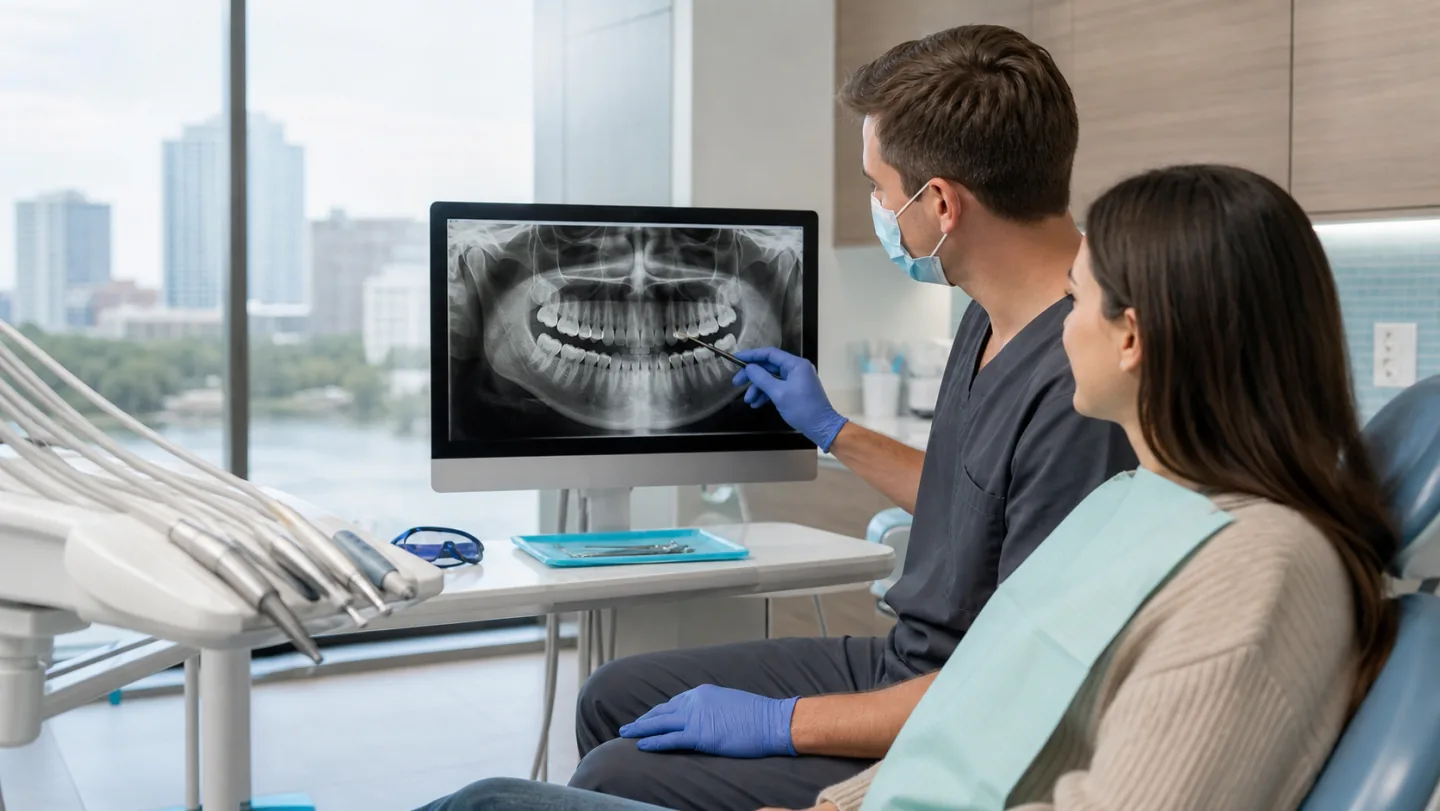
Why take an X-ray if you can see the broken part?

The visible damage tells only part of the story. An image helps show what lies underneath, including the roots, which matters both for diagnosis and for planning any repair.

What makes inflamed pulp different from pulp that can recover?

Some inflammation settles when the cause is dealt with. Once the tissue can’t recover, it is described as irreversible, and cleaning and sealing the canals may then be considered.

Could the assessment show that I don’t need a root canal?

Yes, that’s entirely possible. Plenty of sore teeth have other explanations, and the purpose of the appointment is to identify what is really happening before anything is decided.

Would you like a clear answer?

Have the tooth looked at properly.

Request an examination at our Winnipeg clinic. If you have severe pain or swelling, please call us instead of filling in the form.

Patient testimonials

Kind words from our patients

★★★★★ 5.0 from 440+ reviews on Google

Close to home

Areas we serve

Convenient dental care on McPhillips Street for families across northwest Winnipeg and nearby communities.

Explore all service areas

A healthier smile is one visit away

Ready for dental care that feels genuinely comfortable?

✓ New patients welcome ✓ Direct insurance billing ✓ Multilingual team

How can we help?

Our dental team is here for you.

Ready to book or have a question? Choose the option that works best for you.

For urgent dental concerns, please call us directly.

Send us a message

Our team will reply during clinic hours.