Skip to content
Winnipeg North Dental
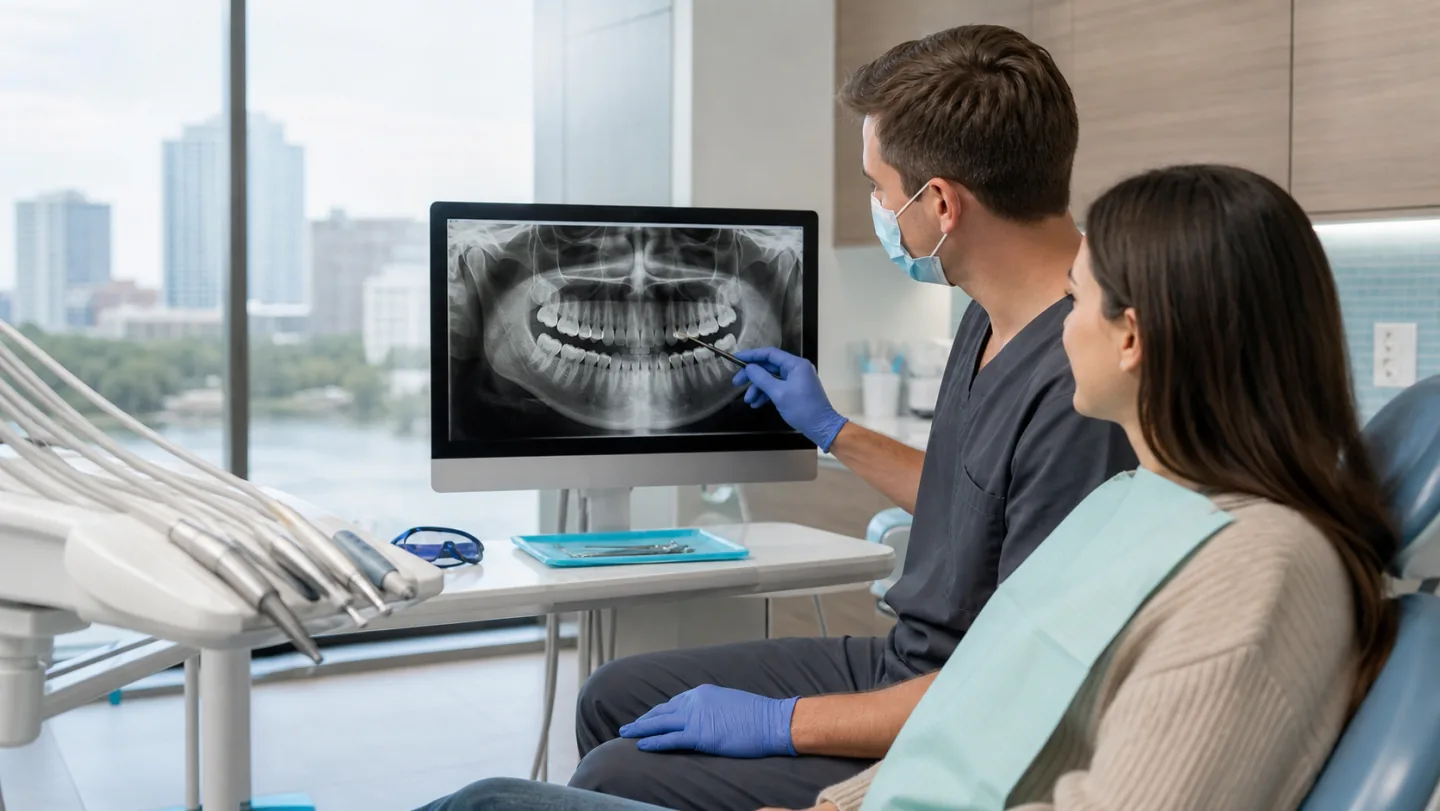
A dentist reviewing a dental X-ray before root canal treatment
That tooth has a long history.

Root Canal Therapy for Tyndall Park Residents

Large fillings and crowns protect a lot of teeth, but they can also hide what is happening underneath. If a heavily repaired tooth has begun acting up, here is what to know.

Let's find a time

Request an appointment

We’ll call to confirm your appointment. For urgent care, please call us directly.

Beneath the old dental work

When a Heavily Restored Tooth Starts to Hurt

A tooth repaired more than once has usually been through a lot, whether from past decay, a break or simple wear. Its restoration can look perfectly fine while the tissue deep inside is no longer healthy. New decay around an older filling or crown is one more thing the dentist may consider.

For people in Tyndall Park, an area of Winnipeg, the place to have this checked is our McPhillips Street clinic. An examination and X-rays help show whether the pulp is affected, how much sound tooth remains, and whether root canal therapy would make sense under the work you already have.

Explore root canal therapy
Dental chair with a monitor and frosted-glass cabinets behind it in a treatment room
Light blue chair facing a wall-mounted monitor at our clinic.

Your past work matters

Knowing what has been done to the tooth gives the dentist useful background.

How much tooth remains

Structure left under a filling or crown strongly influences what can be predictably done.

Restoration gets reconsidered

The existing filling or crown is part of the discussion, not just the root.

Old repairs, new questions

How existing dental work figures in.

A previous restoration does not rule out root canal therapy, although it does add considerations that only an exam can answer.

Assessing what lies underneath

Since a repaired tooth can hide its problems, the first task is to understand what has changed and why.

  • Deep past decay may have brought damage close to the inner tissue.
  • Fresh decay can form at the edges of an older restoration.
  • A crack could be present, even with a restoration in place.
  • How firmly the tooth is supported affects its long-term outlook.

Treating and restoring it

If the tooth is judged restorable, treatment follows the usual order, with extra thought given to what sits on top.

  • Local anesthetic and isolation come before the work begins.
  • A small opening gives access to tissue and canals inside the tooth.
  • Those canals are cleaned, shaped, disinfected and filled.
  • Ask whether your present filling or crown can stay or should be replaced.

If too little sound structure remains, extraction may be the more realistic path. The dentist will explain that before you make any decision.

Taking stock of the tooth

How a much-repaired tooth gets assessed.

Your first visit is largely about gathering information. The number of appointments after that depends on the tooth, the infection and the restoration needed.

Request your visit
  1. 01

    Share the repair history

    Tell us which tooth it is and what you remember about the fillings or crown it has had. Rough dates are perfectly useful.

  2. 02

    Look under and around

    Through examination and X-rays, the dentist reviews the restoration’s condition, the remaining tooth, the root area and any sign of infection.

  3. 03

    Weigh what can be restored

    A realistic discussion follows about whether keeping this tooth seems predictable, and what would be required to rebuild it afterward.

  4. 04

    Treat, then protect

    With your agreement, the canals are treated under local anesthetic. A suitable final restoration then returns the tooth to everyday use.

Gather what you remember

Your tooth’s repair record is useful.

Nobody expects you to remember every filling. Even a rough account can help, and earlier X-rays held by another clinic may be something to ask about.

Because the existing restoration may affect your plan, ask for estimated costs that take it into account.

Bring what you can

  • What you recall about past work on this tooth, including who did it.
  • Any recent change, such as a rough edge or a crown that feels loose.
  • The symptoms you have noticed and when they tend to appear.
  • Current medications, health updates, and insurance or CDCP details.
Waiting area corner with white chairs, small plants and a window with blinds
Light blue dental chair and instrument arm on a wood-look floor

Seating by the window, and a chair ready for treatment.

If this tooth has worn you out

You have been here before.

After years of repairs to one tooth, hearing about more work can be tiring. Tell us how you feel about it. Knowing where you stand helps us explain your options in a way that respects what you have already been through.

Speak up about past visits

If a previous repair was unpleasant, we would like to know what made it so.

Numbing still comes first

A heavily restored tooth receives local anesthetic too. Report anything sharp as soon as you feel it.

Weigh it at your own pace

Ask whether the condition of your tooth leaves time for you to think the decision over.

A tooth that needs looking after

Helping an often-repaired tooth carry on.

Treated teeth with several past repairs have less structure in reserve, so ongoing attention makes more of a difference.

01

Finish its protection

Any tooth that has lost structure may be more vulnerable to fracture. Keep the restoration appointment recommended for yours.

02

Watch the edges

Decay can start where a filling or crown meets the tooth. Clean around those areas carefully, and ask for a demonstration if reaching them is tricky.

03

Check in if it changes

Some short-term biting tenderness can follow care and should fade. Tell the clinic about pain that gets worse, significant pain or any swelling.

Has the restoration loosened or chipped? Contact the clinic and describe what happened.

Talk with our team
Clinic entrance with railing, glass doors and large Winnipeg North Dental lettering

Winnipeg North Dental

Unit-5 2358 Mcphillips Street, Winnipeg, MB R2V 4J6
Get directions (opens in a new tab)
Bringing that tooth in

Have Your Restored Tooth Reviewed

Tyndall Park residents receive this care at Winnipeg North Dental, Unit 5, 2358 McPhillips Street, in Winnipeg, where the dentist can examine both tooth and restoration.

Filling out the request lets us know you would like to come in. The time is settled only when the clinic confirms it with you directly.

Questions about coverage?

Talk with our team before your visit or learn about CDCP.

A little clarity before your visit

Your questions, answered.

Helpful details about root canal therapy in Tyndall Park.

Ask our team
How should a Tyndall Park resident request a look at this tooth?

Ring (204) 338-3003 or complete this page’s form, noting the tooth has a large filling or crown. You would visit Unit 5, 2358 McPhillips Street once the clinic has confirmed your time.

Can a tooth with a crown need a root canal?

Yes, it can. A crown covers the outside of a tooth, while the tissue inside can still become inflamed or infected. An examination and X-rays can help reveal what is going on.

Will my crown have to be replaced?

That depends on its condition and how treatment would need to reach the canals. Ask the dentist about this once your tooth has been examined, and include it when you discuss estimates.

Why would a tooth hurt years after a filling?

Deep damage from long ago, a new crack or fresh decay at a filling’s edge may all be involved. Sometimes the cause is something else, so the dentist has to look before explaining it.

Is a tooth with so many repairs even worth saving?

That has no automatic answer. The dentist considers remaining structure, support and long-term outlook, then explains whether restoration appears predictable or whether extraction deserves discussion.

Still hanging on to that tooth?

Get a current read on where it stands.

Request a review at our Winnipeg clinic. Swelling or severe pain should be reported by telephone rather than through the form.

Patient testimonials

Kind words from our patients

★★★★★ 5.0 from 440+ reviews on Google

Close to home

Areas we serve

Convenient dental care on McPhillips Street for families across northwest Winnipeg and nearby communities.

Explore all service areas

A healthier smile is one visit away

Ready for dental care that feels genuinely comfortable?

✓ New patients welcome ✓ Direct insurance billing ✓ Multilingual team

How can we help?

Our dental team is here for you.

Ready to book or have a question? Choose the option that works best for you.

For urgent dental concerns, please call us directly.

Send us a message

Our team will reply during clinic hours.


