Skip to content
Winnipeg North Dental
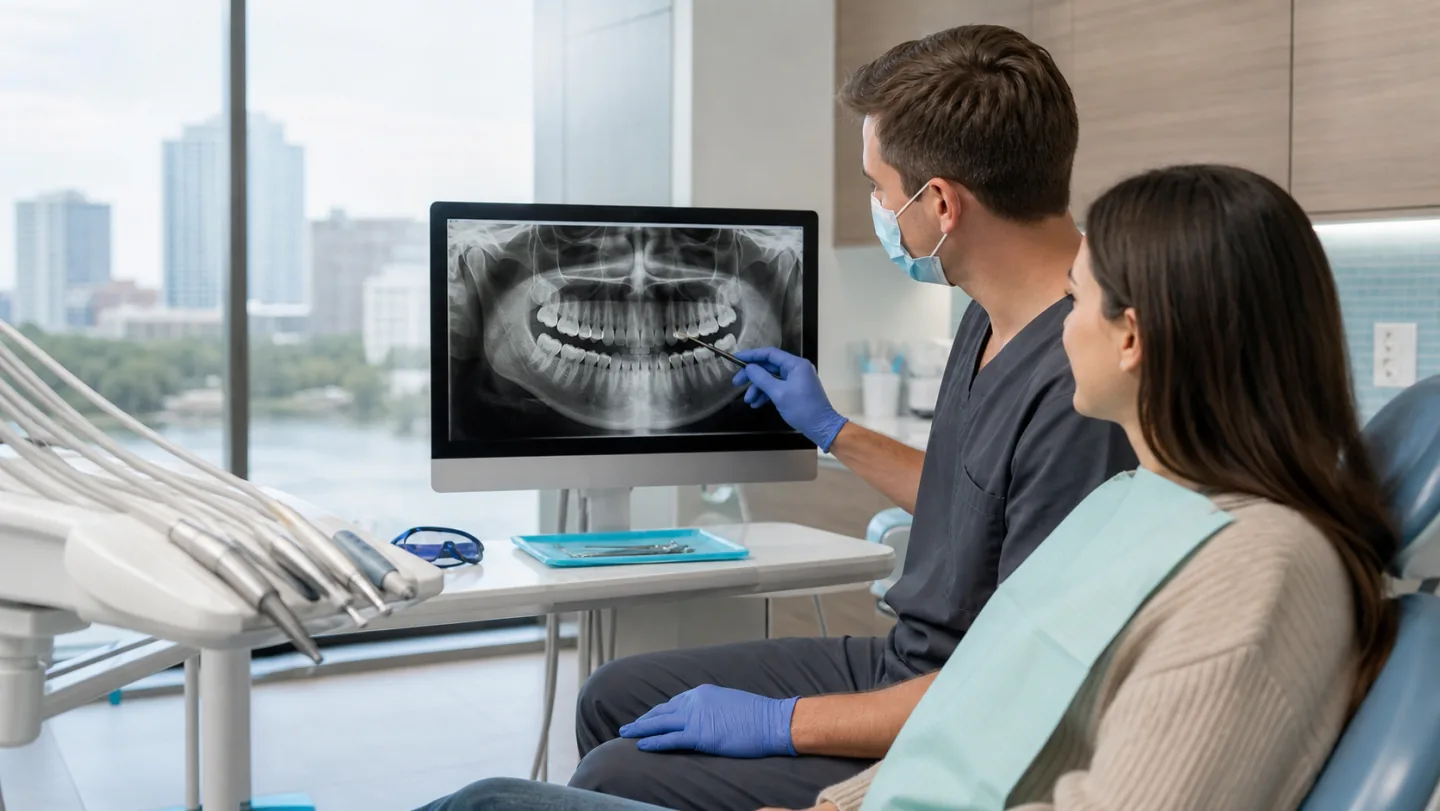
A dentist reviewing a dental X-ray before root canal treatment
Your first big dental treatment.

Root Canal Therapy for Stonewall Residents

If your dental history is mostly checkups and maybe a small filling, a root canal can feel like a jump into unknown territory. Here is a beginner’s view of what the appointment is, in everyday language.

Let's find a time

Request an appointment

We’ll call to confirm your appointment. For urgent care, please call us directly.

New to all of this

What a First-Timer Should Know About Root Canals

You’ve probably sat in a dental chair before, so parts of this will be familiar: the numbing, the light, a dentist working in your mouth. What’s new is that the work takes place inside the tooth, in the tiny channels that run down through its roots. The aim is to remove damaged tissue and keep the tooth you have.

Stonewall is outside the City of Winnipeg, so your care would involve coming in to our McPhillips Street clinic. Your first step isn’t the procedure itself but an exam, because a root canal is one possible answer, and the dentist needs to confirm that it’s the right one for your tooth.

Explore root canal therapy
Reception desk with a glass divider, potted snake plant and blue bench, viewed from the entry hall
A reception desk with a glass divider and a potted snake plant.

It begins with a look

No one should start on a root canal until the tooth has been properly examined and X-rayed.

You can ask basic questions

There’s no such thing as too simple a question when the whole experience is new to you.

There is a second part

Newcomers are often surprised by this: after the canals, a tooth needs a lasting restoration.

A beginner’s tour

What’s going on inside your tooth?

It may help to picture the tooth in layers: a hard shell on the outside and soft living tissue running through the middle. When that soft core is beyond recovery, this treatment deals with it.

What gets done during treatment

Though the name sounds intimidating, the idea is straightforward. The dentist opens a small path in, clears what’s damaged and closes the space so that it stays clean.

  • Freezing comes first, then a barrier sets the tooth apart from your mouth.
  • Slim instruments reach down the channels to tidy and shape them.
  • Disinfecting solution helps with cleaning those hard-to-see areas.
  • A filling material then seals each channel from top to bottom.

What comes once that’s complete

After the canals are sealed, your tooth isn’t quite finished. It’s lost some of its structure, so what protects it during years of chewing matters.

  • A filling closes the entry point made at the start of treatment.
  • A crown is a cap that covers the tooth, and many molars need one.
  • Front teeth don’t always need one, depending on what’s left of them.
  • Holding off on this step for too long can put the tooth at risk.

Some teeth are done in one sitting and others in several. The dentist can give you a clearer picture after seeing your tooth.

Walking you through it

Your first root canal, stage by stage.

The details differ for every tooth, of course. But knowing the general shape of it can make a first experience feel less like stepping into the dark.

Request your visit
  1. 01

    You get in touch

    Let the clinic know what your tooth has been doing, and mention that you haven’t had this kind of treatment before.

  2. 02

    You find out what’s wrong

    The dentist asks about your symptoms and health history, examines the tooth, and uses X-rays to see the parts that aren’t visible from the outside.

  3. 03

    You hear the plan

    If a root canal is advised, you should come away knowing why, how many appointments are expected and what the alternative would be.

  4. 04

    You go through treatment

    Once the area has been frozen, the work is done with the tooth isolated. Afterward, you’ll be told how to look after it until it’s been restored.

Before a first appointment

Things a newcomer may not think of.

A little preparation can go a long way toward making an unfamiliar appointment more manageable. Most of it is just thinking through what you want to know ahead of time.

Because you’d be coming in from Stonewall, ask how long to plan for and whether you could be numb for a while after you leave the clinic.

Good first-timer preparations

  • List every medication and supplement you’re taking, with any health conditions.
  • Jot down when the tooth began bothering you and what makes it worse.
  • Ask what a typical first appointment includes at the clinic.
  • Plan your day so you aren’t rushing straight off to something important.
Pale blue dental chair reclined toward the foreground, with cabinets, a screen and a light overhead arm behind
White chairs and small side tables with potted plants in front of a large window with sheer striped blinds

A reclined pale blue chair, and white chairs with small plants by a sheer-blinded window.

What it actually feels like

Sensations you may notice.

Not knowing what you’ll feel can be the hardest part of doing anything for the first time. These are some of the things people tend to ask about in advance.

The numbing

Local anesthetic takes away the pain signals from that area, and this happens before any work starts on the tooth.

The rest of it

Pressure and vibration are normal to feel. Sharp pain isn’t something you should sit through, so tell the dentist the moment it happens.

The barrier

A thin sheet may surround the tooth. Ask to have it shown and explained if it’s unfamiliar to you.

The days right after

What’s normal for a first-timer?

Without past experience to compare to, it’s hard to know what’s ordinary. Here’s a short guide to the difference between expected soreness and something worth a call.

01

Usual tenderness

Putting pressure on the tooth might feel a bit uncomfortable for a short time. You should notice it getting better, not worse.

02

Not usual

If you have significant swelling or strong pain, or if it just isn’t going as described, please call the clinic.

03

Your next appointment

Find out when your filling or crown is due, and put it on the calendar, even if the tooth feels entirely fine.

Remember that a treated tooth can still get new decay, so brushing, flossing and regular checkups carry on as before.

Talk with our team
Close view of Winnipeg North Dental’s silver lettering and phone number above tall frosted windows

Winnipeg North Dental

Unit-5 2358 Mcphillips Street, Winnipeg, MB R2V 4J6
Get directions (opens in a new tab)
Where you’d be coming

Where Stonewall Residents Receive This Care

If you’re based in Stonewall, your appointments would be in Winnipeg, at Winnipeg North Dental, Unit 5, 2358 McPhillips Street. Remember to look for Unit 5 when you arrive.

It’s fine to use the form for a first enquiry, but it won’t lock in a time. Someone from the clinic gets back to you first.

Questions about coverage?

Talk with our team before your visit or learn about CDCP.

A little clarity before your visit

Your questions, answered.

Helpful details about root canal therapy in Stonewall.

Ask our team
I live in Stonewall and have never done this before. How do I start?

Simply phone (204) 338-3003 or use the form to request an assessment, and say it’s your first time. You’d be seen at the McPhillips Street clinic in Winnipeg, at a time staff confirm with you.

Is a root canal just a very big filling?

Not quite. An ordinary filling repairs the outer part of a tooth, whereas a root canal treats the tissue inside the roots, and then a filling or crown goes on top.

Do they take my tooth’s roots out?

No, the roots remain in place. What’s removed is the soft tissue inside them, after which the empty channels are cleaned and sealed.

Will I be awake?

Treatment relies on local anesthetic to numb the tooth, so you would normally be awake for it. If you have questions about other comfort options, ask the clinic when you’re booking.

Could I end up not needing one?

Yes, that’s possible. A sore tooth doesn’t always need a root canal, so your examination could point toward a different kind of care.

What should I do if I don’t understand something?

Ask for it to be explained again, as many times as you need. Being new to this is a perfectly good reason to want more detail.

Taking the first step?

Start by getting the tooth checked.

Use the form to request an appointment at our Winnipeg clinic, and staff will reply. If your pain or swelling is severe, please call.

Patient testimonials

Kind words from our patients

★★★★★ 5.0 from 440+ reviews on Google

Close to home

Areas we serve

Convenient dental care on McPhillips Street for families across northwest Winnipeg and nearby communities.

Explore all service areas

A healthier smile is one visit away

Ready for dental care that feels genuinely comfortable?

✓ New patients welcome ✓ Direct insurance billing ✓ Multilingual team

How can we help?

Our dental team is here for you.

Ready to book or have a question? Choose the option that works best for you.

For urgent dental concerns, please call us directly.

Send us a message

Our team will reply during clinic hours.



