Skip to content
Winnipeg North Dental
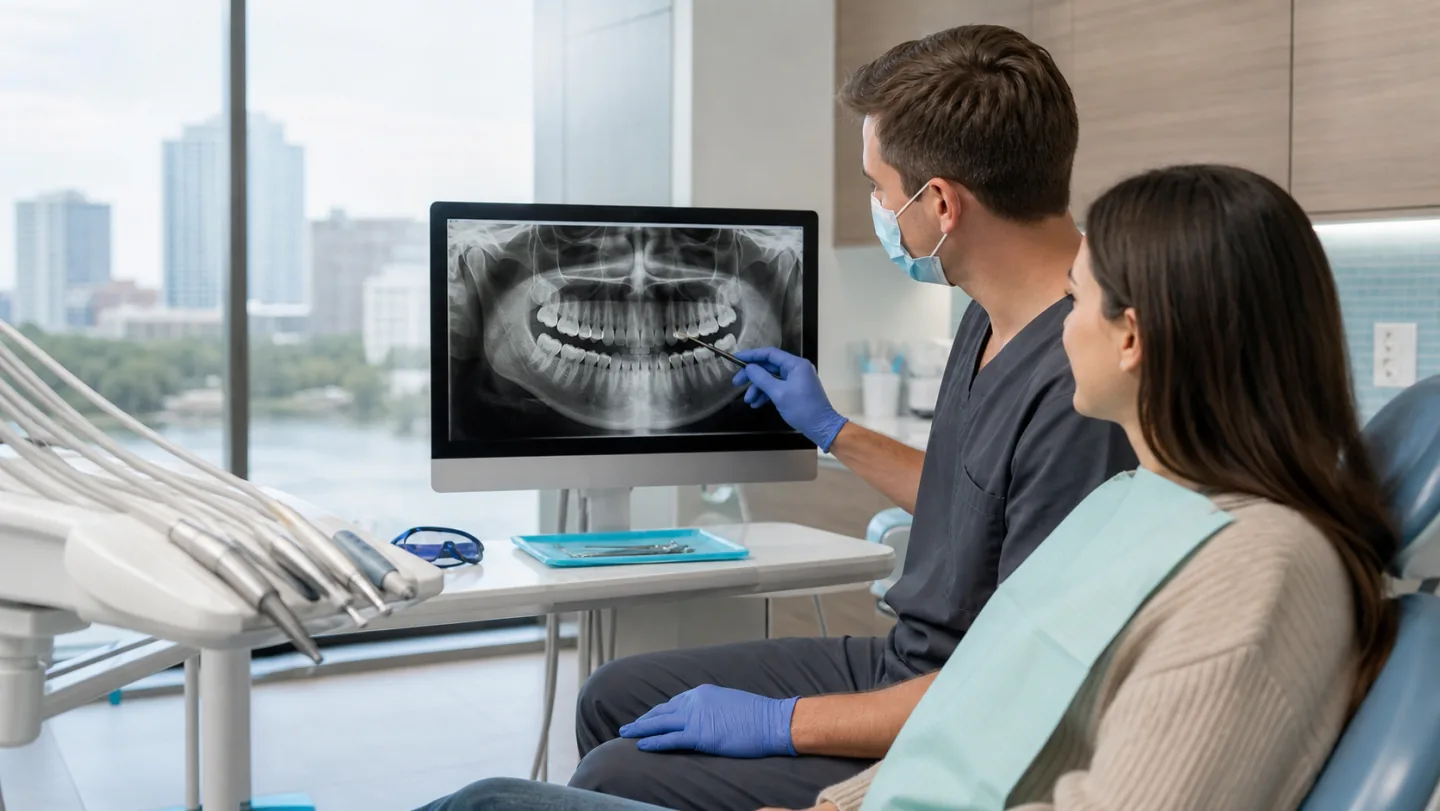
A dentist reviewing a dental X-ray before root canal treatment
Two sore teeth at once?

Root Canal Therapy for St. Vital Residents

When a whole side of your mouth is complaining, it’s natural to fear you need two root canals. Sometimes that’s how things stand, and sometimes one tooth is making its neighbour seem guilty.

Let's find a time

Request an appointment

We’ll call to confirm your appointment. For urgent care, please call us directly.

More than one suspect

Working Out Which Teeth Are Involved

Dental pain can spread, and it doesn’t always stay above the tooth that’s causing it. A single inflamed tooth might make a broader area ache, while two teeth with separate problems can also feel like one big problem. Guessing doesn’t get you far, so each suspect tooth has to be checked on its own.

Anyone in St. Vital, an area in Winnipeg, can have this sorted out at our clinic on McPhillips Street. Findings for each tooth may differ, too, with one needing canal treatment while another could need a filling or nothing at all.

Explore root canal therapy
Reclined blue dental chair with an instrument tray, sink and wooden lower cabinets
An instrument tray on a white arm above a light blue dental chair.

Each tooth gets tested

Pain may blur across an area, so the exam looks at the teeth one by one.

Separate answers

Two teeth next to each other can need entirely different kinds of care.

An order to things

If several teeth need work, the dentist can explain what ought to come first.

Tooth by tooth

Sorting out, then treating.

Each tooth has its own canals, its own damage and its own story. What’s decided for one doesn’t automatically apply to the other.

What may be going on

A number of different situations can feel similar from where you’re sitting.

  • One tooth has deep trouble and the ache is spreading.
  • Each of two teeth has its own inflamed or infected tissue.
  • A filling is failing on one tooth and the pulp is suffering in another.
  • Something other than the tooth, such as a gum issue, is contributing.

Treating any tooth that needs it

Where a root canal is confirmed, every treated tooth goes through the same broad stages.

  • It’s frozen, then isolated so that the area stays clean.
  • Reaching the pulp allows diseased tissue to be removed.
  • Its canals are then cleaned out, disinfected and shaped.
  • A sealing material goes in, with a restoration to follow.

Ask whether more than one tooth could be treated together, or whether separate appointments suit your situation better.

Making sense of it

Sorting out a confusing ache.

You’re not expected to work out which tooth is responsible. Your job is to describe what you notice, and then let the examination narrow things down.

Request your visit
  1. 01

    Point to the whole area

    Show where discomfort seems to be, and say so if you feel it across several teeth or can’t really tell.

  2. 02

    Let each be checked

    Temperature and pressure responses, along with X-ray images, may help separate one tooth from another.

  3. 03

    See the findings tooth by tooth

    Ask for a plain description of each one, including any that turn out to be perfectly healthy.

  4. 04

    Talk through the order

    Urgency, restorability and your own priorities can all affect which tooth is dealt with first.

Before the exam

Clues you can collect.

It helps to notice how things behave, as long as you aren’t making anything worse. Keep it simple, and don’t test your teeth on purpose.

Make sure the clinic has your full medication list, especially if you’re managing pain with something you’ve bought yourself.

Helpful clues

  • Which teeth you suspect, even if you’re only guessing.
  • Whether the discomfort stays in one spot or moves around.
  • Recent dental work anywhere on that side of your mouth.
  • Your allergies, health conditions and regular medicines.
Bright waiting corner with white chairs, potted plants, a small white chair and a pale rug
Reception area with a patterned rug, a snake plant and a white desk

Small potted plants on side tables, and a patterned rug by the front desk.

Getting through more than one

Comfort across several teeth.

It’s reasonable to be concerned about going through this twice. How your mouth responds could differ between teeth, so tell the dentist about each.

Numbing an area

Local anesthetic can reach more than the one tooth, depending on where it’s placed, so ask which parts will feel numb.

Pressure, then settling

Pressure is common while you’re being treated. Should you feel anything sharp, tell the dentist right away.

Resting your jaw

Longer work can be tiring for your jaw. If it starts getting to you, let the dentist know so you can pause.

With more than one on the go

Keeping track of each tooth.

When two teeth are involved, one may be finished while the other is still waiting. Keep clear about what’s been completed and what still has to happen.

01

Sorting out the soreness

A recently treated tooth may be sore to bite on for a while. Pain or swelling that’s substantial or growing is a reason to phone.

02

A restoration for each

Every treated tooth still needs its own suitable restoration, and putting any of them off can leave that tooth open to fracture.

03

Noticing a new pattern

Once one tooth settles, you could find another stands out more. Mention that, rather than assuming it’s the same problem.

Depending on tooth position and remaining structure, each one could end up with a different restoration.

Talk with our team
Winnipeg North Dental storefront with a logo sign, frosted windows and a small garden bed

Winnipeg North Dental

Unit-5 2358 Mcphillips Street, Winnipeg, MB R2V 4J6
Get directions (opens in a new tab)
Where the exam takes place

Seen at McPhillips Street

For St. Vital residents with more than one worrying tooth, the visit would be at Winnipeg North Dental, Unit 5, 2358 McPhillips Street, Winnipeg. It’s fine to say you’re not sure how many teeth are involved.

Filling in the form doesn’t confirm a time, so expect to hear from us about arranging one.

Questions about coverage?

Talk with our team before your visit or learn about CDCP.

A little clarity before your visit

Your questions, answered.

Helpful details about root canal therapy in St. Vital.

Ask our team
How can someone in St. Vital get several sore teeth looked at?

Phone (204) 338-3003 or send the form, mentioning that more than one tooth seems affected. Your exam would take place at our McPhillips Street clinic.

Can one bad tooth make the teeth around it hurt?

Yes, discomfort can feel as though it’s spreading to teeth beside it. That’s a good reason to have them examined, rather than judging by how they feel.

Can two root canals happen in one appointment?

This depends on the teeth involved and what each requires. Bring it up with the dentist after the exam, because no general answer fits everybody.

Which tooth would you treat first?

Generally, urgency and the condition of each tooth guide that choice, and your preferences matter too. You’ll have a chance to ask why one is ahead of another.

If one tooth can’t be saved, does that change the plan for the other?

It might, since the overall plan looks at how teeth work together. Ask how your decision on one might affect what’s recommended for the other.

Do both teeth need crowns afterward?

Not automatically. Each tooth is judged separately, including where it sits, how much structure is left and how it meets your bite.

No need to pick a tooth

Let the exam narrow it down.

Request an appointment at our Winnipeg clinic and say that several teeth may be involved. If you have severe pain or swelling, please call instead.

Patient testimonials

Kind words from our patients

★★★★★ 5.0 from 440+ reviews on Google

Close to home

Areas we serve

Convenient dental care on McPhillips Street for families across northwest Winnipeg and nearby communities.

Explore all service areas

A healthier smile is one visit away

Ready for dental care that feels genuinely comfortable?

✓ New patients welcome ✓ Direct insurance billing ✓ Multilingual team

How can we help?

Our dental team is here for you.

Ready to book or have a question? Choose the option that works best for you.

For urgent dental concerns, please call us directly.

Send us a message

Our team will reply during clinic hours.



