Skip to content
Winnipeg North Dental
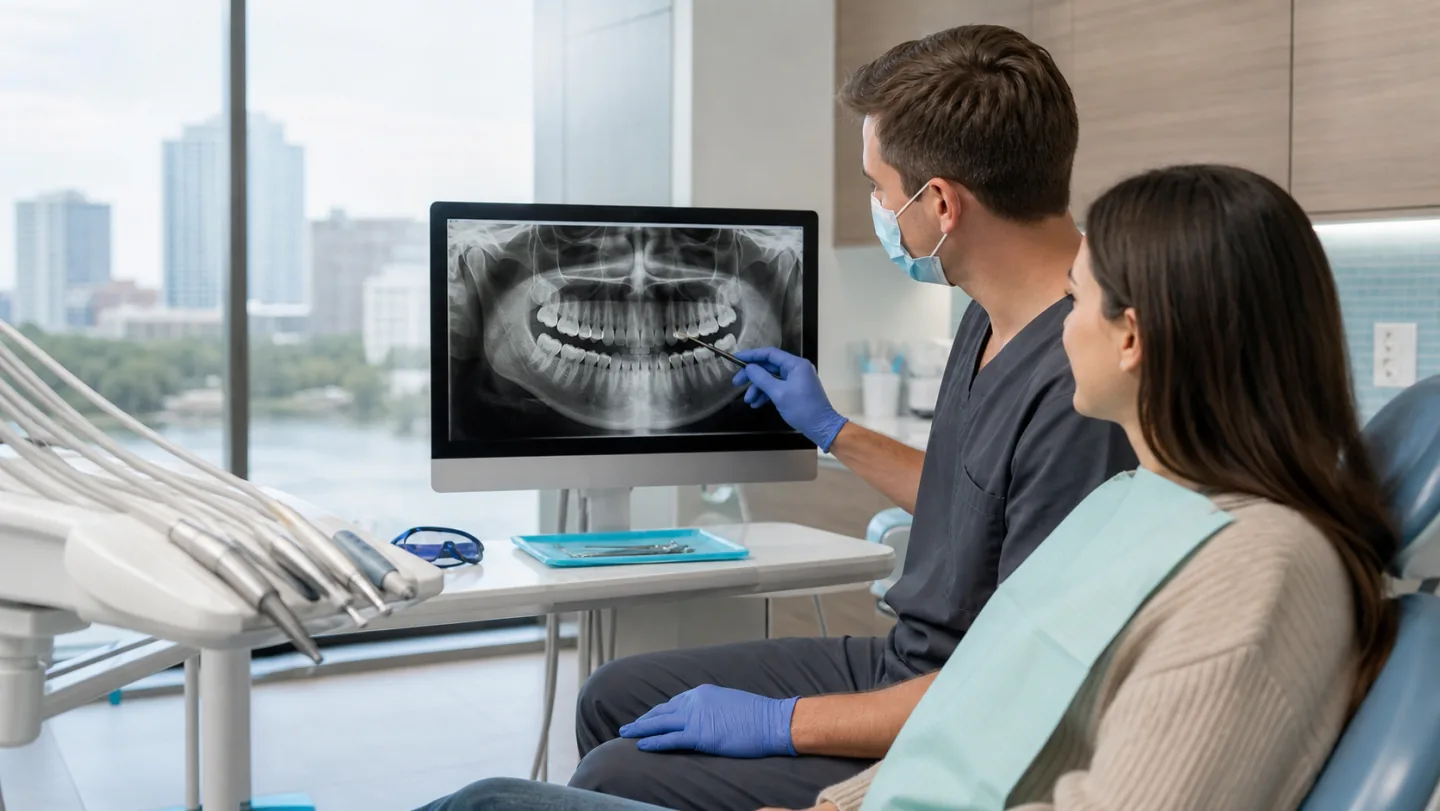
A dentist reviewing a dental X-ray before root canal treatment
Think past the sealing stage.

Root Canal Therapy for Seven Oaks Residents

Many people picture a root canal as the whole job, then are surprised to hear about a crown. If you want the complete plan from the outset, this page is written with you in mind.

Let's find a time

Request an appointment

We’ll call to confirm your appointment. For urgent care, please call us directly.

The full picture

A Treated Tooth Still Has to Be Rebuilt

Clearing out and sealing the canals deals with the problem inside a tooth. It does not replace the structure already lost to decay or a fracture, and it is that lost structure that can leave the tooth more liable to break. So the course of care has two halves: treating the inside, then protecting the outside with a suitable final restoration.

For Seven Oaks residents, both halves are planned through our McPhillips Street clinic in Winnipeg. Before anything begins, an examination and any needed X-rays show whether enough healthy tooth remains to make the plan predictable. Knowing that early gives you a clearer sense of what you are agreeing to.

Explore root canal therapy
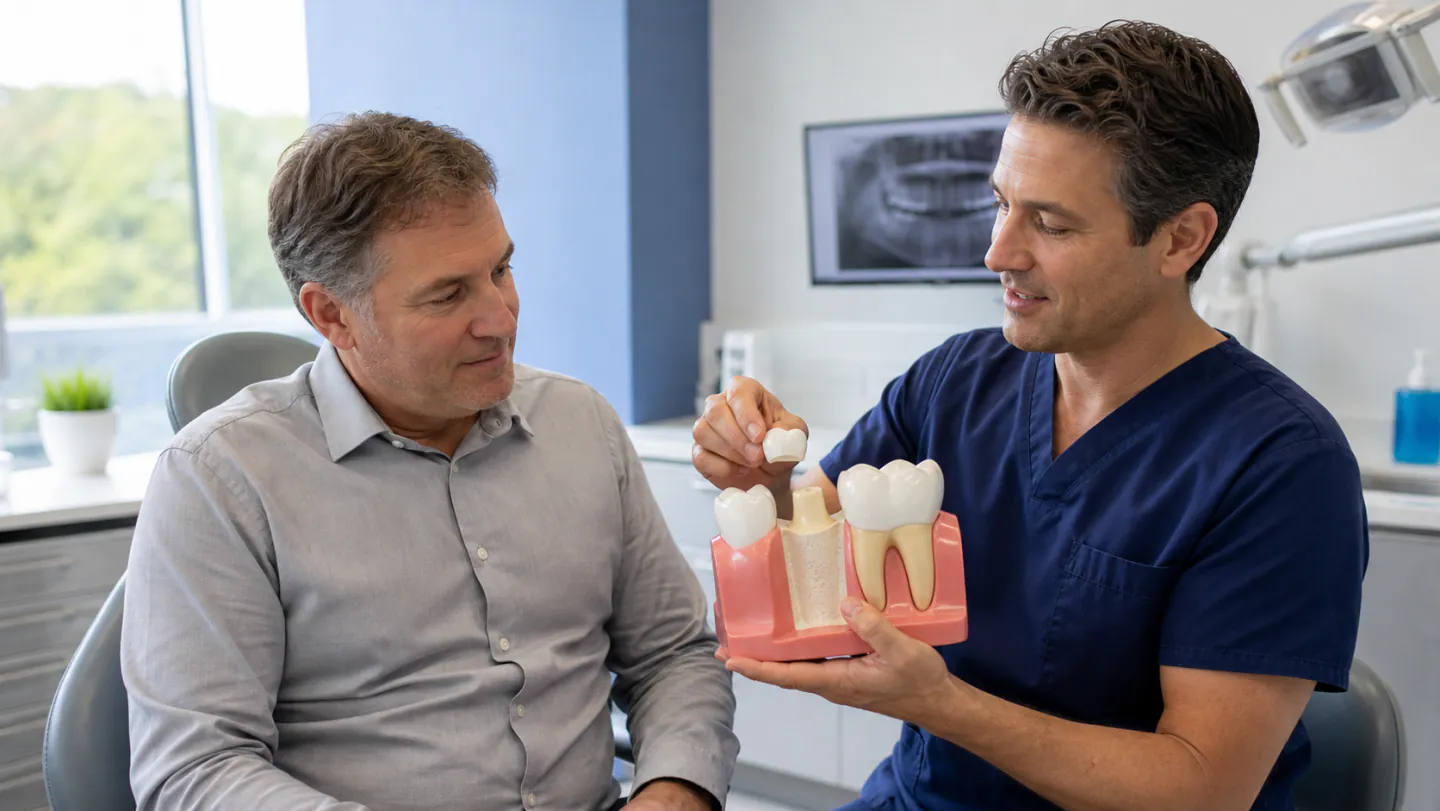
Dentist showing a patient a model of a tooth with a crown
A tooth model can help explain how a crown covers a treated tooth.

Both stages explained

Ask how sealing the canals and restoring the tooth fit together in your case.

Restorability checked first

We look at what would be left to rebuild on before recommending treatment.

A clear finish line

The work is not complete until the tooth’s final restoration is in place.

Two halves of one plan

Inside the tooth, then over it.

Each stage does its own job, and one without the other leaves work undone. Exactly what your tooth needs will depend on where it sits and what is left of it.

Half one: the canals

This part targets the inflamed or infected tissue, working from a small opening once the area has been numbed.

  • Isolating the tooth protects the clean working field.
  • Inflamed or infected tissue is cleared from the canal system.
  • Instruments and disinfection ready the canals for filling.
  • A sealed canal system lowers the risk of reinfection.

Half two: the restoration

Rebuilding gives the weakened tooth back its everyday strength as far as possible and helps shield it against the forces of chewing.

  • Molars and premolars often call for a crown over their chewing cusps.
  • Front teeth vary, based on remaining structure and the way you bite.
  • A filling is also typically part of closing up the tooth.
  • A sound restoration helps limit leakage and protect the result.

Sometimes the question of whether a tooth can be restored leads to a different answer altogether, in which case extraction may be discussed.

How the plan unfolds

From first look to final restoration.

Appointments vary according to the tooth, its anatomy and any infection, and the restoration may be handled as a further stage.

Request your visit
  1. 01

    Raise the whole plan early

    Start by saying you want to understand everything involved from beginning to end. Past dental work on this tooth and your general health come up here too.

  2. 02

    See what can be rebuilt

    An examination and X-rays reveal the extent of the damage. The dentist considers whether there is enough structure and support for a predictable repair.

  3. 03

    Treat the inner space

    Local anesthetic comes first. Then the canals are accessed, cleaned, shaped, disinfected and filled, over one appointment or several.

  4. 04

    Put the restoration in place

    A filling, a crown or another protective option is completed as planned. Ask when this should occur, because delaying it can place the tooth at risk.

Questions worth asking

Budget your time for both stages.

Planning only for the root canal can leave you unprepared for what follows. It is sensible to ask about the restoration at the same time, including timing and estimated cost.

Coverage for the two stages may differ, so check with your plan. Ask the clinic for an estimate after your assessment.

Have these on hand

  • Any insurance or CDCP details you intend to use for either stage.
  • An updated list of your medications and medical conditions.
  • Anything you recall about the tooth’s past fillings or crowns.
  • Your questions on timing, such as how soon a restoration should follow.
Blue patient chair and instruments in a clinic treatment room
White desk and chairs in the clinic’s consultation room

Where treatment and planning happen at our clinic.

Through both stages

Comfort matters at each appointment.

More than one visit may be involved, so it is worth telling us what went well and what did not after each one. That way, your preferences can be carried forward into the next stage of care.

Numb before beginning

Anesthetic is in place before canal work starts, though pressure or vibration can remain noticeable.

Sharp means stop and say

If you feel a sharp pain, alert the dentist right then instead of waiting.

Learn what each stage involves

Ask how a restoration appointment differs from canal treatment so each one feels familiar.

Protecting your investment

Between sealing and restoring, and beyond.

The stretch after the canals are sealed is when a tooth can be overlooked. Keep these points in mind so the plan is carried through.

01

Don’t let the gap stretch

Once the pain has settled, the crown can feel optional. It is not something to postpone without talking to the dentist, as the tooth can be at risk meanwhile.

02

Ordinary soreness versus concern

Tenderness from biting may appear for a brief time and should get better. Significant, worsening or unexpected pain or swelling is a reason to phone.

03

Care for it like any tooth

Decay can still form on a treated tooth, and fractures or leaks can create problems. Regular dental visits help protect both the tooth and its restoration.

Lost track of the next stage? Call and ask where things stand.

Talk with our team
McPhillips Street exterior of the clinic with its phone number displayed

Winnipeg North Dental

Unit-5 2358 Mcphillips Street, Winnipeg, MB R2V 4J6
Get directions (opens in a new tab)
Your clinic for both stages

Visiting Us on McPhillips Street

Seven Oaks is in the northern part of the City of Winnipeg. Residents receive root canal therapy at Unit 5, 2358 McPhillips Street, and restorative appointments are arranged through the same clinic.

Any form submission is treated as a request. A staff member follows up to fix the time, or you may simply call to begin.

Questions about coverage?

Talk with our team before your visit or learn about CDCP.

A little clarity before your visit

Your questions, answered.

Helpful details about root canal therapy in Seven Oaks.

Ask our team
How do people in Seven Oaks begin this treatment with you?

Begin with a request on this page or a call to (204) 338-3003. Assessments happen at Unit 5, 2358 McPhillips Street, Winnipeg, and we will get back to you to finalize a time.

Why would I need a crown if the infection has been treated?

Treating infection does not bring back lost tooth structure. Having lost part of its strength to damage, a treated tooth can be more vulnerable to fracture, and a crown helps protect it. Many back teeth benefit from this type of coverage.

Do front teeth need crowns as well?

It depends. The recommendation for a front tooth is based on how much structure remains and the way your bite works, so a crown is not automatic. Ask the dentist about your own tooth.

How soon after a root canal should the restoration be done?

The dentist will advise on timing based on your tooth and your plan. In general, delaying this step can place the tooth at risk, so it is a good idea to arrange it as recommended.

Can a crown protect against the infection returning?

A sound final restoration helps protect the result, although it cannot rule out problems. Leakage, a fracture, complex anatomy or new decay can each still affect a treated tooth, so regular care remains important.

What if there is not enough tooth left for a crown?

That may change the recommendation. Extraction can be the more appropriate choice if a tooth cannot be predictably restored, and the dentist will go over what that would mean.

See the whole road ahead

Ask for the plan from start to finish.

Request an appointment at our Winnipeg clinic and raise both stages at your visit. Pain or swelling that is severe warrants a call.

Patient testimonials

Kind words from our patients

★★★★★ 5.0 from 440+ reviews on Google

Close to home

Areas we serve

Convenient dental care on McPhillips Street for families across northwest Winnipeg and nearby communities.

Explore all service areas

A healthier smile is one visit away

Ready for dental care that feels genuinely comfortable?

✓ New patients welcome ✓ Direct insurance billing ✓ Multilingual team

How can we help?

Our dental team is here for you.

Ready to book or have a question? Choose the option that works best for you.

For urgent dental concerns, please call us directly.

Send us a message

Our team will reply during clinic hours.