Skip to content
Winnipeg North Dental
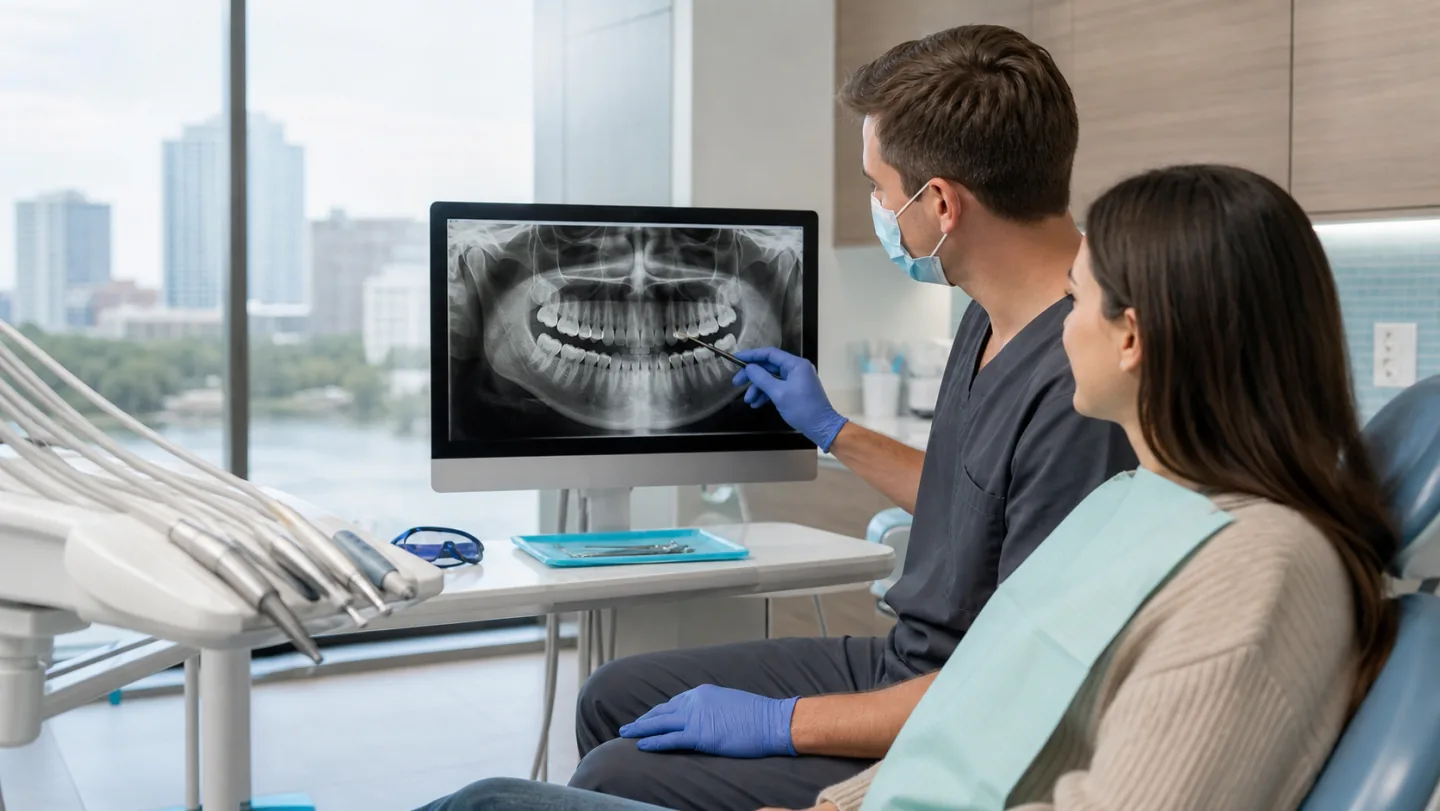
A dentist reviewing a dental X-ray before root canal treatment
Sinus pressure, or a tooth?

Root Canal Therapy for Selkirk Residents

An ache in your upper back teeth can be hard to place. It might come from the sinus above, from a tooth or from both at different times. Telling them apart starts with having the tooth looked at.

Let's find a time

Request an appointment

We’ll call to confirm your appointment. For urgent care, please call us directly.

Two neighbours, one ache

When Upper Tooth Pain Might Not Be What It Seems

The roots of your upper back teeth sit close to the floor of the sinus, which helps explain why congestion can feel like a toothache, and why a problem in a tooth can feel like pressure in your cheek. Several teeth aching at once can feel different from one particular tooth that won’t settle down.

If you’re in Selkirk, which is outside the City of Winnipeg, a trip in to our McPhillips Street clinic can give you some clarity on the dental side. The dentist can check whether a tooth is the likely source and whether root canal therapy is relevant. If teeth don’t seem to be the problem, you’ll know that as well.

Explore root canal therapy
Bright office with a white desk, keyboard and mouse, black task chairs and a window with striped blinds
A white desk with a keyboard and mouse between black task chairs.

Is it one tooth or several?

Note whether you can point at a single spot, or whether a whole region seems to ache together.

What changes it?

Hot and cold, biting, bending forward or a stuffy nose can all be useful details to mention.

Let the exam sort it out

Your own hunch is a good starting point, but it takes an assessment to know more about the tooth.

If a tooth turns out to be the source

Treating an upper molar from the inside.

Should your examination link the ache to damaged tissue inside the tooth, root canal therapy may be recommended. Upper back teeth tend to have several narrow canals, so the plan is shaped to the tooth.

Working within the roots

Each canal in the affected tooth needs attention. The dentist numbs the area, creates an opening and works along these internal passages to remove what’s unhealthy.

  • Isolating the tooth helps to keep moisture out of the work area.
  • Each internal channel is instrumented and then treated with disinfectant.
  • Curved or narrow roots may influence how long the treatment takes.
  • Sealing material is placed to close the cleaned canal system.

Protecting a chewing tooth

Molars take a lot of force during chewing, and one that’s had a root canal has often already lost structure. That’s why the final step usually gets particular attention.

  • A filling closes up the entry made into the crown of the tooth.
  • Cuspal coverage, such as a crown, is frequently advised for molars.
  • Leaving the tooth without this repair can expose it to fracture.
  • The dentist can explain what your particular tooth is likely to need.

A diagnosis that points elsewhere means a root canal wouldn’t be appropriate. Treatment should follow what’s found, not what was first assumed.

Narrowing it down

How your dentist investigates the ache.

With this kind of pain, the assessment is largely about ruling things in or out. These stages show how you might arrive at a clearer explanation.

Request your visit
  1. 01

    Tell it in your own words

    Explain where it hurts, whether you’ve recently had a cold or congestion, and whether the feeling shifts when you lean over or lie down.

  2. 02

    Have the teeth tested

    The dentist checks the area, examines the teeth involved and may see how they respond to pressure or temperature, alongside any appropriate X-rays.

  3. 03

    Hear what’s been ruled out

    It’s useful to learn what isn’t the cause as well as what might be. If a tooth seems healthy, that’s worthwhile information too.

  4. 04

    Decide what to do next

    If a tooth is responsible, go over the plan and the number of appointments. If not, ask what the dentist suggests you do from there.

Clues to pay attention to

Keep a few notes on the pattern.

Pain that moves around or comes and goes can be frustrating to describe from memory. Just a few days of simple notes can make things much clearer during your appointment.

Ask ahead how long the assessment should take, so your trip in from Selkirk can be planned, and whether any treatment would need a separate visit.

Patterns to record

  • Whether one tooth aches or the discomfort spreads along the upper jaw.
  • Recent congestion, colds or seasonal allergies, and how they line up with the ache.
  • Whether hot or cold sets it off, and how long the feeling lasts afterward.
  • Whether walking downstairs or bending over makes the upper teeth feel heavier.
Sitting area with a navy bench, two abstract prints, a pale rug and white chairs by a window
Seafoam treatment chair with paperwork on the seat, in a room with a stool and a white instrument unit

A pale rug below a navy bench, and a seafoam treatment chair next to a stool.

If your head feels stuffed up

Comfort when you’re congested.

If you’re also dealing with a blocked nose, lying back with your mouth open may be uncomfortable. Mention it at the start of your appointment, so it isn’t a surprise for anyone.

Sitting position

Let the dentist know if a fully reclined position bothers your head or breathing, so you can talk through it.

Frozen, yet aware

After numbing, you might notice some vibration and force from the work. Sharpness is different, so please say so if that occurs.

Pain in the cheek

Facial pressure can be unsettling when you don’t know the cause. Ask what the findings mean for that symptom in particular.

If it isn’t gone right away

After treatment on an upper tooth.

Once the tooth has been treated, you might wonder if any remaining feeling is the tooth or the sinus. Knowing what to expect can help you decide whether to phone.

01

Some biting soreness

A short period of sensitivity to chewing is possible. You’d generally expect this to lessen as the tooth settles.

02

When to call us

New swelling, or pain that’s severe or moving in the wrong direction, should be reported to the clinic by phone.

03

Telling symptoms apart

Ask the dentist what you should do if you get congested and the ache returns, in case it’s not the treated tooth.

Treated teeth can run into later problems from a fracture or new decay, so keep up your regular dental visits.

Talk with our team
Winnipeg North Dental viewed from the pavement, with grey siding, a white sign band and shrubs by the entry

Winnipeg North Dental

Unit-5 2358 Mcphillips Street, Winnipeg, MB R2V 4J6
Get directions (opens in a new tab)
Getting an answer

Where Selkirk Residents Are Examined

From Selkirk, you’d come into Winnipeg for this appointment, which takes place at Winnipeg North Dental, Unit 5, 2358 McPhillips Street, Winnipeg, MB R2V 4J6.

After you submit the form, you’ll need to wait for the clinic to reply with a time, as a request doesn’t reserve one.

Questions about coverage?

Talk with our team before your visit or learn about CDCP.

A little clarity before your visit

Your questions, answered.

Helpful details about root canal therapy in Selkirk.

Ask our team
How can someone from Selkirk find out whether a tooth is the cause?

Call (204) 338-3003 or send a request through this page, and describe the ache and where it is. You’d have your assessment at our clinic on McPhillips Street in Winnipeg, once staff have confirmed the time.

Can a sinus problem feel like a toothache?

Yes, it can. Upper back teeth sit right beneath the sinus, so pressure from congestion may be felt as an ache in those teeth, sometimes in several of them at the same time.

Can an infected tooth cause sinus symptoms?

A problem in an upper back tooth can sometimes produce pressure or discomfort up in the cheek. This is one reason to have the tooth checked when symptoms don’t add up.

What if you find nothing wrong with my teeth?

That’s still a useful result, as it means a root canal isn’t the answer for now. Ask the dentist what would be a sensible next step for you to take.

Should I wait to see if my cold clears up first?

If you aren’t sure, phone the clinic and describe what’s happening. Please don’t wait or use the form if you have severe pain or swelling.

Still can’t place that ache?

Have the upper teeth checked.

Request an assessment at our Winnipeg clinic, and you’ll hear back from the staff. Phone instead if pain or swelling becomes severe.

Patient testimonials

Kind words from our patients

★★★★★ 5.0 from 440+ reviews on Google

Close to home

Areas we serve

Convenient dental care on McPhillips Street for families across northwest Winnipeg and nearby communities.

Explore all service areas

A healthier smile is one visit away

Ready for dental care that feels genuinely comfortable?

✓ New patients welcome ✓ Direct insurance billing ✓ Multilingual team

How can we help?

Our dental team is here for you.

Ready to book or have a question? Choose the option that works best for you.

For urgent dental concerns, please call us directly.

Send us a message

Our team will reply during clinic hours.



