Skip to content
Winnipeg North Dental
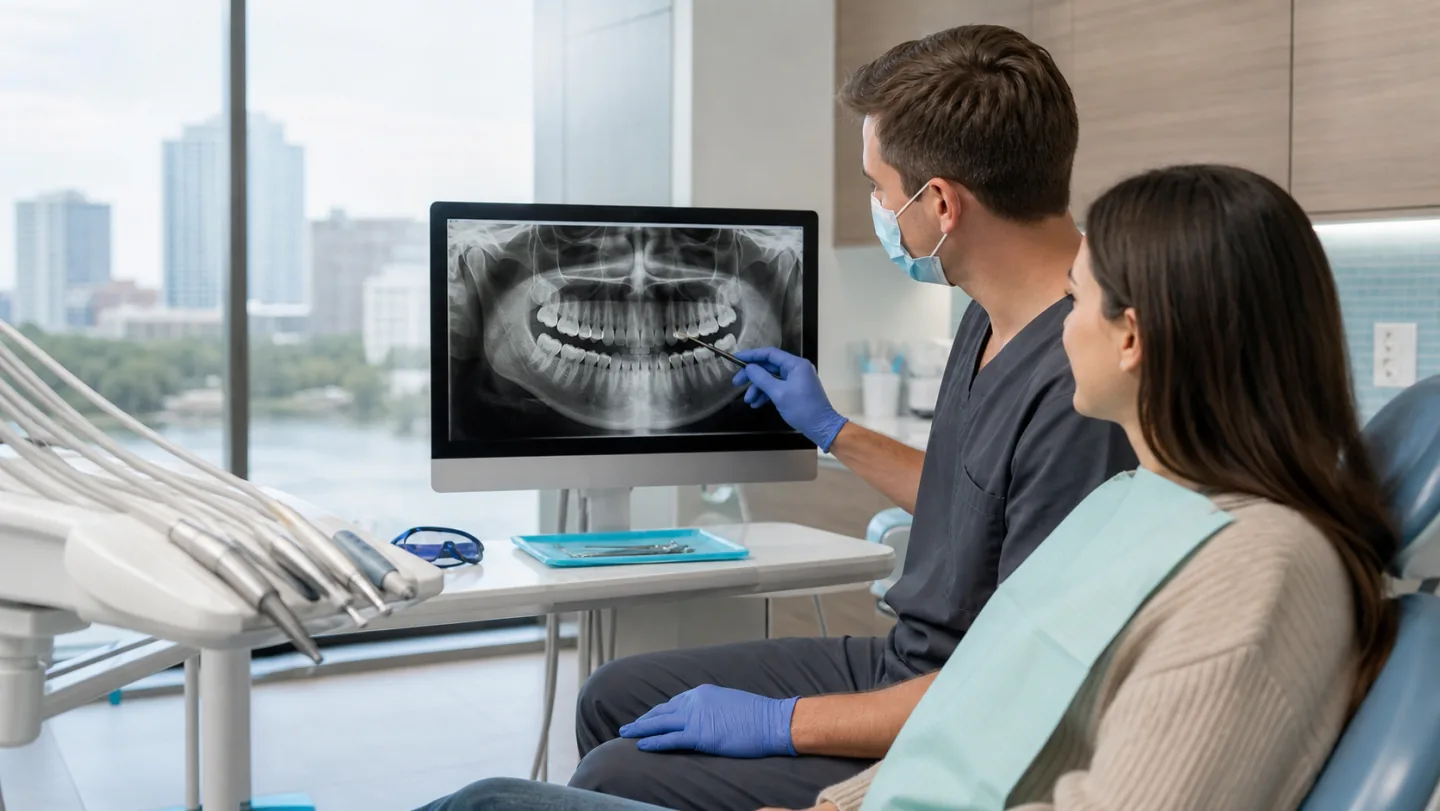
A dentist reviewing a dental X-ray before root canal treatment
It hurts somewhere back there.

Root Canal Therapy for Scotia Heights Residents

Top or bottom? This tooth or the next one? When an ache seems to spread along your whole jaw, pointing to the culprit can feel impossible. Finding it is the dentist’s task, not yours.

Let's find a time

Request an appointment

We’ll call to confirm your appointment. For urgent care, please call us directly.

Pain without an address

Why a Toothache Can Be So Hard to Pinpoint

Tooth pain doesn’t always stay neatly in one spot. An inflamed tooth can seem to ache across an area, and you may be convinced it is a top tooth when a lower one is the source, or the other way around. That confusion is common and says nothing about how carefully you have been paying attention.

A root canal should only be done on the right tooth for the right reason. For residents of Scotia Heights, an area in Winnipeg, the search for that tooth happens at our McPhillips Street clinic, using an examination and X-rays together with your description.

Explore root canal therapy
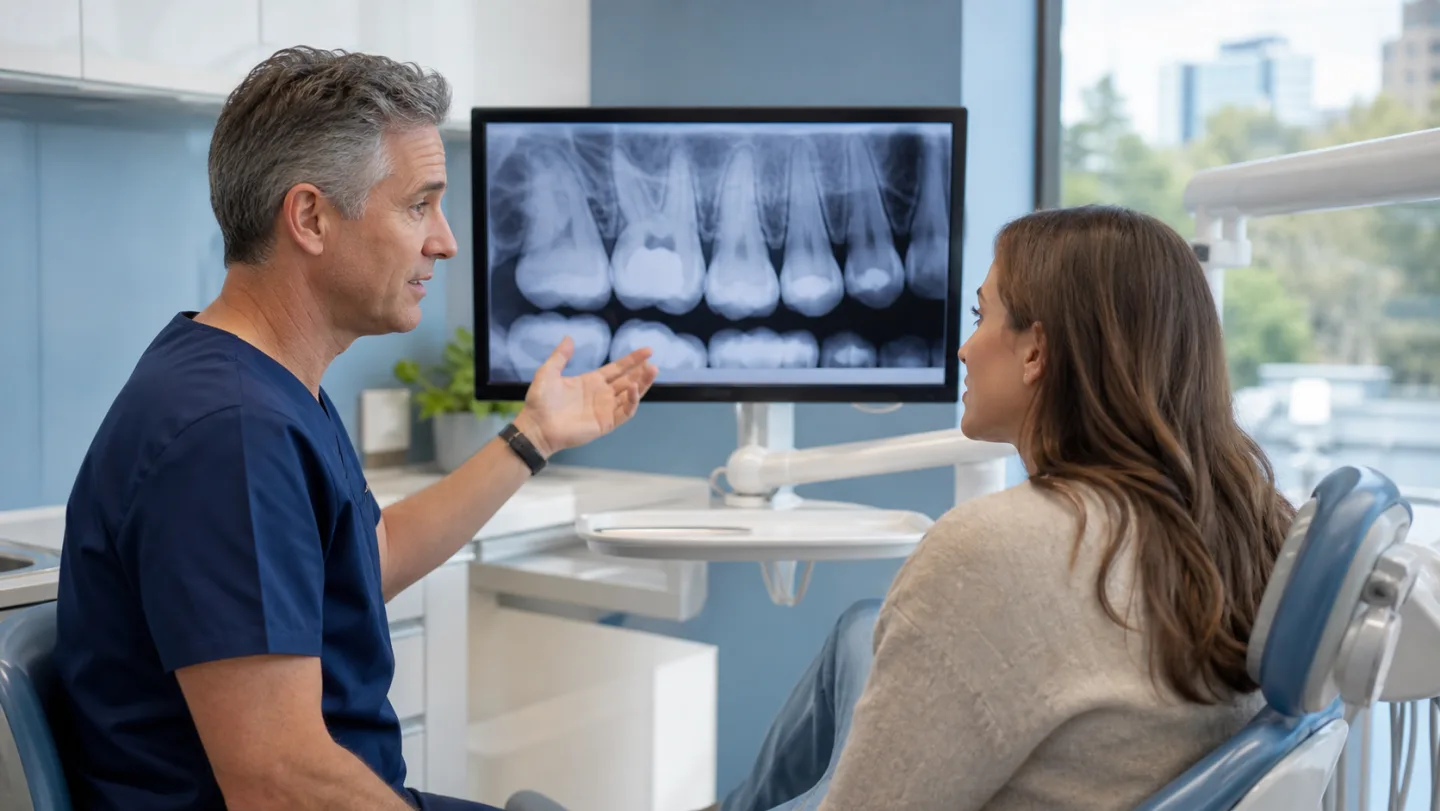
Dentist in navy scrubs gesturing toward a full-arch X-ray while a seated patient listens
A dentist and a seated patient looking at an X-ray on a monitor.

You needn’t be certain

A rough idea of the area is enough to start the search. The rest is the dentist’s job.

Clues add up

Triggers, timing and tenderness on biting each help narrow down the possibilities.

Confirm before treating

Identifying the source comes first, because treatment is aimed at one specific tooth.

Finding it, then fixing it

From a vague ache to one identified tooth.

There are two parts to this: working out where the problem lies, and then, if the inner tissue is the cause, treating that tooth.

Narrowing the search

No single clue settles the matter, so the dentist puts several kinds of information side by side.

  • Your account of where it hurts and what sets it off.
  • A visual check of the teeth and gums around the area.
  • Suitable X-rays that show what the eye can’t see from outside.
  • Whether particular teeth respond to pressure from biting or temperature.

Treating the tooth responsible

If the pulp of an identified tooth is beyond recovery and the tooth is restorable, a root canal may follow.

  • Numbing and isolation prepare that tooth for the procedure.
  • Through a small opening, the affected inner tissue comes out.
  • Each canal is cleaned, shaped, disinfected, and finally sealed.
  • A filling or crown then rebuilds what the tooth needs for chewing.

The search may lead somewhere other than a root canal. Not every painful tooth needs this treatment, and that is one more reason to look before deciding.

A methodical appointment

How the dentist tracks down the source.

Expect a certain amount of detective work. Should a root canal turn out to be the answer, the number of appointments depends on the tooth, any infection and the restoration.

Request your visit
  1. 01

    Point to the general area

    Show the dentist where it seems to hurt, even if the whole side of your face feels involved. A rough zone gives a place to begin.

  2. 02

    Answer some questions

    You may be asked what brings on the ache, what eases it and whether it comes in waves. Short, honest answers are perfectly helpful.

  3. 03

    Examine and take images

    The dentist inspects the likely teeth and uses appropriate X-rays. Comparing these results with your symptoms helps narrow the field.

  4. 04

    Hear what was found

    You’re told which tooth seems responsible and why. If the answer isn’t clear yet, you should hear that plainly, along with what would come next.

A pain diary helps

Note where and when it hurts.

A short record over a few days can reveal more than you might expect. Jot down what you notice on your phone, so you don’t have to rely on memory.

Please don’t press or tap teeth in an effort to find the sore one. Your everyday observations are plenty for the dentist to work with.

Clues to jot down

  • The side of your mouth where the pain seems strongest, and whether it moves.
  • Times of day or activities when it tends to flare up.
  • Foods, drinks or chewing that bring it on or make it worse.
  • Recent dental work in that area, your medication list and insurance details.
Front desk with a clear glass screen, flowers and a framed abstract print on the wall
Dental instrument arm and sink beside a turquoise chair in a clinic treatment room

A front desk with a glass screen, and an instrument arm beside a turquoise chair.

When testing feels daunting

Ask to hear about each test first.

If you already hurt, the thought of someone tapping on your teeth may not sound appealing. Tell us how sore things are, and ask for each check to be explained before it happens.

A signal for stopping

Agree on a way to tell the dentist you need a break, so that you can indicate it during any test.

Once treatment begins

The tooth is numbed for the canal work itself. Report sharpness at any moment, even if you feel you should tolerate it.

Honest answers help

If you aren’t sure whether a test felt different, say so. Uncertainty is useful information as well.

After the source is found

What to watch for next.

Once the source has been addressed, an ache that was once everywhere should begin to settle. Here’s how to tell whether things are moving in the right direction.

01

A shrinking problem

After a root canal, you may feel brief tenderness when biting on that tooth. That is expected to get better rather than worse.

02

A stubborn ache

Pain that remains strong, spreads or doesn’t follow the expected course needs a call, so the dentist can take another look at what is happening.

03

Protecting the tooth

Keep the appointment for the final restoration. Without it, the treated tooth may be more exposed to fracture over time.

Is a different area bothering you now? Tell the clinic where, as it may be a separate problem.

Talk with our team
Winnipeg North Dental sign in raised lettering above a pair of dark glass doors

Winnipeg North Dental

Unit-5 2358 Mcphillips Street, Winnipeg, MB R2V 4J6
Get directions (opens in a new tab)
Track it down with us

Where the Search Takes Place

Scotia Heights residents are examined at Winnipeg North Dental, Unit 5, 2358 McPhillips Street, Winnipeg. The clinic also provides the root canal therapy if your tooth needs it.

When you use the form, your preferred time is only a suggestion. It becomes an appointment after the clinic has confirmed it with you.

Questions about coverage?

Talk with our team before your visit or learn about CDCP.

A little clarity before your visit

Your questions, answered.

Helpful details about root canal therapy in Scotia Heights.

Ask our team
What should I do from Scotia Heights if I can’t say which tooth hurts?

Just explain that when you get in touch. Call (204) 338-3003 or use the form, and you’ll be seen at Unit 5, 2358 McPhillips Street after the clinic arranges a time.

Could pain in my upper teeth be coming from my lower teeth?

It can happen, and it’s one reason your sense of location is treated as a helpful starting point instead of a final answer. The examination and imaging fill in the rest.

What if the X-ray doesn’t show anything?

A tooth can be in trouble without an obvious sign on an image, so X-rays are considered together with the examination and your symptoms rather than on their own.

Could my toothache be coming from something other than a tooth?

It is possible, and that is exactly the kind of thing an assessment is meant to sort out. If the findings point away from your teeth, the dentist can tell you so.

What if the pain has moved by the time I come in?

Tell the dentist what you noticed earlier and how it has changed. A shifting pattern is still useful, and some teeth will show their problem during the exam anyway.

Pain you can’t quite place?

We’ll help narrow it down.

Ask for a visit at our Winnipeg clinic, even if you only know the general area. Severe pain or swelling is a reason to phone.

Patient testimonials

Kind words from our patients

★★★★★ 5.0 from 440+ reviews on Google

Close to home

Areas we serve

Convenient dental care on McPhillips Street for families across northwest Winnipeg and nearby communities.

Explore all service areas

A healthier smile is one visit away

Ready for dental care that feels genuinely comfortable?

✓ New patients welcome ✓ Direct insurance billing ✓ Multilingual team

How can we help?

Our dental team is here for you.

Ready to book or have a question? Choose the option that works best for you.

For urgent dental concerns, please call us directly.

Send us a message

Our team will reply during clinic hours.