Skip to content
Winnipeg North Dental
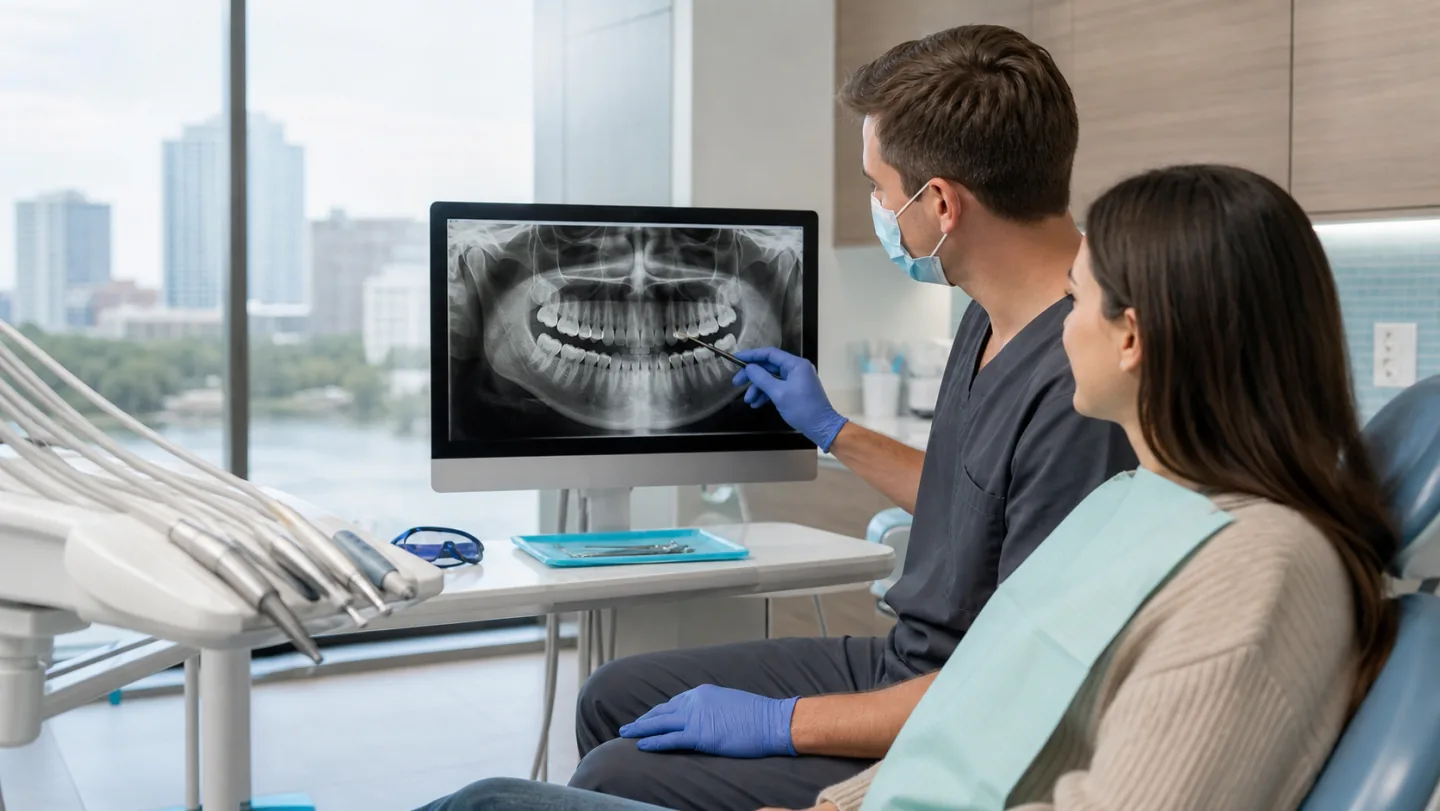
A dentist reviewing a dental X-ray before root canal treatment
Worn down over the years?

Root Canal Therapy for Rosser Residents

Decay gets most of the attention, yet wear can thin a tooth too. If yours have flattened over time and one has started complaining, it may be worth asking what is happening beneath the surface.

Let's find a time

Request an appointment

We’ll call to confirm your appointment. For urgent care, please call us directly.

Slow damage, late symptoms

When Tooth Wear Becomes a Root Canal Question

Enamel and dentin are the barrier between your bite and the living tissue at the centre of a tooth. Years of wear can gradually thin that barrier, and fine cracks may develop too. Plenty of worn teeth never need a root canal, but some reach the point where the inside is affected.

Rosser is outside the City of Winnipeg, so a visit to our McPhillips Street clinic takes some arranging. A tooth that has become touchy, tender or suddenly chipped is still worth having examined, because only an assessment can separate surface sensitivity from a deeper problem.

Explore root canal therapy
Seafoam dental chair with its instrument arm and a sink behind it, seen from the foot of the chair
A seafoam chair stretching toward a sink and a wood-tone cabinet.

Notice new behaviour

An old, flat tooth that has only recently begun reacting to temperature deserves a mention.

Describe your habits

Clenching or grinding, if you know you do it, gives the dentist helpful context about the force on that tooth.

Think about protection

A worn tooth has less to spare, so what covers it after treatment matters a great deal.

Thin walls, then a repair

What treatment involves for a worn tooth.

The basic sequence is no different from that for a tooth damaged by decay. The difference may come in the thinking about how much structure remains and how hard your bite works it.

Cleaning out the canals

With the tooth frozen and kept apart from the rest of the mouth, the dentist goes in through a small access point and removes the unhealthy tissue.

  • Fine instruments work through the narrow spaces, which are then disinfected.
  • Shaping gets those channels ready to receive their filling material.
  • Sealing them afterward reduces the chance of a new infection taking hold.
  • Unusual anatomy or infection may stretch this out over further visits.

Rebuilding against your bite

A tooth that has already lost height and thickness can be vulnerable once it has been treated, so the plan needs to think about daily chewing force.

  • A filling closes the access point and may be only the first stage.
  • Coverage by a crown is commonly advised for teeth at the back.
  • Putting off this repair can leave the tooth open to fracture.
  • Ask if your overall wear pattern affects what is recommended here.

If a crack runs too deep or too little sound tooth is left, saving it may not be realistic. Removal would then enter the conversation.

What the visit looks at

From a sore worn tooth to a clear answer.

Worn teeth can be sensitive for several reasons, and a root canal is just one of the possibilities. Here is the rough order in which that gets sorted out.

Request your visit
  1. 01

    Tell the story of the tooth

    Explain when the discomfort began, what sets it off and whether it fades quickly or keeps going after a hot or cold drink.

  2. 02

    Let the dentist look closely

    Your bite, any visible cracks, existing dental work and the wear itself can all be examined, with X-rays taken where they would help.

  3. 03

    Hear the likely explanation

    Some findings point toward simpler care. Others suggest the inner tissue can no longer recover, and that distinction shapes every step after it.

  4. 04

    Map the visits

    If treatment is advised, ask how many appointments are anticipated, what each involves and when the protective restoration fits in.

Clues worth collecting

Pay attention before you come in.

Small observations can be surprisingly useful when a tooth has changed gradually. A few days of attention will give you more to report than a general sense that it’s been off.

You may wake with a sore jaw or tired teeth. If so, mention that as well, even if the connection seems unlikely to you.

Things to take note of

  • Whether cold, heat or chewing brings on the discomfort, and how long it stays.
  • Any tooth edge that has recently chipped, roughened or changed shape.
  • Morning jaw soreness, or a partner’s remarks about grinding at night.
  • Older fillings or crowns near the sore spot, and when they were placed.
Reception counter of white and speckled panels, with succulents, a blue bench and a framed abstract print
Long navy bench under two framed abstract prints beside a window with striped blinds

A white and speckled reception counter, and a navy bench beneath two abstract prints.

Comfort for a tired bite

Keeping your jaw in mind.

If clenching has been part of your life, holding your mouth open and relaxed may take some awareness. It helps to tell the dentist early, so you can settle how to handle it.

Ask for a pause

If your jaw starts to ache partway through, you are welcome to say so rather than pushing through in silence.

How numbing feels

A frozen tooth may still sense pressure and vibration. Anything sharp should be flagged straight away.

Sensitive neighbours

Point out the other teeth that tend to react, as worn teeth often don’t travel alone.

Looking after what’s left

Life with a treated, worn tooth.

Getting through the treatment doesn’t change the forces your teeth live with. This is a good stage to ask how the whole bite is doing, and not just the one tooth.

01

A tender stretch

Some short-lived soreness on biting can follow treatment. It ought to be improving, not building, over the days after your appointment.

02

Reach out if it worsens

Pain or swelling that’s substantial, increasing or off the expected track warrants a call to the clinic rather than more waiting.

03

Protecting the others

Ask the dentist whether your wear pattern calls for any further attention, and what could help protect the neighbouring teeth over time.

New decay, leakage or a fracture can still affect a treated tooth, so keep it part of your regular checkups.

Talk with our team
Winnipeg North Dental’s grey-sided front with a white sign band over dark-framed doors and frosted windows

Winnipeg North Dental

Unit-5 2358 Mcphillips Street, Winnipeg, MB R2V 4J6
Get directions (opens in a new tab)
Getting this assessed

Where Rosser Patients Are Seen

Assessment and treatment for Rosser residents take place in Winnipeg, at Winnipeg North Dental, Unit 5, 2358 McPhillips Street. It’s fair to ask how long each appointment may be when you set one up.

Sending the form doesn’t hold a time for you. A reply from the clinic is what settles the appointment.

Questions about coverage?

Talk with our team before your visit or learn about CDCP.

A little clarity before your visit

Your questions, answered.

Helpful details about root canal therapy in Rosser.

Ask our team
How can someone in Rosser have a worn, sore tooth looked at?

Reach the clinic at (204) 338-3003 or through the form here, saying that the tooth is worn and when it started bothering you. Appointments are at our McPhillips Street clinic in Winnipeg.

Can wear alone lead to a root canal?

It can contribute. Wear is one way the protective outer layers can be breached, and fractures or decay may also be involved. An exam is how the dentist works out what has actually happened.

My tooth is only sensitive to cold. Does that mean the pulp is damaged?

Not necessarily. The more telling detail is whether the feeling keeps going once the cold is gone. A quick twinge and a lingering ache can mean different things, so mention which one you get.

Does grinding my teeth affect the outcome?

Heavy forces can put a treated tooth at risk because it may already be weakened. Mention any clenching or grinding, so it can be considered when your final restoration is discussed.

Is a badly worn tooth too short to save?

Sometimes there isn’t enough left for a predictable repair, and sometimes there is. Remaining structure and support decide this, which is why the tooth has to be assessed in person.

Has a worn tooth changed?

Let the dentist take a closer look.

Request an appointment for an assessment on McPhillips Street, and the clinic will respond with timing. For bad pain or swelling, call rather than filling in the form.

Patient testimonials

Kind words from our patients

★★★★★ 5.0 from 440+ reviews on Google

Close to home

Areas we serve

Convenient dental care on McPhillips Street for families across northwest Winnipeg and nearby communities.

Explore all service areas

A healthier smile is one visit away

Ready for dental care that feels genuinely comfortable?

✓ New patients welcome ✓ Direct insurance billing ✓ Multilingual team

How can we help?

Our dental team is here for you.

Ready to book or have a question? Choose the option that works best for you.

For urgent dental concerns, please call us directly.

Send us a message

Our team will reply during clinic hours.



