Skip to content
Winnipeg North Dental
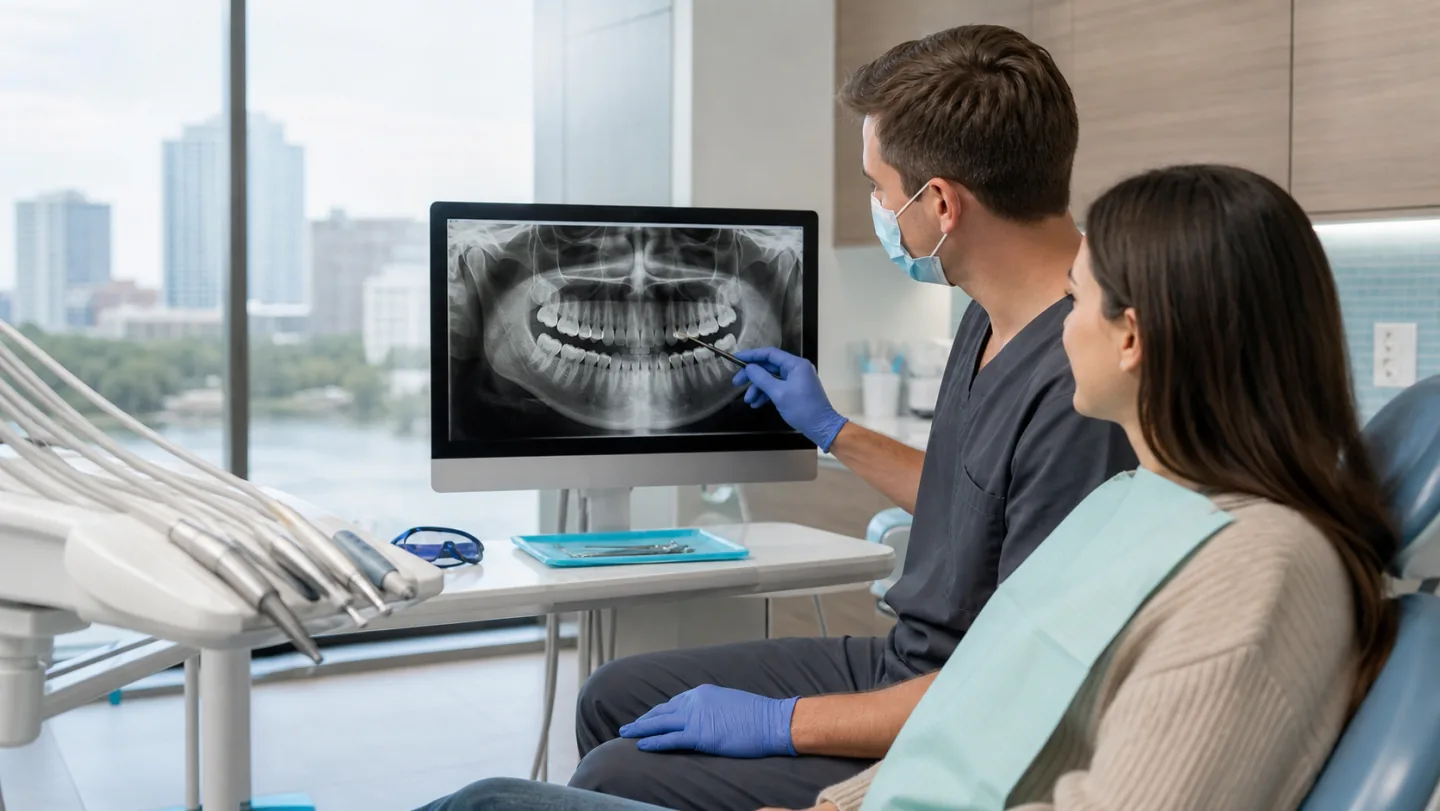
A dentist reviewing a dental X-ray before root canal treatment
Why not an implant instead?

Root Canal Therapy for Rivercrest Residents

It’s a reasonable thing to wonder: why save a troubled tooth when you could replace it? The two paths involve very different steps, and the condition of your own tooth largely decides which one fits.

Let's find a time

Request an appointment

We’ll call to confirm your appointment. For urgent care, please call us directly.

Repairing versus replacing

Comparing a Root Canal With an Implant

A root canal tries to keep your natural tooth in place by treating the inside of it. An implant comes after a tooth has been lost or removed, using a post placed in the jawbone to carry a replacement. They aren’t two versions of one procedure, and they’re suited to different situations.

Rivercrest is outside the City of Winnipeg, and either route could mean more than one planned trip to our McPhillips Street clinic. Before you pick a favourite, have the tooth examined. If enough healthy structure and support remain, preserving it may be on the table; if not, the conversation moves to removal and what might follow.

Explore root canal therapy
Two black chairs at a glossy white desk under a framed seascape, with a third chair by the window
Black chairs at a glossy white desk, below a framed seascape.

Start with this tooth

A general preference can’t tell you what’s possible. An exam of the actual tooth can.

Count every stage

Compare each path from beginning to end, including healing and final restoration, instead of only the first step.

Look beyond the first fee

Removal alone isn’t the whole bill if you later plan on replacing what was taken out.

The two routes side by side

What each path asks of you.

These summaries are for orientation only. Suitability for either one comes from an assessment, and your dentist may have reasons to favour one for your particular mouth.

Keeping your own tooth

Treatment works inside the existing tooth. Keeping it avoids creating a gap and helps preserve your normal chewing, provided a predictable restoration can be made.

  • The tooth is numbed and walled off before a small opening gives access.
  • Unhealthy tissue is cleared, and the canals are shaped and disinfected.
  • Sealing material then fills the space left within the roots.
  • A filling and, commonly, a crown complete the protective work.

Removing and replacing it

Extraction may be more suitable when a tooth is fractured too deeply or lacks the support to hold a repair. An implant is one possible replacement to discuss afterward.

  • The tooth comes out first, and this leaves a space during the healing period.
  • An implant requires surgery and assessment of the bone that’s available.
  • A crown on the implant is the part that eventually fills the gap.
  • Bridges and dentures are other replacements you may wish to ask about.

Neither path can promise a permanent result. Ask how each one might do in your case, and what its likely upkeep would look like.

Making a fair comparison

Getting the two options on one page.

An even-handed comparison takes more than a general description of each treatment. This is one way of working through your choice at the clinic.

Request your visit
  1. 01

    Ask for an assessment

    Mention in your request that you’re considering both options. It’s useful for the clinic to know from the outset what you’re weighing.

  2. 02

    Learn whether saving is realistic

    After the exam and X-rays, ask how the tooth’s condition, support and long-term outlook affect the likelihood of keeping it.

  3. 03

    Line up the timelines

    Find out what each route would involve, including healing periods and restorations, so you can compare how many visits each may take.

  4. 04

    Decide with the whole picture

    Consider cost, timing, your other teeth and how you feel about each option. Then make your decision with the dentist’s findings in hand.

Sharpen the comparison

Questions about this tooth, not teeth in general.

Avoid asking only which one is better. More specific questions about your own tooth and situation tend to bring you more useful answers.

Since appointments mean coming in from Rivercrest, ask how the number and spacing of trips would differ between the two options.

Put these to the dentist

  • How much sound tooth is left here, and what is its support like?
  • What would each route cost overall, including any final restoration?
  • How long would I have a gap if the tooth were removed and replaced?
  • What would make you lean one way or the other for this tooth?
Reception area with a white desk, clear divider, plants on a wood-look floor and a rug beside a blue bench
Long pale blue dental chair beneath a white overhead arm, with a cart and stool to one side

A white desk with a clear divider, and a long blue chair under a white overhead arm.

Comfort is part of the decision

What each route may feel like.

You may be drawn to an implant simply because you dread a root canal. If so, say that plainly, as the concern itself can be discussed apart from the choice.

About the root canal

Your tooth is numbed first, though you might sense some pressure or vibrating. Sharp pain is always something to speak up about.

About an extraction

Ask how the area is numbed and what healing might feel like, so you can compare accurately.

Your worries count

A fear of one procedure is legitimate information. It simply shouldn’t be the only thing that makes your decision.

Living with the choice

Upkeep doesn’t end on either path.

A restored natural tooth and a replacement both need looking after. It’s helpful to ask about the long view for each before you finalize your decision.

01

After a root canal

Short-term biting tenderness can happen, and it should be easing as time goes on. Call the clinic if pain or swelling is worrying or growing.

02

After a removal

Ask for specific aftercare instructions, and find out how long you should wait before any replacement could go ahead.

03

In the years ahead

Either option benefits from regular dental visits, as new problems can develop around treated teeth and replacements alike.

Treated teeth can still develop new decay or a fracture, so keep this tooth on your list for regular care if you keep it.

Talk with our team
Winnipeg North Dental’s white sign panel over a glass entry, flanked by navy siding and frosted windows

Winnipeg North Dental

Unit-5 2358 Mcphillips Street, Winnipeg, MB R2V 4J6
Get directions (opens in a new tab)
Where this comparison happens

Where Rivercrest Residents Weigh Their Options

If you’re coming in from Rivercrest, your appointments would be at Winnipeg North Dental, Unit 5, 2358 McPhillips Street, in Winnipeg.

Filling in the form only starts the conversation, and an appointment is settled once staff have been in touch with you.

Questions about coverage?

Talk with our team before your visit or learn about CDCP.

A little clarity before your visit

Your questions, answered.

Helpful details about root canal therapy in Rivercrest.

Ask our team
How do I ask about my options if I live in Rivercrest?

Use the form on this page or call (204) 338-3003, and say you’d like to compare a root canal with removing the tooth. Assessments happen at our McPhillips Street clinic in Winnipeg, and staff will confirm timing.

Isn’t an implant the more modern choice?

Newer isn’t the deciding factor. A root canal keeps your own tooth when that’s realistic, and an implant is one way to replace a tooth that can’t be kept.

Which one lasts longer?

No one can give a single answer that holds for everybody. Your tooth’s condition, your bone, your bite and your ongoing care all play a role, so ask how those apply to you.

Is an extraction and implant cheaper in the long run?

Compare the whole plan, not just the first step. Include the removal, the timing, every procedure involved in the replacement, and the crown a saved tooth may also need.

Can I try a root canal now and have an implant later if it fails?

Treating the tooth now doesn’t automatically rule out a later replacement, but future suitability can’t be promised. Raise this directly, because it depends on your bone and on how the tooth fares.

Still deciding?

Bring both options to your assessment.

Request a visit at our Winnipeg clinic, and staff will reply to arrange timing. Call instead if the tooth is causing severe pain or swelling.

Patient testimonials

Kind words from our patients

★★★★★ 5.0 from 440+ reviews on Google

Close to home

Areas we serve

Convenient dental care on McPhillips Street for families across northwest Winnipeg and nearby communities.

Explore all service areas

A healthier smile is one visit away

Ready for dental care that feels genuinely comfortable?

✓ New patients welcome ✓ Direct insurance billing ✓ Multilingual team

How can we help?

Our dental team is here for you.

Ready to book or have a question? Choose the option that works best for you.

For urgent dental concerns, please call us directly.

Send us a message

Our team will reply during clinic hours.



