Skip to content
Winnipeg North Dental
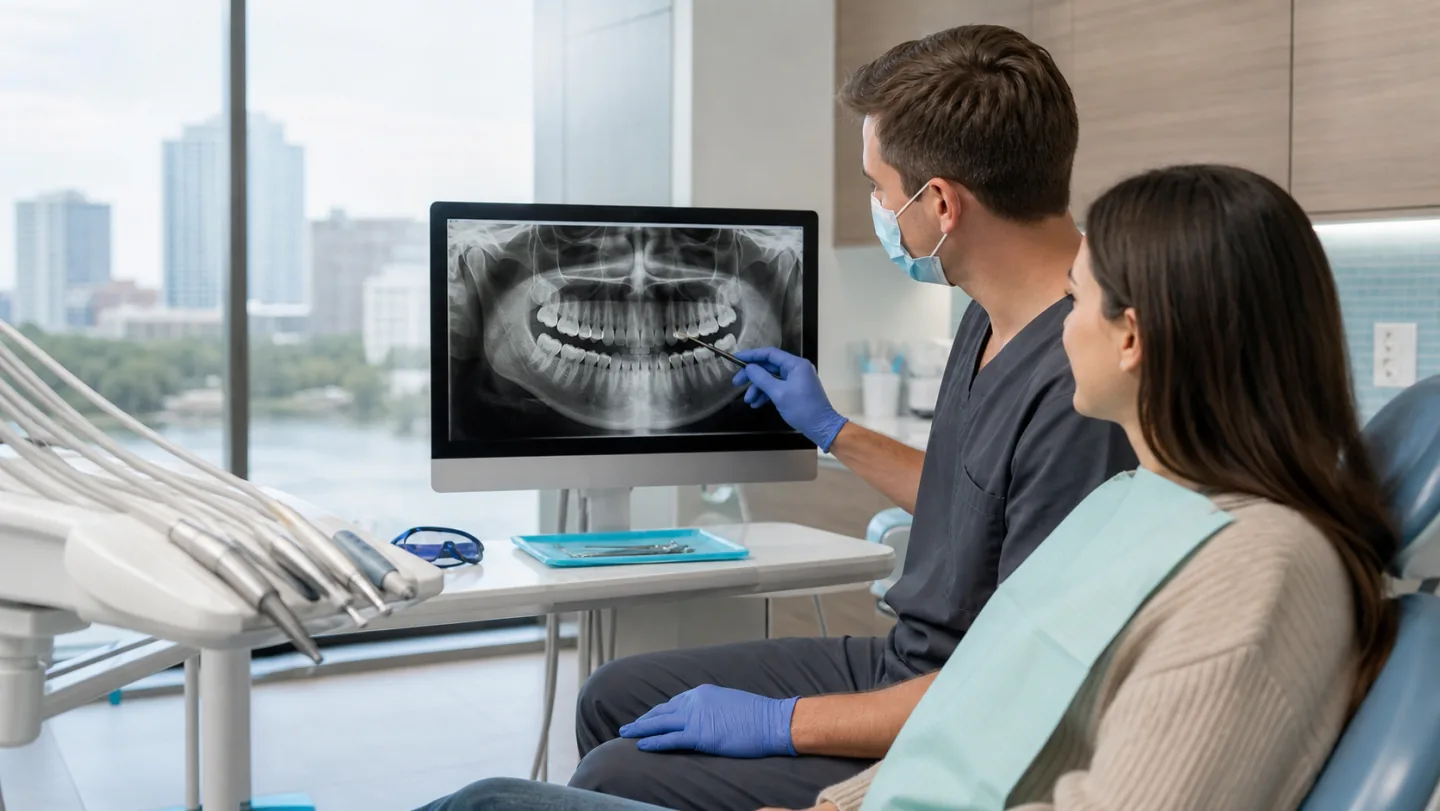
A dentist reviewing a dental X-ray before root canal treatment
After a crack, chip or knock.

Root Canal Therapy for Riverbend Residents

Bit down on something hard, or took a blow to the mouth? Even if the tooth looks mostly fine, damage can reach deeper than you might think, so it is worth having it checked.

Let's find a time

Request an appointment

We’ll call to confirm your appointment. For urgent care, please call us directly.

Damage you may not fully see

A Broken Tooth Isn’t Only a Surface Problem

Enamel and dentin act as a tooth’s armour. A crack, fracture or injury can get through them and expose or inflame the soft tissue at the centre, sometimes before serious pain has begun. That tissue may recover, or it may not, and how deep the damage extends is often the deciding factor.

Riverbend residents dealing with a damaged tooth can have it assessed at our clinic on McPhillips Street in Winnipeg. If the inner tissue is affected and the tooth can still be restored, root canal therapy may allow you to keep it. A fracture that runs too deep may lead to a different recommendation, and you will hear the reasons either way.

Explore root canal therapy
Clinic operatory showing the dental chair, cabinets and monitor
A cracked tooth would be treated in a room like this one at our clinic.

Depth is the question

The assessment focuses on how far a crack or break has travelled into the tooth.

Looks can mislead

What shows on the surface cannot tell you how far the damage has actually reached.

Function restored where possible

A treated tooth is rebuilt so that you can use it for chewing again.

After the damage

From fracture to repair.

Damaged teeth vary a great deal, and treatment depends on what the examination reveals. Here is how inner-tissue involvement is assessed and handled.

When the tissue is affected

Trauma and fractures can compromise the pulp in several ways, and the effects may not appear immediately after the event.

  • Tender biting may suggest that a particular tooth has been damaged.
  • Pain from temperature can linger once the source is removed.
  • A deeply broken tooth might involve the inner tissue even without severe pain.
  • Localized swelling can develop if the tissue becomes infected.

When the tooth can be kept

A broken tooth with enough sound structure may be a candidate for treatment, followed by a restoration that strengthens what remains.

  • Local anesthetic is placed, and the tooth is kept isolated.
  • Damaged inner tissue is removed by way of an access opening.
  • The canals are prepared, disinfected and then filled.
  • Rebuilding often includes a crown, as cracked teeth need protecting.

If a fracture extends too deep, or too little tooth is left, extraction can be the realistic recommendation. The dentist will explain what was seen.

Dealing with a damaged tooth

What to expect when you come in.

Your exact path relies on the injury and what X-rays show. For teeth that do go ahead with treatment, appointment numbers can vary.

Request your visit
  1. 01

    Tell us how it happened

    A hard bite, a fall or a sports knock each gives useful context. Mention when it occurred and any changes you have felt since.

  2. 02

    Map out the damage

    The dentist inspects the tooth and any existing dental work, using X-rays as appropriate. This helps show whether the inner tissue may be involved.

  3. 03

    Weigh repair against removal

    You will learn whether the tooth has a predictable future. Root canal therapy, another type of repair or extraction might each be considered.

  4. 04

    Rebuild for chewing

    If the canals are treated, they are sealed first. A protective restoration then helps the remaining tooth stand up to daily use.

Right after it happens

Hold on to the details.

A clear account of the incident helps, particularly if symptoms show up some time later. If the injury is recent and severe, please call the clinic right away.

A cost estimate is easier to provide once the extent of the damage is known. Your plan determines what is covered.

What to mention or bring

  • The date and rough circumstances of the crack, fall or knock.
  • Whether the tooth had a large filling or crown before it broke.
  • Any changes in sensitivity, or in how your bite feels since the injury.
  • Your medicines, along with any benefits or CDCP details you would like applied.
Bright consultation room at the clinic with window blinds and a plant
Blue bench under abstract paintings in the clinic waiting area

A quieter side of our clinic, away from the treatment rooms.

A tooth that has been through it

Handled with care.

A freshly damaged tooth can be touchy, and any sore area around it may need a light hand. Give us a clear idea of what hurts, and we can talk about how to approach the examination.

Point out sharp edges

Tell us about any rough spots catching your tongue or cheek since the break.

During the numbed stage

Vibration and pressure may be felt, yet sharp pain should be flagged at once.

Slow things down

Need a moment to collect yourself? Ask for a break at any time.

Protecting a damaged tooth

Reducing the risk of another break.

A tooth that has already fractured needs particular attention after treatment. These next steps help protect what has been saved.

01

Prioritize the protective stage

A root-canal-treated tooth may fracture more easily, especially with structure already gone. Don’t put off its crown or restoration without checking with the dentist.

02

Monitor healing

Biting can stay a little sensitive for a brief period before improving. If pain or swelling turns significant or worsens, the clinic should hear from you.

03

Report new changes

A fresh crack, renewed sensitivity or a bump on the gum could signal a new problem. Regular examinations also help catch changes in the treated tooth.

Knocked the same tooth again? Call us for advice on the next step.

Talk with our team
Sidewalk view of the Winnipeg North Dental building entrance

Winnipeg North Dental

Unit-5 2358 Mcphillips Street, Winnipeg, MB R2V 4J6
Get directions (opens in a new tab)
Where to bring it

Seen at Our Clinic in Winnipeg

Riverbend is an area in the north part of Winnipeg, and residents with a damaged tooth come to Unit 5, 2358 McPhillips Street for assessment. Treatment and restoration are arranged from there.

If the break is not urgent, send a request and watch for a reply with a proposed time. Nothing is reserved until then, and a phone call is always an option.

Questions about coverage?

Talk with our team before your visit or learn about CDCP.

A little clarity before your visit

Your questions, answered.

Helpful details about root canal therapy in Riverbend.

Ask our team
I broke a tooth in Riverbend. How do I get it seen?

Call (204) 338-3003 and explain what happened, particularly if pain or swelling is severe. For a less pressing break, the form on this page will reach the clinic at Unit 5, 2358 McPhillips Street, and staff will reply to confirm a time.

Does every cracked tooth need a root canal?

No. Many factors affect what is required, chiefly how deep the damage reaches and whether the inner tissue is involved. An examination and appropriate X-rays are necessary before a recommendation can be made.

The tooth was hit a while ago. Why would it bother me now?

Tissue inside a tooth can become inflamed or infected following trauma, and symptoms can change as the tooth changes. Mention the old injury at your appointment, since it may help explain what you are noticing now.

Can a tooth with a deep fracture still be saved?

It depends on how far the fracture extends and how much support remains. Some fractures run too deep for a predictable repair, in which case removing the tooth may be the more appropriate choice.

Why does a broken tooth need a crown after treatment?

With tooth structure already lost, the remaining tooth can be more prone to breaking under chewing forces. A crown or another protective restoration is frequently recommended, particularly on back teeth.

Don’t just live with the crack

Find out how deep the damage goes.

Send a request to our Winnipeg clinic for assessment. For a serious injury, intense pain or swelling, call us by phone.

Patient testimonials

Kind words from our patients

★★★★★ 5.0 from 440+ reviews on Google

Close to home

Areas we serve

Convenient dental care on McPhillips Street for families across northwest Winnipeg and nearby communities.

Explore all service areas

A healthier smile is one visit away

Ready for dental care that feels genuinely comfortable?

✓ New patients welcome ✓ Direct insurance billing ✓ Multilingual team

How can we help?

Our dental team is here for you.

Ready to book or have a question? Choose the option that works best for you.

For urgent dental concerns, please call us directly.

Send us a message

Our team will reply during clinic hours.



