Skip to content
Winnipeg North Dental
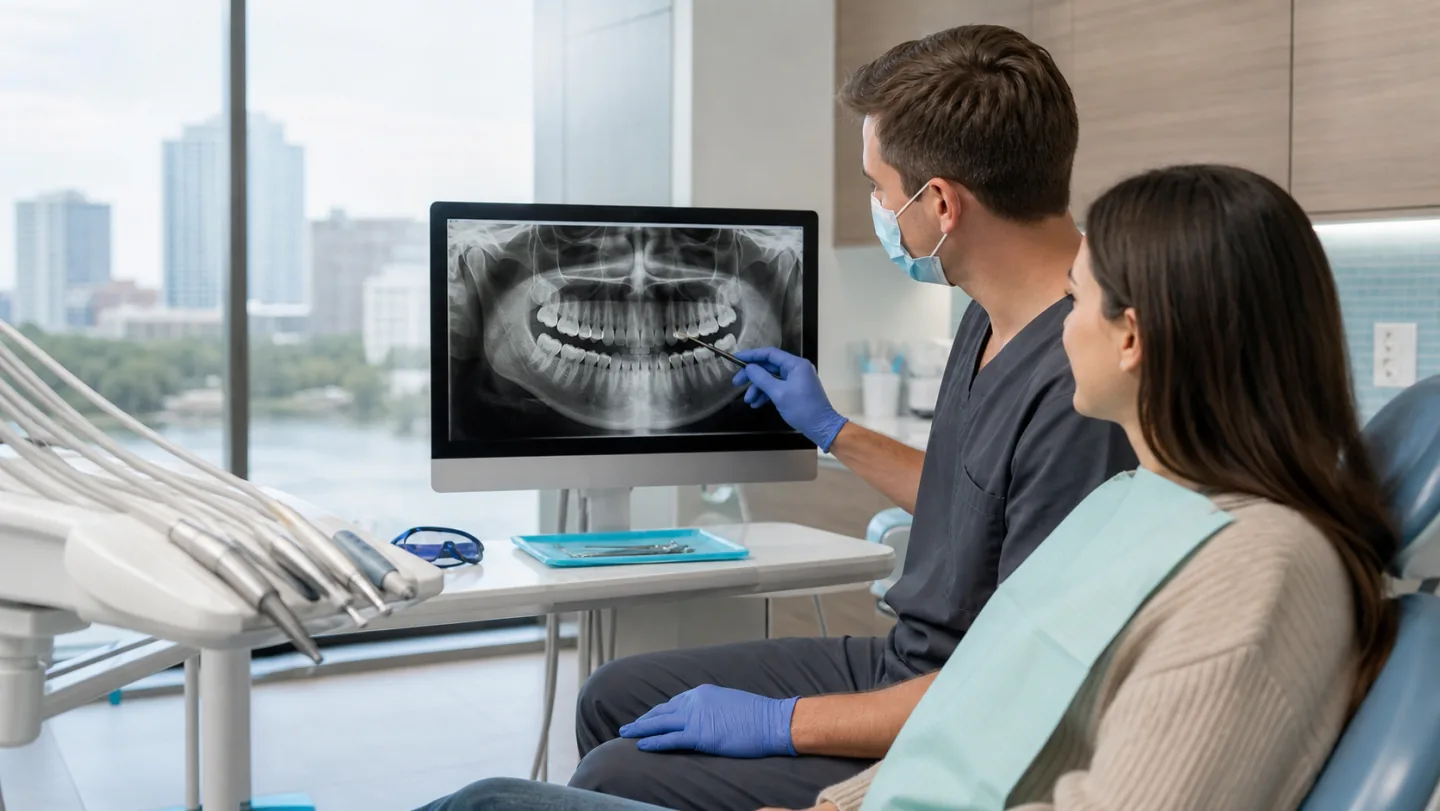
A dentist reviewing a dental X-ray before root canal treatment
A taste you can’t brush away.

Root Canal Therapy for River Trail Residents

A sour or salty taste that keeps returning near one spot in your mouth is easy to dismiss and awkward to mention. It can have ordinary causes, but drainage from an infected tooth is among the possibilities.

Let's find a time

Request an appointment

We’ll call to confirm your appointment. For urgent care, please call us directly.

An awkward symptom to bring up

When an Unpleasant Taste May Involve a Tooth

Many people will rinse, brush and hope, because a strange taste feels too small or too embarrassing to mention. Please mention it anyway. Infection in a tooth can sometimes drain through a small bump on the gum, and you might notice the result before any real pain.

That doesn’t mean every odd taste calls for a root canal, since there are many other possible explanations. River Trail residents who would like it checked can come to our clinic on McPhillips Street in Winnipeg, where an exam and X-rays can help find the source.

Explore root canal therapy
A keyboard on a white desk in a room with black chairs, a painting of a shoreline and a potted plant
A shoreline painting on the wall above a white desk and black chairs.

No embarrassment needed

A foul taste or odour is simply a symptom, and it’s an entirely reasonable thing to raise.

Look for a location

Noticing whether it seems to come from one area can be useful during the examination.

Swollen? Pick up the phone

With any facial or gum swelling, telephoning the clinic is the right step, not the online form.

Two questions to answer

Where it may come from, and what can help.

A persistent taste could involve a tooth, the gums or something unrelated to either. Here’s how the tooth-related explanation fits together, and what happens if it’s confirmed.

How a tooth might produce it

When infection develops inside a tooth, it can sometimes find a way out through the tissues around the root, and this may be noticeable in your mouth.

  • Pulp tissue can become infected after deep decay, a crack or trauma.
  • Pus may escape through a pimple-like spot on the gum beside it.
  • A gum bump can shrink and return without being resolved.
  • Drainage might ease the pressure, which can make the tooth seem quieter.

How treatment deals with the source

Should the dentist confirm that the tooth is responsible and can be saved, root canal therapy is aimed at the infected space inside it.

  • Numbing and isolating the tooth come before any internal work.
  • Infected tissue is cleared through a small access point.
  • Disinfecting the canals is central to addressing the problem.
  • Filling them, then restoring the tooth, helps keep bacteria out.

Rinses may mask a taste for a while, but they don’t reach the inside of a tooth. Finding the actual cause is what allows the right treatment to be chosen.

Tracing the source

From an odd taste to a clear explanation.

It’s possible that the assessment finds no tooth involvement at all. If root canal therapy is recommended, active infection or complex anatomy can influence how many appointments it takes.

Request your visit
  1. 01

    Describe it plainly

    Explain what the taste is like, when you notice it and whether it’s worse at certain times. The dentist has heard this before and can ask the right follow-up questions.

  2. 02

    Inspect the gums and teeth

    The area is examined for a bump, swelling, deep decay, broken structure or anything else that could account for what you’ve been experiencing.

  3. 03

    Check beneath the surface

    Appropriate X-rays help show the condition of the tooth and the surrounding area, including areas that a visual inspection simply can’t reach.

  4. 04

    Decide how to respond

    If a tooth is at fault, you’ll hear whether it can be saved or whether extraction is more realistic. If it’s something else, the dentist can explain that instead.

Clues you can collect

Note what you notice.

You’re not expected to investigate this yourself. Just pay attention in the course of a normal day, and bring what you noticed to the examination.

Painful swelling or a fast-changing symptom shouldn’t wait for a tidy list. Telephone the clinic and describe it.

Observations that may help

  • What the taste resembles, and how frequently it appears.
  • Whether you can feel or see a small bump on your gum.
  • Which side of your mouth seems to be involved, if either.
  • Any dental work, injury or chewing soreness in that area.
Bright reception area with an abstract painting, a white desk and frosted glass doors in the background
Dental light arm over a mint-coloured treatment chair next to a sink with a curved faucet

A bright reception area, and a mint-coloured chair next to a sink.

A small thing, or not

You aren’t overreacting.

No one will think you are fussing over nothing. Getting an unusual symptom checked is what dental visits are for, whether or not the cause turns out to be serious.

If the area is tender

Let the dentist know before the exam reaches that spot, so that they can take care around it.

If treatment goes ahead

The area is numbed for the canal work. Pressure may register, while anything sharp ought to be reported immediately.

If you feel self-conscious

Mention it in as few words as you like. Clinical questions can do the rest of the work from there.

Noticing what changes

What to watch for after treatment.

If a tooth was the source, you’ll naturally be alert to whether the taste fades. These are the points that matter most in the following weeks, and they apply along with any personal instructions.

01

A returning bump or taste

Should either come back, don’t assume that it’s harmless just because you’ve already been treated. Call and let the clinic know what you’re noticing.

02

Short-lived tenderness

Soreness on biting may occur for a brief period and is expected to improve. If it grows more intense, or swelling appears, get in touch.

03

Sealing out bacteria

Leakage around a restoration can allow a problem to come back. Completing the permanent restoration is an important part of limiting that risk.

Unsure whether a taste is new or the same as before? It’s fine to phone and ask.

Talk with our team
Winnipeg North Dental’s storefront with frosted windows, a metal railing and landscaping along the walkway

Winnipeg North Dental

Unit-5 2358 Mcphillips Street, Winnipeg, MB R2V 4J6
Get directions (opens in a new tab)
Where to have this checked

Exams on McPhillips Street, Winnipeg

Assessment and treatment for River Trail residents take place at Winnipeg North Dental, Unit 5, 2358 McPhillips Street, Winnipeg. Call (204) 338-3003 if you’d like to describe your symptoms.

A form submission asks for a visit but doesn’t confirm one. Staff will contact you about a time once it’s received.

Questions about coverage?

Talk with our team before your visit or learn about CDCP.

A little clarity before your visit

Your questions, answered.

Helpful details about root canal therapy in River Trail.

Ask our team
How can a River Trail resident get a bad taste looked at?

You may use the form on this page or phone (204) 338-3003. Your visit would be at Unit 5, 2358 McPhillips Street, and the clinic will confirm the timing with you.

Is a bad taste always caused by a tooth infection?

No. Many things can leave an unpleasant taste, including gum problems and causes outside the mouth altogether. An examination can tell you whether a tooth appears to be involved.

There’s a small bump on my gum as well. Could the two be connected?

They could be. A recurring pimple on the gum may indicate infection, so it’s well worth mentioning, and the dentist can look for where it’s coming from.

Can an infected tooth drain without hurting?

It can. Some teeth that need treatment cause surprisingly little discomfort, and drainage might leave you with a taste or a bump while pain stays fairly mild or absent.

Will a root canal get rid of the taste?

If infection from that tooth was causing it, treating the source is the logical step. Nobody can promise a particular result, so ask what signs of healing you should look for.

Has that taste been around a while?

Have it checked at the clinic.

Request an exam at our Winnipeg clinic, and staff will reply. For swelling or severe pain, please make a phone call rather than sending the form.

Patient testimonials

Kind words from our patients

★★★★★ 5.0 from 440+ reviews on Google

Close to home

Areas we serve

Convenient dental care on McPhillips Street for families across northwest Winnipeg and nearby communities.

Explore all service areas

A healthier smile is one visit away

Ready for dental care that feels genuinely comfortable?

✓ New patients welcome ✓ Direct insurance billing ✓ Multilingual team

How can we help?

Our dental team is here for you.

Ready to book or have a question? Choose the option that works best for you.

For urgent dental concerns, please call us directly.

Send us a message

Our team will reply during clinic hours.



