Skip to content
Winnipeg North Dental
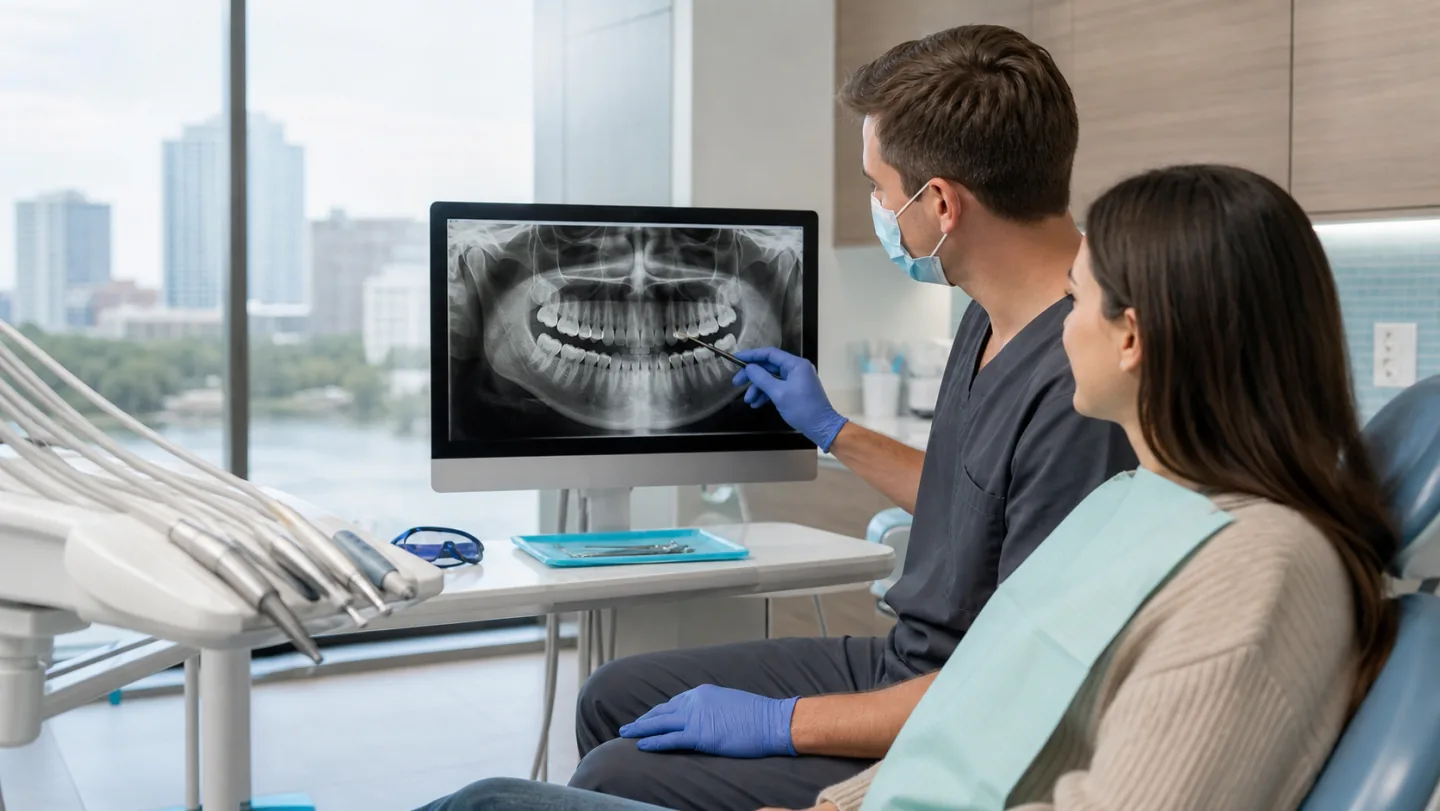
A dentist reviewing a dental X-ray before root canal treatment
Jaw, gag reflex, breathing.

Root Canal Therapy for Parkview Pointe Residents

For some people the tooth isn’t the hard part. It’s keeping your mouth open, having something at the back of it, or lying flat for a stretch. These are practical concerns and deserve practical conversation.

Let's find a time

Request an appointment

We’ll call to confirm your appointment. For urgent care, please call us directly.

The physical side of treatment

When Your Body Makes Dental Work Harder

You might not be anxious about pain at all. Perhaps your jaw clicks and tires easily, you gag during X-rays, or a stuffy nose makes breathing through your nose difficult. Any of these can make a long dental appointment seem daunting, and they’re worth mentioning before it starts.

This page suits Parkview Pointe residents who want to think through those physical concerns ahead of time. Treatment takes place at our clinic on McPhillips Street in Winnipeg. Explain what you find difficult, and ask what could be considered in your situation.

Explore root canal therapy
Long pale blue dental chair stretched across the room beneath a white overhead light arm
A long pale blue dental chair beneath a white overhead light arm.

Mention it in advance

A concern raised before you’re reclined is much easier to discuss than one raised midway.

Agree on a signal

You can’t easily talk during canal work, so ask about a way to let the dentist know you need a break.

Specifics are helpful

Telling someone exactly what triggers a problem gives you both more to work with.

Knowing what your mouth will be doing

What the treatment asks of you physically.

Understanding where the physical demands come from may make it easier to discuss them. Here’s a look at what root canal therapy involves from your side of the chair.

What happens in your mouth

The work is done within a small area, but the tooth needs to stay reachable and clean throughout, which affects how your mouth is positioned.

  • Your tooth is isolated, which is often done using a thin protective sheet.
  • Your mouth stays open while the dentist works in the canals.
  • Water and rinsing may be used as the canals are being disinfected.
  • Numbness can make your lip or tongue feel strange for some time.

What’s worth raising beforehand

None of these automatically rules treatment out, though each one is useful for the dentist to be aware of before the appointment begins.

  • Jaw pain, clicking or a limited ability to open wide.
  • A strong gag reflex, particularly around the back teeth.
  • Any problem breathing through your nose, even a seasonal one.
  • Neck or back discomfort that makes lying back unpleasant.

If keeping your mouth open is a major concern, ask how the length and number of appointments might be approached for your tooth. The answer depends on the tooth’s anatomy and any infection.

Planning around your limits

Making your concerns part of the plan.

These steps give your physical concerns a place in the process. How many appointments you’ll have remains tied to the tooth, any infection present and the restoration it needs.

Request your visit
  1. 01

    Tell the clinic when you book

    Give a short description of the issue when you phone. Knowing about it early means it’s less likely to come as a surprise to anyone on the day.

  2. 02

    Go over it at the exam

    At your assessment, explain what has made earlier dental work hard. If X-rays set off your gag reflex, this is a good moment to mention that as well.

  3. 03

    Ask how treatment could work

    Ask whether breaks, positioning or a change in the appointment structure might help you. The dentist can tell you what’s realistic for this tooth.

  4. 04

    Check in during the work

    Use whatever signal you agreed upon if your jaw tires or breathing feels harder. There’s no need to hold on in silence until the dentist reaches a stopping point.

A little practical groundwork

Think through what you need.

Sorting out your own triggers beforehand can make this easier to explain. Previous dental visits, even ones that had nothing to do with root canals, are a good place to start.

Stuffed up on the day because of a cold or allergies? Call the clinic beforehand and ask how they would like you to proceed.

Questions for your own notes

  • Which part of the mouth or what kind of object sets off gagging?
  • How long can you comfortably keep your jaw open before it aches?
  • Do you have any neck or back trouble when lying nearly flat?
  • Could any health condition or medication affect your breathing?
Window with zebra-style blinds behind white chairs and small side tables holding potted plants
Reception area seen from the entrance side, with a blue accent wall behind a clear glass panel

White chairs by a window with blinds, and a reception desk with a blue accent wall.

During the appointment

Small things to ask about.

What helps one person may do nothing for another, and not every idea will suit every tooth. Consider these as conversation starters to bring to your dentist, not as promises.

Giving your jaw a rest

Ask whether short pauses can be worked in, and tell the dentist when you’re starting to feel tired.

Managing a gag reflex

Describe what sets it off, then ask whether anything can be approached differently for your back teeth.

Comfort beyond positioning

Your tooth should be numb for the work. Pressure might be noticeable, but sharp pain should be flagged immediately.

After a long stretch of opening wide

How you may feel afterward.

It’s not just the tooth that may notice the appointment. Your jaw could be tired as well, and it’s helpful to separate that from soreness in the tooth itself when you describe your recovery.

01

A tired jaw

Stiffness may follow a lengthy period with your mouth open. If it’s severe or isn’t easing, or you already have jaw trouble, tell the clinic about it.

02

A tender tooth

Biting on the treated tooth can be sore for a limited time. That should improve, and worsening pain or swelling is a reason to phone.

03

The next stage of work

Your final restoration may mean more time in the chair. Mention whatever did and didn’t work, so that the same concerns can be considered for that visit.

Did something help you during treatment? Let the clinic know, as it’s worth remembering for your next appointment.

Talk with our team
Clinic entry with notices on the door glass, below a white sign panel reading Winnipeg North Dental

Winnipeg North Dental

Unit-5 2358 Mcphillips Street, Winnipeg, MB R2V 4J6
Get directions (opens in a new tab)
Talk to us before your visit

The Clinic for Parkview Pointe Patients

Your assessment and treatment appointments, as a Parkview Pointe resident, happen at Winnipeg North Dental, Unit 5, 2358 McPhillips Street, Winnipeg.

Requests sent through the form don’t lock in an appointment. The clinic gets in touch afterward, and that’s a good moment to mention your concerns.

Questions about coverage?

Talk with our team before your visit or learn about CDCP.

A little clarity before your visit

Your questions, answered.

Helpful details about root canal therapy in Parkview Pointe.

Ask our team
How can a Parkview Pointe resident mention these concerns before booking?

A phone call to (204) 338-3003 lets you explain them directly, or you can add them when you use the form. You would be coming to Unit 5, 2358 McPhillips Street.

Can a root canal still go ahead if I gag easily?

A gag reflex doesn’t automatically rule it out, but it’s important to discuss. Tell the dentist what triggers it and ask how they might approach your specific tooth.

What if my jaw gets tired partway through?

Let the dentist know using your agreed signal. Ask at the outset how breaks would work, as well as whether your jaw history affects how the appointments might be planned.

I can’t breathe well through my nose. Will that be a problem?

It’s worth raising ahead of time, since your tooth is usually isolated and your mouth is busy during the work. The dentist can talk through what might help in your case.

What is the sheet that goes over the tooth?

Isolation keeps the treatment area clean, and it’s often done with a thin sheet that lets the tooth stand apart. If you would like to see it beforehand, simply ask.

Could the work be split across more than one appointment?

Appointment counts are mostly determined by the tooth, its anatomy and any infection. You can still ask whether your physical limits could also be taken into account in planning.

Something make dental work difficult?

Tell us before you sit down.

Request an appointment at our Winnipeg clinic and mention what you need to discuss. In the case of severe pain or swelling, call instead of using the form.

Patient testimonials

Kind words from our patients

★★★★★ 5.0 from 440+ reviews on Google

Close to home

Areas we serve

Convenient dental care on McPhillips Street for families across northwest Winnipeg and nearby communities.

Explore all service areas

A healthier smile is one visit away

Ready for dental care that feels genuinely comfortable?

✓ New patients welcome ✓ Direct insurance billing ✓ Multilingual team

How can we help?

Our dental team is here for you.

Ready to book or have a question? Choose the option that works best for you.

For urgent dental concerns, please call us directly.

Send us a message

Our team will reply during clinic hours.



