Skip to content
Winnipeg North Dental
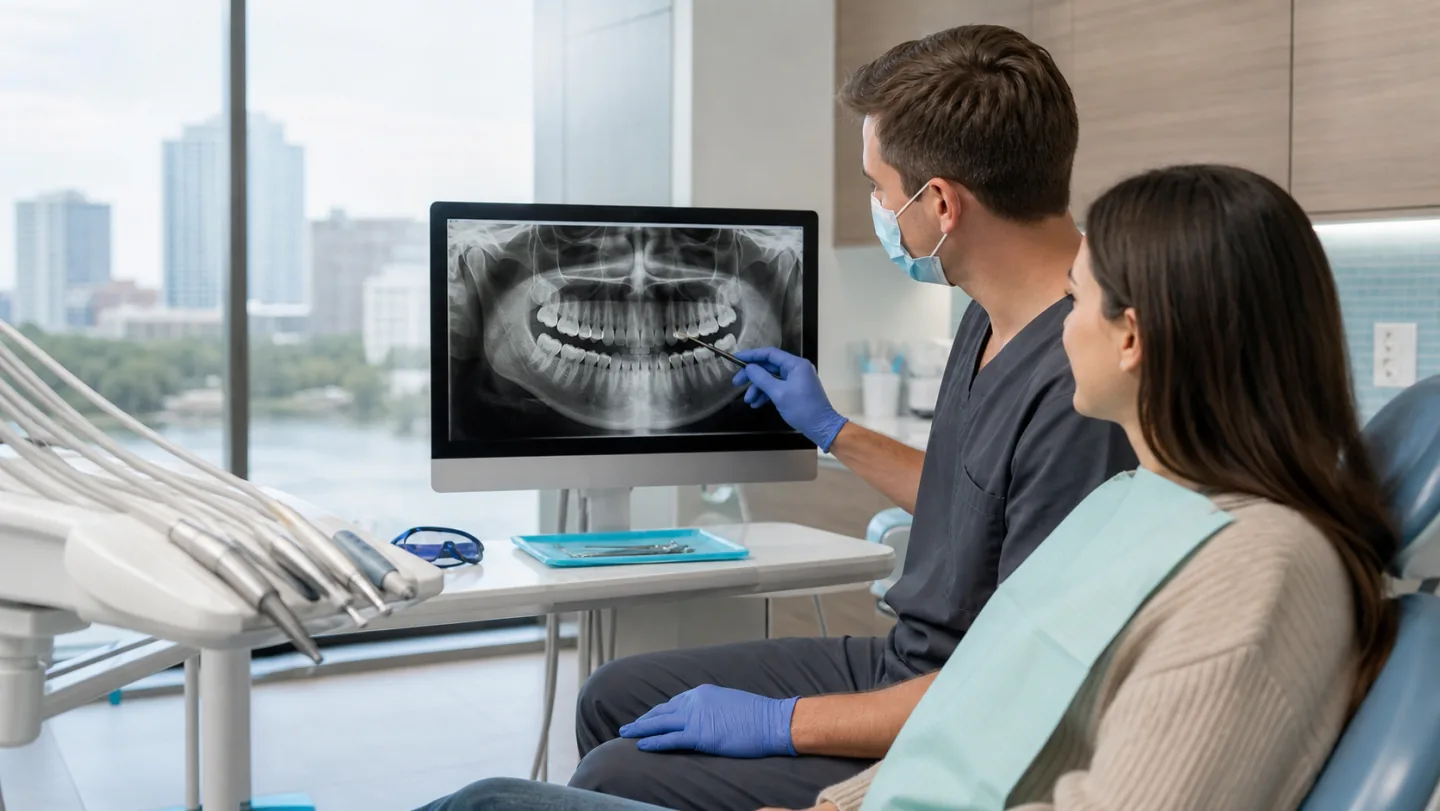
A dentist reviewing a dental X-ray before root canal treatment
Fine last week. Sore again today.

Root Canal Therapy for Old Kildonan Residents

A tooth that comes and goes is easy to dismiss, since each quiet spell feels like the end of the problem. A pattern of returning pain is still a good reason to have it examined.

Let's find a time

Request an appointment

We’ll call to confirm your appointment. For urgent care, please call us directly.

A pattern, not a one-off

A Toothache That Keeps Coming Back

Tooth symptoms do not always hold steady. Pain can show up with a hot drink, fade for days, and then return under pressure. A swelling or gum pimple may drain and shrink, only to recur. As the condition of a tooth changes, so can the way it feels, which makes a good stretch hard to interpret.

Calm periods don’t tell us whether a tooth has recovered, and neither does the pattern alone. Old Kildonan is an area in Winnipeg, and residents can have a tooth like this assessed at our McPhillips Street clinic, where an examination and X-rays can help explain what is happening.

Explore root canal therapy
Sunlit waiting room with potted plants, a small child’s chair and navy bench
The waiting room at Winnipeg North Dental.

Your timeline is evidence

When the pain arrives and leaves can tell the dentist something useful.

Quiet doesn’t mean cleared

A tooth may settle down for a while without the underlying cause having gone.

Not always a root canal

Returning soreness has more than one possible source, so the cause gets sorted out first.

Why it might come and go

What can sit behind an on-and-off ache.

If the source is trouble within the tooth, root canal therapy may be discussed. Here is how the symptoms and the treatment connect.

Signs that tend to recur

These are common reasons people call about a returning problem, though none confirms a diagnosis without an examination.

  • Hot or cold brings on an ache that outlasts the food or drink.
  • Chewing causes tenderness on some days and not on others.
  • A gum bump shows up, drains, fades and comes back.
  • A deep crack or cavity may be present even during quiet spells.

If treatment is recommended

Should the tissue inside prove unable to recover, cleaning and sealing that space may offer a predictable way to keep your tooth.

  • The tooth is numbed and isolated before the dentist begins.
  • Damaged tissue is removed through a small access opening.
  • The canals are cleaned, shaped and disinfected, then sealed.
  • A filling and frequently a crown complete the restoration.

A calm tooth can still be examined. In fact, coming in between flare-ups may feel easier than waiting for the next bad spell.

Making sense of the pattern

Bringing an unpredictable tooth in for a look.

You do not need to be in pain on the day. Here is what happens when you bring a pattern rather than a single event, with appointment numbers varying from one tooth to the next.

Request your visit
  1. 01

    Lay out the pattern

    Tell the dentist when the discomfort began, how often it returns, what seems to set it off and how long each episode lasts.

  2. 02

    Look for the source

    The tooth and gums are examined, with X-rays as appropriate. This is how the dentist judges what the on-and-off symptoms may mean.

  3. 03

    Talk through the outlook

    You learn what was found, whether the tooth can be restored and what might happen if things are left as they are.

  4. 04

    Decide and carry it out

    If you agree to root canal therapy, the canals are treated under local anesthetic, followed by a restoration to protect the tooth.

Between flare-ups

Start keeping track.

Memories of pain fade quickly, which is one reason the tooth seems less urgent on good days. Short notes on your phone can capture what you might otherwise forget.

If the discomfort turns severe or your face or gum swells, stop tracking it and phone the clinic to explain what is going on.

What to jot down

  • The dates when symptoms appeared, and how long they lasted.
  • What you were doing, such as eating, drinking or lying down.
  • Whether you noticed a bump, a bad taste or swelling near the tooth.
  • Your medication list and any insurance or CDCP information.
Consultation desk seen from a high-backed black chair, with a plant by the window
Dental operatory with a small monitor mounted beyond the chair

A consultation room and treatment room at our clinic.

If you’ve been waiting it out

No need to justify the delay.

When a tooth feels fine most of the time, not getting around to it is completely understandable. All we need is an honest description of how things have gone, so we can work out where to go from here.

Come in on a good day

You can have a tooth checked when it isn’t hurting, and you can still describe how it feels on bad days.

Numbing and flare-ups

Inflammation can affect how a tooth responds, so tell the dentist how sore yours has been.

Questions, not pressure

Ask how urgent this looks, and what you would be risking if you chose to wait longer.

Telling the difference afterward

Recovery should move in one direction.

After treatment, a tooth with a habit of flaring up can make anyone uneasy. A few guidelines help you judge whether things are settling as they should.

01

Expect gradual improvement

Biting tenderness may linger a little while following care. Unlike the old cycle, it should be fading rather than returning.

02

Report a returning pattern

If pain that had improved comes back, or a gum bump reappears, let the clinic know rather than waiting to see if it passes again.

03

Follow through on the tooth

Having a quiet tooth may tempt you to skip the final restoration. Please don’t, because a treated tooth can be at greater risk of fracture without it.

Has it started up again since your last visit? Call and tell us.

Talk with our team
Street view of the clinic’s entrance, with shrubs along the front walkway

Winnipeg North Dental

Unit-5 2358 Mcphillips Street, Winnipeg, MB R2V 4J6
Get directions (opens in a new tab)
When you are ready to find out

Have It Checked at Our Winnipeg Clinic

Old Kildonan residents are seen at Winnipeg North Dental, at Unit 5, 2358 McPhillips Street in Winnipeg. Assessment and root canal therapy both take place at this clinic.

An online request gets the process started without locking in a time. Our staff will confirm the appointment with you personally.

Questions about coverage?

Talk with our team before your visit or learn about CDCP.

A little clarity before your visit

Your questions, answered.

Helpful details about root canal therapy in Old Kildonan.

Ask our team
How does an Old Kildonan resident book a look at a tooth that comes and goes?

Contact us at (204) 338-3003 or through the form here, and mention that the symptoms are intermittent. After confirmation by the clinic, your assessment happens at Unit 5, 2358 McPhillips Street.

My tooth doesn’t hurt today. Should I still come in?

A tooth does not need to be sore to be assessed. Give the dentist your history of symptoms, since a quiet day cannot show whether the problem has resolved.

Why would an infected tooth stop hurting?

Symptoms can change along with the condition of the tooth, and some teeth needing treatment cause surprisingly little discomfort. Reduced pain alone doesn’t tell you the tooth has healed.

The bump on my gum went away. Is that a good sign?

Not necessarily. A recurring pimple or drainage may indicate infection even when it has temporarily shrunk, so it is worth reporting and having examined.

Could it be something other than a root canal problem?

Yes. Not every painful tooth needs this treatment. Your dentist will consider your symptoms along with the examination and X-rays before recommending anything.

Quiet for now?

Use the calm to get answers.

Ask our Winnipeg clinic for an assessment before the next flare-up. If severe pain or swelling arrives first, telephone us.

Patient testimonials

Kind words from our patients

★★★★★ 5.0 from 440+ reviews on Google

Close to home

Areas we serve

Convenient dental care on McPhillips Street for families across northwest Winnipeg and nearby communities.

Explore all service areas

A healthier smile is one visit away

Ready for dental care that feels genuinely comfortable?

✓ New patients welcome ✓ Direct insurance billing ✓ Multilingual team

How can we help?

Our dental team is here for you.

Ready to book or have a question? Choose the option that works best for you.

For urgent dental concerns, please call us directly.

Send us a message

Our team will reply during clinic hours.



