Skip to content
Winnipeg North Dental
A dentist reviewing a dental X-ray before root canal treatment
But it doesn’t even hurt.

Root Canal Therapy for Leila North Residents

It can feel strange to hear that a calm, painless tooth might need a root canal. Here is why quiet teeth sometimes need attention, and what an assessment can tell you.

Let's find a time

Request an appointment

We’ll call to confirm your appointment. For urgent care, please call us directly.

Quiet problems

When Little Pain Doesn’t Mean Little Trouble

Many of us use pain as our measure of whether a tooth is fine, so a suggested root canal on a comfortable tooth can seem hard to believe. Pain is an unreliable guide here. A tooth may look intact while trouble develops within it, and deep decay or a break may reach the inner tissue before any severe ache begins.

If you live in Leila North and want to understand a finding like this, it is reasonable to ask to see what the dentist sees. At our McPhillips Street clinic in Winnipeg, the recommendation rests on an examination and X-rays, and the reasoning can be explained in full. Sometimes the finding will point to treatment, and sometimes to something else.

Explore root canal therapy
Dental operatory with a chair, overhead arm and screen at the clinic
An operatory at Winnipeg North Dental.

Reasons you can follow

Ask what on the X-ray or in the examination is prompting the recommendation.

Trouble seen earlier

Some teeth show warning signs well before they cause you any noticeable discomfort.

Symptoms can change

A tooth’s behaviour may shift over time, so its current quiet does not settle the question.

Below the surface

What can be happening inside a comfortable tooth.

The tooth’s hard exterior can hide what lies within. Here is what the dentist looks for and what treatment changes if it is needed.

Signs other than pain

Not all warnings are felt as an ache. These are examples of what could prompt a closer look at a tooth.

  • A recurring pimple on the gum that may come and go.
  • A small amount of drainage or localized swelling.
  • Decay or a fracture that has gone deep, even without much pain.
  • Findings on an X-ray that call for further assessment.

What the treatment addresses

If the inner tissue cannot recover, it is taken out and the canal system is prepared and closed under local anesthetic.

  • Layers of enamel and dentin protect the pulp until damage breaches them.
  • The dentist reaches the affected tissue through a small access opening.
  • Narrow canals running through the roots are cleaned and disinfected.
  • Sealing the space reduces the likelihood of reinfection.

Equally, not every odd-looking tooth needs treatment. The diagnosis depends on findings put together, not on any single sign.

Making sense of the finding

How you can check the reasoning.

Expect the assessment to be a conversation. Should treatment go ahead, its number of appointments depends on anatomy, infection and the planned restoration.

Request your visit
  1. 01

    Share what you were told

    If another clinic flagged this tooth, tell us what you remember. Let us know about anything you have felt, however minor it might seem to you.

  2. 02

    Look at the evidence

    The dentist examines the tooth and reviews appropriate X-rays. Ask to have the images pointed out and explained in terms that make sense to you.

  3. 03

    Understand your options

    You will hear whether treatment is advised and what waiting could mean for this particular tooth. Compare that with the option of extraction, where relevant.

  4. 04

    Proceed if it is right for you

    With local anesthetic in place, the canals are treated in one or more appointments. A protective restoration then finishes the job.

Before you come

Think back over the past few months.

A tooth that seems fine now may have dropped hints you dismissed at the time. It helps to recall them, since small details can add to what the X-ray shows.

Time and cost are fair questions when treating a tooth that feels fine. Ask for an estimate, and check how your plan applies.

Try to remember

  • Any past blow to the tooth, or a chip or crack it may have had.
  • Brief flare-ups, or a gum bump that appeared and then vanished.
  • Previous fillings or other dental work done on this tooth.
  • Your current medications, plus insurance or CDCP details where relevant.
Reception area with a white counter and wood flooring at the clinic
Seating and artwork in the clinic waiting area

Welcome areas at the McPhillips Street clinic.

Treating a tooth you can’t feel

Fair questions, and room to ask them.

Agreeing to treat a tooth that does not bother you is a bigger leap, so doubt is understandable. Tell us what you are unsure about, and let us know if the idea of treatment itself makes you uneasy.

What numbing covers

Once anesthetic has worked, the sensations to expect are mostly pressure or vibration.

When to interrupt

Any sharp pain is worth interrupting for, and the dentist should learn about it immediately.

Your skepticism is welcome

Ask why now, why this tooth and what the alternatives are; these are good questions.

Past the treatment stage

Your tooth may feel the same. It still needs care.

Because this tooth was not painful, you might not notice much difference afterward. That makes the remaining steps easy to forget, so here they are.

01

Don’t skip the restoration

A comfortable tooth can tempt you to delay, yet a treated tooth may crack more readily. Back teeth often need a crown or similar coverage.

02

Possible new tenderness

You might notice mild soreness on biting for a short period, which should improve. Let us know if pain or swelling becomes marked or keeps building.

03

Keep getting it checked

Since discomfort is not a reliable alarm, routine dental care matters. Decay, leakage or a fracture may still arise, and a sound restoration helps guard against them.

Noticing something new around the tooth, painful or not? Give the clinic a call.

Talk with our team
Winnipeg North Dental sign above the clinic entrance on McPhillips Street

Winnipeg North Dental

Unit-5 2358 Mcphillips Street, Winnipeg, MB R2V 4J6
Get directions (opens in a new tab)
Getting it looked at

Assessment at McPhillips Street

Leila North lies in the northern part of Winnipeg. Residents who would like this tooth assessed are seen at our clinic at Unit 5, 2358 McPhillips Street, and any treatment is provided there as well.

Asking online starts the process without fixing a time. The clinic replies to work out a date, and phoning is equally fine.

Questions about coverage?

Talk with our team before your visit or learn about CDCP.

A little clarity before your visit

Your questions, answered.

Helpful details about root canal therapy in Leila North.

Ask our team
How can a Leila North resident have a painless tooth checked?

Ask for an assessment using the form here, or ring (204) 338-3003, and mention what you have been told about the tooth. Visits are held at Unit 5, 2358 McPhillips Street, and the date is firm once the clinic has confirmed it.

If it doesn’t hurt, can’t I wait until it does?

Ask the dentist what waiting would mean for your particular tooth. Depending on what is found, a deep problem can put the tooth at risk even if you feel little, so the answer depends on the assessment.

Can a tooth need a root canal with no symptoms at all?

Yes, some teeth that need treatment cause surprisingly little discomfort. Examination and suitable X-rays are required for a diagnosis, because how the tooth feels cannot settle the question alone.

Why does a gum pimple matter if it doesn’t hurt?

A recurring pimple or drainage on the gum may indicate infection, even when the tooth itself is comfortable. It should be examined so that the source can be identified.

Will treating it make my tooth feel worse?

Some tenderness when biting can occur briefly after treatment, including in a tooth that felt comfortable beforehand, and it should get better. Contact the clinic if it does not follow that course.

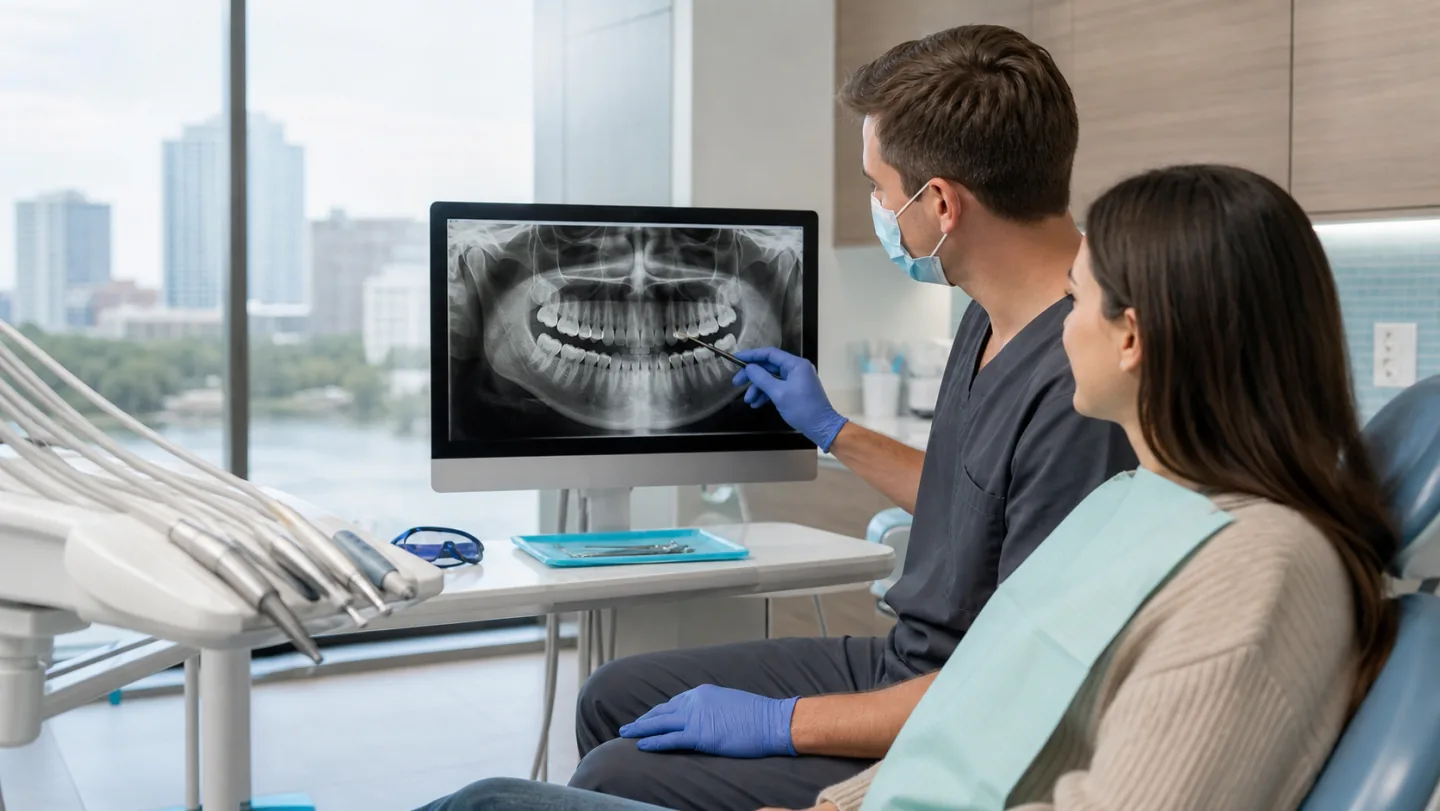
Curious what the X-ray shows?

Understand the finding before you decide.

Request a visit at our Winnipeg clinic and ask every why you have. Please call if swelling or severe pain develops.

Patient testimonials

Kind words from our patients

★★★★★ 5.0 from 440+ reviews on Google

Close to home

Areas we serve

Convenient dental care on McPhillips Street for families across northwest Winnipeg and nearby communities.

Explore all service areas

A healthier smile is one visit away

Ready for dental care that feels genuinely comfortable?

✓ New patients welcome ✓ Direct insurance billing ✓ Multilingual team

How can we help?

Our dental team is here for you.

Ready to book or have a question? Choose the option that works best for you.

For urgent dental concerns, please call us directly.

Send us a message

Our team will reply during clinic hours.



