Skip to content
Winnipeg North Dental
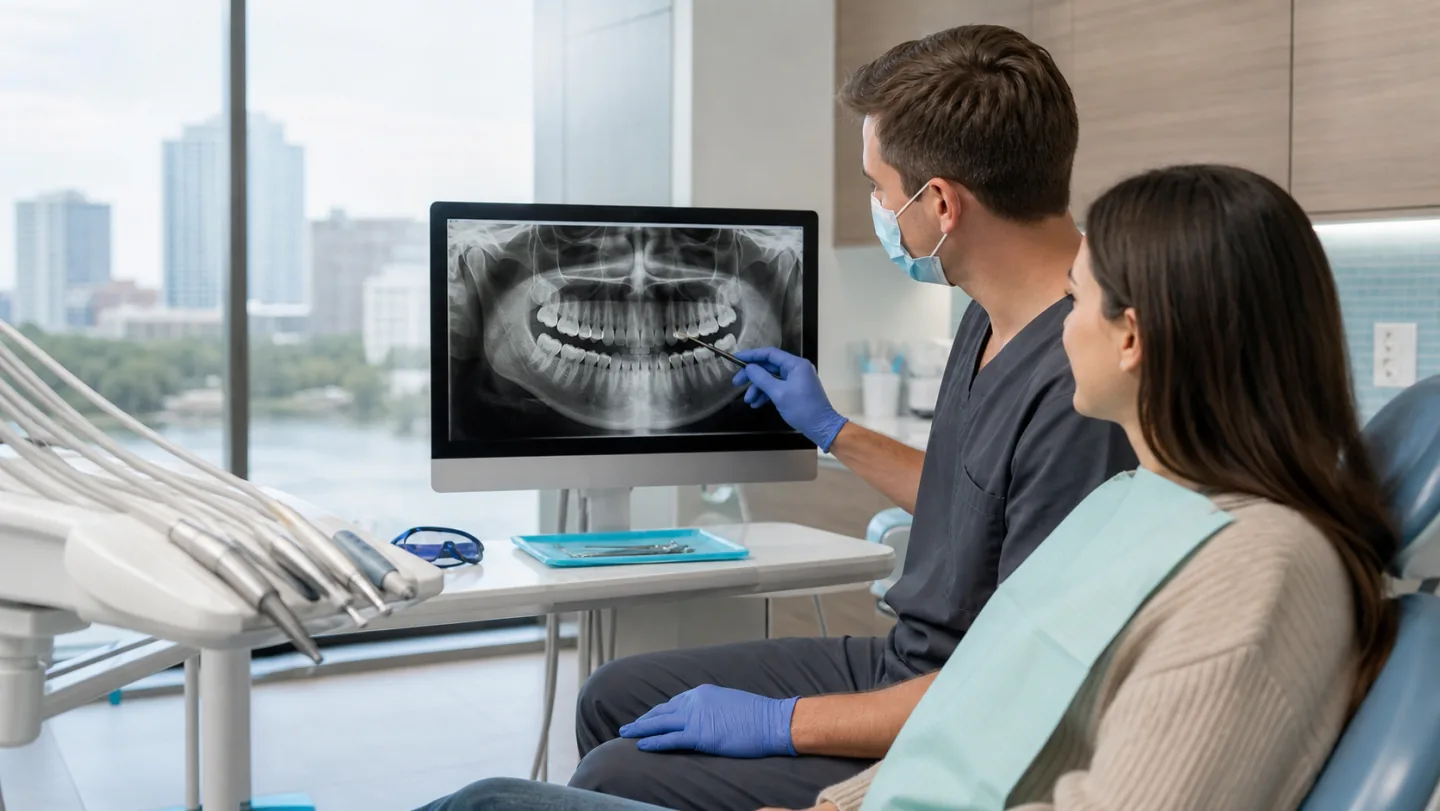
A dentist reviewing a dental X-ray before root canal treatment
Why is it a molar thing?

Root Canal Therapy for Kildonan Park Residents

Back teeth do the heaviest chewing and have the most going on beneath the surface. If yours is the one in trouble, here is why its treatment may look a little different.

Let's find a time

Request an appointment

We’ll call to confirm your appointment. For urgent care, please call us directly.

No two teeth alike

How Tooth Anatomy Shapes a Root Canal

From the outside, it might seem that one root canal would be much like another. Inside, though, teeth vary. A molar generally has more roots and canals than a front tooth, and those narrow passages can bend or branch in ways that take extra care to clean and seal.

Curious how that applies to your own back tooth? Kildonan Park is an area in Winnipeg, and residents can have that question answered at our clinic on McPhillips Street, after an exam and X-rays show what is actually there.

Explore root canal therapy
Clinic operatory with a wall-mounted monitor, overhead light arm and a seafoam dental chair
A seafoam dental chair below an overhead arm and wall monitor.

More roots, more canals

Teeth further back typically have a more elaborate inner layout than those at the front.

Visit counts can differ

Complex anatomy is one factor that may mean treatment extends beyond one sitting.

Chewing forces matter

Back teeth bear a heavy load, which is why a crown is commonly part of their plan.

Inner layout and procedure

A closer look inside a back tooth.

Knowing a little about what lies beneath the biting surface makes the procedure easier to picture and explains why careful preparation matters.

What is in there

The canals extend down through the roots, and their number and shape vary from one tooth to the next.

  • Enamel and dentin form the hard outer shell of the tooth.
  • Pulp at the centre holds nerves, blood vessels and connective tissue.
  • Those canals taper as they run through each of the roots.
  • Curves and side branches can make some canals harder to work in.

How it is treated

Regardless of the number of canals, the aim is to remove the damaged tissue and close the space.

  • Following numbing, isolation keeps the working area clean.
  • The dentist makes a small opening through the top of the tooth.
  • Every canal located is instrumented, disinfected and prepared.
  • Sealing is followed by a restoration, which on molars is often a crown.

Where the anatomy is especially complex, treatment needs can vary, so ask what the X-rays show about your tooth and how that affects the plan.

How a molar gets sorted out

Working through a complicated tooth.

A more complex tooth doesn’t change the overall path, though it can influence how long the route takes. The dentist can describe what to expect once the tooth has been seen.

Request your visit
  1. 01

    See what you’re dealing with

    An exam and appropriate X-rays provide information about the roots and the surrounding bone, plus how much sound tooth remains.

  2. 02

    Decide if it can be kept

    Enough healthy structure and support must remain for a predictable restoration. That assessment shapes the recommendation for a heavily damaged molar.

  3. 03

    Work through the canals

    With the tooth frozen, each canal is addressed in turn. Some cases are completed at one sitting, whereas others are divided across more.

  4. 04

    Rebuild for chewing

    Once sealed, the tooth receives its lasting restoration. Covering the cusps helps a back tooth stand up to the pressure of daily meals.

Small steps beforehand

Getting ready for a back tooth.

A molar can mean keeping your mouth open for a while, and an unfamiliar word or two. Thinking ahead about these details can make the appointment feel more manageable.

Any jaw soreness or trouble opening wide is worth raising beforehand, since back teeth can be harder to reach.

Helpful to bring up

  • Any jaw stiffness, clicking, or difficulty keeping your mouth open for long.
  • Clenching or grinding, because back teeth take the brunt of that habit.
  • Earlier treatment on this molar, as well as X-rays you know of.
  • Up-to-date health details, your medications and your benefits information.
Black padded chairs around a glossy white desk in a sunlit consultation room
Corner of a waiting room with blinds, side tables, small plants and a child’s white chair

Padded chairs at a white desk, and a corner of the waiting room.

A long reach to the back

Staying at ease when it’s a molar.

Having the very back of your mouth worked on is a particular sensation, and some people find it tiring. Let the dentist know what would help, and ask about taking breaks.

A tired jaw

If your jaw starts to ache from staying open, raise a hand or find another agreed way to let us know.

Checking the numbness

Local anesthetic comes before the canal work. Should you feel something sharp, say so immediately.

Knowing the plan

Ask how much is expected to be done at the coming appointment, so you can prepare yourself mentally.

Back to chewing

Looking after a treated molar.

A back tooth returns to hard work once it has healed and been rebuilt. Paying attention to how you use it in the meantime gives it the protection it needs.

01

Go gently at first

Tenderness when chewing may occur for a short time. It should fade, and it’s reasonable to ask how careful to be with that side.

02

Don’t delay the crown

A molar missing its final restoration may be at greater risk of cracking. Keep that booking high on your list of priorities.

03

Call about changes

Phone the clinic if swelling appears or if the pain becomes considerable, gets worse or differs from what you were told to expect.

Want a look at your X-ray? Ask the dentist to show you the roots of your tooth.

Talk with our team
Exterior of Winnipeg North Dental showing its phone number on the white sign panel

Winnipeg North Dental

Unit-5 2358 Mcphillips Street, Winnipeg, MB R2V 4J6
Get directions (opens in a new tab)
Getting your molar examined

Come See Us on McPhillips Street

Winnipeg North Dental treats Kildonan Park residents at Unit 5, 2358 McPhillips Street, Winnipeg. Your assessment and any root canal therapy on a back tooth happen at this clinic.

The request form won’t book you in by itself. After you submit it, expect a reply from the clinic so a time can be agreed.

Questions about coverage?

Talk with our team before your visit or learn about CDCP.

A little clarity before your visit

Your questions, answered.

Helpful details about root canal therapy in Kildonan Park.

Ask our team
What is the way to ask about a molar from Kildonan Park?

Either fill in the form here or ring (204) 338-3003 for a chat with staff. Your appointment would be at Unit 5, 2358 McPhillips Street, and the clinic will contact you to work out the timing.

How many canals does a molar have?

It varies by tooth and by person, which is partly why a general answer isn’t very helpful. X-rays and the procedure itself show what your particular molar has.

Is a molar root canal harder than one on a front tooth?

A molar often involves more canals and is further back in the mouth, so it can be more involved. How complicated yours may be can be discussed after your examination.

Why does my molar need a crown when my front tooth didn’t?

Back teeth bear heavier chewing forces, and many need their cusps covered once treated. For front teeth, the advice depends more on remaining structure and on your bite.

What if the dentist can’t save a badly damaged molar?

Extraction may be more appropriate when a tooth is fractured too deeply or lacks support. Ask about the options for the space afterward, as these are part of the decision.

A back tooth acting up?

Let’s see what’s going on.

Request an assessment at our Winnipeg clinic for a clear look at your molar. Phone us if the swelling or pain is severe.

Patient testimonials

Kind words from our patients

★★★★★ 5.0 from 440+ reviews on Google

Close to home

Areas we serve

Convenient dental care on McPhillips Street for families across northwest Winnipeg and nearby communities.

Explore all service areas

A healthier smile is one visit away

Ready for dental care that feels genuinely comfortable?

✓ New patients welcome ✓ Direct insurance billing ✓ Multilingual team

How can we help?

Our dental team is here for you.

Ready to book or have a question? Choose the option that works best for you.

For urgent dental concerns, please call us directly.

Send us a message

Our team will reply during clinic hours.



