Skip to content
Winnipeg North Dental
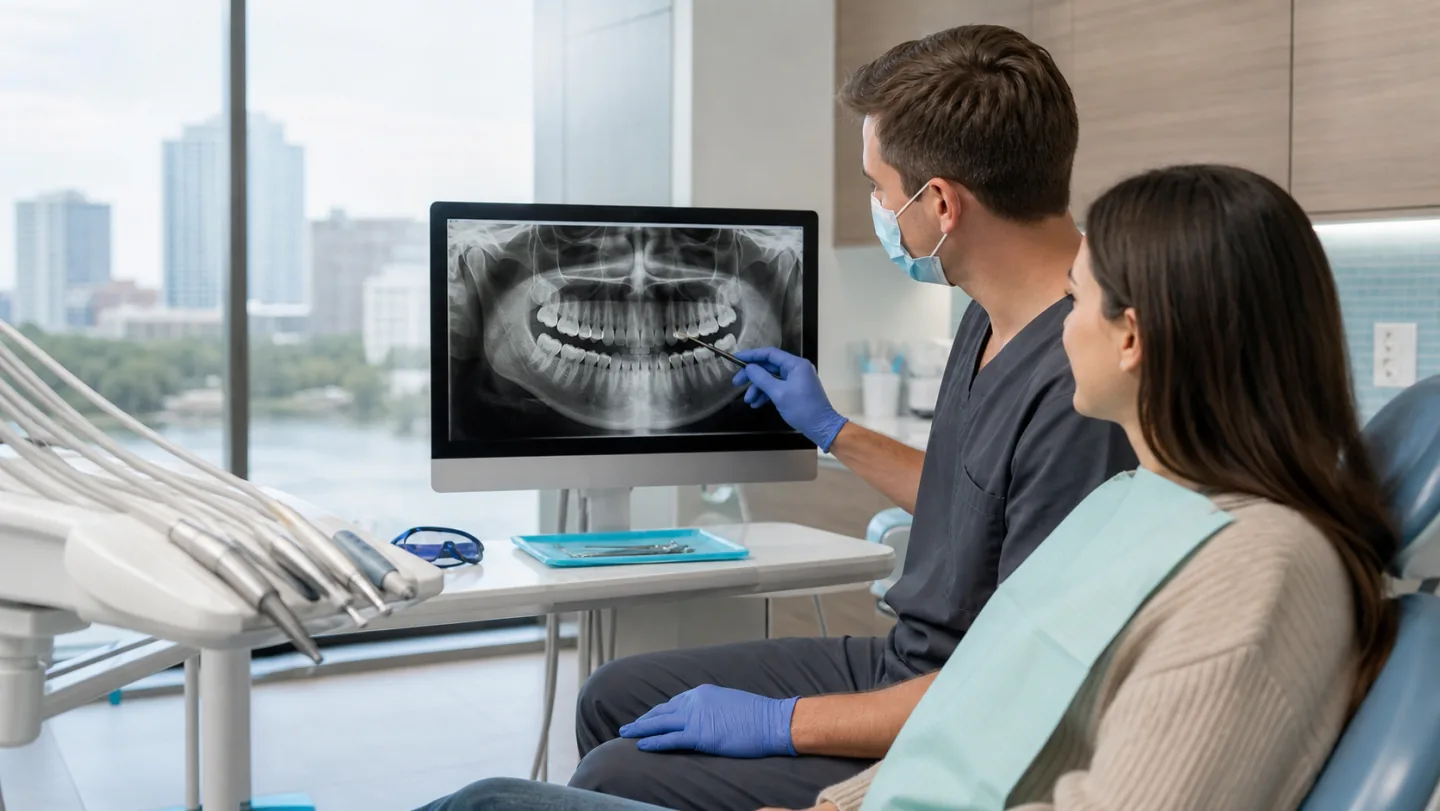
A dentist reviewing a dental X-ray before root canal treatment
Once you’re home again.

Root Canal Therapy for East St. Paul Residents

Most of your recovery won’t take place at the clinic. It’ll happen in your kitchen, at work and on your couch, outside Winnipeg, where it helps to know ahead of time what’s ordinary and what isn’t.

Let's find a time

Request an appointment

We’ll call to confirm your appointment. For urgent care, please call us directly.

Looking beyond the chair

Recovering at Home After Treatment in Winnipeg

It’s one thing to hear aftercare instructions while you’re still numb, and quite another to remember them later on. East St. Paul is outside the City of Winnipeg, so being clear about what to expect can spare you some uncertainty after you’ve left the clinic.

All treatment takes place at our clinic on McPhillips Street, and your dentist’s personal instructions always come first. This page is meant to help you think ahead: which questions to ask before you leave, what might feel different, and what shouldn’t wait.

Explore root canal therapy
Woman in a cream cardigan sitting on a sofa holding a glass of water, with a houseplant beside her
A woman in a cream cardigan sitting on a sofa with a glass of water.

Ask before you leave

A question answered at the clinic won’t be left hanging once you get home.

Watch the trend

Discomfort that’s gradually improving means something different from discomfort that’s growing.

Save the clinic’s number

Should you have concerns between visits, a phone call is the quickest way to raise them.

Sorting your symptoms

Ordinary recovery, or a reason to call.

Everyone’s experience differs, and only your dentist can speak to your own tooth. These general descriptions can help you decide when to phone with a question.

What may be part of healing

Some mild reminders of the treatment can occur, and inflammation that existed beforehand may influence how the tooth feels for a while.

  • Tenderness on the treated tooth when you bite down on it.
  • Numbness in the area until the anesthetic has worn off.
  • An unfamiliar awareness of the tooth, gradually becoming less noticeable.
  • Soreness that’s clearly improving instead of staying the same.

What deserves a phone call

Don’t wait for your next planned trip into the city if something seems off. It’s better to check, even if the answer is reassuring.

  • Pain that’s significant or that keeps getting worse.
  • Swelling in the gum, the cheek or around the treated tooth.
  • Anything that doesn’t match the course you were told to expect.
  • A temporary restoration that feels loose, damaged or has come out.

If you’re unsure which list you’re in, you don’t need to work it out by yourself. Describing the symptom to the clinic is a reasonable next step.

A recovery timeline, loosely

From leaving the clinic to final repair.

These stages can overlap, and the number of appointments varies with the tooth, its anatomy, any infection and the restoration planned. Use this as a guide to what to ask at each point.

Request your visit
  1. 01

    Before you go

    Check whether the work is complete or another canal visit is needed. Ask what the temporary restoration can handle, and when you should chew on the tooth again.

  2. 02

    That first evening

    Allow the freezing to wear off, and follow whatever you were told about eating and any medication. Take note of how the tooth feels when numbness has passed.

  3. 03

    The next several days

    Soreness should be moving in the right direction. If you’re not sure it is, ring the clinic instead of trying to compare your experience with someone else’s.

  4. 04

    Your return to Winnipeg

    Come back for the final restoration on the timeline you agreed. Since a filling or crown protects the treated tooth, this visit shouldn’t slide just because things feel fine.

Set yourself up in advance

A few small arrangements.

A bit of planning before your appointment can make your first day home simpler. These ideas are common sense and shouldn’t replace any specific instructions you’ve received.

Wondering about pain medication? Ask the clinic before your appointment what’s appropriate for you, especially if you already take other medicines.

Think about these beforehand

  • Whether you’ll need softer food options available when you return home.
  • Whether your plans allow for some downtime after the appointment.
  • Where you’ll write down aftercare instructions so you can find them later.
  • When you’ll be able to return for the final restoration appointment.
Grey and black desk chairs at a white table in front of sunlit blinds, with a framed coastal painting
Small white child’s chair between two adult chairs in front of a window, on a light rug

Desk chairs at a white table, and a small white chair on a light rug.

Easing through the first days

Being kind to the treated tooth.

Nothing dramatic is usually needed in order to look after yourself. Be patient with the tooth, pay attention to how it responds and ask questions at the clinic if you’re uncertain.

Chew with care

Until you’re told otherwise, ask whether to favour the other side of your mouth, especially with a temporary in place.

Numbness takes time

Your lip or cheek may feel odd until the anesthetic fades, which is a normal part of being frozen.

Keep up your routine

Ask how to brush and clean around the area, since ordinary hygiene still matters for a treated tooth.

The weeks and months ahead

Staying on track after you feel better.

Feeling fine is the goal, but it’s also when people are most likely to lose track of what’s left. A few commitments make a real difference to how the treated tooth is protected.

01

Finish the restoration

Without its final filling or crown, a treated tooth may be exposed to leakage or fracture. Book that return trip before life gets in the way.

02

Ongoing dental care

Teeth with root canal treatment can still get new decay. Regular dental visits and sound daily cleaning are part of giving the tooth a good long-term outlook.

03

Later warning signs

Fresh pain, a gum bump or swelling months from now shouldn’t be ignored just because the tooth was treated. Get in touch if any of them appears.

If you can’t recall what you were told about aftercare, it’s perfectly fine to phone and ask again.

Talk with our team
Winnipeg North Dental’s white sign band and logo above a recessed glass entrance and tall blinded windows

Winnipeg North Dental

Unit-5 2358 Mcphillips Street, Winnipeg, MB R2V 4J6
Get directions (opens in a new tab)
Where your treatment takes place

McPhillips Street, in Winnipeg

East St. Paul residents come into Winnipeg for this treatment, which is provided at Winnipeg North Dental, Unit 5, 2358 McPhillips Street. Follow-up and restoration appointments are also arranged through the clinic.

Using the form places a request only, with no time set aside yet. Clinic staff contact you to arrange a date.

Questions about coverage?

Talk with our team before your visit or learn about CDCP.

A little clarity before your visit

Your questions, answered.

Helpful details about root canal therapy in East St. Paul.

Ask our team
I’m back home in East St. Paul and something feels wrong. What should I do?

Phone (204) 338-3003 and describe what you’re noticing, especially if you have significant pain or swelling. Any visit would take place at Unit 5, 2358 McPhillips Street in Winnipeg.

How soon can I eat after a root canal?

Ask for this instruction before you leave, as it can depend on your tooth and on any temporary restoration. Many people also prefer to wait until the numbness has faded.

What if my temporary filling comes out?

Call the clinic and explain what happened, even if nothing hurts. A temporary is there to protect the tooth until the next stage, so it’s worth reporting without delay.

My tooth is tender a few days later. Is that normal?

Soreness when biting can happen for a short time. If it’s easing, that’s reassuring; if it’s severe, growing or accompanied by swelling, contact the clinic to discuss it.

Could I have the final crown done at a different clinic?

That’s a reasonable thing to ask your dentist about before your canal work is finished. It would need to be coordinated carefully, so raise it early and ask how records could be shared.

Want to plan ahead for recovery?

Ask before your treatment begins.

Request an appointment at our Winnipeg clinic, where you can raise any aftercare questions. For severe pain or swelling, call rather than filling out the form.

Patient testimonials

Kind words from our patients

★★★★★ 5.0 from 440+ reviews on Google

Close to home

Areas we serve

Convenient dental care on McPhillips Street for families across northwest Winnipeg and nearby communities.

Explore all service areas

A healthier smile is one visit away

Ready for dental care that feels genuinely comfortable?

✓ New patients welcome ✓ Direct insurance billing ✓ Multilingual team

How can we help?

Our dental team is here for you.

Ready to book or have a question? Choose the option that works best for you.

For urgent dental concerns, please call us directly.

Send us a message

Our team will reply during clinic hours.