Skip to content
Winnipeg North Dental
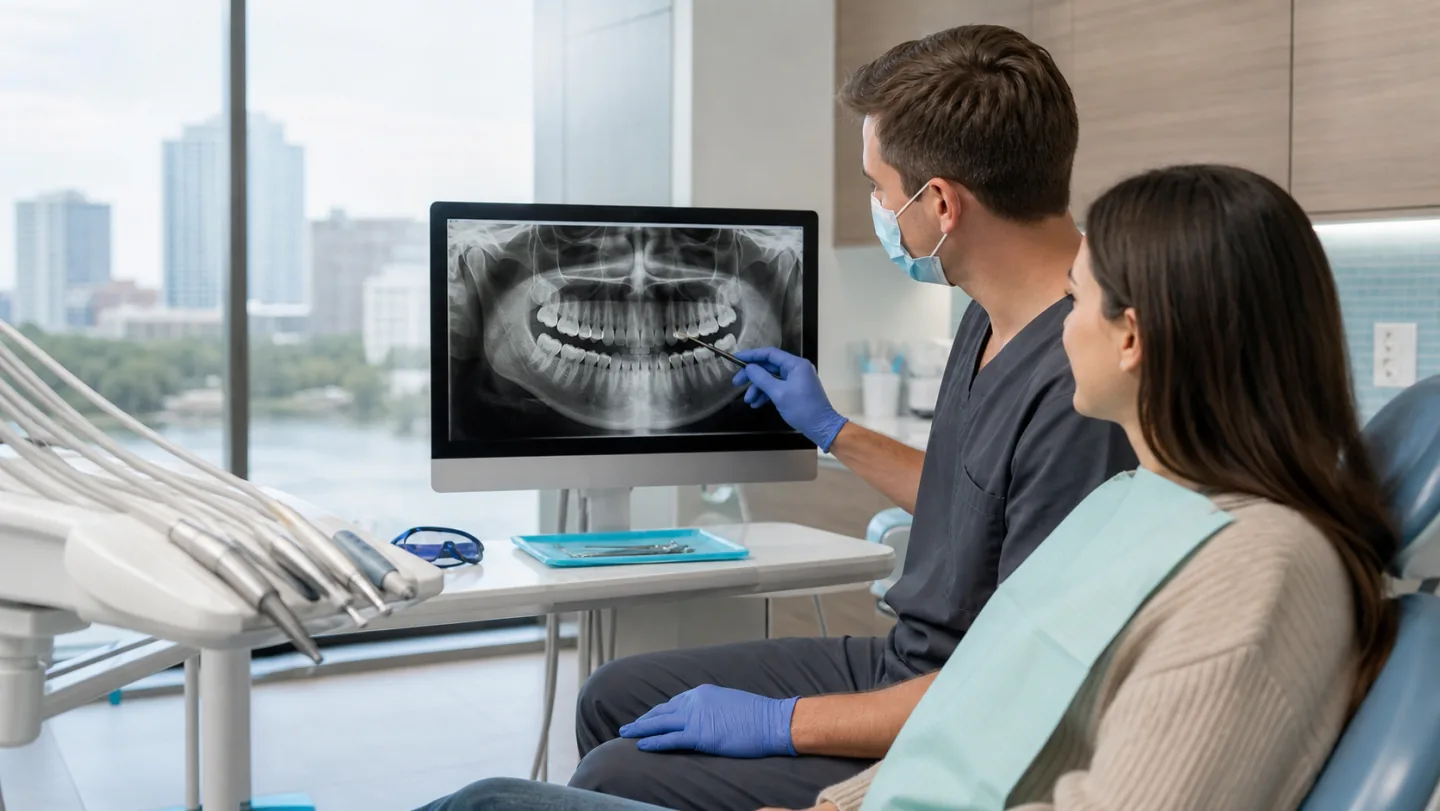
A dentist reviewing a dental X-ray before root canal treatment
Hard to put into words?

Root Canal Therapy for Downtown Winnipeg Residents

Dull, sharp, throbbing, somewhere on that side. Tooth pain can be strangely difficult to describe. Here is what’s worth noting, and how those notes can help at an assessment.

Let's find a time

Request an appointment

We’ll call to confirm your appointment. For urgent care, please call us directly.

Finding the vocabulary

Telling a Dentist What You’re Feeling

People often apologize for being vague about a toothache. There’s no need. What a dentist can use isn’t a perfect description, just a few plain observations about what sets the tooth off and how long the feeling stays.

This page is for Downtown Winnipeg residents who suspect something is wrong and aren’t sure how to explain it. Your notes alone can’t diagnose a tooth or confirm a need for root canal therapy, but they can give an assessment at our McPhillips Street clinic a useful starting point.

Explore root canal therapy
Sunlit consultation room with a white desk, black chairs and a snake plant by the blinds
A consultation room with a snake plant beside the blinds.

Plain words are enough

Saying it’s like a bruise when you bite gives the dentist something to go on.

Patterns over adjectives

When it happens and how long it lasts often tell more than how it feels.

Notes aren’t a diagnosis

An exam and X-rays are still required to find what’s causing it.

From symptom to explanation

What your notes can point toward.

On the left are details worth tracking. On the right is what would happen if those details, plus an assessment, led to a root canal recommendation.

Details worth jotting down

A few lines on your phone is plenty, and there’s no need to keep a formal diary.

  • Whether heat or cold bothers it, and if that feeling lingers afterward.
  • Whether it’s tender when you chew or press on it.
  • Any swelling, a pimple on the gum or a bad taste from drainage.
  • A recent crack, a knock or dental work on that side.

If treatment is recommended

The procedure addresses whatever has happened to the tissue inside the tooth.

  • Numbing is the first step, then the tooth gets isolated.
  • An access point lets the dentist remove the affected tissue.
  • Each canal receives cleaning, shaping and disinfection.
  • Sealing and a restoration, often a crown, round out the treatment.

Symptoms shift as a tooth changes, and some teeth needing treatment hurt very little, so a lack of notes doesn’t mean a lack of problem.

Using what you’ve noticed

How the appointment might go.

You won’t need to present anything formally. Your observations simply give the conversation a place to begin, before the dentist looks for themselves.

Request your visit
  1. 01

    Read out what you wrote

    Even short notes are useful. Being able to say when something happened spares you from relying on memory in the chair.

  2. 02

    Point to the area

    If you can’t tell which tooth it is, that’s fine. Indicate the general region and let the dentist narrow it down.

  3. 03

    Let the tests fill the gaps

    A clinical examination and appropriate X-rays can reveal what no description could, and they may show another cause altogether.

  4. 04

    Ask what it all adds up to

    Have the findings explained in ordinary language. If root canal therapy is advised, ask how many appointments your tooth might take.

A simple symptom note

What to record before you come.

Keep this as easy as possible. A handful of rough notes is more useful than a tidy story pieced together from memory at the last moment.

Don’t delay contacting the clinic in order to collect more notes. Severe pain or swelling is a reason to phone straight away.

Your note might cover

  • The day you first noticed it, and whether it’s getting better or worse.
  • What sets it off, and how long the feeling stays afterward.
  • Anything you’ve taken for it, plus your regular medications and health history.
  • Your dental insurance details, if you have coverage.
Empty dental chair covered in clear plastic, with a sink and tall faucet in the background
Corner of a clinic waiting area with chairs, small side tables and a tall leafy plant

A covered dental chair, and a corner of the waiting area.

Speaking up in the chair

Communicating during treatment.

Being able to describe what you feel continues to matter once work begins. It’s worth knowing which sensations to expect and which ones to flag.

Sensations to expect

Pushing or vibration can be normal when the tooth is numb, and these aren’t the same as pain.

Anything sharp

This is the one to report without delay. Your mouth may be occupied, so ask how to signal it before work starts.

Inflammation beforehand

A tooth that was already flared up can change how the visit feels, so mention how it has been recently.

Keep those notes going

Tracking your recovery in the same way.

The habit you’ve built can be useful after treatment too. Knowing what you felt, and when, makes any follow-up call more straightforward.

01

Note the trend

Tenderness when biting may occur briefly and should get better. Notice which direction it’s moving from one day to the next.

02

Know when to phone

If pain or swelling is significant, is increasing or doesn’t match the course you were told to expect, contact the clinic.

03

Record the next step

Write down the restoration plan as well. Delaying a crown or other protective restoration can leave the tooth at risk.

Later on, any changes in that tooth are worth noting too, as new decay, a leak or a fracture remain possible.

Talk with our team
Winnipeg North Dental entrance with double glass doors under a sign showing the phone number

Winnipeg North Dental

Unit-5 2358 Mcphillips Street, Winnipeg, MB R2V 4J6
Get directions (opens in a new tab)
Bring your notes here

Where the Assessment Takes Place

Downtown Winnipeg residents can bring their questions and notes to Winnipeg North Dental, Unit 5, 2358 McPhillips Street, Winnipeg, where any root canal therapy would also be done.

This form asks for an appointment without reserving one. The clinic will contact you to sort out a time.

Questions about coverage?

Talk with our team before your visit or learn about CDCP.

A little clarity before your visit

Your questions, answered.

Helpful details about root canal therapy in Downtown Winnipeg.

Ask our team
I live in Downtown Winnipeg. What do I actually say on the phone?

Tell the person who answers at (204) 338-3003 what you’ve noticed, using any words you like. Mention swelling or severe pain first. Care is at 2358 McPhillips Street.

What if I can’t tell which tooth is hurting?

That happens often, and you aren’t expected to know. Point to the general area, and the dentist can use the exam and X-rays to narrow it down.

Is throbbing pain a sign that I need a root canal?

It can’t tell you that alone. Not every painful tooth needs this treatment, and an examination is needed to learn what is behind the throbbing.

Should I try to reproduce the pain before my appointment?

No need to go looking for it. Simply note what triggers it in the course of your day, and describe that at your visit.

My symptoms keep changing. Does that confuse things?

Not at all. Symptoms can shift as the tooth changes, so that history is useful information. Let the dentist know how things have developed.

Got your few rough lines?

Bring them to an assessment.

Ask for a visit at our clinic on McPhillips Street and share what you’ve noticed. Please call us if there is swelling or severe pain.

Patient testimonials

Kind words from our patients

★★★★★ 5.0 from 440+ reviews on Google

Close to home

Areas we serve

Convenient dental care on McPhillips Street for families across northwest Winnipeg and nearby communities.

Explore all service areas

A healthier smile is one visit away

Ready for dental care that feels genuinely comfortable?

✓ New patients welcome ✓ Direct insurance billing ✓ Multilingual team

How can we help?

Our dental team is here for you.

Ready to book or have a question? Choose the option that works best for you.

For urgent dental concerns, please call us directly.

Send us a message

Our team will reply during clinic hours.



