Skip to content
Winnipeg North Dental
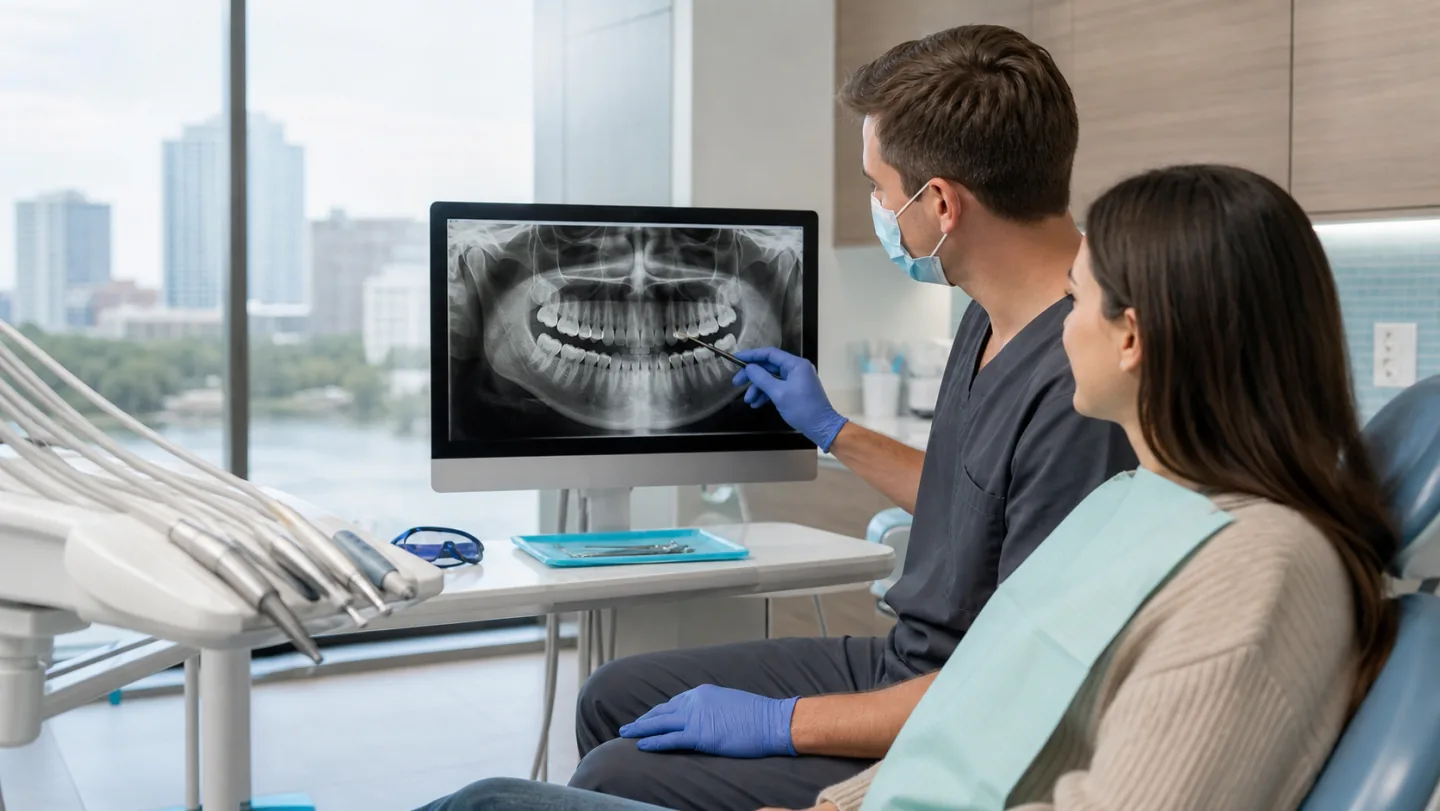
A dentist reviewing a dental X-ray before root canal treatment
Getting by on pain relievers?

Root Canal Therapy for Brooklands Residents

Reaching for something to dull a toothache so you can get on with your day is understandable. Yet when you keep having to do it, your tooth is probably trying to tell you something.

Let's find a time

Request an appointment

We’ll call to confirm your appointment. For urgent care, please call us directly.

Quieter isn’t the same as fixed

When Medication Is Holding a Toothache at Bay

Medication can make a sore tooth more bearable for a time. What it cannot do is remove damaged tissue from inside the tooth or seal the space where trouble has taken hold. If the pulp is the cause, the source stays in place even when you feel better.

That is why it makes sense for anyone in Brooklands, an area in Winnipeg, who keeps depending on medication for one tooth to have it examined at our McPhillips Street clinic. An exam can establish whether a root canal is needed or something else is going on.

Explore root canal therapy
Consultation room with a landscape painting on a white wall and a spiky green plant
A landscape painting and spiky green plant in a consultation room.

Relief hides symptoms

Feeling better on medication tells you little about what is happening inside the tooth.

The cause needs finding

An examination and X-rays address the question that a pain reliever can’t answer.

Let us know what you took

Your dentist will want to hear which products you have been using and how often.

Managing against treating

What medication does, and what it can’t.

These two approaches work on very different levels. Comparing them shows why one may not substitute for the other when the tissue within a tooth has been affected.

What products can do

Their role is limited to how you feel, and whether any is suitable for you is a question for a health professional.

  • They may dull the sensation of pain for a period.
  • Relief can wear off, and the ache may return afterward.
  • They don’t clear away decay or close a crack.
  • Feeling better can make it tempting to put off an exam.

What a root canal does

If inflamed or infected pulp is responsible, this treatment deals directly with its source.

  • The area is numbed, and the tooth is isolated from your saliva.
  • A small opening allows the troubled tissue to be taken out.
  • All canals are prepared, disinfected and filled to close them.
  • Afterward, a restoration such as a filling or crown protects the tooth.

For guidance about how much of a medication to take or whether it is right for you, follow the label and ask a pharmacist, physician or dentist.

Getting at the real problem

How your appointment can go.

Coming in doesn’t commit you to treatment. It lets you find out what the medication has been covering up, and how many visits any treatment would take depends on the tooth.

Request your visit
  1. 01

    Tell us your routine

    Mention what you have taken for the pain, how often and how long you have needed it. It gives the dentist a useful sense of the pattern.

  2. 02

    Look for the source

    The dentist will examine the tooth and take appropriate X-rays, then consider that information together with what you have described.

  3. 03

    Talk about the choices

    If the tissue can’t recover, you’ll hear about keeping the tooth through a root canal, or whether removal would be more appropriate in your case.

  4. 04

    Deal with it directly

    When treatment goes ahead, the dentist numbs the tooth and works through the canals. A final restoration rounds out the plan at a later stage.

Before you come in

Keep track of what you’ve taken.

When a sore tooth has been going on for a while, the details blur together. Writing them down gives a clearer sense of the pattern than a rough memory would.

If you’ve taken something shortly before your appointment, tell the dentist what it was and when, because it may affect how the tooth feels.

What to note down

  • Each product you have used for this tooth, and how regularly.
  • Whether you’ve been needing it more often in recent weeks.
  • Any antibiotics or other prescriptions you have received for it.
  • Your regular medicines, your health history and your benefit details.
Quiet waiting area with a navy storage bench, wooden floor and pale area rug
Clinic entry with a glass partition, a light wood floor and a white reception desk

A navy storage bench on a pale rug, and a white reception desk.

When you’ve been hurting a while

You don’t have to tough it out.

Living with pain wears on you. If you are running low on sleep or patience by the time you come in, tell us, as it helps us understand how hard things have been lately.

Worried about freezing?

Sore teeth can make people wonder whether the anesthetic will work. Raise that, and report sharp sensations at once.

Tell it how it is

Describe how much the pain has been interfering with your daily life. You don’t need to downplay it.

An inflamed tooth

Inflammation can affect comfort during treatment and recovery, so it is fine to ask what to expect.

Afterward, and the medicine cabinet

What may change after treatment.

Many people look forward to no longer planning their day around doses. Recovery is individual, so ask what you should expect and what to use if it feels tender.

01

Short-term soreness

Biting may feel tender for a short time after the canal work. It’s expected to ease rather than build, so take note of which way it’s heading.

02

Pain that keeps needing relief

Call if you’re still relying on medication for considerable pain, or if there is swelling or it gets worse instead of settling down.

03

Comfort isn’t the finish line

A tooth that feels better still needs its final restoration. Skipping this can place the treated tooth at risk of breaking.

Finding you need something for a different tooth now? That’s worth a call too.

Talk with our team
Winnipeg North Dental’s double doors with notices on the glass below the white sign

Winnipeg North Dental

Unit-5 2358 Mcphillips Street, Winnipeg, MB R2V 4J6
Get directions (opens in a new tab)
Find out what’s underneath

Have It Examined on McPhillips Street

Brooklands residents can have a troublesome tooth checked at Winnipeg North Dental, Unit 5, 2358 McPhillips Street, Winnipeg, and any root canal therapy is carried out at the clinic too.

Your form submission is received as a request. Nothing is scheduled until a staff member has contacted you and found a time with you.

Questions about coverage?

Talk with our team before your visit or learn about CDCP.

A little clarity before your visit

Your questions, answered.

Helpful details about root canal therapy in Brooklands.

Ask our team
How do Brooklands residents get a tooth like this seen?

Phone (204) 338-3003 if the pain is strong, or send the form if it’s manageable. Visits are at Unit 5, 2358 McPhillips Street, and the clinic confirms a time.

The medication is working, so is a visit still worthwhile?

It’s a good idea, since relief doesn’t show that the cause has been resolved. An exam can identify what is driving the pain and whether it needs treatment.

Will antibiotics clear this up instead of a root canal?

Whether antibiotics have a role is a decision for your dentist or physician. They don’t remove affected tissue from inside a tooth, so ask how they’d fit into your own situation.

Should I take something before my appointment?

Ask when you confirm your appointment, or check with a pharmacist. Whatever you do take, let the dentist know the name and the time so they can consider it.

Is it harmful to keep putting off treatment if I can manage the pain?

A tooth left untreated can stay at risk, and infection can spread. Ask how much time your tooth has, given what the exam shows, rather than judging by comfort alone.

Tired of counting doses?

Let’s look for the cause.

Request an exam at our Winnipeg clinic and bring your notes. If pain breaks through or swelling starts, please phone us.

Patient testimonials

Kind words from our patients

★★★★★ 5.0 from 440+ reviews on Google

Close to home

Areas we serve

Convenient dental care on McPhillips Street for families across northwest Winnipeg and nearby communities.

Explore all service areas

A healthier smile is one visit away

Ready for dental care that feels genuinely comfortable?

✓ New patients welcome ✓ Direct insurance billing ✓ Multilingual team

How can we help?

Our dental team is here for you.

Ready to book or have a question? Choose the option that works best for you.

For urgent dental concerns, please call us directly.

Send us a message

Our team will reply during clinic hours.



