Skip to content
Winnipeg North Dental
A dental professional explaining periodontal pocket treatment with a dental model
The X-ray mentioned bone loss

Pocket Reduction Surgery for West End Winnipeg Residents

Few phrases from a dental chair sound as heavy as bone loss. If you’re in West End Winnipeg and that’s what you were told, here’s how bone enters into a decision about pocket reduction.

Let's find a time

Request an appointment

We’ll call to confirm your appointment. For urgent care, please call us directly.

What was found beneath the gum

How Bone Shapes a Pocket Reduction Decision

Teeth rely on the bone and attachment around them, and periodontal disease can damage that support. Bone findings help describe how a tooth is doing, what kind of defect may be there, and whether surgery could leave an area that holds up to daily care.

One image can’t settle all of that, and a phrase like bone loss covers a wide range of situations. West End Winnipeg residents can ask for theirs to be explained at our clinic on McPhillips Street, where Winnipeg North Dental reviews it along with other findings.

Explore pocket reduction surgery
Dental chair in a treatment room with monitor displaying a blue image at Winnipeg North Dental
A dental chair and a wall-mounted monitor in a treatment room.

Support matters

A tooth’s remaining support helps determine whether surgery would offer a maintainable long-term result.

Shape matters too

It isn’t only about how much bone is gone, as the contour of a defect affects access.

Findings need context

Bleeding, mobility and how the area responded to therapy complete what an image starts.

Bone during surgery

What happens at the bone level.

Once gum tissue is lifted, your dentist can view directly what X-rays only suggested. This section covers what’s done there, and what you can expect to discuss.

Seeing and cleaning

Following local anaesthetic, the area opens up gently so root surfaces and supporting bone are visible. Deposits and inflamed tissue can then be taken away carefully.

  • Direct access rather than working by feel.
  • A close look at root and bone contours.
  • Treatment confined to the planned area.

Refining contours

Selected uneven bone may be reshaped when appropriate. The purpose is a form the tissue can sit against, making that area simpler to keep clean.

  • This doesn’t happen in every procedure.
  • Ask whether it’s planned for your site.
  • Ask what other bone options might exist.

Pocket reduction focuses on access and cleanability. It isn’t described here as rebuilding lost bone, so ask your dentist directly if that is what you’re hoping for.

Understanding your images

From a worrying phrase to a clear picture.

Your discussion can go at whatever pace you need. Below is a general order for moving from one alarming remark to a useful understanding.

Request your visit
  1. 01

    Look at it together

    Ask to see the image, and have someone point out what’s being described. Questions at this stage are always appropriate.

  2. 02

    Connect it to each tooth

    Findings may differ across your mouth. Find out which teeth are affected, and how the others compare.

  3. 03

    Add the clinical findings

    Pocket depths, bleeding, mobility and restorations fill out what an X-ray alone can’t show. How the site responded to therapy also counts.

  4. 04

    Discuss the options for each site

    Non-surgical care, surgery, monitoring or something else could each apply. Prognosis can vary from tooth to tooth, so ask about each of them.

Collect what you were given

Earlier images can add useful history.

Change over time often tells more than one snapshot does. If X-rays exist at another dental office, you could ask about having them sent for review.

Recent images may still need updating, depending on what’s required for diagnosis. Find out what’s needed when you speak with the clinic.

Helpful to bring

  • The name of any office holding your earlier X-rays.
  • The exact words you were told, if you wrote them down.
  • Medications and health conditions, for a complete history.
  • Questions about what bone loss means for specific teeth.
Curved waiting space with wood-look floor and white counter at Winnipeg North Dental
Keyboard and mouse on a glossy white desk with chairs around it at Winnipeg North Dental

A white counter on a wood-look floor, and a keyboard on a glossy white desk.

A frightening phrase

Give yourself a moment with the news.

Hearing about bone can make you picture the worst. It’s reasonable to pause, ask how serious your case is, and request that it be explained again.

About the procedure

Working near bone may sound dramatic, yet the planned area is thoroughly numbed first. Your health history informs other comfort options.

About the outlook

Ask directly how your dentist sees each tooth over time, including what is uncertain. Clear information is easier to live with than vague dread.

About your looks

After healing, teeth may appear longer or gaps may be more visible. Talk about it now if you have front teeth involved.

Protecting what remains

Support needs looking after from here.

These stages are general; what you’re personally told after surgery comes first, with extent and location making a real difference.

01

The first day or two

Plan on 24–48 hours of taking things easy. Suitable foods and directed medication help, and avoiding the urge to lift your lip protects the site.

02

As tissue reconnects

Plaque is managed by your prescribed method, with no brushing right at the site. Tobacco and disruptive activity are both to be avoided at this stage.

03

Over the years

Maintenance visits keep watch on a tooth’s support, while careful home cleaning limits new inflammation. Stability relies on that shared, continuing effort.

A change you’re worried about during healing or after should prompt a phone call to the clinic.

Talk with our team
Winnipeg North Dental front elevation with mixed grey and brown exterior panels

Winnipeg North Dental

Unit-5 2358 Mcphillips Street, Winnipeg, MB R2V 4J6
Get directions (opens in a new tab)
To have it explained

West End Winnipeg Residents Are Seen on McPhillips Street

Exams, X-ray discussions and treatment for West End Winnipeg residents all happen at Winnipeg North Dental, Unit 5, 2358 McPhillips Street, Winnipeg, MB R2V 4J6.

Submitting the form doesn’t give you a confirmed time, as clinic staff respond first. To speak with someone directly, call (204) 338-3003.

Questions about coverage?

Talk with our team before your visit or learn about CDCP.

A little clarity before your visit

Your questions, answered.

Helpful details about pocket reduction surgery in West End Winnipeg.

Ask our team
How can someone in West End Winnipeg have bone loss findings explained?

Request an assessment using the form or by phoning (204) 338-3003. At our McPhillips Street clinic, you can ask to go through your findings with your dentist.

Does bone loss mean I’ll lose my teeth?

Not automatically. Outlook differs from tooth to tooth and depends on several factors, so ask about each affected tooth instead of assuming the worst.

Will this surgery grow my bone back?

Its purpose is access, disease control and a more maintainable shape. If you’re hoping for regrowth, ask your dentist whether any option addresses that.

Can bone loss get worse after treatment?

Disease can become active again if plaque collects or risk factors persist. That’s why maintenance and daily cleaning stay so central.

Is reshaping bone the same as losing more of it?

Contouring selected irregular bone has a specific purpose and isn’t always needed. Ask whether it’s planned for you, and why it would help.

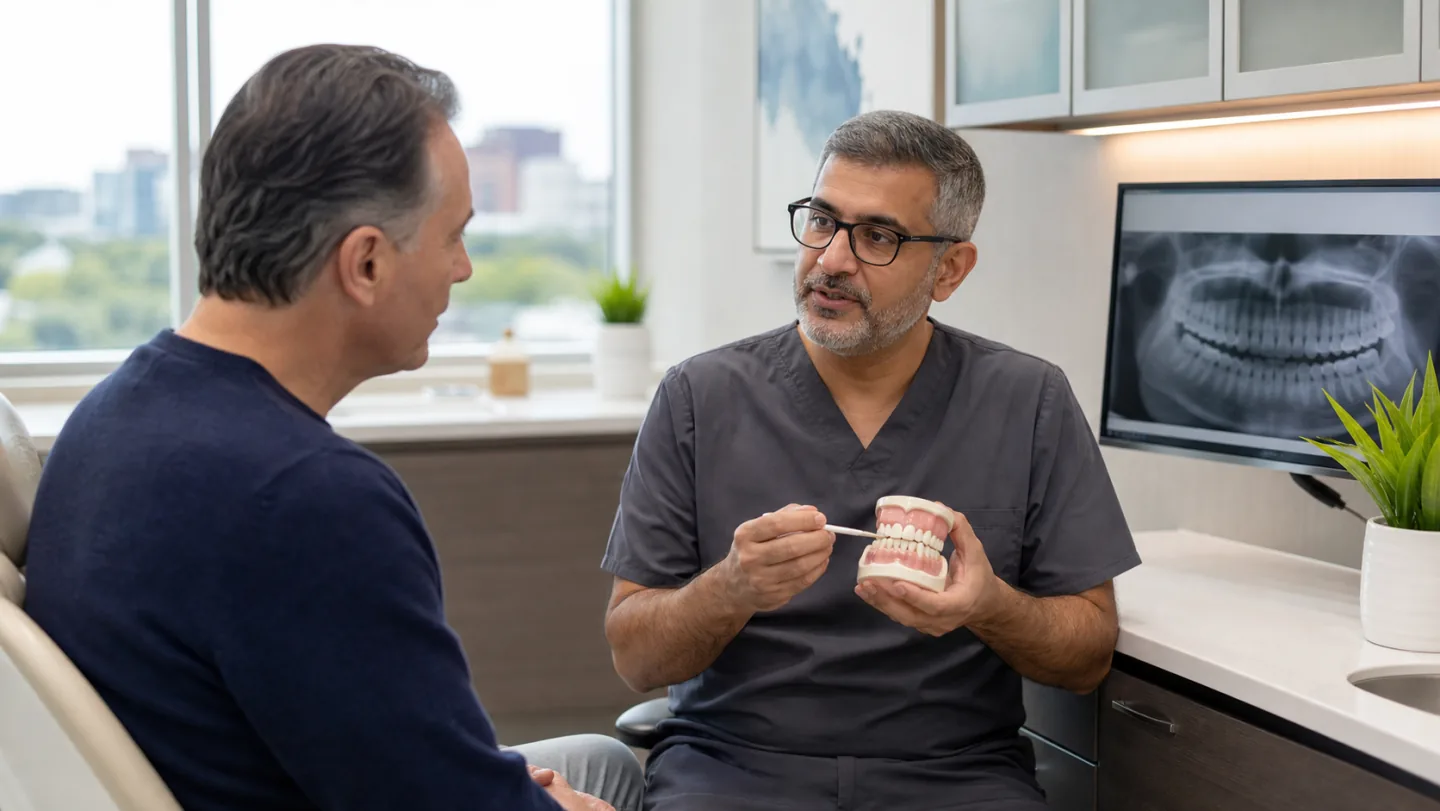
Ask to see what they saw

Turn a scary phrase into a clear answer.

Your bone findings can be gone through on McPhillips Street. You’ll hear from staff there about arranging a suitable time to come in.

Patient testimonials

Kind words from our patients

★★★★★ 5.0 from 440+ reviews on Google

Close to home

Areas we serve

Convenient dental care on McPhillips Street for families across northwest Winnipeg and nearby communities.

Explore all service areas

A healthier smile is one visit away

Ready for dental care that feels genuinely comfortable?

✓ New patients welcome ✓ Direct insurance billing ✓ Multilingual team

How can we help?

Our dental team is here for you.

Ready to book or have a question? Choose the option that works best for you.

For urgent dental concerns, please call us directly.

Send us a message

Our team will reply during clinic hours.



