Skip to content
Winnipeg North Dental
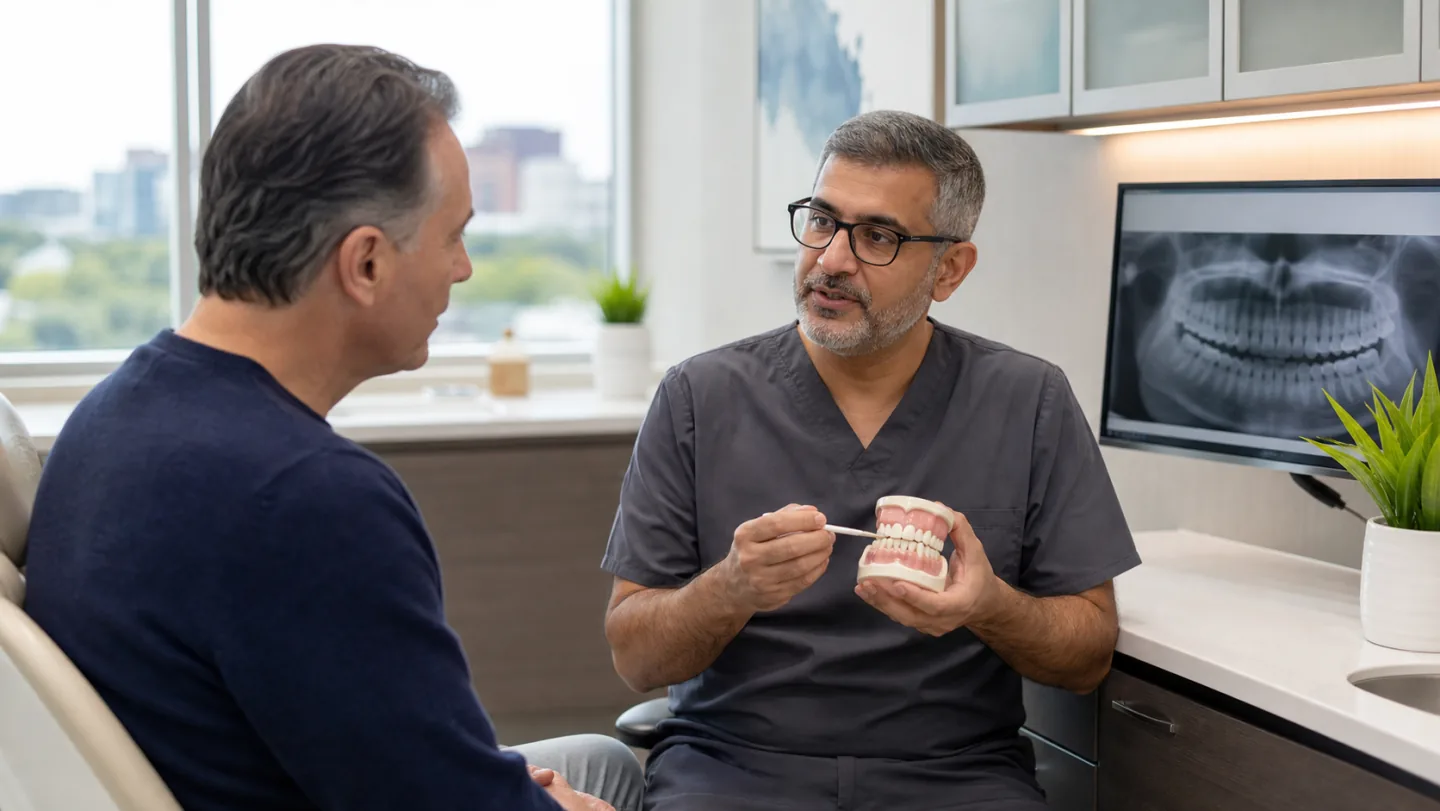
A dental professional explaining periodontal pocket treatment with a dental model
Can this tooth be kept?

Pocket Reduction Surgery for The Maples Residents

When a tooth has lost support, the worry goes well beyond your gums. This page is for anyone in The Maples wondering whether surgery could help a tooth at risk, and what else might need to be considered.

Let's find a time

Request an appointment

We’ll call to confirm your appointment. For urgent care, please call us directly.

When a tooth feels at risk

What Tooth Support Means for the Surgical Decision

Advanced gum disease can damage the structures that hold a tooth in place. Pocket reduction surgery targets a deep site so it can be cleaned and maintained, but it only makes sense when enough support remains for that effort to be worthwhile.

So the first question for a patient from The Maples is about the tooth’s outlook, and only then about the procedure. Your dentist can examine this with you at our McPhillips Street clinic in Winnipeg, in a conversation built around your tooth, your options and your priorities.

Explore pocket reduction surgery
Treatment room with a dental chair and cabinets at Winnipeg North Dental
Where teeth are examined and treated at Winnipeg North Dental.

Outlook comes first

Mobility, remaining bone, decay and restorations all help show what a tooth can realistically offer.

Options get compared

If predictable maintenance looks unlikely, alternatives to surgery become part of your conversation.

No false promises

Surgery cannot ensure that a tooth will never need further treatment, and you should hear that plainly.

Judging a tooth’s future

Is this tooth a good candidate for surgery?

A deep pocket beside a compromised tooth raises a different question from one beside a firm tooth. Here is how the two sides of that decision tend to look.

Signs that surgery may be reasonable

Surgery may be discussed where a specific site remains a problem and there is enough tooth left to justify the effort.

  • The site stayed inflamed or deep following non-surgical care.
  • Adequate support remains around the tooth.
  • Root shape and bone contour allow useful access.
  • You could clean the finished area dependably over time.

Reasons to look at alternatives

Sometimes a tooth has too many problems at once, and surgery alone may not change what happens to it in the long run.

  • Very little supporting structure is left.
  • The tooth is noticeably mobile.
  • Decay or a failing restoration complicates its outlook.
  • Reliable long-term maintenance seems unlikely at that location.

None of these signs decides the matter alone. Your dentist weighs them together after examining the tooth and explains the reasoning to you.

Getting a clear answer

How a worried tooth gets evaluated.

You probably want a straight answer as soon as possible. The way to get one is a careful look at the tooth, its neighbours and your history, followed by an open talk.

Request your visit
  1. 01

    Describe what you have noticed

    Share any movement, shifting, tenderness or bleeding, and when it started. Also tell us what treatment that tooth has already had.

  2. 02

    Examine the tooth and its support

    The tooth’s stability, the surrounding gum and any existing dental work are checked, and needed X-rays are discussed with you.

  3. 03

    Talk through each path

    You hear what surgery could and could not accomplish for this tooth, and how that compares with other options your dentist considers appropriate.

  4. 04

    Carry out your chosen plan

    If surgery is chosen, the area is numbed, the roots are cleaned under direct view, and the gum is sutured in position, with healing visits to follow.

Preparing for a hard conversation

Think about what this tooth means to you.

A tooth’s value differs from person to person, depending on where it is, how you chew and how you feel about keeping it. Knowing your own priorities makes difficult advice easier to work through.

Options can differ a great deal in cost and coverage. Asking for estimates on each path helps you compare them fairly.

Helpful to think through and bring

  • When you first noticed the tooth feeling loose or different.
  • Past work on that tooth, such as a crown, a filling or a root canal.
  • A full list of your medications and details of your health history.
  • Your insurance or CDCP information, along with your main questions about keeping the tooth.
Quiet consultation office with a desk and window blinds at Winnipeg North Dental
Bench and seating beneath abstract art at Winnipeg North Dental

A calm space for difficult decisions at Winnipeg North Dental.

Facing an uncertain tooth

It is natural to feel upset about this.

Hearing that a tooth is at risk can be distressing, whatever the eventual outcome. Take the time you need with the information, and ask anything you want explained again.

Honest answers, gently

Tell us how direct you would like us to be, and how much detail you want when discussing the outlook.

Tender or loose teeth

Point out any sore area before the exam starts, so that it can be approached with care.

Time to decide

Ask whether there is any urgency in your case and how much time you could reasonably take to think.

If you and your dentist go ahead

Giving a treated tooth its fair chance.

A tooth that has been through gum surgery depends heavily on what happens afterward. Your part in healing and ongoing maintenance has a real effect on keeping the area stable.

01

Careful early healing

Avoid disturbing the tissue or sutures, stay away from tobacco, and rely on the cleaning or rinsing method in your instructions rather than brushing that spot.

02

A close look at follow-up

Your review addresses tissue closure, comfort and cleanliness. It also gives you an opportunity to ask how the tooth seems to be doing.

03

Ongoing monitoring

Maintenance visits help catch recurring inflammation or deepening pockets, which may develop where plaque builds up or risk factors persist.

If a tooth suddenly feels much looser or something has you worried, phone the clinic and do not rely on the online form.

Talk with our team
The Winnipeg North Dental sign above the clinic doors

Winnipeg North Dental

Unit-5 2358 Mcphillips Street, Winnipeg, MB R2V 4J6
Get directions (opens in a new tab)
Having it looked at

Where Your Tooth Can Be Assessed

The Maples is in the northwest of Winnipeg, and your tooth would be evaluated at Winnipeg North Dental, Unit 5, 2358 McPhillips Street. Any treatment you decide on is carried out at that same clinic.

A form request tells us you would like a visit, and the clinic must then confirm a time with you. Please phone (204) 338-3003 if the tooth is causing you concern right now.

Questions about coverage?

Talk with our team before your visit or learn about CDCP.

A little clarity before your visit

Your questions, answered.

Helpful details about pocket reduction surgery in The Maples.

Ask our team
I live in The Maples and have a loose tooth. Who should I contact?

Call (204) 338-3003 to describe it, particularly if it has changed recently. For a routine request you can use the form, and your assessment will take place on McPhillips Street once a time is confirmed.

Can surgery tighten a loose tooth?

The procedure targets deep pockets and access for cleaning, and it should not be assumed to firm up a tooth. Ask your dentist what, if anything, might be expected for your tooth’s stability.

What if the tooth has very little support left?

Surgery is not automatically suitable for every tooth. Your dentist will go over its outlook, restorative condition and alternatives if predictable maintenance seems unlikely.

What are the alternatives if surgery does not make sense?

They depend on your findings. Possibilities include monitoring the site, a different type of treatment, or discussing removal and replacement options if the tooth cannot be maintained. Your assessment will narrow these down.

If I go ahead, can I be sure of keeping the tooth?

No one can give that assurance. Surgery aims to improve disease control and make cleaning easier, but a treated tooth may still need more care in the future.

Find out where you stand

Get a clear view of your tooth’s outlook.

Request an assessment at McPhillips Street, and the clinic will respond so you can confirm a suitable time.

Patient testimonials

Kind words from our patients

★★★★★ 5.0 from 440+ reviews on Google

Close to home

Areas we serve

Convenient dental care on McPhillips Street for families across northwest Winnipeg and nearby communities.

Explore all service areas

A healthier smile is one visit away

Ready for dental care that feels genuinely comfortable?

✓ New patients welcome ✓ Direct insurance billing ✓ Multilingual team

How can we help?

Our dental team is here for you.

Ready to book or have a question? Choose the option that works best for you.

For urgent dental concerns, please call us directly.

Send us a message

Our team will reply during clinic hours.



