Skip to content
Winnipeg North Dental
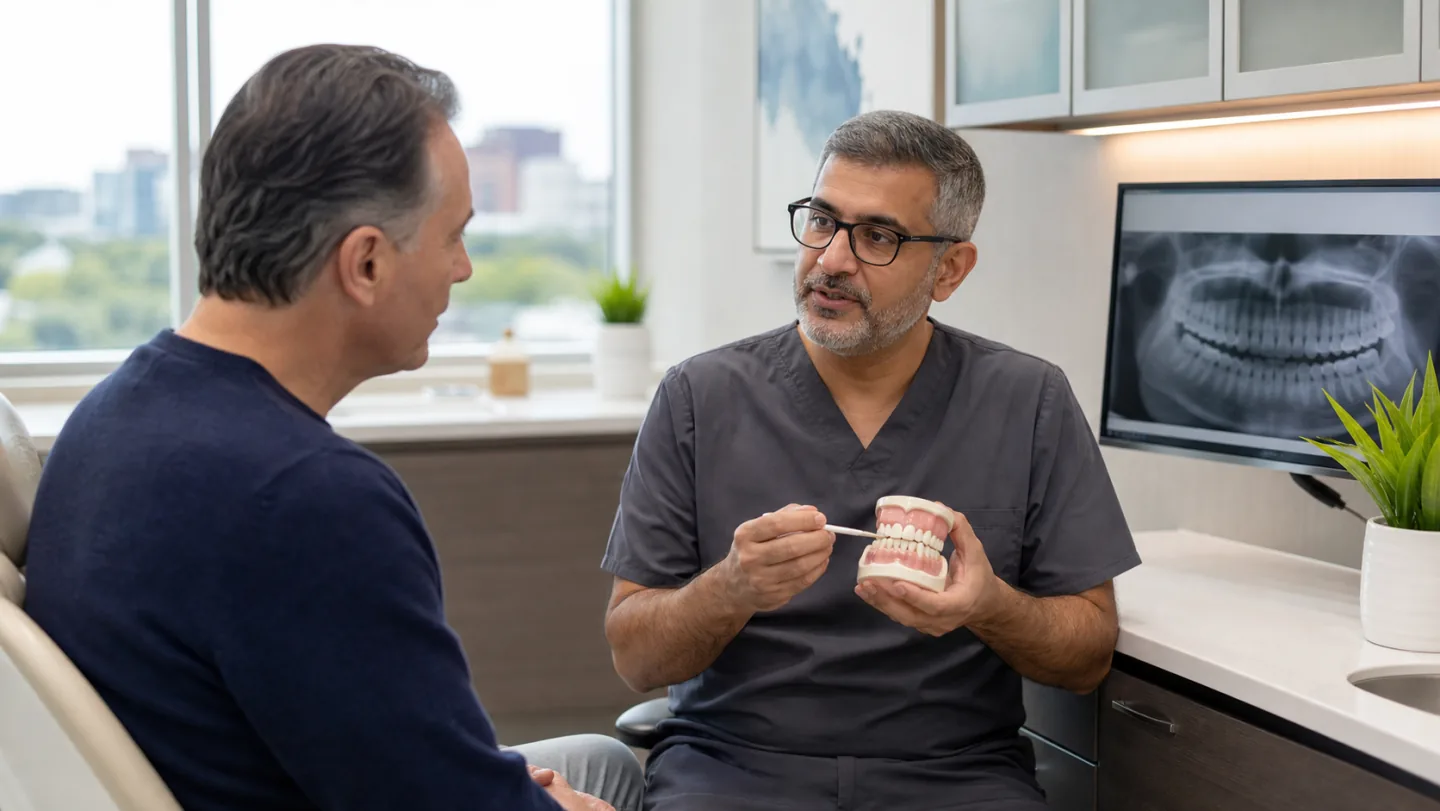
A dental professional explaining periodontal pocket treatment with a dental model
Careful at home, still deep at the gums

Pocket Reduction Surgery for Templeton-Sinclair Residents

It is frustrating to brush and floss faithfully and still hear that certain pockets are too deep. For people in Templeton-Sinclair in that position, the explanation often has more to do with reach than with effort.

Let's find a time

Request an appointment

We’ll call to confirm your appointment. For urgent care, please call us directly.

A problem of reach

When Good Cleaning Habits Cannot Get to the Bottom of a Pocket

Once inflammation has damaged the attachment between gum and tooth, a space can form below the gumline. Past a certain depth, deposits and bacteria sit where bristles and floss simply do not go, however conscientious you are.

Pocket reduction surgery gives direct access to those root surfaces and then repositions the tissue, so that what remains is more manageable to clean. Templeton-Sinclair is in Winnipeg, and any assessment for this would take place at our McPhillips Street clinic.

Explore pocket reduction surgery
Pale blue dental chair and wood-look cabinets in a Winnipeg North Dental treatment room
A pale blue dental chair beside wood-look cabinets at Winnipeg North Dental.

Effort isn’t the whole story

A deep site can remain troublesome in someone with very steady home care, because the space itself gets in the way.

Reshaping for reach

The treatment goal is a more accessible area, one you and the dental team can actually keep clean over time.

Your routine stays essential

Improved access works alongside your daily plaque control. It never takes over that job.

Above and below the gumline

What your toothbrush handles, and what it can’t.

Seeing the limits of home care can take some of the sting out of a surgical recommendation. It also shows what the procedure is meant to change.

Within reach of daily cleaning

Good habits do a great deal for the surfaces and shallow spaces you are able to get at each day.

  • Removing fresh plaque along the gumline.
  • Keeping shallow, healthy spaces clean.
  • Clearing the areas between teeth with suitable aids.
  • Helping limit further inflammation in accessible areas.

Beyond what bristles can do

Selected deep sites may need clinical treatment because the trouble lies out of reach, even with a careful routine.

  • Deposits lodged on root surfaces deep inside a pocket.
  • Inflamed tissue lining a persistent site.
  • Irregular bone contours that can complicate access.
  • Spaces that stayed deep after scaling and root planing.

Being diligent does not mean surgery is automatically right for you, and needing it is no verdict on your habits. Tooth support, anatomy and your response to earlier care all play a part.

Looking at your habits and your gums

An appointment that takes your effort seriously.

Your assessment looks at how you clean as well as what is measured. That way, any advice can address what is really happening at each troublesome site.

Request your visit
  1. 01

    Walk through your routine

    Explain how and when you brush, what you use between teeth and which spots always seem to bleed or feel difficult.

  2. 02

    Check the hard-to-clean areas

    Pockets, inflammation and bleeding are reviewed along with bone and root shape, using X-rays where they are clinically appropriate.

  3. 03

    Separate reach from technique

    You find out whether a change of method could help a given site, or whether the depth and shape of the space are the real obstacle.

  4. 04

    Treat for access, if advised

    When surgery goes ahead, local anaesthetic comes first. The gum is lifted, the roots are cleaned under direct view, and sutures hold the tissue at its planned level.

Showing how you clean

Bring your routine along with your questions.

Specifics help far more than a general claim of brushing twice a day. Think about which products you use and where you tend to struggle, then be as frank as you can.

When you book, feel free to ask what a proposed plan may cost and how your coverage might apply.

Details your dentist can use

  • The brush, floss or other cleaning aids that you use most.
  • Spots that bleed, trap food or feel impossible to reach.
  • Dates and details of your previous deep cleaning, if you had one.
  • Your medication list, your health history and any insurance or CDCP details.
Blue bench, white chairs and framed abstract art in a Winnipeg North Dental waiting area
Desk, chairs and a framed landscape in a consultation office at Winnipeg North Dental

A waiting area at Winnipeg North Dental with a blue bench.

Frustration is allowed

Doing everything right and still hearing bad news is hard.

You may feel discouraged, or even a little defensive, when a deep pocket stays deep despite your work. Those feelings are understandable, and you can bring them into the discussion.

Ask for specifics

Request an explanation of what is limiting each site, so the news feels less like a judgment on you.

Mention tender gums

Speak up about any areas that hurt when they are measured or touched, so they can be approached carefully.

Local numbing

This treatment is commonly done under local anaesthetic, and comfort options are reviewed beforehand against your health history.

Putting your habits to work again

Your routine has a new job after healing.

Careful cleaners sometimes find it hardest to stop cleaning a treated site. For a while, that restraint is exactly what your gums need, and then your routine gradually returns.

01

Hold back at first

Do not brush the surgical area early on. Plaque there is managed with the rinse or cleaning method in your instructions until you hear otherwise.

02

Hear when to restart

At your follow-up, healing and hygiene are checked, sutures are removed if needed, and you are told how and when to resume cleaning that spot.

03

Learn the new shape

The treated area may have more visible root or wider spaces between teeth. Ask how to adjust your technique once healing allows it.

Early sensitivity to hot or cold on exposed roots can occur. Call the clinic if something feels wrong or you are unsure about your instructions.

Talk with our team
Winnipeg North Dental storefront with its name and phone number above the doors

Winnipeg North Dental

Unit-5 2358 Mcphillips Street, Winnipeg, MB R2V 4J6
Get directions (opens in a new tab)
Getting your sites checked

Where the Assessment Happens

Patients from Templeton-Sinclair are seen at Winnipeg North Dental, at Unit 5, 2358 McPhillips Street, Winnipeg, for both the examination and any surgery that follows.

A request through the form is not yet a booked time. The clinic replies to arrange one, and you are welcome to call (204) 338-3003 with questions instead.

Questions about coverage?

Talk with our team before your visit or learn about CDCP.

A little clarity before your visit

Your questions, answered.

Helpful details about pocket reduction surgery in Templeton-Sinclair.

Ask our team
How do I ask about stubborn pockets from Templeton-Sinclair?

Request a visit on this page or phone (204) 338-3003, and mention that you have persistent deep sites despite regular home care. Your appointment would be at our McPhillips Street clinic in Winnipeg.

Would better flossing fix my deep pockets?

It may help some areas, and your technique is worth reviewing. A pocket that is too deep to clean predictably, though, can stay a problem no matter how well you floss.

Does needing surgery mean I have been cleaning badly?

Not necessarily. Pocket depth is only one finding, and bone shape, root anatomy, inflammation and overall risk all influence why a site behaves as it does.

Can I go back to my usual routine right after surgery?

Not in the treated area. Everywhere else, follow the guidance given for your procedure. You will be told at your follow-up how and when to start cleaning the surgical site again.

Will cleaning be simpler once I have healed?

That is the aim. A shallower, more accessible area should be more manageable, but plaque still returns daily, and periodontal maintenance remains part of your care.

Which cleaning aids should I use afterward?

Ask at your follow-up, since the right choice depends on how your treated area looks and how much space has opened up between your teeth.

Your effort deserves an answer

Learn what is keeping that pocket deep.

Tell us what you have been doing at home and what has not improved. The clinic will respond to your request and work out a time.

Patient testimonials

Kind words from our patients

★★★★★ 5.0 from 440+ reviews on Google

Close to home

Areas we serve

Convenient dental care on McPhillips Street for families across northwest Winnipeg and nearby communities.

Explore all service areas

A healthier smile is one visit away

Ready for dental care that feels genuinely comfortable?

✓ New patients welcome ✓ Direct insurance billing ✓ Multilingual team

How can we help?

Our dental team is here for you.

Ready to book or have a question? Choose the option that works best for you.

For urgent dental concerns, please call us directly.

Send us a message

Our team will reply during clinic hours.



