Skip to content
Winnipeg North Dental
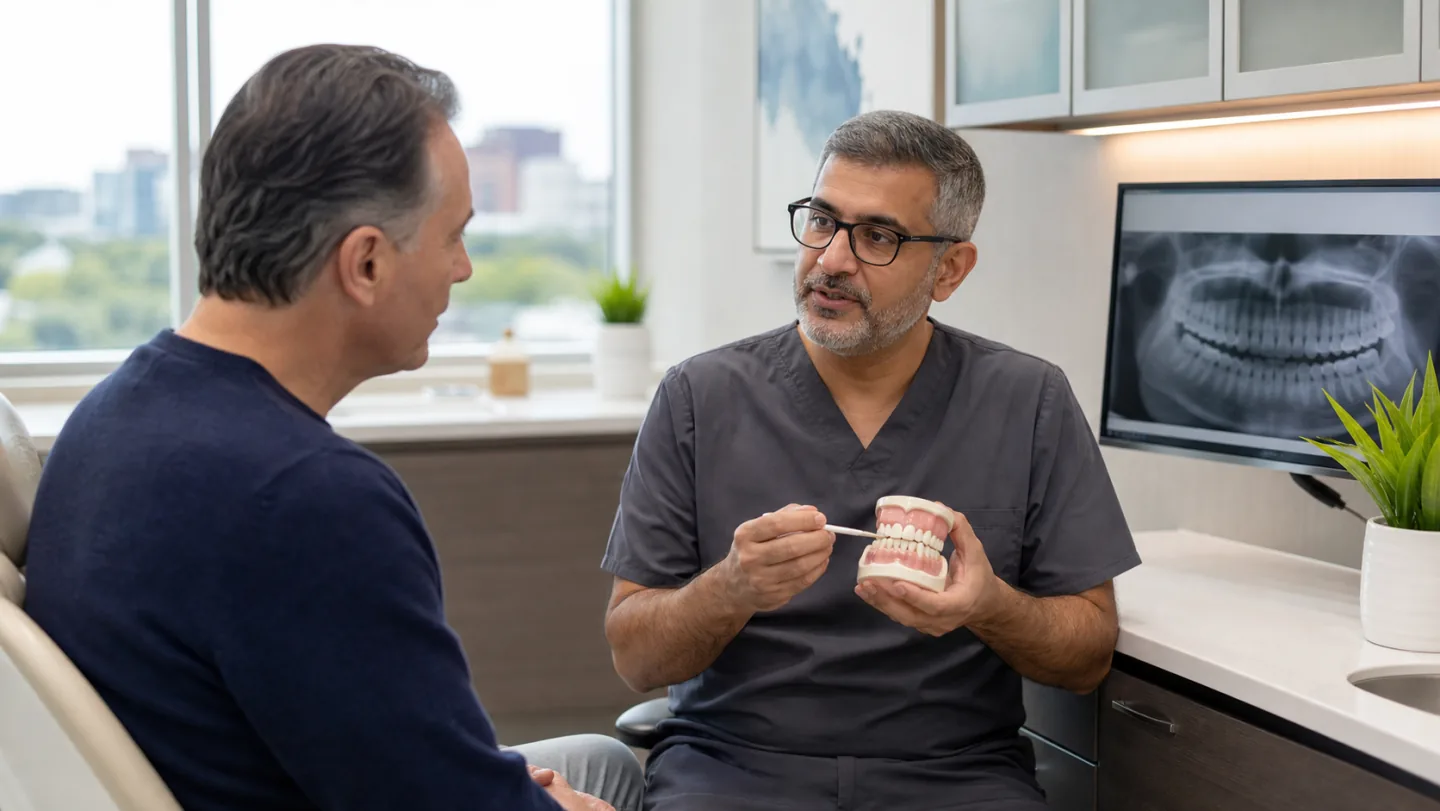
A dental professional explaining periodontal pocket treatment with a dental model
What counts as success?

Pocket Reduction Surgery for Parkview Pointe Residents

Before agreeing to surgery, it helps to know what a good result would actually look like. Parkview Pointe readers will find realistic goals here, along with the checks that show how a site is doing.

Let's find a time

Request an appointment

We’ll call to confirm your appointment. For urgent care, please call us directly.

Defining the goal

How to Judge Whether Gum Surgery Has Helped

It is easy to picture success as perfect-looking gums and no further dental work. The actual aim is more modest and more practical: controlled disease, and a shallower, more accessible area that you and the dental team can keep clean. A site can be doing well even if your teeth look a little different from how they did before.

Agreeing on that definition early prevents later disappointment. Care for Parkview Pointe residents takes place at our clinic on McPhillips Street in Winnipeg, where you can ask what your dentist would be watching for at each proposed area.

Explore pocket reduction surgery
Reception counter with an orchid and small plants at Winnipeg North Dental
An orchid and small plants on the reception counter at Winnipeg North Dental.

Set the target beforehand

Ask what your dentist hopes to see at a given site before any treatment is agreed.

Look past appearances

Longer-looking teeth may come with a healthier site, so how it looks tells only part of the story.

Progress is checked over time

Stability shows up across healing reviews and later maintenance visits, not in a single moment.

Means and ends

What the procedure is built to achieve.

Knowing why each step exists makes it easier to tell a reasonable goal from a hopeful one. Here is the link between what gets done and what you might expect from it.

What each stage contributes

The procedure is designed to deal with the current disease and to leave a shape that is more straightforward to look after.

  • Numbing lets the planned area be treated with care.
  • Gum lifted aside gives direct access to roots and bone.
  • Clearing deposits and inflamed tissue addresses what stayed behind.
  • Sutured repositioning, sometimes after bone reshaping, creates the new contour.

Results it cannot promise

Clear limits are part of informed planning, and they keep your expectations in line with the actual purpose of treatment.

  • It does not take over the role of your daily plaque control.
  • It does not remove every future risk of disease.
  • It cannot rule out further treatment for a given tooth.
  • It may not leave your gumline looking as it once did.

When you discuss a proposed site, ask what would count as a good, an acceptable and a disappointing result there. The answers can make your decision far clearer.

Setting a shared definition

Agree on what you are both aiming for.

A good result is easier to recognize when you have talked about it in advance. Your conversation might take this shape.

Request your visit
  1. 01

    Tell us what you are hoping for

    Less bleeding, an easier routine, keeping a certain tooth or something else: your priorities are worth stating, because they may or may not match what surgery can do.

  2. 02

    See your starting point

    Current readings, inflammation, bone shape and the tooth’s support are reviewed so that there is a clear reference for later comparison.

  3. 03

    Line up hopes with reality

    Your dentist can explain which of your goals seem reachable, which are uncertain and which the procedure is not designed to address.

  4. 04

    Plan how it will be measured

    Should you go ahead, ask which appointments will review healing, when readings might be looked at again and what the long-term schedule could be.

Clarify your own priorities

Decide what matters most to you.

Different people hope for different things from this surgery. Thinking about your own hopes beforehand makes it easier to discover whether they are realistic.

It is helpful to ask for a copy of your current readings, if available, so that you have something concrete to look back on.

Think these over

  • The outcome you would be happiest with, and why.
  • Changes in appearance you would find hard to accept.
  • How much daily cleaning you can truly commit to.
  • Your medications, health history and tobacco use, for the record.
Reclined patient chair with an instrument tray and a sink at Winnipeg North Dental
Consultation table and high-backed chair with an abstract landscape on the wall at Winnipeg North Dental

A reclined patient chair and a high-backed desk chair in two rooms at Winnipeg North Dental.

Comfort during and after

A smooth day is not the only measure.

A site can heal well even if the first days feel unpleasant, and an easy appointment says little about long-term results. Keep comfort and outcome as separate questions.

Numbness on the day

Treatment normally relies on local anaesthetic, while your health history shapes whatever other comfort options are available.

What to expect afterward

Find out what you are likely to feel while healing, so an ordinary sensation does not alarm you.

When to speak up

Ask what sort of symptom should prompt a call, so you are not left guessing during recovery.

How progress is reviewed

Signs to look for, at each stage.

No single check tells you everything. Each stage of follow-up answers a different question about how your treated area is getting on.

01

Is it closing well?

A healing review examines tissue closure, your comfort and your hygiene, removes sutures if needed and sets out when to resume cleaning the site.

02

Can you reach it now?

A practical test of the result is whether you can actually clean the treated area. Ask for help if your method does not seem to work.

03

Is it staying stable?

Later maintenance visits can show whether inflammation or deeper readings have returned, and plaque or remaining risk factors can make that happen.

If you have a question about your result between appointments, you are welcome to call the clinic.

Talk with our team
Winnipeg North Dental clinic front in a grey-sided commercial building

Winnipeg North Dental

Unit-5 2358 Mcphillips Street, Winnipeg, MB R2V 4J6
Get directions (opens in a new tab)
Where progress gets checked

Reviews and Results at Our McPhillips Street Clinic

Parkview Pointe residents attend Winnipeg North Dental, Unit 5, 2358 McPhillips Street, Winnipeg, for assessment, surgery and every review.

Filling out the form won’t reserve a time, since staff confirm each request first. Prefer to speak to someone? Reach the desk at (204) 338-3003.

Questions about coverage?

Talk with our team before your visit or learn about CDCP.

A little clarity before your visit

Your questions, answered.

Helpful details about pocket reduction surgery in Parkview Pointe.

Ask our team
How can someone from Parkview Pointe ask about realistic results?

Ask for an assessment at our McPhillips Street clinic through the form or at (204) 338-3003. Note in your request that you would like to discuss goals as well as treatment.

What would a successful outcome look like?

Generally, less inflammation at the site and an area that can be maintained. Your dentist can describe what that might mean for the specific teeth under consideration.

Will my pocket readings be checked again?

Your dental team monitors treated areas as part of follow-up and maintenance. Ask when readings are likely to be revisited, as timing can differ from one plan to the next.

My teeth look longer. Did something go wrong?

Longer-looking teeth are a known change as the gumline is repositioned and swelling settles. If you are concerned about what you see, bring it up at your next review.

Could a tooth still be lost after surgery?

Yes, that remains possible. The procedure aims to improve control and access, but it cannot ensure that a tooth will never need further treatment. Ask how your tooth’s outlook has been judged.

How long will the result last?

No fixed period applies. Stability depends heavily on daily cleaning, periodontal maintenance and whatever risk factors remain, and those are things you can discuss openly with your team.

Know the target first

Ask what a good result would mean for you.

Send a request to our McPhillips Street clinic and say what you hope surgery could do. Staff will get in touch to find an appointment time.

Patient testimonials

Kind words from our patients

★★★★★ 5.0 from 440+ reviews on Google

Close to home

Areas we serve

Convenient dental care on McPhillips Street for families across northwest Winnipeg and nearby communities.

Explore all service areas

A healthier smile is one visit away

Ready for dental care that feels genuinely comfortable?

✓ New patients welcome ✓ Direct insurance billing ✓ Multilingual team

How can we help?

Our dental team is here for you.

Ready to book or have a question? Choose the option that works best for you.

For urgent dental concerns, please call us directly.

Send us a message

Our team will reply during clinic hours.



