Skip to content
Winnipeg North Dental
A dental professional explaining periodontal pocket treatment with a dental model
If you use tobacco and need gum care

Pocket Reduction Surgery for Mandalay West Residents

Some people delay asking about their gums because they expect a telling-off about smoking. If you are in Mandalay West and use tobacco, you deserve straightforward information about how it fits into a decision on pocket surgery.

Let's find a time

Request an appointment

We’ll call to confirm your appointment. For urgent care, please call us directly.

A frank topic, without the scolding

Tobacco and Gum Surgery: Why It Comes Up

Tobacco appears in pocket surgery aftercare for a practical reason: it should be avoided during early healing, and it is a recognized risk factor for gum disease. Remaining risk factors are one reason inflammation and deeper readings can return in a treated area.

None of that means you cannot ask about treatment. Mandalay West is in Winnipeg, and at our McPhillips Street clinic you can describe your actual tobacco use and hear what it would mean for your particular sites.

Explore pocket reduction surgery
Desk, three dark chairs and a potted plant in a Winnipeg North Dental consultation office
A consultation office with a desk and potted plant at Winnipeg North Dental.

Honesty helps you most

An accurate account of your tobacco use gives your dentist a sounder basis for advising you.

Healing needs protecting

Your aftercare will ask you to stay away from tobacco during the early stage of recovery.

Ask, whatever your habit

Having a tobacco habit is no reason to skip an assessment of gums that bleed or stay deep.

Tobacco in the bigger decision

Where tobacco fits, and what else is considered.

Tobacco is one factor among several, and it does not make the decision on its own. Here is how it sits next to the other things your dentist will assess.

What tobacco touches

Tobacco matters at several points along the way, so it is better discussed early than left unsaid.

  • Your overall risk when gum care is being planned.
  • Your early healing, when it should be avoided.
  • The long-term stability of treated areas.
  • What you may want to plan ahead of a surgery date.

What else carries weight

These clinical findings all contribute as well, and they would matter whether you used tobacco or not.

  • Which sites improved following scaling and root planing.
  • The contours of the bone and the shape of your roots.
  • Remaining support and any looseness in the tooth.
  • How realistically you could keep the area clean.

Whether surgery is suitable is decided by assessment, taking every one of these into account. Ask how your own tobacco use changes the picture, if at all.

An upfront appointment

Putting the awkward question on the table.

The conversation will go better once the subject is out in the open. Here is one way a visit might unfold when tobacco is part of your situation.

Request your visit
  1. 01

    Say what you use and how often

    Give your dentist a realistic description of your tobacco habits, together with your medications and general health history.

  2. 02

    Have your gums measured

    Depth, bleeding, tooth support and restorations are all assessed. If X-rays would add useful information, you can discuss them at this stage.

  3. 03

    Discuss timing and healing

    Ask how long you would need to avoid tobacco in your case, and how you could plan around that if surgery is advised.

  4. 04

    Go ahead when you are ready

    On the day, local anaesthetic numbs the planned area. Roots are then cleaned through lifted gum tissue and the site is sutured, with aftercare and healing visits to follow.

Planning around a habit

Think about the early healing stretch in advance.

Staying away from tobacco is easier with a plan than on willpower alone. Consider your usual triggers and what your first days could look like, and bring your questions with you.

Asking for an estimate, and checking what your plan may cover, is a useful way to settle the practical side of this as well.

Good to have in mind

  • What type of tobacco you use, how much, and for how long you have used it.
  • A note of when you find it hardest to go without.
  • Your other medications and the rest of your health history.
  • Any insurance or CDCP information, along with your questions about healing.
Two white chairs and a small child’s chair by a window at Winnipeg North Dental
Dental chair and instrument arm beside a sink in a Winnipeg North Dental treatment room

Window seating in a waiting area at Winnipeg North Dental.

No judgment needed

A habit doesn’t have to be a source of shame here.

You probably already know the general warnings, and hearing them again rarely helps anyone. If you would prefer specifics about your gums and your surgery, feel free to say so.

Set the tone

Tell your dentist what kind of conversation you would find useful on this topic, and what you have already heard.

Numbing in the chair

Local anaesthetic is commonly used for this procedure, with comfort options looked at beforehand.

Slip-ups are worth mentioning

If you use tobacco during healing, tell the clinic plainly so that you can get accurate advice about what to do next.

Long after the sutures are gone

Looking after a treated site with tobacco in mind.

Surgery improves access but leaves periodontal risk in place. If you continue to use tobacco, it remains part of the picture at each review you attend.

01

The early no-tobacco period

Tobacco is on the avoid list during early healing, alongside activities that could disturb your sutures or the tissue itself.

02

Checks on how it is closing

A follow-up appointment looks at tissue closure, comfort and hygiene. Your dentist then explains when cleaning of the area may start up again.

03

Maintenance as a safeguard

Regular periodontal maintenance gives you a way to monitor the area for recurring inflammation, particularly where risk factors continue.

If you have concerns about healing, please telephone the clinic, whatever you think may have caused them.

Talk with our team
Winnipeg North Dental sign and phone number on the building’s white facade

Winnipeg North Dental

Unit-5 2358 Mcphillips Street, Winnipeg, MB R2V 4J6
Get directions (opens in a new tab)
Having the conversation

Where Mandalay West Patients Are Seen

Your assessment and any surgery take place at Winnipeg North Dental, Unit 5, 2358 McPhillips Street, Winnipeg. Mandalay West patients can raise the tobacco question at the first visit.

An online request needs a reply from the clinic before any time is set. You could also call (204) 338-3003 if you have a question you would rather ask by phone.

Questions about coverage?

Talk with our team before your visit or learn about CDCP.

A little clarity before your visit

Your questions, answered.

Helpful details about pocket reduction surgery in Mandalay West.

Ask our team
Can I book an assessment from Mandalay West even though I smoke?

Yes. Use the form or phone (204) 338-3003 to ask for an assessment at the McPhillips Street clinic. You can talk about your tobacco use in as much detail as is useful.

Will I be refused surgery because I use tobacco?

Suitability comes from your overall assessment, and tobacco is one of the things considered. Ask your dentist directly how your habit affects the recommendation for your teeth.

How long do I need to stay away from tobacco?

Your aftercare will say to avoid it during early healing, and that timing depends on your surgery. Ask for a clear answer about your case before your treatment date.

Do these instructions include all forms of tobacco?

Your instructions refer to tobacco generally. If you use a particular product, or something you are not sure about, name it and ask how the advice applies.

Does continuing to use tobacco affect the long-term result?

It can. Inflammation and deeper readings may return if plaque builds up or risk factors remain, which is why daily care and maintenance visits matter so much.

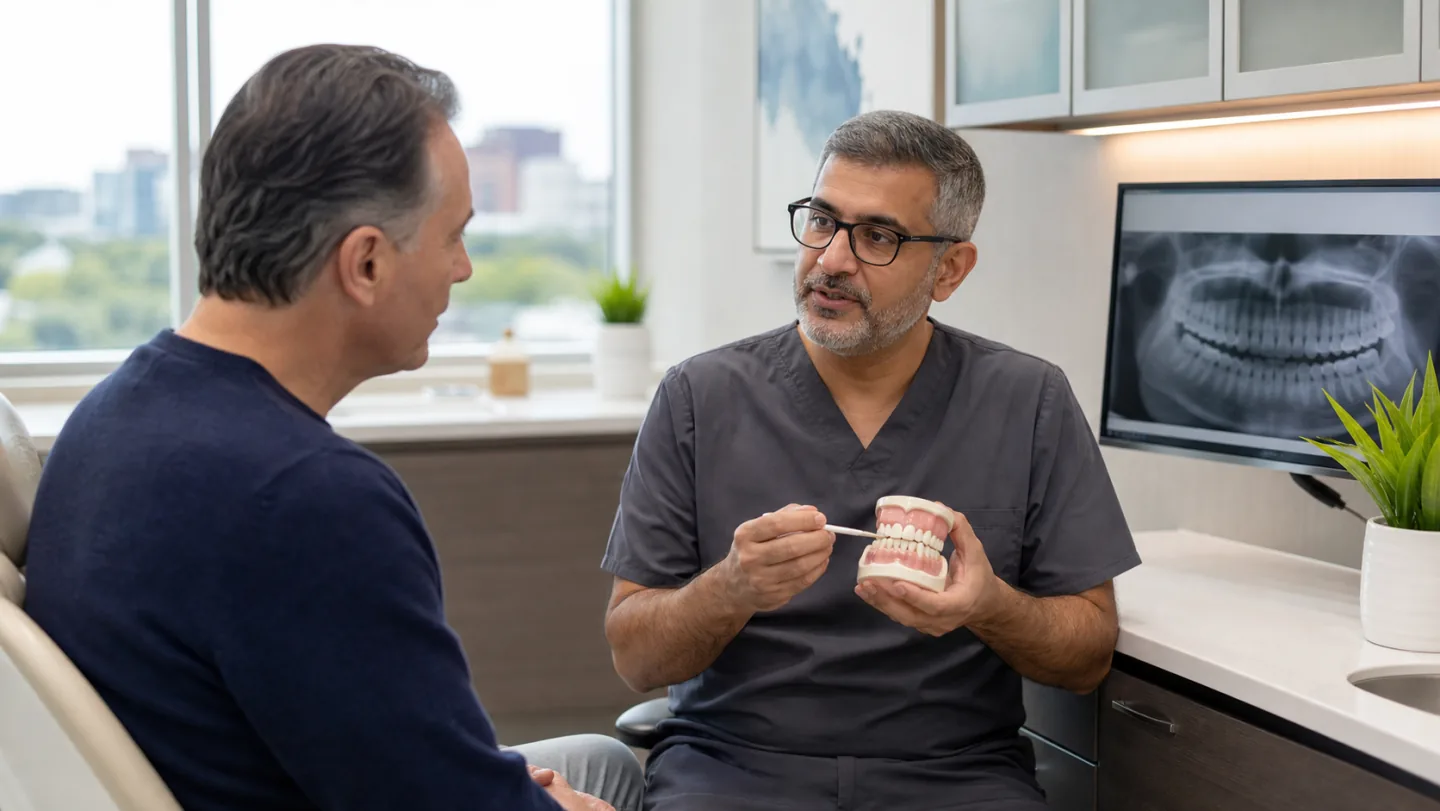
A straight conversation awaits

Ask your tobacco questions without the lecture.

Request an assessment at the McPhillips Street clinic. A reply will follow to arrange a time, and you can raise whatever you need when you arrive.

Patient testimonials

Kind words from our patients

★★★★★ 5.0 from 440+ reviews on Google

Close to home

Areas we serve

Convenient dental care on McPhillips Street for families across northwest Winnipeg and nearby communities.

Explore all service areas

A healthier smile is one visit away

Ready for dental care that feels genuinely comfortable?

✓ New patients welcome ✓ Direct insurance billing ✓ Multilingual team

How can we help?

Our dental team is here for you.

Ready to book or have a question? Choose the option that works best for you.

For urgent dental concerns, please call us directly.

Send us a message

Our team will reply during clinic hours.



