Skip to content
Winnipeg North Dental
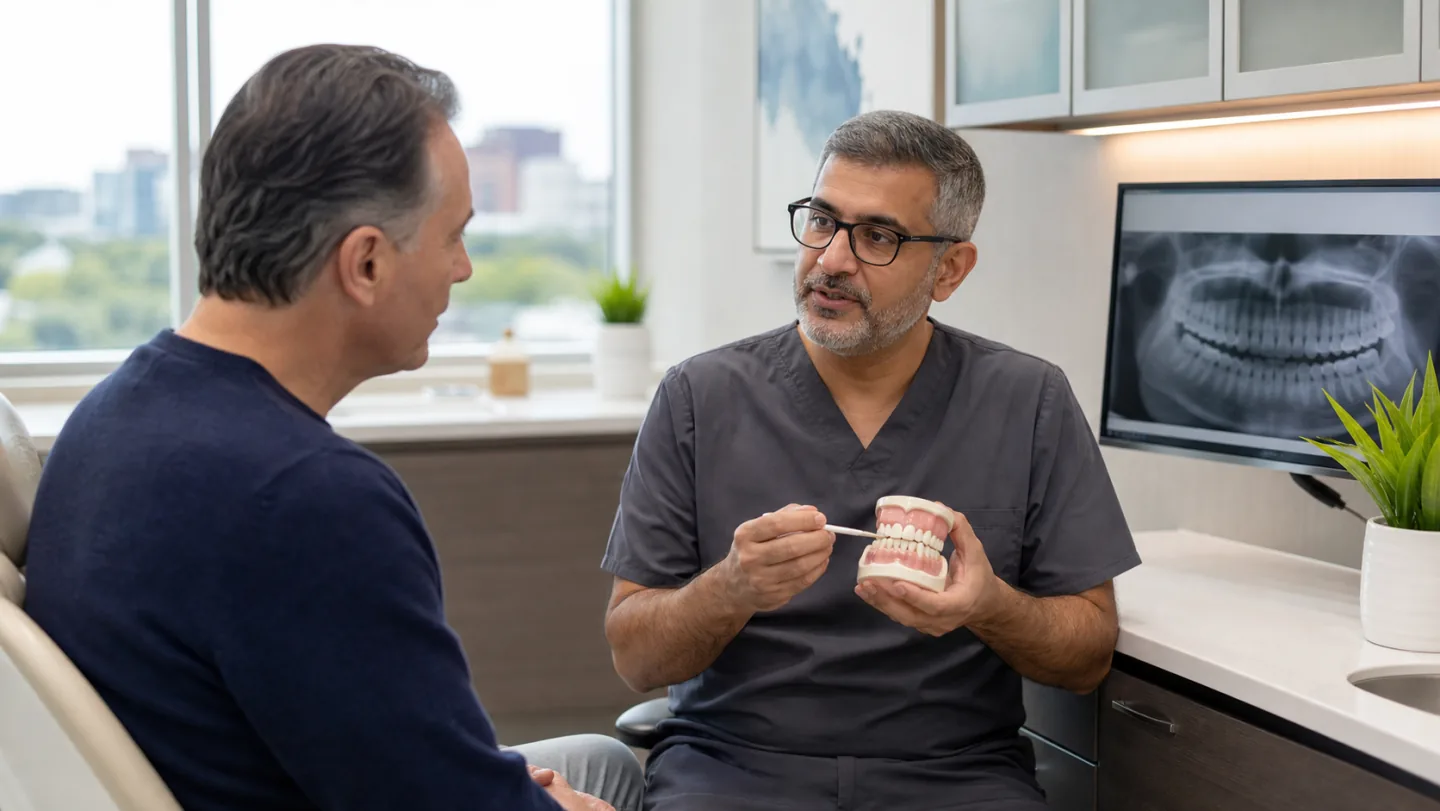
A dental professional explaining periodontal pocket treatment with a dental model
A tooth that has started to move

Pocket Reduction Surgery for Downtown Winnipeg Residents

You catch yourself pressing it with your tongue, wondering whether it has always felt like that. If you live in Downtown Winnipeg and have a loose tooth along with a pocket diagnosis, start here.

Let's find a time

Request an appointment

We’ll call to confirm your appointment. For urgent care, please call us directly.

Movement and deep pockets

How a Loose Tooth Figures in the Surgery Decision

Mobility is one of the things examined when deciding what to do about a deep pocket, together with remaining support, decay and the state of any restorations. Surgery needs a tooth with enough support and a maintainable outlook, so a loose one calls for careful thought first.

A tooth can feel loose for more than one reason, and only an examination can sort that out. Downtown Winnipeg residents who notice movement can have it looked at with us on McPhillips Street, at Winnipeg North Dental, instead of guessing.

Explore pocket reduction surgery
Chairs drawn up to a white table under a coastal painting at Winnipeg North Dental
Chairs drawn up to a white table, with a coastal painting on the wall.

One finding among several

Movement gets read together with support, bone shape and how the area answered earlier treatment.

No automatic answer

Surgery isn’t an automatic choice for a tooth with little support, and alternatives can be discussed.

Worth raising promptly

If a tooth has changed, tell the clinic instead of waiting to see what it does next.

What is and isn’t on offer

What surgery might do for a mobile tooth.

It’s important to be realistic here. This procedure addresses access and inflammation; it isn’t described as a way of tightening a tooth, so ask what you can expect.

What it’s meant to address

With local anaesthetic in place, your dentist lifts the gum to reach the root and bone, removing deposits and inflamed tissue that have stayed out of reach.

  • Direct cleaning of the affected root surface.
  • Possible refining of irregular bone contours.
  • Tissue sutured at a more manageable level.

What your dentist weighs first

Before any recommendation, the tooth itself needs an honest look. The question is whether a surgically treated area would hold up to long-term care.

  • How much the tooth moves and how much support remains.
  • Whether decay or an old restoration complicates things.
  • Whether you could keep the site clean.
  • Other paths if the outlook is limited.

Some teeth are maintained, some are monitored and some aren’t predictable to keep. Ask which group your dentist considers yours to be in, and why.

When movement is the worry

How a mobile tooth gets assessed.

Your own appointment might follow a different path. These steps give you a rough idea of how such a concern can be approached.

Request your visit
  1. 01

    Describe what you’ve noticed

    When did it start? Does it hurt? Has your bite changed? Even uncertain details help build a clear history.

  2. 02

    Have the tooth examined

    Its movement, surrounding tissues and remaining support are checked. Earlier pocket measurements and therapy are taken into account if available.

  3. 03

    Talk about the outlook

    You’ll hear how your dentist views this tooth over the long term, which is known as its prognosis. Ask for plain language.

  4. 04

    Weigh what comes next

    Possibilities may include non-surgical care, surgery, monitoring or other approaches. Discuss what each one would mean for chewing and for appearance.

Track what you notice

A few details make the exam more useful.

Try not to keep testing the tooth with your tongue or finger. A simple record of what has changed tells your dental team more than constant checking.

A tooth that suddenly becomes very loose, or a concern that feels urgent, is a reason to call the clinic rather than fill in the form.

Note down

  • Which tooth is moving, and roughly when you first noticed.
  • Any change in how your teeth meet when you bite.
  • Bleeding, swelling or tenderness around the area.
  • Earlier gum treatment, plus your medications and health history.
Pale blue dental chair angled toward cabinets and a monitor at Winnipeg North Dental
Blue bench beside a window with a small white child’s chair at Winnipeg North Dental

A pale blue dental chair, and a blue bench near a shaded window.

The fear of losing a tooth

It’s normal for this one to feel personal.

A loose tooth can stir up a lot of worry, about eating and about how you’ll look. Share that with your dentist, as it can guide which options you explore.

During the exam

Tell whoever’s examining you if pressing on that tooth hurts, so they can take it into account.

If surgery goes ahead

Local anaesthetic numbs the area beforehand, and you’re commonly awake. Comfort choices are reviewed in light of your history.

While you decide

You may want a few days to absorb a difficult outlook. Ask what that wait would mean for the tooth.

If a treated tooth stays

Keeping it means looking after it.

After surgery, your personal instructions carry more weight than this overview, because what’s advised varies with where and how much was treated.

01

Soon after surgery

Use the first 24–48 hours for rest, directed medication and suitable foods. Inspecting the site by pulling back your cheek or lip isn’t recommended.

02

Through early healing

Brushing stays away from the operated spot. Clean as directed, and skip tobacco or activity that might interfere with tissue or sutures.

03

From then on

Support doesn’t need to be taken for granted. Maintenance visits keep an eye on the treated tooth, and careful cleaning at home does the daily work.

Noticing new movement in that tooth later on? Call the clinic and describe the change.

Talk with our team
Entrance to Winnipeg North Dental with a railing and glass doors under the sign

Winnipeg North Dental

Unit-5 2358 Mcphillips Street, Winnipeg, MB R2V 4J6
Get directions (opens in a new tab)
Getting it examined

Downtown Winnipeg Residents Are Seen at McPhillips Street

Assessment and care for Downtown Winnipeg residents take place at Winnipeg North Dental, Unit 5, 2358 McPhillips Street, Winnipeg, MB R2V 4J6.

The form is for non-urgent requests and doesn’t set a time; expect a response from the clinic. Urgent worries are better handled at (204) 338-3003.

Questions about coverage?

Talk with our team before your visit or learn about CDCP.

A little clarity before your visit

Your questions, answered.

Helpful details about pocket reduction surgery in Downtown Winnipeg.

Ask our team
Who should a Downtown Winnipeg resident contact about a tooth that moves?

Call (204) 338-3003, especially if it’s changed quickly, or use the form for non-urgent requests. You’d be seen at our clinic on McPhillips Street.

Will pocket reduction surgery tighten my tooth?

You shouldn’t assume so. The aims are disease control and easier cleaning, so ask directly what your dentist would expect for this tooth.

Could something other than my gums be making it move?

Not necessarily, and that’s why an examination matters. Your dentist can look at the tissues, the bite and the tooth itself to help find the reason.

What if the tooth can’t be predictably maintained?

Your dentist would discuss its prognosis and other options, which might include removing it and considering ways of replacing it, if that’s appropriate.

Should I avoid chewing on that tooth for now?

Mention that when you call, and ask what the clinic suggests until you can be seen. Tell them too if anything else about it is changing.

Don’t leave it to guesswork

Have that tooth checked and explained.

Your loose tooth can be assessed on McPhillips Street. The clinic replies to requests, and calling is the faster route for anything urgent.

Patient testimonials

Kind words from our patients

★★★★★ 5.0 from 440+ reviews on Google

Close to home

Areas we serve

Convenient dental care on McPhillips Street for families across northwest Winnipeg and nearby communities.

Explore all service areas

A healthier smile is one visit away

Ready for dental care that feels genuinely comfortable?

✓ New patients welcome ✓ Direct insurance billing ✓ Multilingual team

How can we help?

Our dental team is here for you.

Ready to book or have a question? Choose the option that works best for you.

For urgent dental concerns, please call us directly.

Send us a message

Our team will reply during clinic hours.



