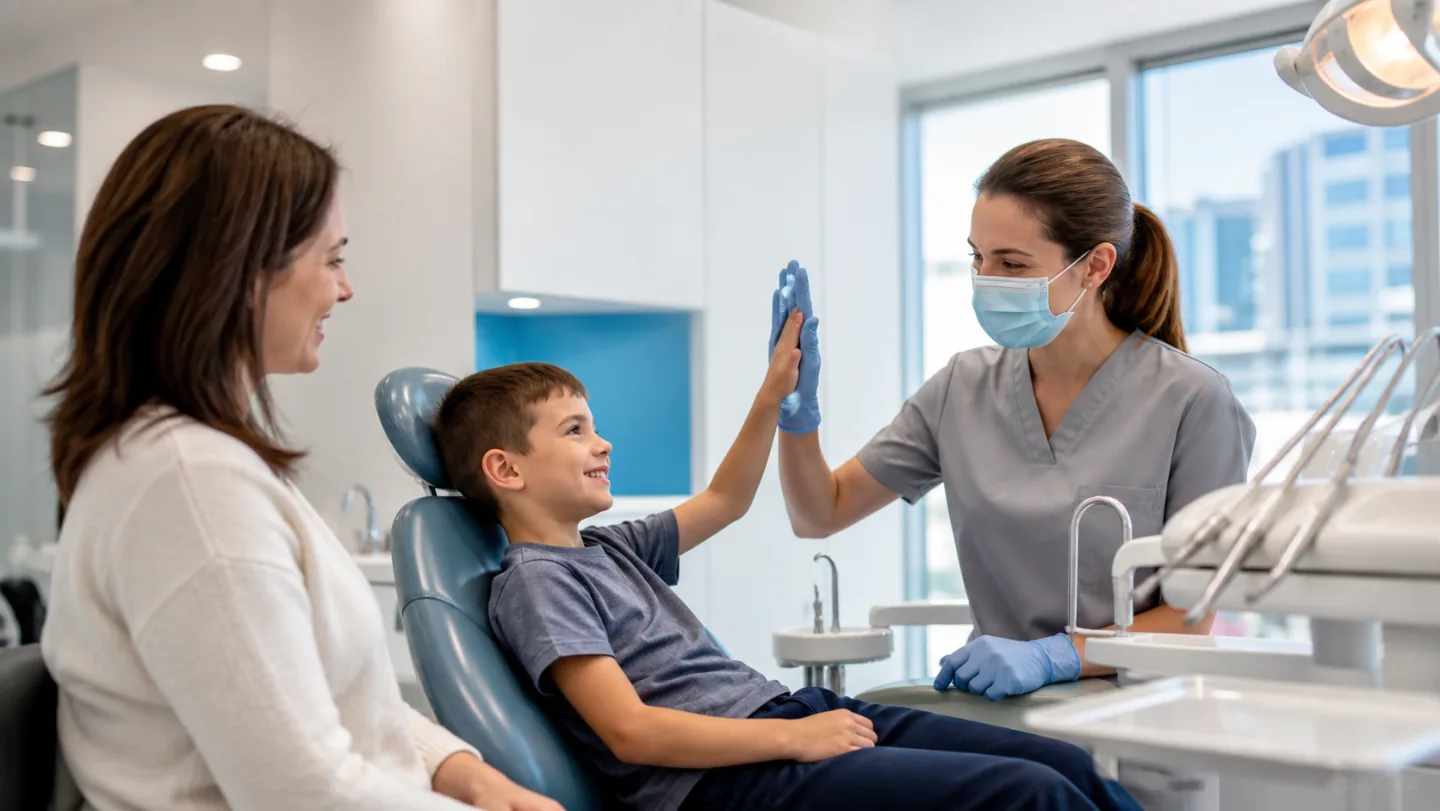
How does a Bridgwater parent arrange care after a cavity was found?+
Send the request form or call (204) 338-3003 and mention the cavity. If it’s already causing pain, phone rather than using the form. The clinic contacts you to arrange the visit.
We brush twice a day. How did this happen?+
Brushing is one factor among several. Tooth shape, deep grooves, snack and drink frequency, and how well brushing reaches every surface can all play a part, and the dentist can point to what seems relevant for your child.
Should I tell my child it’s my fault?+
There’s no need. A simple, calm explanation that a tooth needs some care is more helpful to a child than adult feelings about blame.
Will one cavity change how often my child needs check-ups?+
It may. Previous treatment and cavity risk are both part of how a return interval gets chosen, so the dentist may revisit it after this visit.
Could this have been prevented with sealants?+
Sealants protect deep grooves on suitable molars, but they aren’t the answer for every tooth or every type of decay. The dentist can tell you whether they’re worth considering for your child’s other teeth now.
If the baby tooth will fall out eventually, can we leave it?+
Decay in a baby tooth can still cause pain and affect eating and daily life, and the tooth helps hold space for the adult one. The dentist will explain what leaving it versus treating it would mean.
What if the tooth with the cavity starts hurting badly?+
Don’t wait for the booked date; ring the clinic and describe the pain. If there is also a facial injury that looks serious, a loss of consciousness, bleeding that won’t stop or difficulty breathing, get emergency medical care first.