
A gentle beginning
Early visits help caregivers ask about brushing, fluoride, feeding, pacifiers and what to expect as teeth emerge.
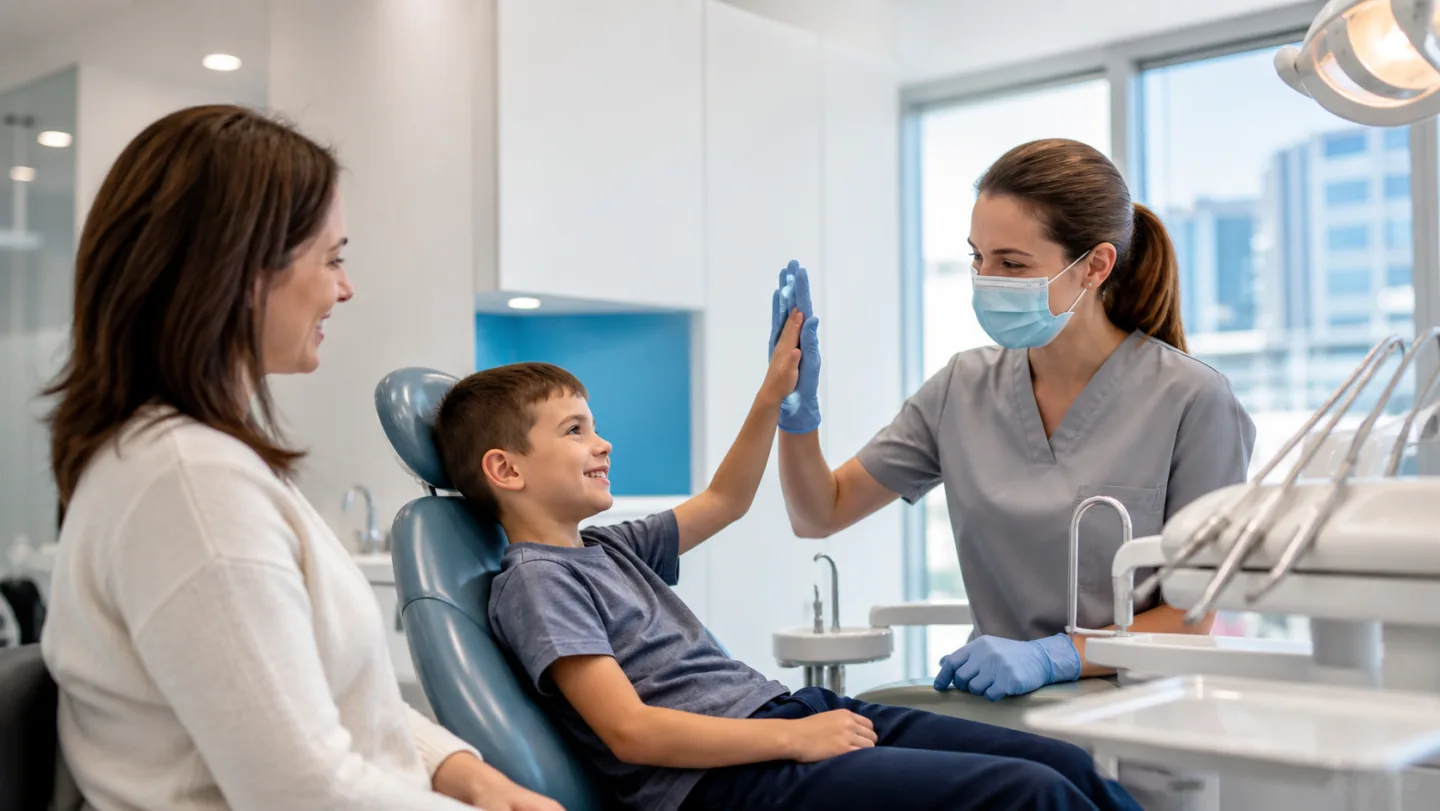
Positive dental visits that help children build healthy habits for life.
Let's find a time
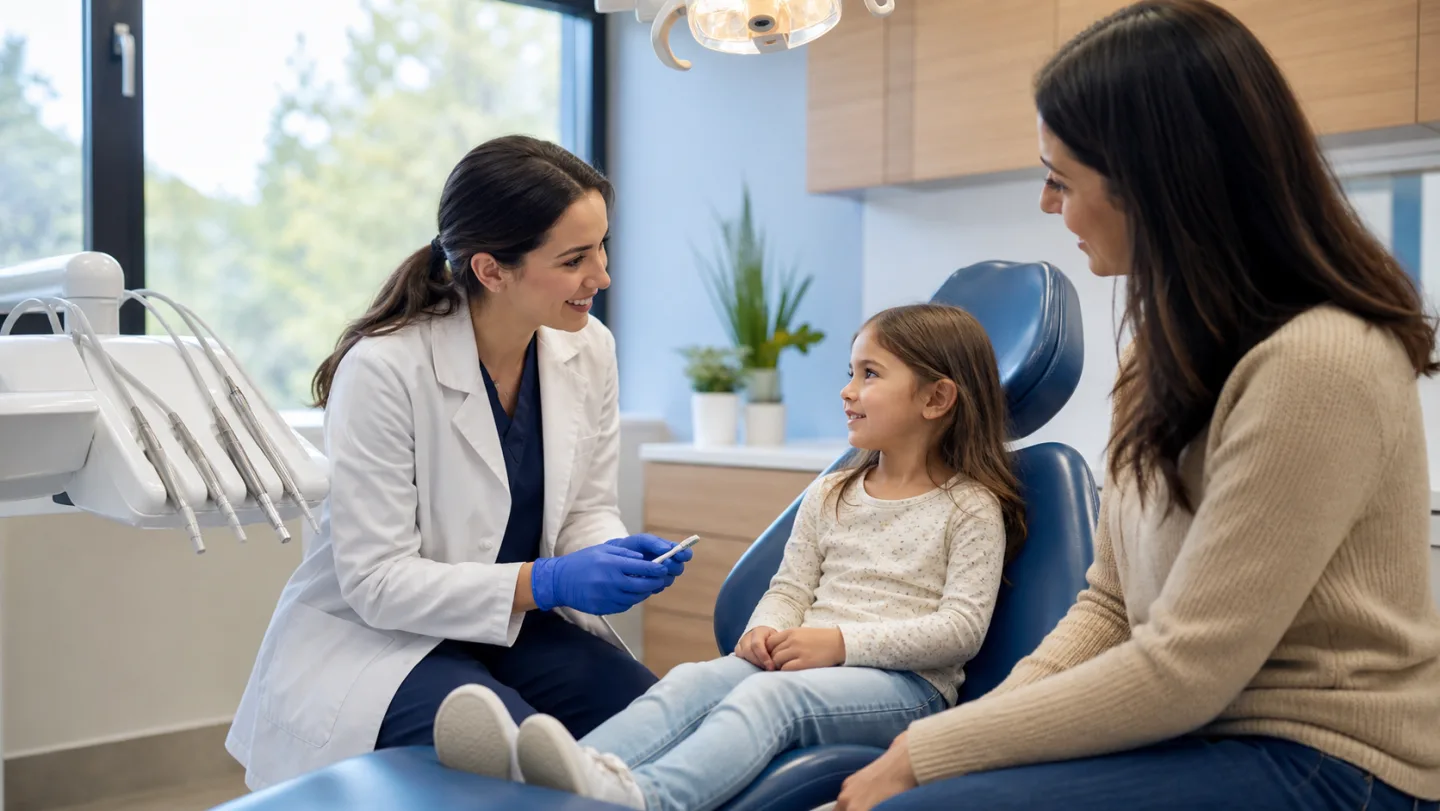
Children learn about dental care through experience. Calm introductions, simple explanations and age-appropriate treatment can help the dental office become a familiar place rather than something to fear.
We welcome infants, children and teens for preventive care, development monitoring and treatment when needed. Every visit is adapted to your child’s age, comfort, communication and oral-health needs.
Early visits help caregivers ask about brushing, fluoride, feeding, pacifiers and what to expect as teeth emerge.
We monitor new permanent teeth, hygiene habits, cavity risk, bite development and areas children may miss when brushing.
Appointments may address braces, wisdom teeth, sports protection, diet, independence and the effects of changing routines.
A successful first appointment is not measured by how much treatment gets done. For some children, sitting in the chair and opening for a quick look is a meaningful first step.
We use clear, friendly language and introduce instruments without unnecessary surprises.
The dentist checks development, teeth and gums as your child’s comfort allows.
Cleaning, fluoride or X-rays may be recommended according to age and individual risk.
We discuss brushing, diet, habits and the recall schedule that fits your child.
We help caregivers focus on the routines that make the greatest difference, then adapt recommendations as children become more independent.
Age-appropriate technique, toothpaste amount and caregiver supervision.
Professional and home fluoride guidance based on age and cavity risk.
Protective material may be recommended for deep grooves on suitable molars.
Practical discussion of snack frequency, sugary drinks and tooth-friendly choices.
Tell your child the dentist will count and care for their teeth. Avoid promising that “nothing will hurt” or sharing difficult dental stories. A calm, matter-of-fact approach leaves room for the team to explain each step honestly.
Bring a comfort item if it helps, along with current health information and questions about brushing, diet, habits or development.
Describe the visit as a chance for the dental team to count, look at and care for their teeth.
A relaxed, matter-of-fact explanation helps avoid adding worry before the appointment.
We introduce each step honestly in language suited to your child’s age and comfort.
Every child develops differently, so recommendations are personalized after an assessment.
The Canadian Dental Association recommends an assessment within six months of the first tooth appearing or by 12 months of age. Early visits focus heavily on prevention and caregiver guidance.
The schedule depends on development, cavity risk, hygiene, previous treatment and other individual factors. Your dentist will recommend an interval after assessing your child.
Tell us before the visit. We can use short explanations, gradual introductions and breaks. Sometimes a simple familiarization visit is the most useful first step.
Yes. Baby teeth support eating, speech, confidence and space for developing permanent teeth. Decay or infection in a baby tooth can still cause pain and affect daily life.
These preventive options are recommended according to age, tooth development and cavity risk. We explain the reason before providing care.
Call promptly and describe the injury. For serious facial injury, loss of consciousness, uncontrolled bleeding or breathing difficulty, seek emergency medical care first.
Patient testimonials
Winnipeg North Dental
“Excellent experience at Winnipeg North Dental. Recommended by my friend Gagandeep. The whole staff is professional and attentive. Special thanks to my friend there. Highly recommend!”
Winnipeg North Dental
“Had a great experience at Winnipeg North Dental. My hygienist, Haven, was thorough, professional, and gave really useful recommendations. Watching Netflix during the cleaning was an awesome bonus. Dr. Elzayat was great as well. Overall, a smooth, comfortable visit. Highly recommend!”
Winnipeg North Dental
“I really enjoyed the treatment at this clinic. I had my teeth treated by Dr. Sukhpreet. Everything went great. Thank you so much for your professionalism!”
Winnipeg North Dental
“Dr harpreet and Dr. Sidhu both were very nice during the job , full professional, very knowledgeable and Dr Harpreet was really polite during all time .”
Winnipeg North Dental
“I had a great experience at Dental North in Winnipeg for a teeth cleaning. The staff was friendly and professional, and the hygienist was gentle yet thorough. I left with my teeth feeling amazing and will definitely be returning!”
Winnipeg North Dental
“Very quick, efficient and friendly. Very happy to have found this place.”
Winnipeg North Dental
“I did called them in 2020 October they were not opened at that time. I give them my number, email and name so that when they open they can give me call to book appointment. They might have forgot that. I had a first appointment for dental in Canada. It went really good. They explained every single bit what they gonna do, What is best for me, Doctor was really nice. It was completely satisfying experience. Didnt smell like a clinic. I mean like any walk in doctor clinic. Even they helped me to understand my dental benefits to use them in best possible way. I would definitely recommend to others.”
Winnipeg North Dental
“Excellent experience! The dentist and staff were professional, friendly and were very welcoming!”
Winnipeg North Dental
“I had a great experience at this place, dr Sidhu and all the team was great.”
Winnipeg North Dental
“They are honest and know what they are doing. i came here for my 7 year old dental treatment and Dr sukhpreet guide us very nicely and did perfect job .Its a feeling in safe hands. Reception and staff are polite .”
Winnipeg North Dental
“My recent visit at the Winnipeg North Dental was excellent. The staff was friendly, the cleaning was thorough yet gentle, and the dentist took the time to explain everything clearly. I highly recommend them! Dr Sidhu is awesome:)”
Winnipeg North Dental
“It was really great experience with Dr. Jiwan on my first visit. She treated me very nicely and professionally . Staff were very nice and friendly.”
Winnipeg North Dental
“Excellent clinic with a warm and welcoming atmosphere. Dr. Sidhu handled my tooth issue very gently and in a friendly, professional manner — truly one of the best!”
Winnipeg North Dental
“Friendly staff, clean clinic, and a dentist who really cares. Everything was explained clearly and I felt comfortable the whole time. Highly recommend”
Winnipeg North Dental
“I had great experience at this place all the staff was really helpful and professional.”
Winnipeg North Dental
“I have had nothing but wonderful experiences with Winnipeg North Dental. I have brought my child here for teeth cleaning and she loves how kindly the entire staff treat her. Dr. Sidhu is kind, professional, and extremely thorough. I highly recommend!”
Winnipeg North Dental
“Dr. Sidhu is so kind and caring. Her gentle approach makes going to the dentist a pleasure especially for a child. My daughter and I are so happy we found Winnipeg North Dental. The staff are great too! Highly recommend.”
Winnipeg North Dental
“This place is immaculate, friendly, helpful and the people working there are wonderful! Dr. Sidhu is the BEST!!!! She really cares about you and making your dental experience a positive one! Forever a patient!⭐️⭐️⭐️⭐️⭐️”
Winnipeg North Dental
“Dr. Sidhu exhibits a high level of professionalism and offers exceptional accommodation. She is an outstanding physician who consistently provides assistance with any dental pain or issues that I have encountered. I am grateful for her expertise and support.”
Winnipeg North Dental
“Dr Sidhu is very friendly and kind she takes care of her patients very well. I have my first visit yesterday and she listen and understand my problems and have done a good examination. Also suggested me many things which can improve my teeth situation. The staff is also very good and helpful. I will be visiting there again for sure.”
Winnipeg North Dental
“I had wonderful experience at this place. Thanks to the whole team.”
Winnipeg North Dental
“I have always found Dr. Sidhu to be very patient and comforting as well as gentle and makes for a totally painless visit, when ever I have dental issues. She is a very up beat and positive person which makes for great dental work experience every time.”
Winnipeg North Dental
“I had a wonderful experience! Dr Sidhu and her team are always so friendly. It was also my 1 year old daughters first check up and Dr. Sidhu was so kind and patient with her. I highly recommend Winnipeg North Dental. Kind, passionate, professional and very well managed. So happy I found such a great dentist!”
Winnipeg North Dental
“Recently, i had received two treatments and feeling very good and would like to thank the doctor for explaining in details about the problem and procedure . I would like to thank the staff and doctor for their professionalism for providing the kind service.Thank you.”
Winnipeg North Dental
“My experience here was amazing. Dr. Jiwan Sidhu is very nice and kind! She's overall a great dentist and I recommend others to come here!”
Winnipeg North Dental
“Dr. Sidhu and her Winnipeg North Dental Team are AWESOME!!! They always make their client feel comfortable and explains everything that need to be done in every visit. I also like that she is very caring, always connect with us after our visit to ensure that all is well with our teeth. Very highly recommended.”
Winnipeg North Dental
“Dr Sukhpreet has great and professional knowledge . God bless”
Winnipeg North Dental
“Dr. Sidhu is an amazing doctor who makes her patients feel comfortable and guides through the process. Me and my family had a great experience. I love the way she shares all details about dental health. Thank you”
Winnipeg North Dental
“Amazing place. It is always clean. And Dr.Sidhu takes very good care of her patients. Every time I am there she goes above and beyond to make my stay a pleasant one. Dr.Sidhu truly cares about her patients as do the other staff working with her. They are all very professional. I highly recommend this place and dentist.”
Winnipeg North Dental
“I can't wait to get in the chair with Dr. Sidhu looking down on me with that super powerful freezy needle. Oh yeah, nicest dentist I've ever been to in all of my 79 years. She makes pain fun!”
Winnipeg North Dental
“Dr. Sidhu and her team are amazing. Everyone is very welcoming and know how to make a client comfortable. She explains everything about the procedure and follows up after every session. I am glad I visited her for regular check ups.”
Winnipeg North Dental
“Called first thing in the morning for an emergency and my 4 year old son was taken in within an hour. Dr. Sukhpreet was so nice and gentle and my son just adored her. Just the best dental office for my family..!!!”
Winnipeg North Dental
“My wife and I have been going to Dr.Sidhu and Maribeth for a very long time now. Over 10 years. And when Winnipeg North Dental started we followed them there. The care we get there is the best. From the front desk staff, to the hygienist and dental assistants and the dentists they’re the best group. Thank you guys.”
Winnipeg North Dental
“Knowledgeable staff and easy to get appointments! Thanks”
Winnipeg North Dental
“Just started going to this Clinic and so far my experience are all positive. Staff are friendly. Clinic is super clean. Very organized and always on time. Plenty of parking.Highly recommended”
Winnipeg North Dental
“Dr. Sidhu and her staff are amazing! They don't rush, ask questions, and take the time to answer. I was impressed that Dr. Sidhu spent more than 10 minutes doing my check-up; the last dentist I went to spent 2 minutes and didn't even ask my name! I will definitely be going back.”
Winnipeg North Dental
“I’ve been seeing Dr.Sidhu at Winnipeg North Dental since it opened! Always a 10/10 experience there! She and all her staff exceed my expectations every time! Extremely friendly and will go the extra mile for you to ensure you receive the best dental care possible!”
Winnipeg North Dental
“My experience in Winnipeg North dental was amazing and thankyou to Dr. Sidhu and her team , they also ensure that the patient in their care always feel comfortable. They provide the best quality service to their patients and Dr. Sidhu is amazing , very friendly. Highly recommended.”
Winnipeg North Dental
“Wonderful experience with Winnipeg North Dental Clinic. Dr. Sidhu was a wonderful dentist, and the staff was always helpful and kind. They ensured I had a smooth process and follow-up. I am so glad I chose Winnipeg North Dental clinic and would highly recommend to anyone.”
Winnipeg North Dental
“Had a cleaning that was great! All staff are awesome also had a filling done with Dr Sidhu her bed side manner and pt care is top notch! When she did the freezing needle I could not feel any pain! Absolutely none! If you have any fear of dentists Dr. Sidhu is for you!!”
Close to home
Convenient dental care on McPhillips Street for families across northwest Winnipeg and nearby communities.
Neighbourhoods & communities
Nearby streets & corridors
A healthier smile is one visit away