Skip to content
Winnipeg North Dental
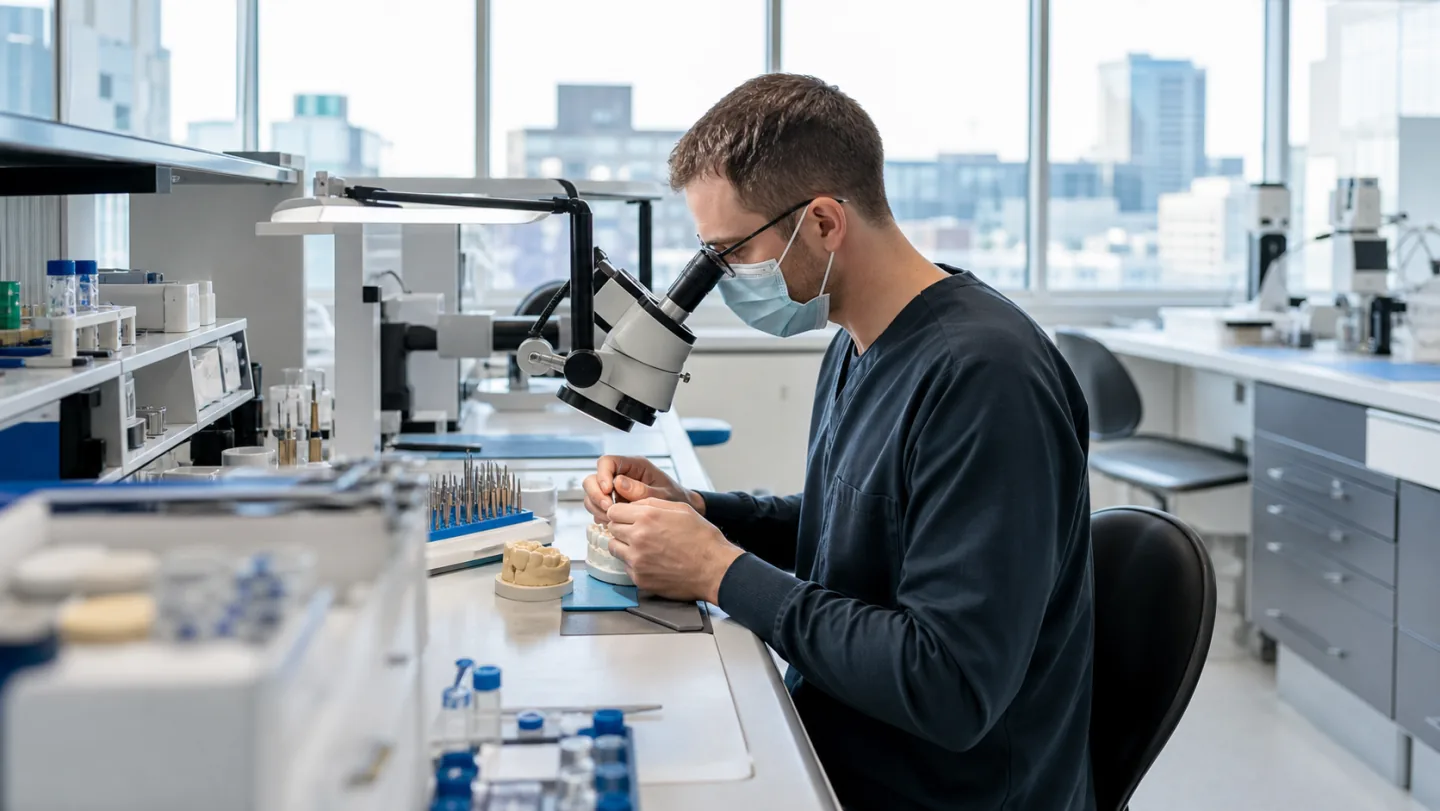
A dental laboratory technician crafting a custom restoration at a workbench
When eating feels like work

Our Dental Laboratory for North End Winnipeg Residents

Custom dental work has a job to do at mealtimes. North End Winnipeg residents who find chewing difficult with a crown, bridge or denture can ask to have it assessed.

Let's find a time

Request an appointment

We’ll call to confirm your appointment. For urgent care, please call us directly.

Function comes before finish

How Chewing Shapes the Design and Review of Custom Dental Work

A piece of dental work can look exactly right and still not feel right at dinner. Chewing is one of the functions designers have to account for, alongside speech, staying in place and the goal of your treatment. It also places repeated pressure on restorations and on the tissues that support them.

Perhaps you have started avoiding certain foods, or you favour one side without really deciding to. Those are useful things to tell a dentist. North End Winnipeg residents can talk it over at Winnipeg North Dental on McPhillips Street, where the work and your mouth can be assessed together.

Explore our dental laboratory
Dental treatment room at Winnipeg North Dental
A treatment room with a blue dental chair at our clinic.

Designed for use

Function is part of the plan for custom work, along with how it fits and looks.

Bite is recorded

Records show how your upper and lower teeth relate to each other and move.

Mealtime problems count

Trouble with eating gives your dentist a reason to take a closer look.

What chewing asks of a piece

Why function gets so much attention.

When you chew, your teeth don’t simply close and stop. They slide, press and release, and any custom work involved must cope with all of it.

In fixed restorations

A crown or bridge has to meet the opposing teeth in a way that suits the rest of your bite.

  • Bite records give the design stage its starting information.
  • High contact can make one spot feel overloaded.
  • The neighbouring teeth also affect how food moves around it.
  • A chip or other damage can change how it feels to chew.

In dentures

A denture’s stability during a meal depends on several factors that must be balanced together.

  • Retention helps it stay put when you bite and chew.
  • Supporting tissues take the pressure of chewing.
  • Those tissues can change shape as time goes by.
  • Sore areas may make you avoid chewing in certain places.

How well any piece works for eating varies from person to person. Your dentist can talk with you about what’s realistic after an assessment.

Sorting out a chewing problem

How your concern gets followed through.

New work and existing work follow somewhat different paths here. What’s shown below is a general outline that your dentist can tailor to you.

Request your visit
  1. 01

    Explain the difficulty

    Describe which foods or which side give you trouble, and your dentist will assess your bite, the work itself and the tissues around it.

  2. 02

    Update the information

    Where needed, bite records, scans or impressions show how your mouth is working at present.

  3. 03

    Make what’s prescribed

    If a new or remade piece is called for, fabrication proceeds from those clinical details and your dentist’s plan.

  4. 04

    Review it in use

    Your dentist evaluates how your teeth contact, then checks comfort and function, adjusting or sending the work back when appropriate.

A week of meals

Notice what you’ve been avoiding.

People often adapt without realizing it, for instance by cutting food smaller or switching sides. Paying attention to your habits for a few days can reveal a pattern worth sharing.

If you’re in significant discomfort, don’t wait to keep notes. Phone the clinic instead.

Meal notes

  • Foods you’ve started to avoid, such as hard or chewy ones.
  • The side you tend to chew on, and whether that’s changed.
  • Which restoration or denture seems to be involved.
  • Sore spots that appear after eating.
Reception desk at Winnipeg North Dental
Waiting area at the Winnipeg North Dental clinic

The front desk and waiting area at Winnipeg North Dental.

Comfort at the table

Eating shouldn’t mean quietly working around a problem.

A new contact point often appears only when you start chewing real food. Adjustments are a normal part of many custom treatments, and they can help improve comfort and protect your tissues.

Biting down feels wrong

Let your dentist know if one tooth seems to take the pressure first.

Gums hurt after meals

Tenderness beneath a denture after eating is a detail worth mentioning.

Food keeps getting caught

Describe where it collects around your crown, bridge or partial.

Over many meals

Chewing can change as your mouth does.

Everyday use puts your dental work through a lot, and your mouth doesn’t stay exactly the same. Should eating become harder after things have been going well, contact the clinic and describe what’s changed.

01

A gradual decline

Slowly worsening chewing with a denture can relate to changing tissues, so have the fit reviewed.

02

A sudden change

When a bite feels different all at once, phone the clinic rather than waiting to see whether it settles.

03

A break at the table

If something breaks during a meal, recover what you can, store it in something protective, skip the adhesive and take it all in.

A phone call can help you work out whether a chewing problem needs an appointment.

Talk with our team
Exterior of the Winnipeg North Dental clinic on McPhillips Street

Winnipeg North Dental

Unit-5 2358 Mcphillips Street, Winnipeg, MB R2V 4J6
Get directions (opens in a new tab)
North End patients

Where Chewing Problems Are Assessed

The North End is in Winnipeg, and residents are seen at Winnipeg North Dental, Unit 5, 2358 McPhillips Street, for any assessment or fitting relating to custom dental work.

Please treat the form as a request, since the clinic has to confirm it first. Call about anything urgent instead.

Questions about coverage?

Talk with our team before your visit or learn about CDCP.

A little clarity before your visit

Your questions, answered.

Helpful details about our dental laboratory in North End Winnipeg.

Ask our team
How do North End Winnipeg residents ask about a chewing problem?

Say what’s been happening in your request form, or call (204) 338-3003. After the clinic confirms a time, you’d be seen at Unit 5, 2358 McPhillips Street, Winnipeg, MB R2V 4J6.

Why does my new crown feel fine until I chew?

Some contact only becomes noticeable under the pressure and movement of chewing. Tell your dentist which foods or movements bring it on so your bite can be checked.

Should chewing with dentures feel like chewing with natural teeth?

Experiences differ, and dentures are a balance of many factors. If something seems wrong or is getting worse, ask to have the fit and tissues evaluated.

Can old dental work be the reason eating has become harder?

It could be one possibility, but there may be others. Your dentist needs to examine the work and your mouth to find out what’s going on.

What if I’ve been avoiding one side for a long time?

Mention it, even if it has become a habit. It gives your dentist a useful place to begin looking, and there’s no reason to feel awkward about it.

Trouble at mealtimes?

Ask your dentist to look at how you chew.

If you live in the North End, send a request to visit our Winnipeg clinic on McPhillips Street. Once it arrives, the clinic will contact you about a time.

Patient testimonials

Kind words from our patients

★★★★★ 5.0 from 440+ reviews on Google

Close to home

Areas we serve

Convenient dental care on McPhillips Street for families across northwest Winnipeg and nearby communities.

Explore all service areas

A healthier smile is one visit away

Ready for dental care that feels genuinely comfortable?

✓ New patients welcome ✓ Direct insurance billing ✓ Multilingual team

How can we help?

Our dental team is here for you.

Ready to book or have a question? Choose the option that works best for you.

For urgent dental concerns, please call us directly.

Send us a message

Our team will reply during clinic hours.



