
Impressions or digital scans capture teeth and surrounding tissues.
Winnipeg North Dental Family Dentistry
Our Dental Laboratory
Carefully crafted dental restorations and appliances designed around you.
Let's find a time
Request an appointment
From treatment plan to finished restoration
The details you feel begin with details we record.
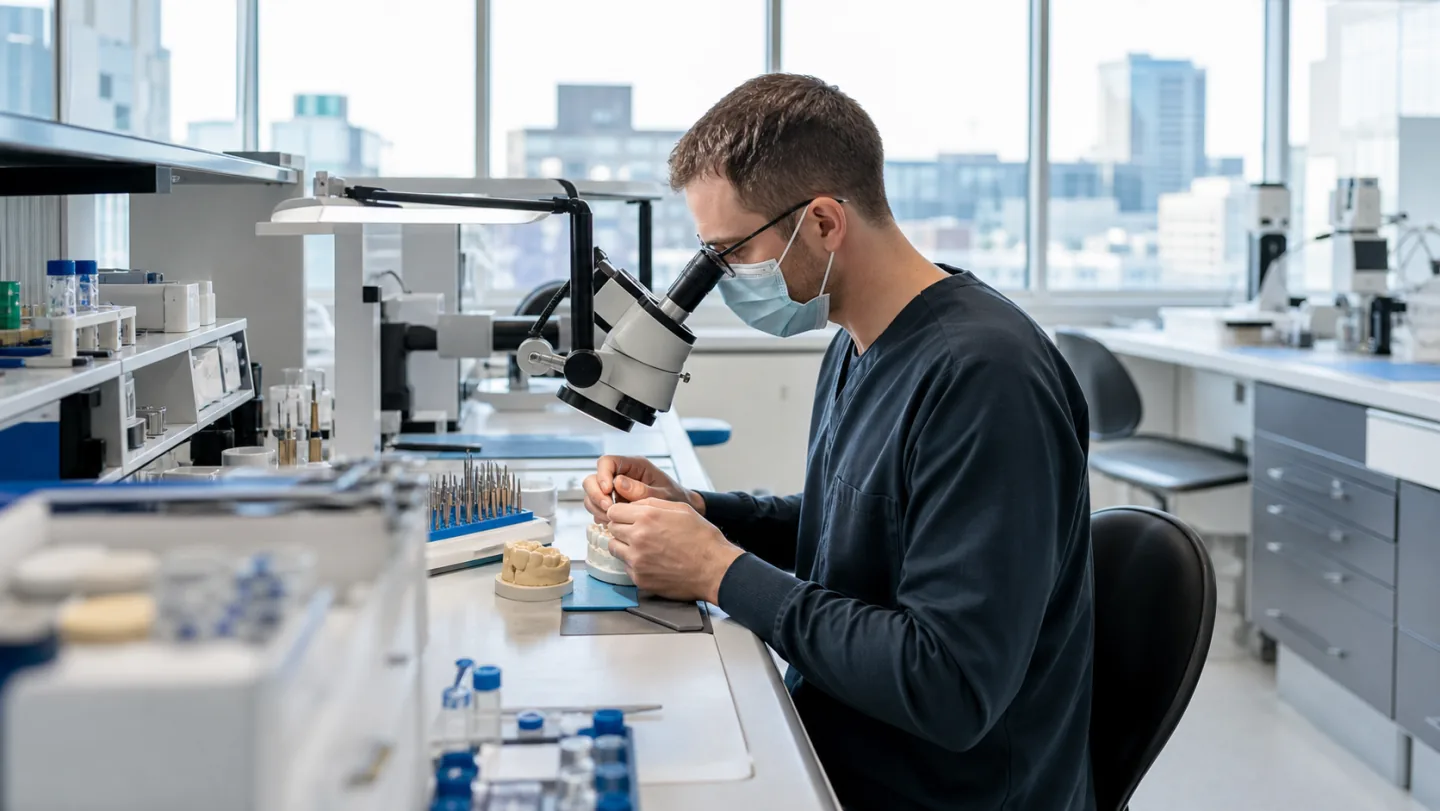
Crowns, bridges, dentures and dental appliances are made from clinical information gathered during your visits. Impressions or scans, bite records, photographs and shade details communicate how the finished result should fit, function and look.
Laboratory collaboration is not separate from your care. Your dentist evaluates the tooth or tissues, plans the restoration and checks the finished work in your mouth before it is accepted.
The information behind the work
Good records guide good craftsmanship.
The records needed depend on what is being made. Complex work may involve more than one planning or fitting appointment.
Records show how the upper and lower teeth relate and move together.
Colour and surface details help a restoration blend with nearby teeth.
The design reflects chewing, speech, retention and the treatment goal.
What dental laboratories create
Custom work for different kinds of smiles.
Each restoration or appliance is prescribed for a specific patient and clinical purpose.
Crowns & bridges
Fixed restorations for damaged teeth or selected spaces.
Dentures
Full, partial and implant-supported removable tooth replacement.
Implant restorations
Custom components that restore implants above the gumline.
Appliances
Selected guards, trays and other prescribed dental devices.
The path to a custom result
Measured, made, tried and refined.
Plan
The dentist assesses your needs, explains options and prepares the tooth or treatment area.
Record
Scans or impressions, bite information, shade and other details are collected.
Fabricate
The prescribed restoration or appliance is produced from the clinical records.
Fit and refine
Your dentist checks contact, bite, comfort, appearance and function, then adjusts or returns the work for refinement when needed.
Fit is more than comfort
Small refinements protect the whole result.
A restoration must relate to neighbouring teeth, the opposing bite and the gumline. A denture must balance retention, speech, chewing and the changing shape of supporting tissues.
Adjustments are a normal part of many custom treatments. Tell us where something rubs, catches, feels high or affects speech so the result can be evaluated rather than simply tolerated.
If something breaks
Keep every piece. Skip the household glue.
A broken denture, chipped restoration or damaged appliance should be assessed before repair. The condition of the pieces and the tissues underneath helps determine whether an adjustment, repair or replacement is appropriate.
01
Save every piece
Small fragments can provide useful information and may be needed for repair.
02
Store it safely
Keep the appliance and pieces protected, and bring everything to the clinic.
03
Do not glue it
Household adhesive can damage materials, distort the fit and complicate professional repair.
Dental laboratory FAQs
What custom work involves.
How long does a custom restoration take?+
Timing depends on the type and complexity of the work, materials, laboratory steps and whether a trial or additional record is needed. Your dentist will outline the expected sequence.
Why do I need a temporary restoration?+
A temporary can protect a prepared tooth and maintain appearance or function while the final restoration is being made. Follow the care instructions provided.
What if the shade does not look right?+
Shade is assessed with the restoration in your mouth and under suitable lighting. If the result does not meet the clinical plan, refinement may be recommended before final acceptance.
Can a denture be repaired the same day?+
Some repairs may be possible quickly, while others require more time or new records. The appliance and supporting tissues must be assessed first.
Will a new appliance need adjustments?+
Often, yes. New contact points can appear as you speak and chew. Timely adjustments help improve comfort and protect the tissues.