Skip to content
Winnipeg North Dental
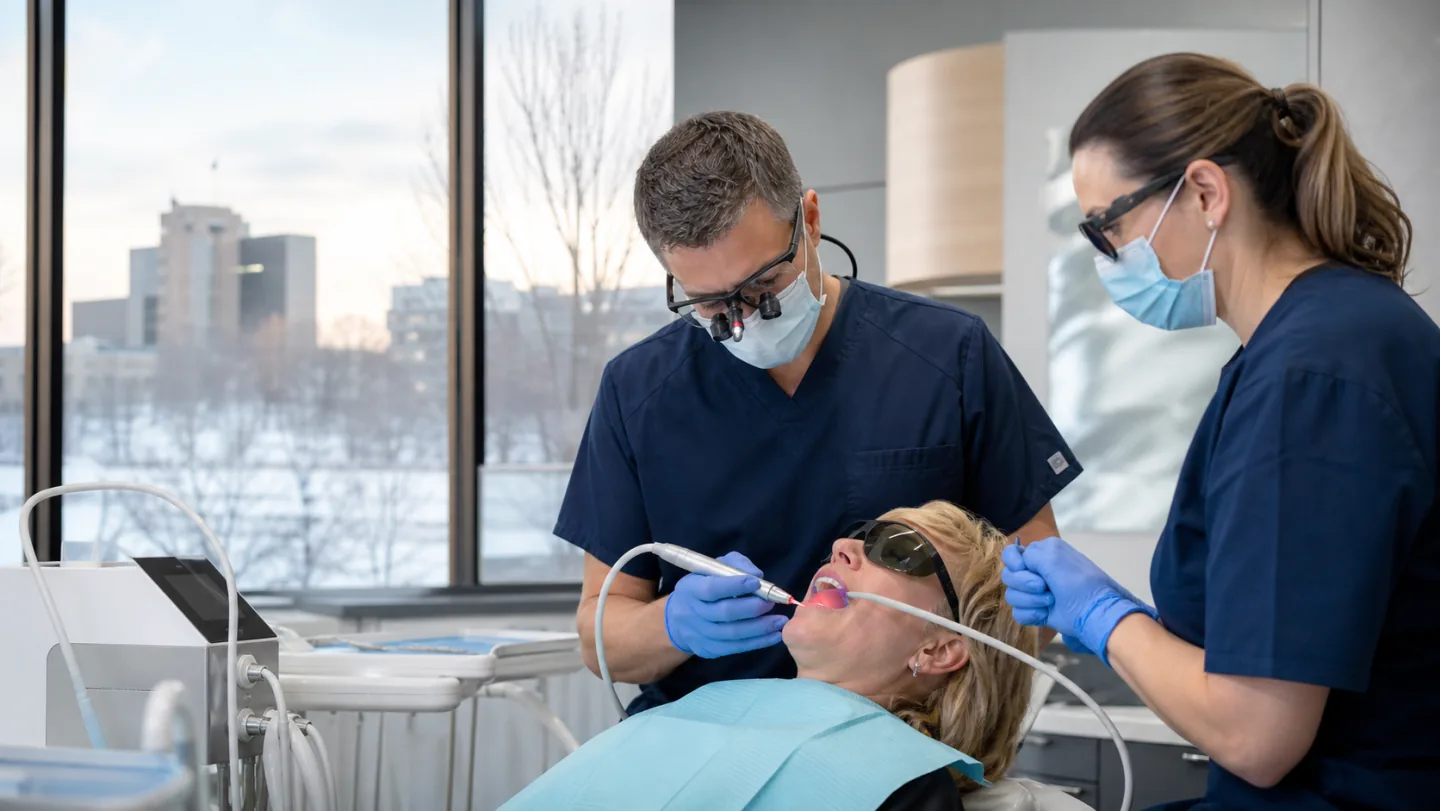
A dental team using laser technology during a precise clinical procedure
If your teeth are touchy already

Laser Dentistry for River Heights Residents

When ice water or a cold breath of winter air already makes a tooth wince, the idea of anything being done near the gumline can feel unwelcome. Here is what is and isn’t known ahead of time about sensitivity and laser care.

Let's find a time

Request an appointment

We’ll call to confirm your appointment. For urgent care, please call us directly.

Sensitivity, honestly

Existing Twinges Are Part of Your Story

Dental lasers are used chiefly on gums and other soft tissue, where concentrated light lets the dentist work on a marked-out area and manage bleeding as it goes. The clinic’s own guidance is frank that brief sensitivity can still follow such a procedure, so precision should not be read as a promise of a calm aftermath.

Someone whose teeth react easily has good reason to describe that pattern before any plan is made. River Heights residents can do so during an examination at our McPhillips Street clinic in Winnipeg, where the cause of the gum concern is identified first.

Explore laser dentistry
A white desk, black chairs and a framed seascape painting in a Winnipeg North Dental consultation room
A white desk with a keyboard and black chairs, beside a window with striped blinds and a potted plant.

Describe the pattern

Hot, cold, sweet or brushing: knowing what sets your teeth off helps the dentist understand what they’re dealing with.

Precision isn’t a pledge

Temporary sensitivity after soft-tissue treatment can happen, even when the work itself is finely controlled.

Questions come before consent

You can ask how a recommended procedure might affect a tooth that is already reactive.

Scope of laser work

Gums first, and only where it helps.

A laser on its own is not a plan. Its place is decided by the diagnosis, the tissue involved and whether it brings a meaningful advantage over a conventional instrument.

Where a laser tends to come up

The exact use depends on what the examination finds and on the laser system available.

  • Reshaping gum tissue as part of restorative, functional or cosmetic planning.
  • Supporting selected periodontal procedures alongside other gum care.
  • Removing or reshaping a small, defined patch of oral soft tissue.

Why sensitivity changes the conversation

These are reasons to raise your twinges early, not reasons to avoid an assessment.

  • The cause of tooth sensitivity may matter to the overall plan.
  • Comfort measures are chosen with the specific area in mind.
  • Knowing your baseline makes it easier to judge changes after treatment.

Many dental procedures are better served by conventional instruments, and a laser is recommended only when it suits the treatment goal.

Once you agree to proceed

The order things happen in.

The dentist walks you through the area involved, the comfort plan and what recovery normally looks like before starting. Use that moment to point out which teeth are the touchy ones.

Request your visit
  1. 01

    Glasses on, area set apart

    Protective eyewear is handed to you first, and the site is isolated where the procedure needs it.

  2. 02

    Numbing or another measure

    Local anesthetic or a different comfort option is picked to match the work being done.

  3. 03

    Light directed with care

    With controlled settings, the laser reaches only the tissue named in your plan.

  4. 04

    Going over aftercare

    You leave knowing how to keep the area clean, what to eat, what symptoms to note and when follow-up is.

Before your assessment

Give the dentist a clear baseline.

A short description of how your teeth behave day to day is surprisingly helpful. It separates what was already there from anything new later on.

If a sensitive tooth has suddenly turned into a constant ache, call the clinic rather than waiting for a routine visit.

Your sensitivity notes

  • Which teeth react, and to what: cold, heat, sweets or a toothbrush.
  • How long the twinge lasts once it starts.
  • Any desensitizing toothpaste or rinse you use now.
  • Medications or supplements, including ones taken only now and then.
A reclined light blue dental chair with an overhead light arm in a Winnipeg North Dental treatment room
A white front desk with orchids and a snake plant at the Winnipeg North Dental reception

A light blue treatment chair with a monitor behind it, and a reception counter decorated with plants.

Keeping it bearable

Talk about the touchy spots in advance.

Sensitivity during and after care is something people feel very differently. Sharing your history lets the dentist explain what is likely for your procedure, and speaking up in the chair lets them respond in the moment.

Freezing is still an option

A laser doesn’t rule out local anesthetic, and it may be recommended for your comfort.

Name the sensation

Sharp, cold, pressure or ache: telling the dentist what you notice helps them pause or adjust.

Ask about the hours after

Find out whether some sensitivity is expected for the specific work being planned.

Watching how it settles

Know your normal, then compare.

Healing depends on what was treated and on your general health, so instructions are tailored to the procedure. Having described your usual sensitivity beforehand makes it easier to tell whether anything has changed.

01

Short-lived reactions

The treated area may feel tender, a little swollen or more sensitive than usual for a while.

02

When to pick up the phone

Contact the clinic if discomfort is stronger than you were told to expect or keeps increasing.

03

The return visit

A follow-up suited to the treated site lets the dentist check its healing and hear how your teeth feel.

Check with the clinic before switching toothpastes or rinses near a healing area, so the change fits your instructions.

Talk with our team
Exterior of the Winnipeg North Dental clinic on McPhillips Street

Winnipeg North Dental

Unit-5 2358 Mcphillips Street, Winnipeg, MB R2V 4J6
Get directions (opens in a new tab)
Where you’re seen

Care on McPhillips Street

River Heights is within Winnipeg, and residents attend Winnipeg North Dental at Unit 5, 2358 McPhillips Street for their examination and for any laser procedure that is recommended.

Submitting the form puts in a request only. The clinic replies to confirm a time. Urgent problems should be phoned in, not sent through the form.

Questions about coverage?

Talk with our team before your visit or learn about CDCP.

A little clarity before your visit

Your questions, answered.

Helpful details about laser dentistry in River Heights.

Ask our team
Will laser gum treatment make my sensitive teeth worse?

It isn’t possible to say before an examination. Temporary sensitivity can follow soft-tissue work, so ask what is likely for the procedure being suggested.

Can a laser treat the sensitivity itself?

Lasers are used mainly for selected gum and soft-tissue procedures. The dentist would first look for the cause of your sensitivity and explain suitable options.

Does the laser feel hot on a sensitive tooth?

Sensation varies with the procedure and area. Tell the dentist immediately about anything uncomfortable so treatment can be paused or adapted.

Should I keep using my sensitivity toothpaste afterward?

Ask when you get your aftercare instructions. Home care around a treated area depends on the procedure, so confirm before carrying on as usual.

Is bleeding less of an issue with a laser?

In selected situations a laser may mean less bleeding during treatment, but this depends on the tissue, the procedure and how you heal.

Where do River Heights residents note their sensitivity when booking?

Note your tooth sensitivity on the form or when you call (204) 338-3003. The appointment would be at our McPhillips Street clinic in Winnipeg.

Start with a baseline

Tell us how your teeth react.

River Heights residents can request an assessment below, and the clinic will reach out to set a time.

Patient testimonials

Kind words from our patients

★★★★★ 5.0 from 440+ reviews on Google

Close to home

Areas we serve

Convenient dental care on McPhillips Street for families across northwest Winnipeg and nearby communities.

Explore all service areas

A healthier smile is one visit away

Ready for dental care that feels genuinely comfortable?

✓ New patients welcome ✓ Direct insurance billing ✓ Multilingual team

How can we help?

Our dental team is here for you.

Ready to book or have a question? Choose the option that works best for you.

For urgent dental concerns, please call us directly.

Send us a message

Our team will reply during clinic hours.



