Skip to content
Winnipeg North Dental
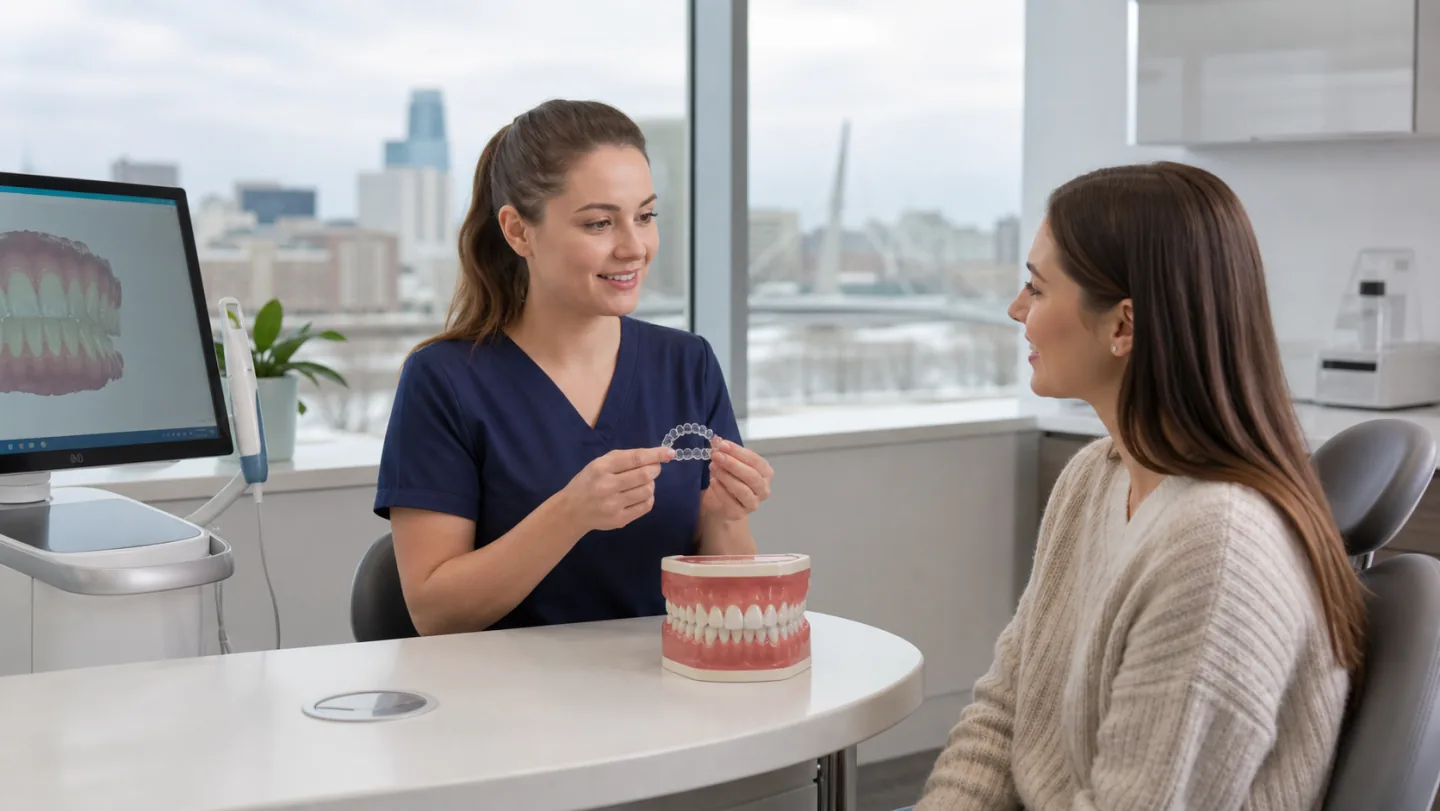
A dentist showing a clear aligner to a patient during a consultation
Swore off orthodontics at fifteen?

Invisalign for Wolseley Residents

Sore cheeks, tightened wires, food stuck in brackets. Bad memories can make a person wary of ever trying again. Wolseley residents can compare those memories with what trays really involve.

Let's find a time

Request an appointment

We’ll call to confirm your appointment. For urgent care, please call us directly.

A wary second look

Considering Aligners After a Bad Experience With Braces

If braces left you with unpleasant memories, you’re entitled to be skeptical of anything that sounds like more of the same. Aligners do remove some of the things people disliked: there are no brackets or wires, and trays come out for eating and cleaning. They also bring demands of their own.

Moving teeth still involves pressure and sometimes tenderness, and it’s now up to you to keep the appliance in. Wolseley residents can go over all of that at our McPhillips Street clinic in Winnipeg, including the possibility that your particular movements would still be better served by braces.

Explore invisalign
Treatment room with a blue chair, overhead arm and a screen showing a dental image
A treatment room at Winnipeg North Dental with its pale blue chair.

No wires or brackets

Trays replace them, though small bonded attachments may be part of your plan.

Different responsibility

Braces stay put regardless, whereas aligners work only if you keep them in.

Still real tooth movement

Pressure and tenderness haven’t gone away, and neither has the need for retainers.

An honest swap

What you leave behind, and what you take on.

It would be misleading to present aligners as braces without the downsides. It’s more accurate to say the downsides differ, and that you may tolerate one set better than the other.

Old complaints that may ease

Many of the classic complaints about braces came from the hardware itself. Trays change that hardware, which changes some of the daily experience.

  • Eating happens with trays out, without brackets to work around.
  • Brushing and flossing go ahead without wires in the way.
  • The appliance is less visible, although attachments may show.
  • Trays have no wires to poke, though edges can occasionally irritate.

New demands to weigh

Nobody tightens anything for you, and that freedom cuts both ways. Think about whether the new routine would suit you any better than the old one did.

  • You’re responsible for putting trays back in, day after day.
  • Each snack means a removal, then cleaning before reinserting.
  • Elastics or attachments may still be required for some plans.
  • Certain movements remain more predictable with fixed braces.

Bad memories are real, but the appliance should be chosen on what your teeth need and what you can maintain. Your dentist can help you sort those out.

What treatment looks like now

A different rhythm from what you remember.

If your last experience involved adjusting wires at regular visits, the pattern of aligner care may feel unfamiliar. Here’s how it generally proceeds.

Request your visit
  1. 01

    Looking at the whole mouth

    Your exam takes in teeth, gums, jaws and bite, along with photographs and fitting X-rays. Tell your dentist what went badly the first time.

  2. 02

    Working out the movements

    Tooth positions, sequence and sources of space are planned on screen. You can ask what the software shows and how far it can be trusted.

  3. 03

    Starting with trays

    Rather than having brackets bonded, you’ll have aligners checked for fit, any attachments placed, and a lesson in handling them.

  4. 04

    Monitoring the result

    Your progress is compared with the plan, and your dentist steps in when a tray stops fitting as it should.

Before you come in

Be specific about what you disliked.

Hated braces covers a lot of ground. It helps to work out whether the problem was soreness, appearance, the food rules, the appointments or how you were treated.

Your old orthodontic records may be hard to find after so long. Bring what you have, and don’t worry if that’s nothing at all.

Think back over

  • Which parts of having braces bothered you most.
  • Whether you wore a retainer afterward, and for how long.
  • Any changes you’ve spotted in your teeth since then.
  • Medications you take and your present health.
Seating under two abstract prints, with wood-look floors and a pale rug in view
Consultation room seen from behind a high-backed black chair, facing a bright window

Waiting area seating and a consultation room at Winnipeg North Dental.

A fresh start, on your terms

You can tell us it was awful.

You’re not being difficult when you describe what you hated. It gives your dentist useful information, and it lets you ask how each of those things would be handled now.

Tenderness, explained

Ask how pressure from a new aligner differs from what you recall, and what’s worth calling about.

No surprises about extras

Request a full account of any attachments, elastics or tooth reduction before agreeing to treatment.

Permission to say no

You may find the answer is that you’d rather leave your teeth as they are, and that’s fine.

The part many teens skipped

This time, plan for the retainer.

Many people finish braces in adolescence and let retention slide. Going through treatment a second time, it’s worth treating what comes after the last tray as part of the job.

01

A lifelong tendency

Teeth can keep shifting at any point in life, so it may not be a fault of your earlier treatment. Prescribed retainers help limit that movement.

02

Additional trays

If some tooth positions haven’t been reached, refinement may follow. That’s a normal part of aligner planning, not necessarily a failure.

03

Telling us when it’s hard

If you find yourself falling out of love with your trays, speak up before you stop. Lost wear can change what’s needed next.

Feeling that old frustration creeping back? Give the clinic a call.

Talk with our team
Winnipeg North Dental front doors with notices on the glass and blinds in the windows

Winnipeg North Dental

Unit-5 2358 Mcphillips Street, Winnipeg, MB R2V 4J6
Get directions (opens in a new tab)
For wary Wolseley patients

Go Over the Past at Our Clinic

Wolseley is one of Winnipeg’s areas. Residents wanting to compare aligners and braces can have that assessment at Winnipeg North Dental, Unit 5, 2358 McPhillips Street.

This form starts a request but doesn’t set a date. The clinic follows up about timing, and it’s equally fine to telephone and speak to someone.

Questions about coverage?

Talk with our team before your visit or learn about CDCP.

A little clarity before your visit

Your questions, answered.

Helpful details about invisalign in Wolseley.

Ask our team
Are aligners less painful than the braces I remember?

People’s experiences differ, so no one can promise that. Teeth can still feel pressure and tenderness as they move, though there are no wires or brackets involved.

Would I need braces again rather than aligners?

It’s possible, because some movements are more predictable with them. A review of your teeth, roots and bite will show whether aligners can do what’s needed in your case.

Do aligners have the same food rules that braces did?

They’re different. With trays out for meals, you aren’t protecting brackets, but you do have to remove them for all food and clean up before putting them back.

Can you tell why my braces didn’t last?

Your dentist can look at how your teeth sit now and ask about your retainer history. Teeth can shift over a lifetime, so a single clear cause isn’t always something to expect.

Will people notice like they did with braces?

Trays are less obvious, not undetectable. Edges and attachments can be seen in conversation, so ask where any attachments would be placed in your own plan.

Do I need my old orthodontic records?

They could be interesting, if they’re easy to find, but you can still ask for an assessment without them. Current records would be taken to reflect your mouth today.

How could someone in Wolseley look into this without committing?

Send a request through this page or call (204) 338-3003, and say you’re only looking into it. You’d come to Unit 5, 2358 McPhillips Street, Winnipeg, MB R2V 4J6, at a time the clinic sets with you.

No wires attached

See whether a second try makes sense this time.

Request an assessment at our Winnipeg clinic, and start by telling us what you’d never want to go through again.

Patient testimonials

Kind words from our patients

★★★★★ 5.0 from 440+ reviews on Google

Close to home

Areas we serve

Convenient dental care on McPhillips Street for families across northwest Winnipeg and nearby communities.

Explore all service areas

A healthier smile is one visit away

Ready for dental care that feels genuinely comfortable?

✓ New patients welcome ✓ Direct insurance billing ✓ Multilingual team

How can we help?

Our dental team is here for you.

Ready to book or have a question? Choose the option that works best for you.

For urgent dental concerns, please call us directly.

Send us a message

Our team will reply during clinic hours.



