Skip to content
Winnipeg North Dental
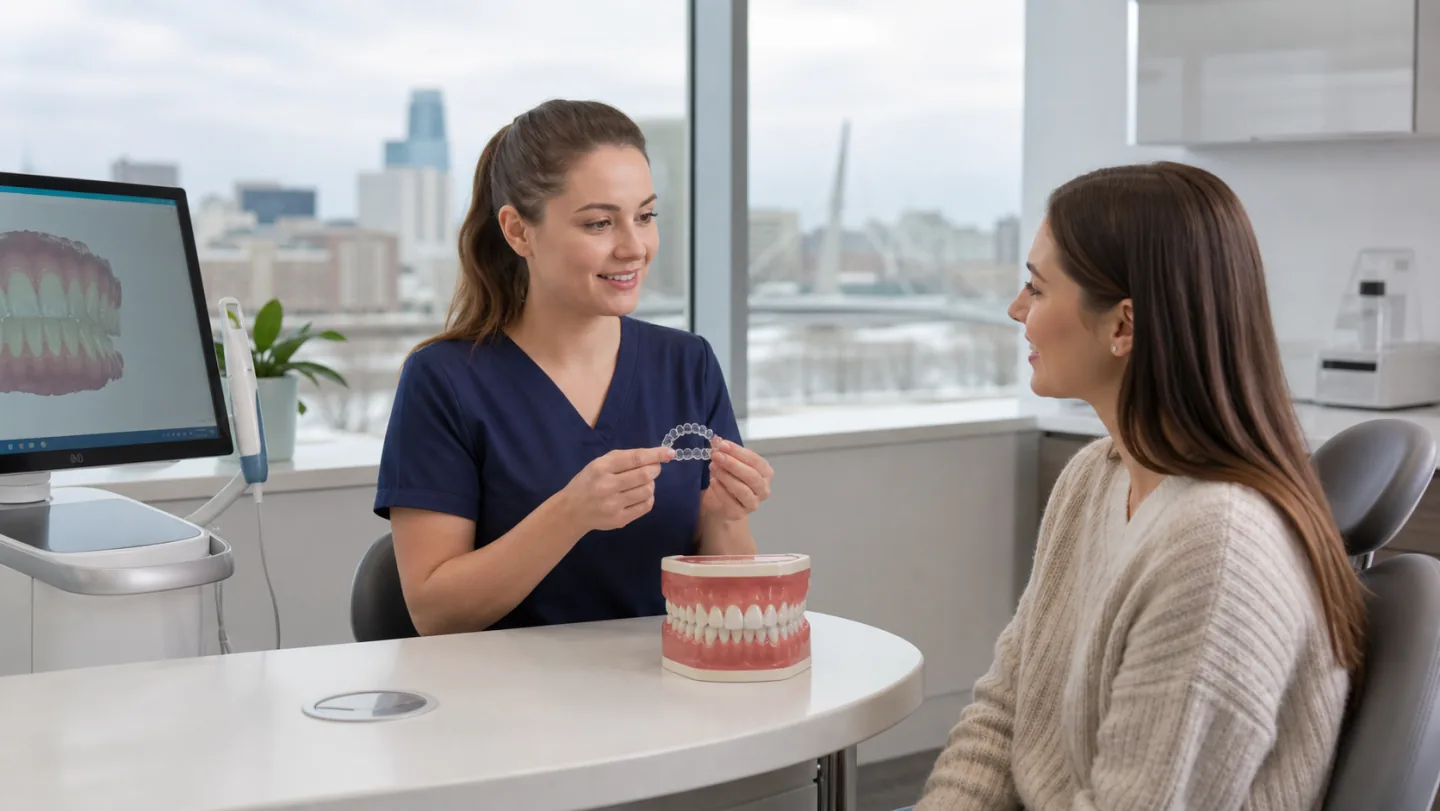
A dentist showing a clear aligner to a patient during a consultation
Your mouth is your work tool.

Invisalign for Waterford Green Residents

Teaching, presenting, selling, chairing a meeting: when people watch you talk all day, a dental appliance raises its own questions. This page is for Waterford Green residents in that position.

Let's find a time

Request an appointment

We’ll call to confirm your appointment. For urgent care, please call us directly.

Talking through treatment

Clear Aligners When You’re Speaking in Front of People

Removable trays appeal to people who face an audience, since there are no brackets across the front teeth. They are discreet rather than unseen, though. A tray’s edge, the shine of saliva and any bonded attachments can catch the eye of whoever you’re chatting with at normal distance.

How your own plan would look depends on which teeth have to move and how. Waterford Green is in Winnipeg, and residents have this assessed at our clinic on McPhillips Street. Tell the dentist how much of your day is spent talking, so that it’s part of the conversation from the outset.

Explore invisalign
Consultation room with black office chairs around a white desk and a window with striped blinds
Black office chairs around a white desk with a keyboard, Winnipeg North Dental.

Honest about visibility

Trays are hard to spot from across a room, while up close they may be noticed. Ask where your attachments would sit.

Your speaking schedule

Mention presentations, recordings or long teaching days, since they shape how you’ll think about daily wear.

Wear still comes first

Slipping trays out before a talk is tempting. Teeth aren’t being moved during that time, so raise it before it becomes a habit.

What an audience might see

Two things that sit on your front teeth.

Trays are one visible element and attachments the other. Knowing the difference helps you ask a far more useful question at your assessment.

The trays themselves

These nearly clear shells cover the teeth and come off for meals and brushing. For most of a working day they stay in, with your talking going on around them.

  • Edges along the gumline may catch the light.
  • Moisture on the plastic can add a slight gloss.
  • Each new tray in the series fits slightly differently.
  • Plain water is generally fine while they’re in place.

Attachments, if you need them

A bonded, tooth-coloured shape gives the tray something to grip when a rotation or root movement calls for extra control. It stays on between tray changes.

  • Their number and position follow your treatment goals.
  • Not all of them land on the teeth people see first.
  • You can’t pop them off before a big presentation.
  • Ask to see where they would go in your plan.

Marketing photos tend to skip attachments. Your assessment is where you can find out what your own version would really involve.

When the talking comes up

Bring up your work at each of the four stages.

Treatment moves through diagnosis, design, delivery and tracking. Each stage gives you a natural point to mention how you use your voice and your smile.

Request your visit
  1. 01

    At diagnosis

    The dentist looks over your teeth, gums, bite and jaw relationships, with photographs and appropriate X-rays. Mention here that you’re on show for much of your day.

  2. 02

    During design

    Tooth movements are sequenced and space is planned. Ask which front teeth would carry attachments, and why those movements need the added control.

  3. 03

    On delivery day

    Fit gets checked, attachments are bonded, and you learn how to insert and remove the trays. Try speaking aloud with them in before you leave.

  4. 04

    While tracking

    Actual movement is compared against the digital sequence. If lost wear time around busy work periods has put you behind, this is where to say so.

Think about your speaking days

Sketch out a typical week on your feet.

The questions that matter to you come from your own routine. A few minutes of thought about your working week gives the assessment something real to work with.

You won’t be expected to know anything about orthodontics. Knowing what your job asks of your mouth is more than enough to get started.

Worth noting down

  • How often you speak, present or appear on camera.
  • Where you’d brush and clean between teeth at work.
  • Medications, plus any recent changes to your health.
  • Any teeth you’d especially like people to stop noticing.
Treatment room with a pale blue dental chair, wood-look cabinets and a wall-mounted screen
Waiting area with a navy bench below two abstract blue paintings

A pale blue dental chair and a navy waiting-area bench at Winnipeg North Dental.

Getting your voice back

New trays may take some talking to get used to.

A snug tray over your teeth is a new thing for your tongue to work around. Practise with them in at home, and let the clinic know if something isn’t settling.

Reading aloud at home

Going over a few pages with new trays in gives you a private sense of how you sound and feel.

An edge against the lip

If a tray edge seems to rub while you talk, describe the spot to the clinic instead of putting up with it.

Attachments and the tongue

Bonded shapes may feel prominent to your tongue or lips. Tell the clinic if one is bothering you.

Once the speaking is smoother

Retainers join your morning and evening.

Moving teeth is followed by keeping them where they’ve arrived. For anyone conscious of their smile at work, that later phase deserves as much attention as the trays.

01

A final round, maybe

When some movements are still incomplete, fresh records may lead to refinement aligners. This is a routine planning tool and doesn’t signal failure.

02

Prescribed retainer wear

A retainer holds teeth while the surrounding tissues adapt. Use yours according to the instructions you’re given.

03

Attachments coming off

Ask when your bonded shapes would be removed, so you have a realistic idea of when your teeth will look bare again.

Teeth can keep shifting at any age, so a retainer that starts to fit differently is worth a call to the clinic.

Talk with our team
Front of the Winnipeg North Dental building with its sign above glass doors

Winnipeg North Dental

Unit-5 2358 Mcphillips Street, Winnipeg, MB R2V 4J6
Get directions (opens in a new tab)
For Waterford Green speakers

Where to Have This Conversation in Person

For Waterford Green residents, assessments, fittings and progress checks take place at Winnipeg North Dental, Unit 5, 2358 McPhillips Street, in Winnipeg.

Sending the form on this page starts a request, and the clinic then gets back to you to settle a time. For anything urgent, skip the form and phone.

Questions about coverage?

Talk with our team before your visit or learn about CDCP.

A little clarity before your visit

Your questions, answered.

Helpful details about invisalign in Waterford Green.

Ask our team
Could aligners change the way I speak?

Having something new over your teeth can feel odd when you talk. It’s difficult to say in advance how you’ll find it, so raise any concern that doesn’t ease.

Can I take my trays out for an important presentation?

They come out for meals, drinks other than water and cleaning. Teeth only move while trays are worn, so ask how your prescribed schedule treats occasional exceptions.

How visible would my trays be on video?

That varies with the lighting, the camera and whether you have attachments. You could ask to see the fitted trays in a mirror or on your own phone.

Can attachments go only on my back teeth?

Their placement follows the movement that each tooth needs, so it can’t simply be chosen for looks. Ask what is planned and whether any alternatives exist.

Are braces out of the question for someone in my job?

Not necessarily. Brackets are more visible, yet they need no remembering and offer direct control for a broad range of movements. Compare both for your own teeth.

Can I sip coffee between meetings with my trays in?

Take them out first, as only plain water is generally fine with trays in place. Sugars or acids can otherwise be held against your teeth.

How does a Waterford Green resident arrange an assessment?

Reach the clinic through the request form, or at (204) 338-3003. Your visit takes place at Unit 5, 2358 McPhillips Street, Winnipeg, MB R2V 4J6.

Ready to see it for yourself?

Find out how your trays would look when you talk.

Ask for an assessment on McPhillips Street, and bring along what you’d like to know about wearing aligners at work.

Patient testimonials

Kind words from our patients

★★★★★ 5.0 from 440+ reviews on Google

Close to home

Areas we serve

Convenient dental care on McPhillips Street for families across northwest Winnipeg and nearby communities.

Explore all service areas

A healthier smile is one visit away

Ready for dental care that feels genuinely comfortable?

✓ New patients welcome ✓ Direct insurance billing ✓ Multilingual team

How can we help?

Our dental team is here for you.

Ready to book or have a question? Choose the option that works best for you.

For urgent dental concerns, please call us directly.

Send us a message

Our team will reply during clinic hours.



