Skip to content
Winnipeg North Dental
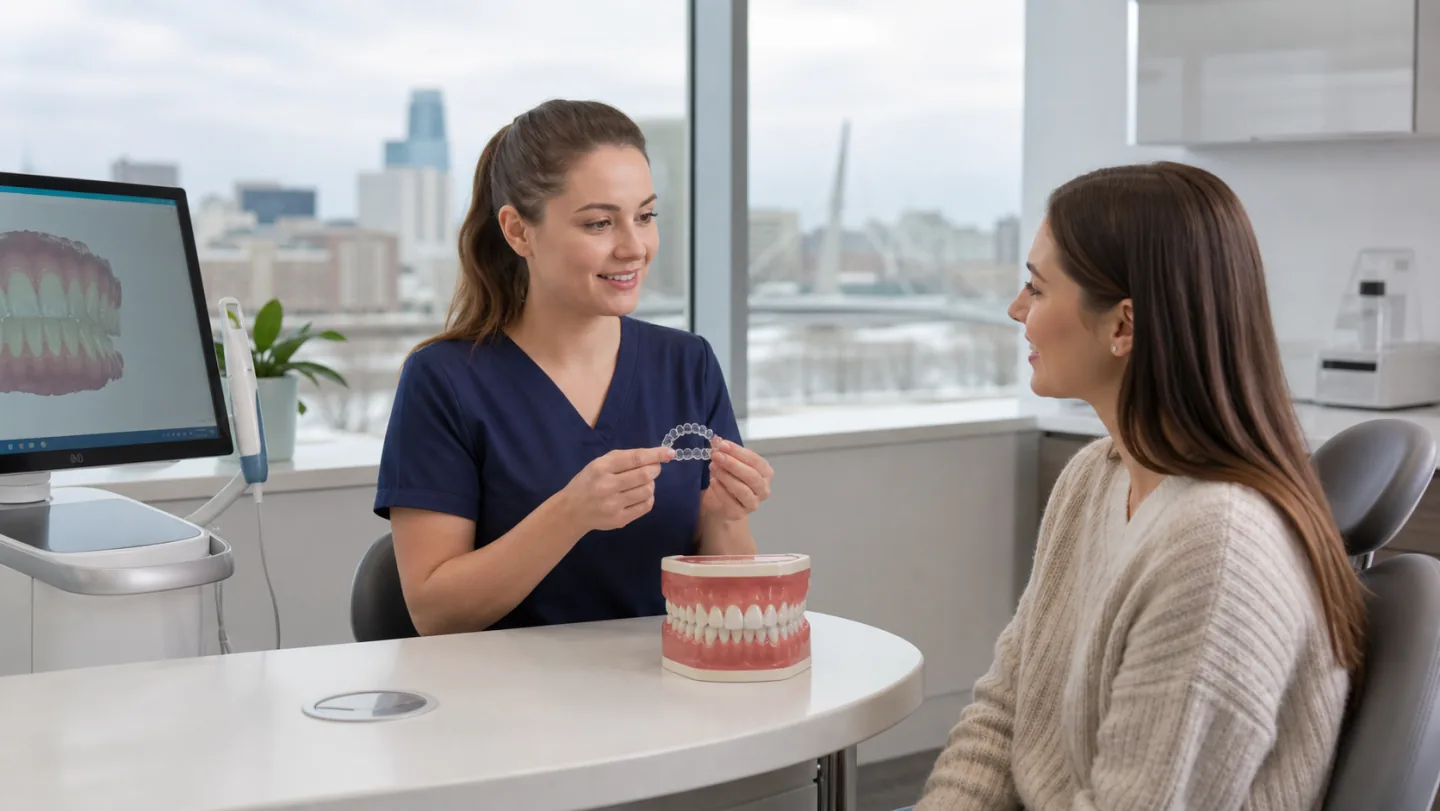
A dentist showing a clear aligner to a patient during a consultation
Dentists make you uneasy?

Invisalign for Transcona Residents

Wanting straighter teeth while dreading the chair is an uncomfortable mix. If that’s you, this Transcona page sets out what aligner visits involve, so fewer surprises are waiting.

Let's find a time

Request an appointment

We’ll call to confirm your appointment. For urgent care, please call us directly.

For anxious patients

Clear Aligners When Dental Visits Make You Nervous

Dental nerves don’t have to rule out orthodontic treatment, but they do deserve some planning. Aligner care involves repeat visits over the course of treatment, and knowing about that beforehand is better than discovering it once you’ve started.

Much of the work takes the form of looking and recording: an examination, photographs, scans and X-rays as appropriate. Transcona residents can start by explaining their worries at our McPhillips Street clinic in Winnipeg, and ask what each stage would involve before agreeing to anything.

Explore invisalign
Reception area with a white counter, green plants and a blue bench by the wall
White counter and plants at the Winnipeg North Dental reception.

Explained first

You can ask to have each part of an appointment described before it starts.

Repeat visits, known ahead

Progress reviews are part of the treatment, so it helps to plan for them mentally.

Trays stay in your hands

Between visits, you’re the one inserting and removing your aligners at home.

What actually happens

Separating the real from the imagined.

Fear often fills in blanks with the worst version. Here are the parts of aligner treatment most likely to be on an anxious person’s mind, described as plainly as we can.

Things done at the clinic

Your dentist needs information about your mouth and, later, may add small features to your teeth. Most of these steps can be talked through first.

  • Your teeth, gums, bite and jaws are examined.
  • Scans, photographs and suitable X-rays may be taken as records.
  • Bonded attachments are small tooth-coloured shapes placed when planned.
  • Limited enamel reduction between teeth is used only in some plans.

Things that happen at home

Daily wear, cleaning and tray changes take place in your own space. Tell your dentist if the idea of managing that on your own is reassuring or stressful.

  • New trays may bring a feeling of pressure on your teeth.
  • Aligners come out for meals and for anything except plain water.
  • Brush and clean between teeth before putting them back.
  • Anything that seems wrong can be raised with a phone call.

If a plan includes something you dread, ask why it’s proposed and what would change without it. You’re entitled to understand what you’re agreeing to.

Your visits, one by one

A predictable order helps.

Nothing here is meant to rush you. These are the broad stages of aligner care, so you can picture each before you’re sitting in the chair.

Request your visit
  1. 01

    A conversation and an exam

    Share your worries first if you can. Your dentist then checks your teeth, gums and bite and reviews any records needed.

  2. 02

    A plan you can question

    Tooth movements and any extra steps are laid out. Ask what would be done at each point, and how it might feel.

  3. 03

    A guided delivery

    Aligner fit is verified, and planned attachments are bonded. You then try taking trays out and seating them with help on hand.

  4. 04

    Check-ins along the way

    Your dentist compares your progress with the plan and acts if a tray isn’t fitting. Mention how you’re feeling about visits as well.

A word about your nerves

Say it early, in whatever words you have.

You don’t need an explanation for your anxiety, or any history to justify it. A simple line such as I get nervous at the dentist gives the clinic something useful to work with.

If speaking about this is hard in person, you could note it when you call or include it with your appointment request.

It may help to think about

  • What specifically worries you: sounds, gagging, needles, being told off, something else.
  • Past dental experiences that have stayed with you.
  • Prescriptions, supplements or conditions your dentist ought to know about.
  • Any question that you’d want answered before anyone looks in your mouth.
Light-filled treatment room with a padded blue chair and a monitor on the wall
Quiet seating area with a blue bench, abstract paintings and a patterned rug

A treatment room and the quiet waiting area at Winnipeg North Dental.

Agreeing on how to work

You can ask for a break.

A pause, a slower pace or a fuller explanation are reasonable things to want during care. Decide together how you’ll signal that you need a moment.

If scans make you gag

Let your dentist know right away about a strong gag reflex so you can talk over how records could be taken.

Signal when you need to

A raised hand can mean stop. Settle on your signal together before anything begins.

Questions about numbing

Ask whether any step in your plan would involve freezing, and what to expect if so.

Keeping nerves from derailing it

Avoiding a visit can cost you ground.

Anxious patients sometimes put off appointments when things are going badly, which is exactly when a check matters most. Think of phoning as the easier first move.

01

When you want to cancel

Let the clinic know that nerves are the reason, if you’re comfortable saying so. Missed reviews may let a tracking problem go unnoticed for longer.

02

When you’ve slipped

Nobody needs a confession, only accurate information. Lost wear time can change the plan, and your dentist has to know about it to respond.

03

When trays finish

Your retainers come next, worn as prescribed because teeth keep their ability to shift. Regular check-ups are worth keeping up as well.

Dreading your next visit? A quick call beforehand can ease your mind.

Talk with our team
Exterior of a modern unit with the Winnipeg North Dental logo above its doors

Winnipeg North Dental

Unit-5 2358 Mcphillips Street, Winnipeg, MB R2V 4J6
Get directions (opens in a new tab)
A calm start for Transcona

Start the Conversation With Our Clinic

Transcona is in Winnipeg. Residents receive their aligner care at Winnipeg North Dental, Unit 5, 2358 McPhillips Street, starting with an assessment and a talk.

Submitting this form doesn’t lock in a slot, so there’s no rush. The clinic answers with options, or you may prefer to call and ask about them.

Questions about coverage?

Talk with our team before your visit or learn about CDCP.

A little clarity before your visit

Your questions, answered.

Helpful details about invisalign in Transcona.

Ask our team
Does aligner treatment involve drilling or needles?

Many stages don’t, though it depends on your plan and on any other dental care your mouth may need. Ask your dentist to go through each step and identify any that would concern you.

I gag easily when things go in my mouth. Will records be a problem?

Mention it before anything is placed in your mouth. Digital scans, photographs and X-rays may all be involved, and you can discuss how each could be approached.

Can I ask for just a talk at the first visit?

You can certainly say that talking is what you want most, and ask what the appointment would include. An assessment doesn’t commit you to treatment.

Do attachments hurt going on?

They’re bonded to the outside of your teeth. Ask your dentist to walk you through how it’s done and what you’d feel so that nothing comes as a shock.

What if I panic partway through an appointment?

Use whichever signal you’ve agreed on, or just say so. Stopping to explain what’s going on or to take a breath is a reasonable thing to ask for.

Would I see the dentist less often than with braces?

That varies with your treatment, so it’s not something to assume. Ask how often reviews are likely for you, as they’re an important part of tracking your teeth.

How can a Transcona resident reach out without a lot of fuss?

The form on this page is one quiet way in, and (204) 338-3003 is the other. Any visit is held at Unit 5, 2358 McPhillips Street, Winnipeg, MB R2V 4J6, at a time confirmed with you.

At a pace you choose

Ask first. Decide afterward.

Request an Invisalign assessment at our Winnipeg clinic, and tell us what would make that first appointment easier for you to attend.

Patient testimonials

Kind words from our patients

★★★★★ 5.0 from 440+ reviews on Google

Close to home

Areas we serve

Convenient dental care on McPhillips Street for families across northwest Winnipeg and nearby communities.

Explore all service areas

A healthier smile is one visit away

Ready for dental care that feels genuinely comfortable?

✓ New patients welcome ✓ Direct insurance billing ✓ Multilingual team

How can we help?

Our dental team is here for you.

Ready to book or have a question? Choose the option that works best for you.

For urgent dental concerns, please call us directly.

Send us a message

Our team will reply during clinic hours.



