Skip to content
Winnipeg North Dental
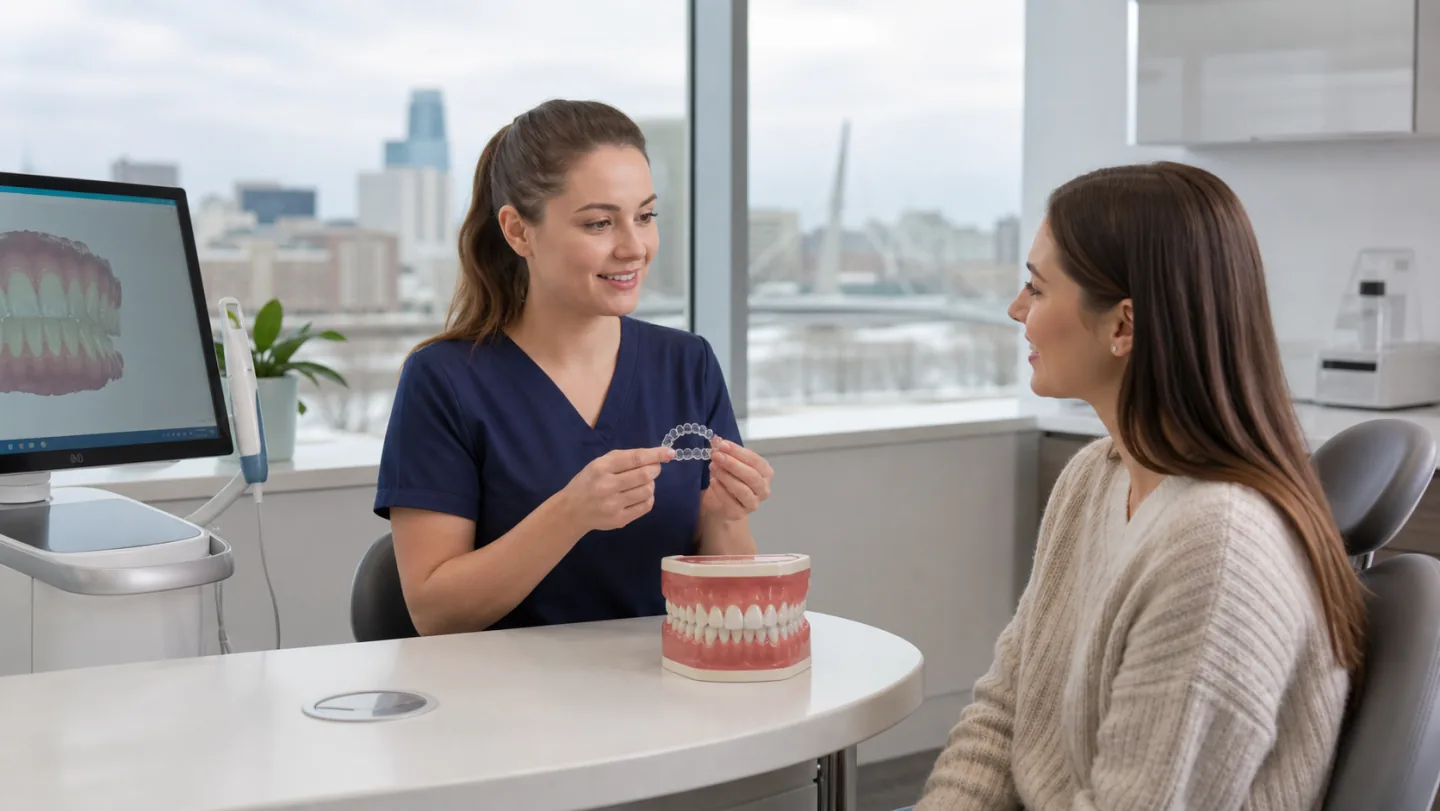
A dentist showing a clear aligner to a patient during a consultation
No sink at your job site?

Invisalign for St. Vital Residents

Clear trays expect you to brush before putting them back after a meal. For St. Vital residents who work in trades, delivery, landscaping or anywhere far from a washroom, that expectation deserves some planning.

Let's find a time

Request an appointment

We’ll call to confirm your appointment. For urgent care, please call us directly.

Aligners on the move

Clean Trays When Your Workplace Has No Bathroom Mirror

With Invisalign, aligners come out whenever you eat or drink something other than plain water. Before they go back in, the routine is to brush and clean between your teeth, so food and sugars aren’t sealed against the enamel. Out of the trays’ way, they sit in their case, not a pocket or a napkin.

None of that is difficult in an office kitchen. It takes more forethought from a ladder, a cab or a field. St. Vital residents can talk through a realistic version of their workday during an assessment at our McPhillips Street clinic in Winnipeg.

Explore invisalign
Clinic reception area with a white counter, glass dividers, plants and a wood-look floor
The white front counter and glass dividers at Winnipeg North Dental’s reception.

Case at all times

Trays belong in their case whenever they’re out, including on site.

Clean before reinserting

Brushing and cleaning between teeth comes before trays go back in.

Water is the exception

Plain water is generally fine with trays in; other drinks mean removal.

The mechanics, briefly

Small, planned steps toward a new position.

Each aligner in the series is a little different. Worn as directed, it applies controlled pressure that moves selected teeth gradually, and that only happens while the tray is in.

Problems trays may tackle

Aligners can manage many concerns, though your dentist decides suitability after examining your teeth and bite.

  • Crowded, overlapping or turned teeth.
  • Gaps that can be closed in a controlled way.
  • Suitable bite issues, including overbite or crossbite.
  • Teeth that relapsed after previous orthodontics.

Add-ons that may appear

Depending on the movement, your plan may include features that also need care at work.

  • Bonded, tooth-coloured attachments that help trays grip.
  • Removable elastics between upper and lower teeth.
  • Space made by limited enamel reduction, when appropriate.
  • Planned expansion, where it suits your case.

If elastics are part of your plan, ask how to handle them around meals during a working day.

Appointments at a glance

What each stage involves.

The clinical side follows the same pattern for everyone. Your work routine mostly shapes the daily part in between visits.

Request your visit
  1. 01

    Assessment and records

    Your teeth, gums, bite and jaw relationships are examined, and photos plus suitable X-rays are reviewed.

  2. 02

    Digital planning

    Destinations for each tooth, ways of creating room, and points needing extra control are all mapped out in software.

  3. 03

    First fitting

    Trays are checked for fit, any attachments are bonded, and you practise inserting and removing them.

  4. 04

    Progress checks

    Your dentist compares how teeth have moved with the planned sequence and acts if a tray isn’t fitting as intended.

Map your workday

Walk through a typical shift.

Picture an ordinary day from start to finish. Where you eat, what you drink and where you could brush all affect how workable aligners would be.

Bring the honest version of your day, not the ideal one. Practical advice depends on it.

Consider

  • Where you usually eat lunch and how long breaks last.
  • Which drinks you have through the shift besides water.
  • Whether clean water is available where you work.
  • Any medical conditions and medications you’re taking.
Waiting area with a navy bench, a pale rug, potted plants and a window shaded by striped blinds
Black chairs at a white desk in a consultation room with a large window

Navy bench seating in the waiting area and a desk in the consultation room at Winnipeg North Dental.

Real-world advice

Your job isn’t an obstacle to mention quietly.

Describing dusty sites or long drives helps your dentist give useful guidance. It also helps you judge whether the routine is something you’d actually manage.

Ask about handling

Find out how to take trays out and put them in cleanly when away from a mirror.

Spare thinking

Ask what to do if a tray is lost or damaged while you’re at work.

Honest fit

If your work makes the routine impractical, it’s fair to consider other options.

Between visits

When something goes wrong on the job.

Trays get dropped, cracked or left behind. What matters is how you respond, because missed wear can let teeth lag behind the plan.

01

A damaged or lost tray

Call the clinic rather than moving ahead to the next aligner. A damaged tray or lost wear may need a specific fix.

02

Refinements

Additional aligners are sometimes ordered from new records when movements aren’t complete. That’s a normal step.

03

Retainers long term

After active movement, retainers worn as prescribed help hold teeth, which can shift throughout life.

Tray cracked or missing mid-shift? Phone the clinic when you can.

Talk with our team
Winnipeg North Dental’s street-facing entrance with a planted strip along the sidewalk

Winnipeg North Dental

Unit-5 2358 Mcphillips Street, Winnipeg, MB R2V 4J6
Get directions (opens in a new tab)
St. Vital workers

Plan Your Routine With Us in Person

Tradespeople, drivers and outdoor workers from St. Vital, a Winnipeg community, can have their aligner assessment at Winnipeg North Dental, Unit 5, 2358 McPhillips Street.

Sending this request leaves the date open for now. Someone from the clinic contacts you to arrange the appointment, and calling (204) 338-3003 works too.

Questions about coverage?

Talk with our team before your visit or learn about CDCP.

A little clarity before your visit

Your questions, answered.

Helpful details about invisalign in St. Vital.

Ask our team
What if I can’t brush before putting my aligners back in?

The guidance is to clean your teeth before reinserting trays. Ask your dentist how to manage days when that’s harder, rather than skipping wear.

Can I drink coffee from a thermos with trays in?

Drinks other than plain water generally mean taking aligners out first. Follow the specific instructions you’re given for your plan.

Where should my aligners go while I eat lunch on site?

In their case, every time. Trays wrapped in napkins or tucked into pockets are easily lost or damaged.

Do attachments get in the way of physical work?

Attachments are small bonded shapes on the teeth that help trays control movement. Ask your dentist how many your plan needs and where they’d go.

What should I do if I crack a tray at work?

Contact the clinic instead of jumping ahead in the series. A damaged aligner may call for a particular correction.

How does a St. Vital resident with a busy shift schedule request a visit?

Fill in the form with the times you’re usually free, or call (204) 338-3003. Your appointment happens at Unit 5, 2358 McPhillips Street, Winnipeg, MB R2V 4J6.

Bring your work boots

See whether aligners can keep up with your job.

Request an Invisalign assessment at our Winnipeg clinic and describe a real workday so the advice fits.

Patient testimonials

Kind words from our patients

★★★★★ 5.0 from 440+ reviews on Google

Close to home

Areas we serve

Convenient dental care on McPhillips Street for families across northwest Winnipeg and nearby communities.

Explore all service areas

A healthier smile is one visit away

Ready for dental care that feels genuinely comfortable?

✓ New patients welcome ✓ Direct insurance billing ✓ Multilingual team

How can we help?

Our dental team is here for you.

Ready to book or have a question? Choose the option that works best for you.

For urgent dental concerns, please call us directly.

Send us a message

Our team will reply during clinic hours.



