Skip to content
Winnipeg North Dental
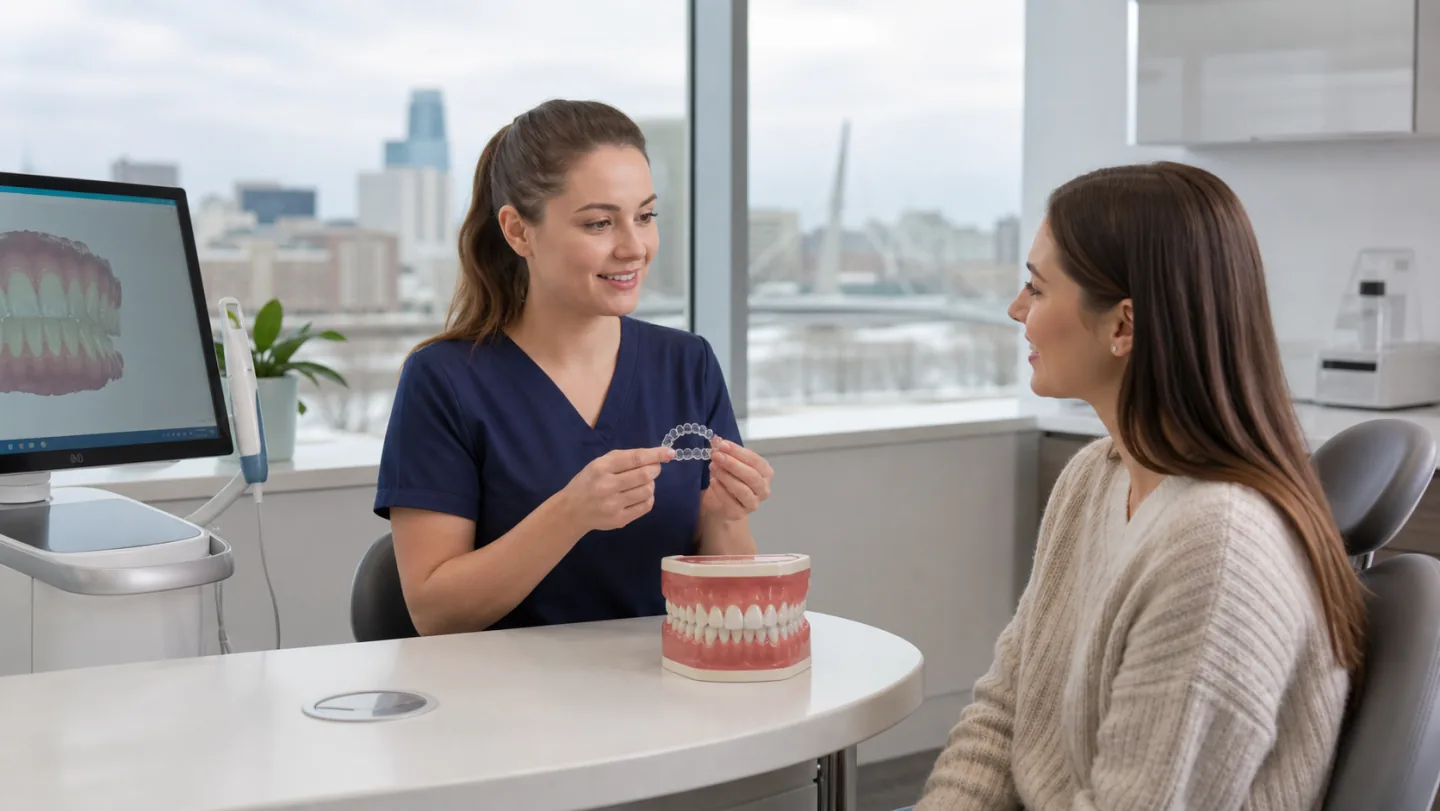
A dentist showing a clear aligner to a patient during a consultation
Is your teenager asking about these?

Invisalign for St. Andrews Residents

When a teen in St. Andrews would rather have clear trays than brackets, a parent has fair questions about follow-through. This page looks at those questions squarely.

Let's find a time

Request an appointment

We’ll call to confirm your appointment. For urgent care, please call us directly.

For the adult in the conversation

Clear Trays Hand a Lot of Responsibility to a Teenager

Brackets stay put whether anyone remembers them or not. A tray moves teeth only while it’s in the mouth, so the daily work falls to the person wearing it, and that’s worth talking through honestly at home before anyone commits.

Whether aligners suit a particular young person comes down to an examination, and to how realistic the wear schedule is for them. St. Andrews lies outside the City of Winnipeg, so families would travel in to our McPhillips Street clinic for that assessment and any treatment that follows.

Explore invisalign
Consultation room with leather office chairs, a white desk and a landscape painting on the wall
Leather office chairs facing a white desk at Winnipeg North Dental.

Their habits count

A teen’s honest track record with routines tells you a good deal about how trays would go.

An exam comes first

Tooth position, gums, bite and jaw relationships are all looked at before aligners are considered suitable.

Braces remain a real option

A fixed appliance needs no remembering, and it gives direct control across a broad range of movements.

Home truths about trays

What a young wearer signs up for each day.

Lunch at school, snacks with friends and late nights all run into the same set of habits. Picture an ordinary week for your teen as you read these.

Out for food, back in afterward

Anything to eat, and any drink besides plain water, means trays come out first. Teeth then get brushed and cleaned between before those trays return.

  • Midday meals away from home need a plan for cleaning.
  • Sports drinks and pop count as reasons to remove them.
  • A case has to travel everywhere the trays do.
  • Forgetting to reinsert them lets teeth lag behind the plan.

Extras that may show

Some teens picture something invisible. In practice, tray edges and saliva can catch the eye at conversational distance, and many plans add other small features.

  • Tooth-coloured attachments bonded to certain teeth.
  • Removable elastics for selected bite corrections.
  • Noticeable tray edges during close conversation.
  • Retainers to keep wearing once movement ends.

A tray that stops fitting calls for a phone call to the clinic. Your teen shouldn’t jump ahead to the next one in the series to solve it.

The road map for families

How treatment would unfold for a teen.

Young or older, every aligner patient moves through the same four stages. Here’s what each could mean from a parent’s point of view.

Request your visit
  1. 01

    Finding out what’s possible

    The dentist looks at teeth, gums, bite and jaws, and goes over photographs along with appropriate X-rays. This is the moment to raise your worries about follow-through.

  2. 02

    Mapping the movement

    A digital plan sets out where each tooth should go, including how room will be made. What appears on screen is a proposal, and teeth won’t always match it.

  3. 03

    Learning the routine

    Fit gets confirmed, any planned attachments go on, and your teen practises putting trays in and taking them out. Ask them to handle this part themselves.

  4. 04

    Checking the real teeth

    Actual progress is compared with the sequence, and a problem can be dealt with if a tray has stopped fitting as it should.

A talk before the phone call

Settle a few things at the kitchen table.

Coming in from outside the city takes some organizing around school and work. A short conversation first makes the assessment far more useful for everyone involved.

Ask the clinic what it needs from a parent or guardian for a minor’s visit, so you’re not caught short on the day.

Questions to raise at home

  • Who will be responsible for keeping track of trays?
  • How would school lunches and cleaning actually work?
  • What’s bothering your teen most about their teeth?
  • Any medical details or recent changes the dentist should hear?
Two abstract blue paintings on a white wall above a low navy bench
Pale blue dental chair with an overhead light arm and a small wall-mounted screen

Blue abstract art over a navy bench and a pale blue dental chair under a light arm, Winnipeg North Dental.

When it’s their mouth, your worry

Let your teen do some of the talking.

Young patients sometimes go quiet in a dental office while a parent answers for them. Hearing their own reasons and concerns helps give a more accurate picture of what daily life with trays would be like.

Soreness may come up

Pressure is how teeth get moved, so a new tray can feel snug. Tell the clinic if something seems wrong.

Rubbing edges

A rough spot on a tray isn’t something to file at home. Let the clinic know about it.

Teen questions welcome

Encourage them to write down what they want to know, even if it seems small or a little embarrassing.

Long after graduation photos

Straightening doesn’t finish with the final tray.

A young person will carry retainer habits into adult life, possibly while moving away from home. It’s a practical thing to think about from the beginning.

01

Further trays, sometimes

Should planned movement fall short, fresh records can be used to order refinement aligners. That’s an ordinary planning step, and doesn’t mean anyone failed.

02

Retainers for the years ahead

Teeth can keep shifting throughout life, so these need wearing as prescribed, well beyond the teenage years.

03

Handing over the job

Work toward your teen knowing their own retainer schedule and who to contact when something goes wrong.

Regular dental checkups still matter during and after aligners. Ask how those would fit around progress visits.

Talk with our team
Winnipeg North Dental storefront with glass double doors and a metal railing at the entrance

Winnipeg North Dental

Unit-5 2358 Mcphillips Street, Winnipeg, MB R2V 4J6
Get directions (opens in a new tab)
For St. Andrews families

Where a Family Would Attend for Aligner Care

For a St. Andrews teen, assessments and aligner visits all take place at Winnipeg North Dental, Unit 5, 2358 McPhillips Street, Winnipeg.

Sending the form starts a request and doesn’t secure a time, because the clinic gets back to you to arrange one. Phone rather than use the form for anything urgent.

Questions about coverage?

Talk with our team before your visit or learn about CDCP.

A little clarity before your visit

Your questions, answered.

Helpful details about invisalign in St. Andrews.

Ask our team
Is my teenager old enough for Invisalign?

Suitability isn’t settled by a birthday on this page. An examination of the teeth, bite and jaw relationships would answer it, along with a frank look at daily habits.

Would braces be wiser for a forgetful teen?

They could be worth serious thought. Fixed brackets work without anyone needing to remember them, while success with trays leans heavily on consistent wear.

What if my kid keeps leaving trays out at school?

Missed hours allow teeth to fall behind the digital plan, and treatment could end up longer or altered. Contact the clinic if it has become a pattern.

Can trays stay in during lunch if they’re careful?

No, they need to come out for all meals and snacks. Food can damage them, and sugars or acids can end up held against the teeth.

Will their friends notice?

Quite possibly, up close. Aligners are discreet without being invisible, and any attachments can add to what people see during a conversation.

How do we ask for an assessment from St. Andrews?

Call (204) 338-3003 or send a request through the form, and include your teen’s main concern. The clinic will follow up with you about timing.

A conversation for you both

Bring your teen’s questions to McPhillips Street.

Request an assessment in Winnipeg and find out whether trays, brackets or something else makes sense for them.

Patient testimonials

Kind words from our patients

★★★★★ 5.0 from 440+ reviews on Google

Close to home

Areas we serve

Convenient dental care on McPhillips Street for families across northwest Winnipeg and nearby communities.

Explore all service areas

A healthier smile is one visit away

Ready for dental care that feels genuinely comfortable?

✓ New patients welcome ✓ Direct insurance billing ✓ Multilingual team

How can we help?

Our dental team is here for you.

Ready to book or have a question? Choose the option that works best for you.

For urgent dental concerns, please call us directly.

Send us a message

Our team will reply during clinic hours.



